
Why Your Hotel is Losing Money Without PMS and IBE Integration
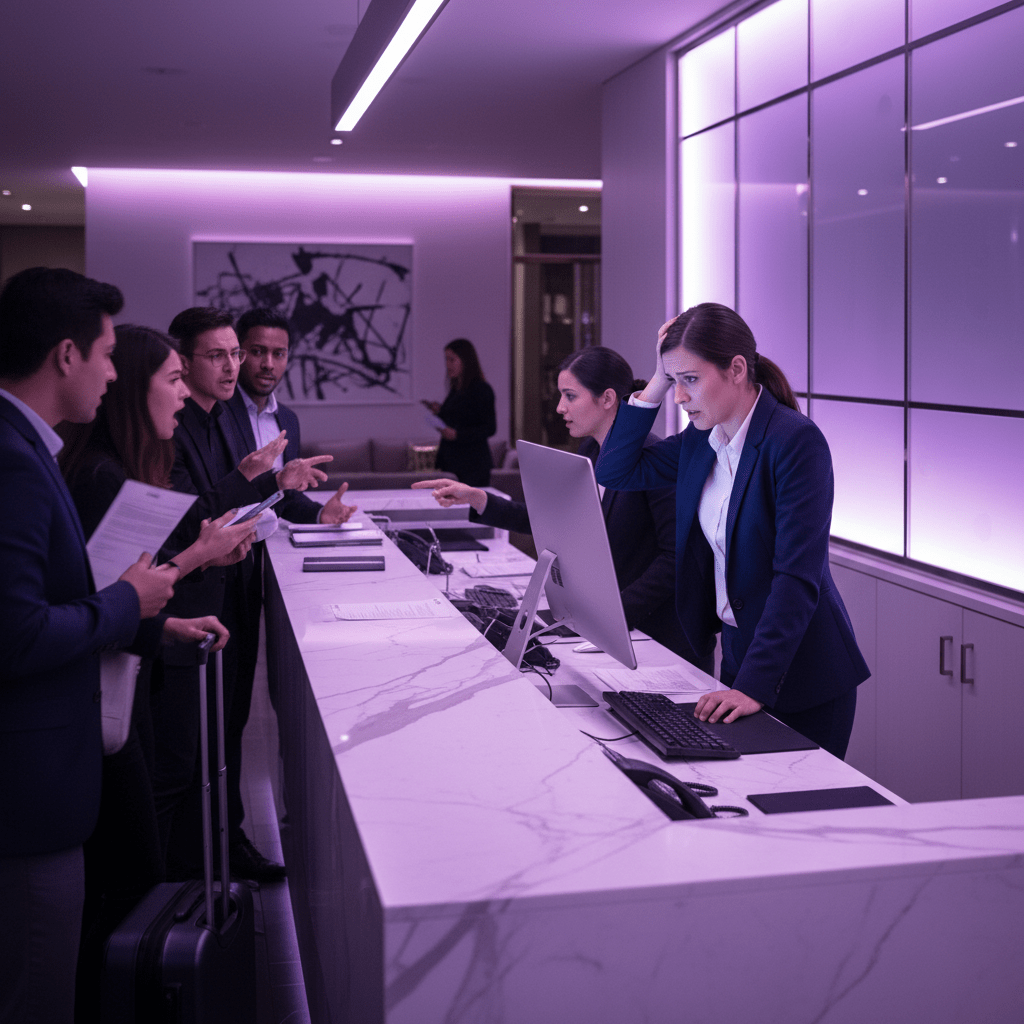
Picture this. It’s 9 PM on a Friday. The lobby is packed. Your front desk manager—let’s call him Dave—is staring at the screen, and he looks terrified.
Why?
Because the last King Suite was just booked by a couple standing at the desk and by someone online at the exact same time. Dave didn’t type the online reservation into the system fast enough.
Now you have a double booking. And an angry guest to deal with.
We’ve all been there. It’s a nightmare.

Here’s the thing. In a world where a traveler can use a flight booking search engine to secure a seat across the ocean in milliseconds, it’s crazy that so many hotels are still copying and pasting reservations manually. It feels stuck in the past.
But it’s not just about stress. It’s about your wallet.
The Real Cost of “Doing it by Hand”
When your hotel booking engine with pms isn’t connected, you lose cash in two big ways.
First, there are the commissions. OTAs (Online Travel Agencies) like Expedia or Booking.com often take 15% to 25% of your revenue. Direct bookings? They usually cost you less than 5%. That’s a huge difference in your profit margin.
Second, manual work costs real money. A study showed that automating these tasks can save a hotel around 49 working days per year. That’s roughly $10,492 in labor just thrown away on typing names into a spreadsheet.
If you want to stop the bleeding, you have to connect booking engine to pms.
This guide is going to show you exactly how to fix the chaos. We’ll look at property management system integration, how to set up real-time pms sync, and how tools like Ease My Hotel can turn that manual mess into a smooth automated reservation system.
Let’s stop losing money and start making operations easier.
Back to Basics: Defining the PMS and the IBE
Before we fix the broken process, let’s make sure we are speaking the same language. The hospitality industry loves acronyms, right? But really, there are only two main players you need to understand here.
Think of them as the “Heart” and the “Front Door.”
First, let’s talk about the PMS (Property Management System).
This is your digital command center. It’s the heart of your hotel’s operations. If you are using a tool like Ease My Hotel, this is the screen your staff looks at 90% of the day.
Modern cloud-based systems act as the guest “brain”, handling the heavy lifting like:
- Checking guests in and out
- Telling housekeeping which rooms need cleaning
- Managing guest profiles and history
- Handling all the billing and receipts
Basically, the PMS manages everything inside the building.
Second, you have the IBE (Internet Booking Engine).
This is your digital front door. It’s the software that powers the “Book Now” button on your website. Key features of a good IBE include a mobile-first design and a 3-step booking process that makes it super easy for guests to pay you directly.
Its job is simple: Capture the booking commission-free and secure the payment.
So, what’s the problem?
In many hotels, the hotel booking engine with pms acts like two strangers who refuse to talk to each other. The IBE sells a room, but the PMS doesn’t know about it yet. That gap? That’s where the chaos happens.
You need property management system integration to close that gap. You want an automated reservation system where the “Front Door” tells the “Heart” exactly what’s happening instantly.
When these two systems communicate, the IBE brings the guest in, and the PMS takes care of them. It sounds simple, but getting them to sync perfectly is the only way to stop those 9 PM double-booking nightmares.
The High Cost of Siloed Systems: Operational Nightmares and Lost Revenue
You might think, “My team handles it. We just check emails and update the system. It’s free.”
But is it really free?
Actually, manual work is probably one of the most expensive things you pay for. When your systems—the “Heart” and the “Front Door”—are separated by a wall of silence, bad things happen. Expensive things.
The Double Booking Disaster
Remember the lobby nightmare we talked about? That wasn’t just bad luck.
It happens because of the lag.
Here is how it goes down. Someone books Room 202 on a travel site. You get an email notification. But maybe the front desk is busy checking someone in, or the phone is ringing. Ten minutes pass.
In those ten minutes, your website still shows Room 202 as open.
So, another guest books it directly.
Now you have two people for one bed. You have to “walk” a guest to another hotel. You pay for their cab, their room elsewhere, and you probably lose them as a loyal customer forever.
It’s stressful. And it’s completely avoidable if you simply connect booking engine to pms.
The Time You Will Never Get Back
Let’s talk numbers. Because they are honestly kind of scary.
Writing down reservations from emails onto a sticky note and then typing them into the computer feels like it only takes a minute. But it adds up fast.
A study found that hotels can waste about 49 working days per year just moving data around manually.
Forty. Nine. Days.
That is nearly two months of salary paid to someone just to act as a human photocopier. In cash terms? You are throwing away roughly $10,492 every single year on labor that an automated reservation system could do for pennies.
Plus, humans make mistakes. We get tired. We make typos.
There is a simple rule about this called the 1-10-100 rule. It basically says preventing a mistake costs $1. Fixing it later costs $10. But letting a mistake reach the guest? That costs $100 or more in damage control.
Inaccurate Rates Push Guests Away
Here is another huge way you lose money.
Imagine a guest is planning a trip. They check your website. It says “Sold Out” because you forgot to update the inventory after a cancellation.
So, they go to a big travel site. Surprise! They find a room there because that system updated automatically.
They book it there.
Now, instead of keeping 100% of that money, you have to pay a 15% to 25% commission to the booking site. You essentially paid a tax because your systems weren’t in real-time pms sync.
Think about it. Guests today expect the instant speed of a flight booking search engine. If your hotel info looks wrong or outdated compared to the big sites, they won’t trust you. They will book where they feel safe.
You need proper property management system integration to make sure your website shows the truth, every single time.
Under the Hood: How Real-Time PMS and IBE Integration Works
So, how does the magic actually happen?
Spoiler alert: it’s not magic. It’s just smart plumbing.
When we talk about fixing the disconnect between your systems, we usually throw around terms like “integration” or “sync.” But if you aren’t a tech person, that might sound like gibberish.
Let’s break it down into plain English. Because understanding this part is usually the difference between buying a tool that works and buying one that just gives you a headache.
The Digital Messenger (APIs)
At the center of all this is something called an API.
You might have heard your IT guy mention it. It stands for Application Programming Interface. Sounds boring, right?
Here is a better way to think about it. Imagine a waiter at a restaurant.
You (the system) are at the table. The kitchen (the other system) is in the back. You can’t go into the kitchen and cook the burger yourself. You need someone to take your order, go to the kitchen, tell the chef what to do, and bring the food back to you.
The API is that waiter.
It is a secure digital messenger that lets your property management system integration happen without anyone having to type a single thing. It carries the data back and forth instantly.

One-Way vs. Two-Way Sync (This Matters!)
This is where a lot of hotels get tripped up.
Not all connections are created equal. When you look at tools to connect a booking engine to pms, you will see two types: One-Way and Two-Way.
One-Way Integration is the old-school method. It’s like a monologue. Your PMS might tell the booking engine, “Hey, we have 5 rooms left.” But the booking engine doesn’t talk back.
So, when a guest books a room online, the PMS doesn’t know about it until you manually check for it. That lags time causes the double-booking mess we talked about earlier.
Two-Way Integration is what you need.
This is a real conversation. It’s a real-time pms sync.
The PMS tells the booking engine rates and availability. The booking engine talks back instantly, sending reservation details, guest info, and credit card data right into the PMS.
Think about it. When you use a flight booking search engine, if you pick a seat, it vanishes for everyone else on earth instantly. Your hotel rooms need to act the exact same way.
What Actually Moves Between Systems?
When you set up a solid hotel api integration with a platform like Ease My Hotel, it’s not just about room numbers. A lot of data has to flow perfectly to create a truly automated reservation system.
Here is what usually gets swapped in a good two-way setup:
Rates and Inventory: If you change a price or close a room for maintenance in the PMS, the website updates instantly.
New Reservations: Bookings from your site drop straight into the digital room rack.
Modifications: If a guest changes their dates online, the system moves them on your calendar automatically.
Cancellations: If they cancel, that room goes back on sale immediately without you lifting a finger.
Guest Profiles: Names, emails, and preferences get saved so you know who is coming.
Actually, a good system handles even more than that. But those are the basics.
Having this flow happen automatically is the only way to support a modern 3-step booking process that guests actually finish. If the data gets stuck, the guest gets frustrated. And frustrated guests don’t book.
Try Ease My Hotel for free.
No lock-in contracts. Cancel anytime
Unlocking Profitability: The Top 5 Benefits of an Integrated Hotel Booking System
So, we know the “plumbing” between your systems works basically like a smart waiter. But why should you care?
Is it just to stop your front desk manager from having a meltdown on a Friday night?
Well, sure. That helps. But honestly? It’s mostly about your bank account.
Successful property management system integration isn’t just a tech upgrade; it is a survival strategy. In a market where every dollar counts, keeping your systems in silos is like trying to carry water in a bucket with holes in the bottom.
Here are the top 5 benefits of integrated pms and booking engine setups that will effectively plug those holes.
1. Stop Paying the “OTA Tax”
Let’s be real. Online Travel Agencies (OTAs) are expensive.
While they are great for getting your name out there, they eat your lunch when it comes to profits. Most charge commissions between 15% and 25%.
With a direct booking engine integration, you capture those guests on your own turf. The cost for a direct booking is usually around 4.5%. That is a massive difference in margin.
But it gets better.
Direct bookings are actually stickier. A recent analysis found that while OTA bookings often suffer from a cancellation rate of nearly 50%, direct bookings sit at a much more stable 18.2% cancellation rate.
When you connect booking engine to pms, you aren’t just saving on commission; you are building a revenue stream that is far less likely to disappear on you.
2. Eliminate the “Human Bottleneck”
We all think we’re good at multitasking. We aren’t.
When your team has to manually type reservation emails into the system, they become a bottleneck. It slows down check-ins, delays housekeeping updates, and keeps your staff glued to screens instead of smiling at guests.
Actually, the cost of this manual work is shocking.
Reports suggest that inefficient manual processes cost hotels thousands annually, not just in wasted salary but in the sophisticated opportunity costs of challenges like forecasting and reporting.
By switching to an automated reservation system, you remove the bottleneck. The data flows freely, and your team gets to go back to being hospitality pros instead of data entry clerks.
3. React to the Market Instantly
Pricing is a moving target.
If a big concert is announced in town next weekend, demand spikes. You need to raise your rates now.
Without real-time pms sync, you have to log into your PMS, then your website admin panel, and maybe three other extranets to update the price. By the time you finish, you might have already sold three rooms at the cheap rate.
With a hotel booking engine with pms connection, you change the rate once in a tool like Ease My Hotel. Boom. It updates everywhere instantly. You catch the revenue wave right when it happens.
4. Create a Frictionless Guest Experience
Have you ever tried to book something on your phone, but the page was slow, or it asked for the same info twice?
You probably gave up.
Guests today are ruthless. If your booking process is clunky, over 80% of them will abandon it. They expect the smooth, instant confirmation they get from big tech companies.
A solid hotel api integration ensures that when a guest searches for a room, they see live inventory. No request a quote buttons. No waiting for confirmation emails.
They book. They pay. They get a confirmation. Simple.
5. Own Your Guest Data
This might be the most important one for the long run.
When a guest books on an OTA, they are the OTA’s customer. You often get a masked email address and limited info.
When they use your integrated engine, you own the data.
You know their real email. You know their real email. You know they requested a quiet room away from the elevator. You know it’s their anniversary. This allows you to market to them later and build loyalty.
So, when you are looking at how to choose an ibe for your pms, don’t just look for a Book Now button. Look for a system that feeds this goldmine of data straight into your guest profiles.# How to Choose the Right Integrated IBE for Your PMS: A Vendor Checklist
Buying software feels a lot like buying a used car. You want to believe the salesperson, but you’re secretly worried the engine will fall out as soon as you drive off the lot.
I’ve seen hotel owners paralyzed by this decision. And I don’t blame them.
If you choose the wrong tool, you aren’t just wasting money. You’re signing up for months of technical headaches. You need to know exactly what to look for before you sign that contract.
So, grab a pen. Here is your checklist for picking a system that won’t let you down.
1. The “Handshake” Must Be Solid
First things first.
Does this booking engine actually talk to your PMS? And I don’t mean “sure, we can make it work.” I mean, are they certified partners?
If you want to connect booking engine to pms systems seamlessly, you need a certified two-way integration. This means the connection has been tested and proven to handle heavy traffic without crashing.
Ask the vendor: “Is this a one-way or two-way sync?”
If they say one-way, run.
Also, ask about the setup time. A solid integration for a 50-100 room hotel should take about 2 to 4 weeks to go live. If they say it takes months, their tech is likely outdated.
2. The Mobile Test (Do Not Skip This)
Here is a scary stat: booking abandonment on hotel websites often exceeds 80% when the mobile experience is bad.
That means 8 out of 10 people who want to stay with you give up because your site is too hard to use on their phone.
Your guests expect the speed and simplicity of a major flight booking search engine. They want to click, pay, and be done in under two minutes.
If your hotel booking engine with pms requires them to pinch-and-zoom or fill out 20 different fields, you are losing money.
Let’s look at the mobile user experience.

Look for a “3-step booking process.” Select room. Enter details. Pay. That’s it.
3. The Feature Checklist
Once you know it works technically and looks good on a phone, look for these specific features. These are the ones that actually drive revenue.
- Total Payment Security: Look for PCI compliance. This basically means the system is a fort. It ensures you never have to write a credit card number on a sticky note again (please stop doing that).
- Upselling Ability: Can the guest add breakfast or a late checkout right in the cart? This is free money. Use it.
- Promo Codes: You need the ability to run flash sales or give loyal guests a discount code easily.
- Clear Analytics: You should be able to see exactly where your bookings are coming from without needing a degree in data science.
The “All-in-One” Shortcut
Now, you might be thinking, “This sounds like a lot of work to find two different companies that play nice together.”
You’re right. It is.
That’s why the industry is moving toward the automated reservation system where one platform does it all.
Tools like Ease My Hotel combine the PMS and the Booking Engine into one unified system. There is no “integration” to worry about because it’s all the same brain. You don’t have to check if the left hand is talking to the right hand.
When you use an all-in-one solution, you eliminate the risk of the connection breaking. Plus, you only have one support number to call if something goes wrong.
It simplifies your life. And right now, simple is exactly what we need.
Avoiding Pitfalls: Common Mistakes in a PMS-IBE Integration Project
Buying new software is exciting. It feels like a fresh start. But I’ve seen hotel owners spend thousands on a new setup, only to turn it off a week later because it caused more problems than it solved.
Usually, it’s not the software’s fault. It’s how it was set up.
If you don’t want your launch day to turn into a disaster movie, watch out for these three traps.
Mistake 1: The Mismatched Puzzle Pieces
You see a flashy booking engine. It looks incredible. It has the speed and sleek design of a top-tier flight booking search engine. You love it. So, you buy it.
But you didn’t check if it was a certified partner with your current PMS.
This is a classic mistake. Just because two systems can connect doesn’t mean they should. If the integration isn’t “deep”—meaning it can’t handle cancellations or modifications automatically—you end up with systems that essentially go separate ways just when you need them to work together.
Always ask for proof that they work together before you sign.
Mistake 2: Forgetting the Humans
Here is a hard truth. Tech doesn’t run hotels. People do.
You can install the smartest automated reservation system on the market, but if your front desk team doesn’t understand it, it’s useless.
I’ve seen managers set up a new system and just email a PDF manual to the staff. That doesn’t work. Your team needs to practice. If they don’t feel confident, they will ignore the new tool and go back to sticky notes and spreadsheets. You need to budget time for real, hands-on training.
Mistake 3: The “Mapping” Mess
This sounds technical, but stick with me. It’s actually simple.
“Mapping” is just telling System A that “Ocean View King” is the exact same thing as “King-OCN” in System B.
If you rush this, bad things happen. A guest books a luxury suite online, but the system maps it to a standard room because of a typo. They show up, pay top dollar, and get a view of the parking lot.
To avoid this, you need to audit every single room connection at least 48 hours before going live.
This is where an all-in-one platform like Ease My Hotel shines. Since the PMS and booking engine are already part of the same body, you don’t have to worry about connecting the wires or mapping codes. They are already connected.
From Chaos to Control: Your Next Step Towards a Fully Automated Hotel
Let’s look at the big picture.
We started this article talking about Dave, the stressed-out front desk manager staring at a double-booking disaster.
The goal isn’t just to make Dave’s life easier (though he will definitely thank you). It is about securing your business’s future.
Manual entry is a relic. It belongs in a museum, not your back office.
When you finally embrace property management system integration, the math changes in your favor immediately. You stop paying huge commissions on every single booking. You get guests who actually show up.
Remember, OTA bookings get cancelled nearly 50% of the time. Direct bookings? They stick around. That difference alone is worth the upgrade.
Plus, you give guests the speed they crave. They want your booking engine to feel as fast and powerful as a flight booking search engine. If you give them that experience, they book directly which puts more money in your pocket.
So, what now?
Don’t just close this tab. Do a quick audit today.
Ask yourself: “Does my website talk to my front desk in real-time?”
If the answer is no, it is time to change that.
Whether you are looking for specific partners or a unified platform like Ease My Hotel that handles everything from HR to reservations in one dashboard, moving to automation is the smartest play you can make this year.
Let’s turn that chaos into control.
Try Ease My Hotel for free.
No lock-in contracts. Cancel anytime