
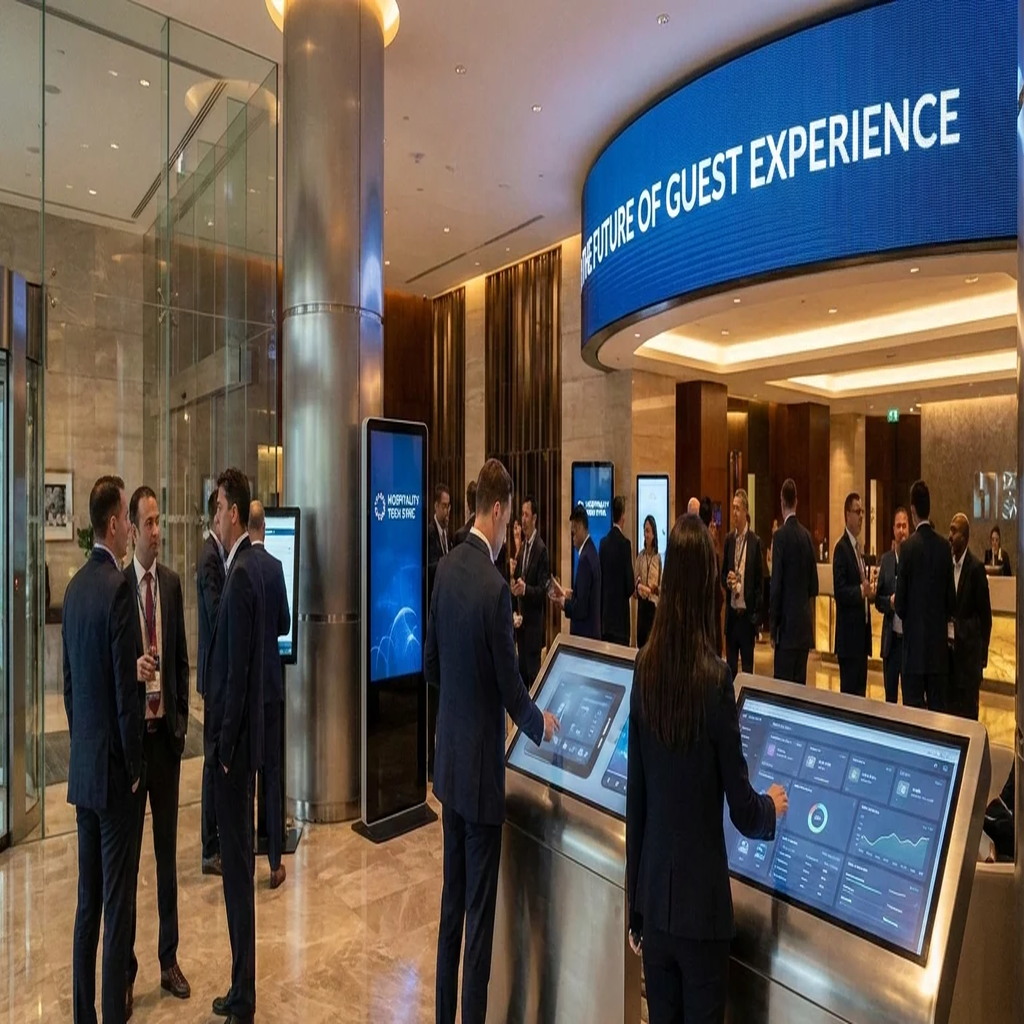
Introduction: The Shift Towards Direct Bookings in India’s Booming Hotel Sector
Did you know the Indian hospitality sector is on track to hit a massive USD 55.67 billion by 2031? That’s not just growth; that’s an explosion of opportunity. Domestic travel is surging, and hotel lobbies from Kerala to Kashmir are buzzing.
But let’s be real for a second.
While your occupancy might be up, is your bank account reflecting that same growth? If you rely heavily on Online Travel Agencies (OTAs), the answer is probably “sort of.”
Don’t get me wrong, OTAs are useful. But they currently grab about 42.51% of the market share, which means a huge chunk of potential profit is walking out the door in commission fees before the guest even checks in. That is a painful reality for independent hoteliers trying to scale.
This is exactly why smart property owners are scrambling to build their own direct booking platform. They aren’t just trying to save money; they are trying to own the guest relationship.
So, what is the core booking engine meaning for your business?
Think of a booking engine as your hotel’s 24/7 digital receptionist. It allows guests to book rooms directly on your website—commission-free. In this article, we’re going to break down exactly what is a booking engine for hotels, why it’s different from your channel manager, and how to navigate the specific challenges of launching a hotel booking engine in India.
Ready to take back control of your inventory? Let’s dive in.
1. Understanding the Core: What is the Meaning of a ‘Booking Engine’?
Let’s clear up the confusion right now. If you have ever bought shoes on Flipkart or groceries on Amazon, you already know how this works.
You see what you want, you click “Add to Cart,” and you pay. Simple, right?
For hotels, the booking engine meaning is basically that same “Checkout” button—but for your rooms. It is a piece of software that lives on your own website. It lets guests pick a date, choose a room, and pay you directly.
The best part? No middleman takes a cut of your money.
But here is where it gets a little tricky for a lot of folks. You might hear terms like “Channel Manager” and “PMS” thrown around. people often use them like they mean the same thing.
They definitely don’t.
Think of your hotel like a busy restaurant. Here is how the pieces fit together:
- The Booking Engine is your Front Counter. It greets the customers walking directly into your shop (your website) and takes their order. It handles the cash and secures the sale immediately.
- The Channel Manager is the Traffic Cop. It stands in the middle of the street and shouts your available inventory to other websites like MakeMyTrip, Agoda, and Booking.com. If someone books a room on Agoda, the traffic cop tells everyone else, “Stop! That room is gone!” so you don’t get double-booked.
- The PMS (Property Management System) is the Kitchen. This is the back office where the daily grind happens—checking guests in, telling housekeeping which rooms to clean, and printing bills.
It can feel like a lot to manage. That is why platforms like Ease My Hotel are catching on—they combine the kitchen, the traffic cop, and the front counter into one system so you aren’t logging into three different accounts.
So, why does having your own hotel booking engine in India matter so much?
It comes down to profit.
When a guest books through an Online Travel Agency (OTA), you lose a big chunk of cash to commissions. But industry data suggests that direct bookings can generate roughly 60% higher revenue per booking compared to OTAs.
That is money that stays in your pocket. Plus, you get to keep the guest’s email address to invite them back later. You can’t do that easily with OTA bookings.
2. Challenge: The Complex Maze of Technical Integration
Here is the thing about technology: it’s amazing when it works, and a total nightmare when it doesn’t.
Imagine this scenario.
It is 11 PM. You are asleep. A guest from London books your last Deluxe Room through your new hotel website booking system. Money in the bank, right?
But wait.
Five minutes later, a couple walks into your lobby. Your night manager, who doesn’t check the website email alerts, gives them the key to that exact same room.
Now you have a double booking. And trust me, nobody is happy.
This happens because your systems aren’t talking to each other. This is the biggest headache for Indian hotel owners: Connectivity.
The “Old Software” Problem
A lot of hotels in India still run on older, desktop-based software. You know the kind—it lives on one computer at the front desk, and if that computer crashes, the whole hotel stops running.
These older systems (Legacy PMS) usually don’t have a way to plug into a modern hotel booking engine India. They are like trying to connect Bluetooth headphones to a cassette player. It just doesn’t work.
This forces your staff to do manual data entry. They have to look at the email from the website and type the details into the computer.
And guess what? Humans make mistakes.
One typo in the date or room type, and your inventory is messed up across the board.
The Sync Struggle
Remember the “Traffic Cop” (Channel Manager) we talked about earlier? This is where the confusion between a channel manager vs booking engine really hurts operations.
To run a smooth ship, you need a two-way connection:
- Engine to PMS: When a booking happens on your site, your main calendar needs to update instantly.
- PMS to Channel Manager: Your system needs to tell Agoda and Booking.com that the room is sold, so they stop selling it.
If any one of these wires gets crossed, you risk overbookings.
Research shows that cloud-based PMS solutions are taking over quickly—holding about 68-80% of the market availability—simply because they solve this integration problem. They live on the internet, just like your booking engine, so they talk to each other easily.
For independent hotels, the fix is usually switching to an all-in-one cloud platform.
Instead of trying to glue three different systems together with expensive custom code, using a unified system like Ease My Hotel handles the hotel PMS integration automatically. It ensures that when a room is booked anywhere—on your site or an OTA—it is blocked everywhere instantly.
No manual typing. No double bookings. Just peace of mind.
3. Challenge: Catering to the Mobile-First Indian Traveller
Picture this.
A guest is on a train to Jaipur. They have a spotty internet signal, and they are trying to book a room at your hotel on their phone. If your website takes more than three seconds to load?
They are gone. Back to MakeMyTrip.
We live in a mobile-first country. Actually, “mobile-first” is an understatement. In 2024, mobile apps captured a massive 65.24% of the Indian online accommodation market.
Thanks to super cheap data—often less than 20 cents per GB—almost everyone plans their trips on a 6-inch screen.
But here is the tricky part about running a hotel booking engine India. Internet speeds are… unpredictable. One minute you have blazing 5G, the next you have practically nothing.
If your direct booking platform is heavy with huge photos and fancy animations, it simply won’t load for that guy on the train. You need something lightweight.
The “Thumb-Friendly” Rule
And the screen size? It changes everything.
Nobody wants to pinch and zoom to find the “Book Now” button. And nobody—absolutely nobody—wants to type out their full address on a tiny keyboard while the rickshaw hits a pothole.
Your booking process needs to be radically simple. We are talking 3 to 4 steps max.
- Pick a Room.
- Select Dates.
- Pay.
Done.
It should feature auto-fill for details and social logins (like “Sign in with Google”) so guests don’t have to remember another password.
This is where tools like Ease My Hotel shine. They are built for this specific messiness of real life. Their hotel website booking system is designed to be responsive and fast, even when the internet isn’t cooperating. It removes the friction so the guest finishes the booking before they hit a tunnel.
Why bother with all this work?
Because it pays off. Big time.
Data suggests that direct bookings on a solid system can bring in $519 per booking, compared to just $320 through OTAs. That is a huge difference in profit margin.
But getting them to the checkout page is only half the battle. What happens when they pull out their wallet?
4. Challenge: Navigating India’s Unique Payment Ecosystem
You have done the hard work. The guest found your site. They fell in love with photos of the pool. They are one click away from confirming.
Then… disaster.
They pull out their phone to pay, but your site asks for a credit card number. The guest stares at the screen, annoyed. Why? Because they wanted to use Google Pay.
In India, cash might still be king in some places, but UPI is definitely the queen.
If your hotel website booking system operates like it is in Europe—asking for Visa or Mastercard details first—you are likely losing customers at the very last second.
The UPI Revolution
Let’s look at the numbers. UPI isn’t just popular; it completely dominates how Indians spend money.
Research shows that UPI now commands over 80% of the retail digital payments market. People use it for literally everything, from buying a ₹10 chai to booking a ₹10,000 holiday suite.
If your direct booking engine doesn’t show a QR code or a “Pay via UPI” option instantly, the guest might think your system is outdated. Or worse, they might just close the tab and book via an OTA that does accept their preferred payment method.
The “Transaction Failed” Nightmare
We have all been there. You click “Pay,” the little wheel spins… and spins… and then: “Transaction Failed.”
It is frustrating. For a guest trying to book a room, it is a sign to go elsewhere.
High payment failure rates are a quiet killer for direct bookings. This usually happens when hotels try to cut corners with cheaper, less reliable payment gateways.
You need a solid partner here. In India, gateways like Razorpay and PayU are the gold standard because they are built to handle the erratic nature of our internet and banking systems. They handle the “handshake” between the customer’s bank and your bank smoothly.
Building Trust (The Security Part)
Here is another thing to consider.
Guests trust MakeMyTrip or Booking.com blindly. They know their money is safe.
But when they land on “Grand Hotel’s Official Website,” they get a little suspicious. Is this site safe? Will my card details get stolen?
Your hotel booking engine in India needs to scream “Safety.”
Technically, this means being compliant with something called PCI DSS. It sounds complicated, but it just means your system follows strict security rules to lock down data.
You don’t need to be a cybersecurity expert to fix this. You just need the right software.
Platforms like Ease My Hotel integrate directly with secure, top-tier Indian payment gateways. They handle the payment gateway integration for hotels so that when a guest pays, the transaction is encrypted, safe, and—most importantly—successful. It creates that “Amazon-like” confidence guests need to enter their PIN.
So, you have the payments sorted. But how do you actually get people to look at your website in the first place?
5. Challenge: Competing with the Marketing Muscle and UX of OTAs
Let’s be honest for a minute.
Turn on the TV during a cricket match. What do you see? Massive, celebrity-studded ads for MakeMyTrip or Goibibo. They have multi-crore marketing budgets, huge tech teams, and algorithms that know exactly what your guest wants before they even ask.
You are running a hotel. You probably don’t have an extra few crores lying around for a TV spot.
It feels like a David vs. Goliath battle. And a lot of hoteliers just give up. They surrender to the OTA machine, accepting that 20% to 30% commission as the “cost of doing business.”
But here is the secret: You don’t need to outspend them. You just need to outsmart them.
The “Rate Parity” Trap (And How to Escape It)
Most contracts with OTAs have a “Rate Parity” clause. It’s basically a pinky promise that says you won’t sell your rooms cheaper on your own website than you do on theirs.
So, if a room is ₹5,000 on Agoda, it has to be ₹5,000 on your site. This makes it really hard to convince a guest to book direct. Why should they bother typing in their details on your site when they already have an account with the OTA?
The answer? The Perks.
OTAs can sell a room, but they can’t sell the experience. You own the hotel. You have the power to offer value that an algorithm can’t match.
Smart Indian hotels, like MAYFAIR, are winning this game by offering exclusive “Book Direct” benefits. We aren’t just talking about a generic “free breakfast.” We are talking about things that actually matter to a traveller:
- Guaranteed Room Upgrade: “Book here and get a pool view, guaranteed.”
- Flexibility: Early check-in or late check-out (a lifesaver for guests arriving on early morning trains).
- Freebies: A complimentary airport pickup or a welcome drink on arrival.
These cost you very little but have high perceived value. Suddenly, your ₹5,000 room looks a lot better than the OTA’s ₹5,000 room.
Getting Seen: The Metasearch Game
Now, how do you get people to see these offers?
Enter Google Hotels.
When you search for “Hotel in Manali” on Google, you see a map and a list of prices. Usually, you see Booking.com, Expedia, and Agoda fighting for the top spot.
But if you have the right direct booking platform, your hotel’s official site can appear right there in that list, usually labeled as “Official Site.”
This is a massive opportunity for commission-free bookings. Instead of the guest clicking the OTA link, they click your link.
Connecting to platforms like Google Hotels or TripAdvisor used to be a technical nightmare involving expensive APIs. But today, modern systems handle this automatically.
This is another area where using a unified system like Ease My Hotel pays off. It acts as the bridge, pushing your live rates and inventory directly to Google. It puts your “Official Site” badge right next to the big guys, giving you a fighting chance to capture that traffic.
It’s not about beating the OTAs at their own game. It’s about creating a lane where you are the only clear winner.
So, we have covered the tech, the payments, and the marketing. But now comes the most critical question: Which system is actually right for you?
6. The Solution: A Checklist for Choosing the Right Hotel Booking Engine in India
We have covered a lot of ground. By now, the booking engine meaning for your business should be pretty clear—it is the engine that powers your direct sales.
But knowing what it is helps, but it doesn’t help you pick the right one. And trust me, there are a ton of options out there. It’s easy to get stuck just looking at them all.
Whether you run a boutique homestay in Goa or a business hotel in Pune, you can’t afford to pick the wrong tech. It’s expensive and messy to switch later.
So, to save you some headaches, here is a simple “Must-Have” checklist for your direct booking platform.
The “Non-Negotiable” Feature List
If a salesperson tries to sell you software that doesn’t have these four things, just say no.
- Mobile-First Design: Ask to see the booking page on a standard android phone, not just a fancy laptop. It needs to load fast on 4G.
- Indian Payment Options: It must support UPI, Net Banking, and local wallets. If it only plays nice with International Credit Cards, it won’t work here.
- Two-Way Sync: It has to talk to your PMS and Channel Manager instantly. No delays.
- Google Hotels Connectivity: Can it push your rates to Google Search automatically? This is free marketing you can’t miss.
The “Who You Gonna Call?” Factor
Technology breaks. Usually on a Friday night when you are fully booked.
This is where foreign software often fails Indian hotels. If your provider is based in a different time zone, good luck getting help at 9 PM IST. You need local support. You need someone who understands that internet issues here are different from internet issues in Europe.
The Money Talk: Commissions vs. Subscriptions
Finally, look at the price tag. You usually have two choices:
- Commission-Based: You pay nothing upfront, but they take roughly 3% to 5% of every booking.
- Fixed Monthly Fee: You pay a flat rate (like a Netflix subscription), no matter how many bookings you get.
Commission models sound safe when you are starting out. But do the math. If you grow, that 5% becomes a huge amount of money leaving your bank account every month.
Experts generally recommend the fixed fee model for independent hotels. It keeps your costs predictable.
This is why holistic platforms like Ease My Hotel are gaining traction. They usually offer a flat subscription that covers everything—the hotel website booking system, the PMS, and the channel manager. It solves the challenges for Indian hotels regarding cost and complexity in one go.
Choosing the right engine isn’t just about software. It’s about finding a partner that helps you keep more of what you earn.
Ready to stop paying high commissions and start owning your guest data? The tools are right there. You just have to turn the key.
Conclusion: Your Booking Engine is the Key to Unlocking Profitability
We have covered the tricky parts. We talked about messy integrations, the demand for UPI payments, and the David vs. Goliath fight against big OTAs.
It can feel overwhelming.
But let’s simplify it. The true booking engine meaning for your hotel isn’t about complicated code or fancy widgets. It is about independence.
It is about stopping the leak in your bank account where commission fees drain your profits.
Direct bookings are the single most profitable channel you have. In fact, relying on a solid direct strategy gives you complete control over your guest data and helps you build a brand that stands on its own, rather than just being another list item on a travel site. There is a clear direct booking advantage that goes beyond just saving commission fees—it builds loyalty.
Sure, the challenges for Indian hotels are real. You have to deal with spotty internet, impatient mobile users, and demanding guests.
But these problems are solvable.
You don’t need a massive IT department. You just need the right tools. By choosing a unified system—like Ease My Hotel—that connects your kitchen (PMS), your traffic cop (Channel Manager), and your front counter (Booking Engine), you eliminate the chaos.
No more manual typing errors. No more waking up to double bookings. Just a smooth, professional experience that tells your guests, “Yes, we know what we’re doing.”
So, stop looking at technology as a cost. It is an investment in your future.
The Indian hospitality market is booming. The guests are out there, phones in hand, looking for their next stay.
The only question is: Are you going to make it easy for them to book with you directly?
Take control of your inventory today. Your bottom line will thank you.