
The High Cost of Convenience: Why You Need to Focus on Direct Bookings Now
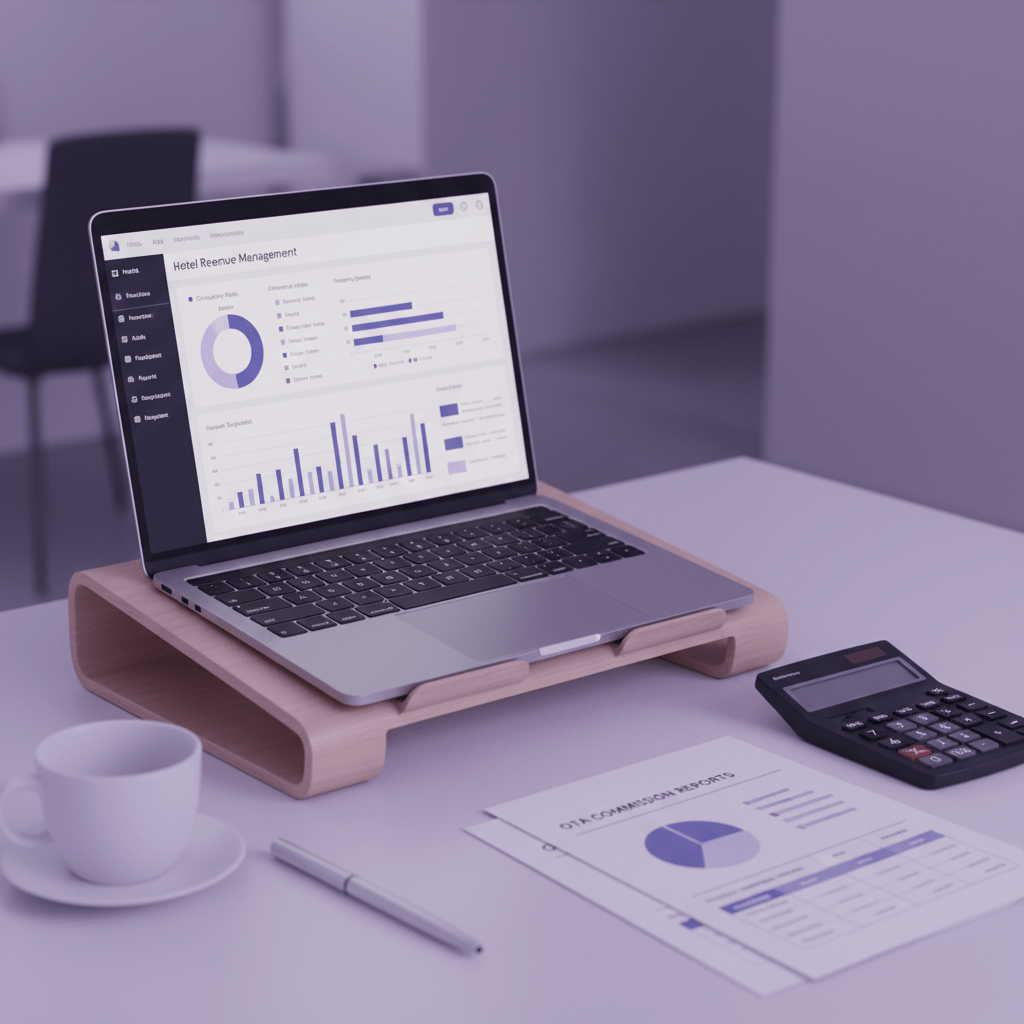
Have you ever looked at your booking report and felt a little sick? Yeah, same. A room sold through an OTA can look like easy money, but the bill shows up later. OTA commissions usually land around 15% to 25% per booking, and for many independent hotels, that can creep even higher. On a $200 room, that’s a chunk of cash gone before the guest even checks in.
And that’s just the start.
When you add cancellation costs, loyalty discounts, marketing spend, and the extra work of chasing the reservation, the real cost of an OTA booking can climb to 30% or more of the stay value. So if you’re trying to figure out how to get more direct hotel bookings, this is where the money story starts. Direct bookings give you more control, better margins, and a real chance to build a guest relationship from the first click.
That matters a lot. Not just for profit, but for the whole guest experience.
In this guide, we’ll walk through the full path: how to drive traffic to your hotel website, how to optimize hotel website for conversions, how to improve your booking engine, and how to keep guests coming back without leaning so hard on OTAs. We’ll also look at hotel SEO tips, Google Business Profile basics, and a few hotel direct booking strategies that actually make sense for small and mid-size properties.
What You’ll Learn
| Step | What It Helps With |
|---|---|
| Attract visitors | More people landing on your site |
| Build trust | Fewer drop-offs and more clicks |
| Fix booking friction | Higher conversion rates |
| Win repeat stays | Stronger guest loyalty |
| Reduce OTA reliance | More commission-free hotel bookings |
And the best part? You do not need a giant team to start. You just need a clear plan, a decent website, and a few smart changes that make booking direct feel easier than booking anywhere else.
Section 1: The Foundation – Is Your Website Your Best Salesperson?
Picture this. Someone finds your hotel on their phone at 9:40 p.m., maybe while sitting on a couch, half-watching a show, half-looking for a weekend trip. If your site loads slow, looks messy, or makes them pinch and zoom like it’s 2012, they’re gone. Just like that.
And here’s the kicker: most travel research starts on smartphones now, and mobile traffic drives a huge share of online travel visits. So if you want to know how to get more direct hotel bookings, the first question is simple. Does your website work well on a phone?
It should. Fast.
A mobile-first hotel website is not a nice extra. It’s the front door. If the page takes too long to load, guests may never even see your rooms. And if they do, they need to move around the site without confusion. Think simple menus, clear room pages, and a booking button that’s easy to spot. Users should find room details, amenities, and policies within two clicks. Not five. Not “maybe if I scroll forever.” Two.
It also helps when the site feels polished and easy to use on a smaller screen.

That also means your site needs to be responsive on every screen size. Tablet, phone, laptop. No weird cut-off text. No broken images. No tiny buttons that only work if you have wizard fingers.
Now let’s talk about the part many hotels skip: photos and video.
Blurry room shots don’t sell a stay. Good photos do. Guests want to see the bed, the bathroom, the lobby, the pool, the breakfast area, and the whole vibe. Is it calm? Trendy? Family-friendly? Cozy and local? That feeling matters almost as much as the room size. A short walk-through video can help too, especially if you’ve got a suite, a rooftop, or a property with a strong style.
Here’s the thing though. Great visuals only help if the site is easy to use. A beautiful homepage with confusing navigation still loses bookings. So keep the wording plain and helpful. Say what the room includes. Say what the parking costs. Say whether pets are allowed. Be upfront. Guests trust that.
A few hotel website best practices to check today:
| Area | What to Check |
|---|---|
| Mobile view | Buttons are easy to tap, text is readable |
| Speed | Pages load in a few seconds, not forever |
| Navigation | Rooms, amenities, policies, and booking are easy to find |
| Photos | Clear, real, professional images of the property |
| Copy | Short, clear, and honest descriptions |
And if your booking path feels clunky, that’s where tools like Ease My Hotel can help centralize booking management, guest communication, and channel updates in one place. That matters because the smoother the experience feels on your site, the more likely guests are to book direct instead of bouncing to an OTA.
Actually, wait, there’s a better way to say it. Your website should act like your best sales rep. Polite. Fast. Clear. Available at midnight. That’s the goal.
But what makes a site feel trustworthy?
Two things mostly: clear info and no surprises. Guests want room size, check-in times, cancellation rules, and real pricing before they hit the final step. If they have to hunt for basic details, they’ll leave. If your site feels honest and easy, you’ve already taken a big step toward commission-free hotel bookings.
Section 2: Winning at Search – How to Attract Guests Ready to Book
You know that moment when someone is this close to booking, then they disappear? A lot of the time, they’re not lost. They’re just searching somewhere else, maybe on Google, maybe on their phone, maybe while checking five tabs at once. That’s where search can help you pull them back.
If you want to know how to get more direct hotel bookings, search is one of the best places to start. People who are already looking for a place to stay are much closer to booking than random social media scrollers. And local search matters even more. Guests type things like “hotel near me,” “boutique hotel downtown,” or “pet-friendly hotel with pool in Austin.” If your hotel shows up there, you’ve got a real shot.
Start with your Google Business Profile
Your Google Business Profile, or GBP, is like your digital front desk. It’s often the first thing guests see before they even reach your website. So keep it clean and current.
Here’s what to check:
| GBP Area | What to Do |
|---|---|
| Name, address, phone | Match your hotel website exactly |
| Hours | Add check-in and check-out times |
| Categories | Pick the right fit, like hotel or boutique hotel |
| Photos | Use clear shots of rooms, lobby, pool, and breakfast |
| Reviews | Reply to guest reviews, even the short ones |
| Posts | Share offers, events, or local tips |
Google says complete profiles are more likely to show up in local results, and rich photos help people click through. That’s not flashy. But it works.
Also, don’t sleep on reviews. A lot of travelers trust them almost like word-of-mouth from a friend. Which makes sense. Nobody wants a surprise mattress from the stone age.
Use hotel SEO tips that match real searches
Now let’s talk about on-page hotel SEO tips. Fancy words, simple goal: show up for the exact stuff people search.
So instead of only using broad terms like “hotel in Chicago,” try longer phrases that match booking intent. Things like:
- pet-friendly hotel downtown Chicago with pool
- boutique hotel near Union Station
- family hotel with free parking in Miami
- hotel near convention center in Dallas
These long-tail keywords help you attract guests who already know what they want. That usually means better clicks and better chances to convert.
Put those phrases in:
- page titles
- meta descriptions
- room pages
- amenity pages
- blog posts
But keep it natural. No weird keyword stuffing. People can smell that from a mile away.
Use content to drive traffic to your hotel website
Here’s the fun part. Your website doesn’t have to be only about rooms and rates. It can also act like a local guide.
Write blog posts that answer the questions guests already ask. A few easy ideas:
- Top 10 Things to Do in [City] This Fall
- Best Family-Friendly Restaurants Near Our Hotel
- A Weekend Guide to [City] for First-Time Visitors
- 5 Rainy Day Plans Near [Landmark]
- Best Coffee Shops Within Walking Distance of Our Hotel
This kind of content helps drive traffic to hotel website pages while showing that you know the area. That builds trust fast.
And trust matters. People book where they feel comfortable.
A simple search plan that actually works
If you’re trying to reduce OTA reliance, don’t try to fix everything in one day. Start small. Clean up your GBP. Add a few strong local keywords. Publish one useful blog post a month. Then watch what brings in clicks.
Ease My Hotel can help here too, especially if you’re juggling bookings, guest messages, and OTA updates in one place. A central dashboard makes it easier to keep your listing info, rates, and guest flow steady across channels. Less mess. More control.
That’s the goal, really. Not magic. Just making it easier for the right guest to find you, trust you, and book direct instead of wandering off to an OTA.
Section 3: The Frictionless Booking Experience – Turning Lookers into Bookers
You know that tiny moment before a guest clicks away? It happens fast. One extra form field. One weird fee. One page that loads like it’s taking a lunch break. And poof, the booking’s gone.
That’s why hotel booking engine optimization matters so much. If you want to know how to get more direct hotel bookings, your booking flow has to feel easy, clean, and calm. Not busy. Not clunky. Just simple.
Here’s the sweet spot: keep the booking process to 2 or 3 steps max. If guests have to click around forever, they’ll bounce. They should see room options, pick dates, and pay without getting lost in a maze of tabs. Plus, your booking engine should look like part of your site, not some random pop-up that crashed the party. Matching colors, fonts, and buttons helps people trust it.
And trust? That’s a big deal.
Show the full price early
Sticker shock kills bookings. It really does. If taxes, fees, or add-ons only show up at the end, guests feel tricked. Then they leave. So show the full price upfront. All of it. No sneaky surprises.
A simple price table can help:
| What to Show | Why It Helps |
|---|---|
| Room rate | Guests know the base cost |
| Taxes | No last-step surprise |
| Service fees | Fewer drop-offs |
| Parking or resort fees | Clear expectations |
| Cancellation rules | More trust |
If you can, add a bold Best Rate Guarantee near the booking button. It tells guests they’re not missing out by booking direct. And that little promise can tip the scale when they’re comparing tabs on a phone at 10:15 p.m. (because that’s when a lot of bookings seem to happen, right?).
Give people the payment choice they want
But wait, there’s more. A lot of guests don’t abandon because they hate your hotel. They abandon because you don’t take the payment method they like.
So offer the basics:
- All major credit cards
- PayPal
- Google Pay
- Apple Pay
Mobile wallet payments are a nice touch too, since many travelers book on their phones now. When payment feels familiar, people relax a little. And relaxed guests book faster.
A few booking engine checks for today
- Can guests finish booking in 2 or 3 steps?
- Does the price stay clear from start to finish?
- Is the Best Rate Guarantee easy to spot?
- Do the payment options match what people use every day?
- Does the booking page feel like your brand?
If you use a system like Ease My Hotel, this gets easier to manage because booking updates, guest messages, and channel changes live in one place. That helps you keep the path smooth and the info steady, without a bunch of back-and-forth between tools.
And if you’re already losing guests halfway through the booking flow, don’t panic. Just fix the friction one piece at a time. First the price. Then the steps. Then the payment choices. Small changes. Real results.
Try Ease My Hotel for free.
No lock-in contracts. Cancel anytime
Section 4: Building Trust and Urgency – Why Guests Should Book Directly With YOU
Ever notice how people hesitate right before they book? They’re almost there. Then they stop. Maybe they want proof. Maybe they want a little push. Maybe they just don’t trust a site that feels thin or quiet. Weird, right? But that pause is where a lot of direct bookings are won or lost.
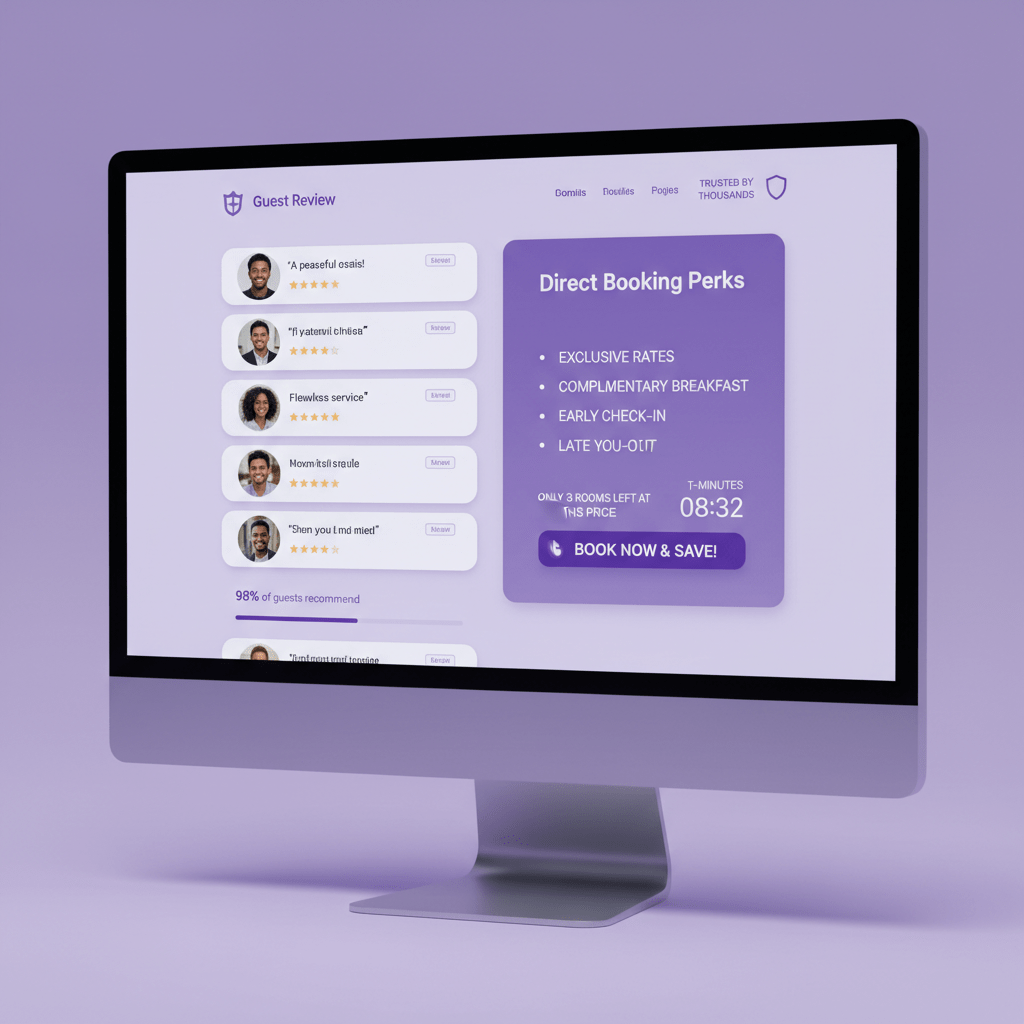
Here’s the thing. Guests trust other guests. A lot. One 2023 review study found 82% of people trust online ratings and reviews as much as, or more than, personal recommendations from family and friends. That means your hotel reviews are not just nice to have. They help sell the room. So if you want to increase direct bookings for hotel stays, put your best reviews where people can see them fast.
Show real reviews on your site
A live review feed from Google, TripAdvisor, or a review tool can do a lot of heavy lifting. It tells visitors, “Other people stayed here and had a good time.” Simple. Clear. Helpful.
Try placing recent reviews near:
- the room gallery
- the booking button
- the pricing area
- the homepage hero section
And keep it fresh. Old praise feels dusty. Recent praise feels real. If a guest sees five new 5-star notes from the last month, that’s more convincing than a pile of ancient compliments from 2021.
Give them a reason to book direct
But trust alone doesn’t close the loop. You also need a good reason to choose your site over an OTA. That’s where book direct perks help.
These don’t need to be wild discounts. In fact, small perks often work better because they feel personal:
| Direct-Booking Perk | Why Guests Like It |
|---|---|
| Free breakfast | Feels like a win on day one |
| Complimentary drink | Easy, friendly bonus |
| Late check-out | Less rush on departure day |
| Room upgrade priority | Makes the stay feel special |
| Free parking | Saves money right away |
A perk like this can tip the scale, especially if the guest is comparing your hotel with three other tabs open on a phone at 10:30 p.m. We’ve all been there. Tired eyes. Too many choices.
Use urgency the honest way
Now, urgency can help too. But it has to be real. No fake countdown timers. No made-up “people looking at this room” messages. Guests can smell that stuff fast.
Use live messages tied to your inventory, like:
- Only 2 rooms left for these dates
- 5 guests booked this room in the last 24 hours
- Last chance for the free breakfast offer
These lines work best when they’re true and tied to your booking engine. Honest urgency feels helpful. Fake urgency feels spammy. Big difference.
And if you’re using a system like Ease My Hotel, you can keep room counts, guest messages, and booking updates in one place, which makes it easier to show accurate info across your site.
Why this matters so much
Direct bookings don’t just save commission. They also build a stronger connection from the start. Guests book with you, not just a room. That small shift can help with loyalty later.
So yes, reviews matter. Perks matter. Honest urgency matters. Put them together, and your site starts feeling like a place people can trust, not just a place they can click away from.
What to fix first this week
If you’re short on time, start here:
- Add recent guest reviews to your homepage.
- Pick one direct-only perk.
- Show live room availability by date.
- Make sure your urgency messages are real.
- Check that your booking path still feels easy on mobile.
Small steps. Real impact. That’s usually how direct booking growth starts.
Section 5: Beyond the Booking – Fostering Loyalty for Commission-Free Repeat Business
Ever notice how the best guests are often the ones who already know your name? They check in faster. They smile faster. And they’re way more likely to book direct next time, which is the part most hotels want more of.
The good news is, loyalty doesn’t need to be fancy. It just needs to feel human.
Start with a simple email flow
The first email should go out right after booking. Short. Warm. Clear. No giant block of text nobody wants to read on a phone at 11 p.m. Say thanks, confirm the stay, and give them one useful next step.
Then send a pre-arrival email a few days before check-in. This is your chance to make the stay feel real before they even walk in. Add a few local tips, like a nearby taco spot, the best coffee around the corner, or a rainy-day museum option. Plus, you can offer little extras that guests actually use, like spa time, dinner reservations, or late check-out.
A simple flow might look like this:
| Timing | What to Include | |
|---|---|---|
| Confirmation | Right away | Thanks, booking details, contact info |
| Pre-arrival | 3 to 5 days before | Local tips, upsells, arrival help |
| Post-stay | 1 day after | Thank-you note, review request, return offer |
And yes, that last email matters. A lot. It keeps the door open for the next stay.
Give guests a reason to come back direct
If you want repeat direct bookings, make the next choice easy. A tiny loyalty program can do that.
You do not need a giant points system with confusing rules. Honestly, that might be too much. A simple “stay 5 nights, get 1 free” setup can work really well for smaller hotels. So can a points-based plan if you already have the tech for it.
A few easy ideas:
- Stay 5 nights, get 1 free
- Book direct 3 times, get a room upgrade
- Return guests get free parking
- Guests who book direct get early access to offers
That kind of reward feels personal. And it nudges people away from OTAs next time.
Reach past guests with the right message
Here’s the part a lot of hotels miss. Not every past guest needs the same email.
Segment your list. If someone stayed last month, send them a thank-you and a referral perk. If someone hasn’t come back in over a year, send a “we miss you” offer with a small bonus for booking direct. If a guest always books family trips, don’t send them a business travel deal. That’s just noise.
This is where a tool like Ease My Hotel can help, since it keeps booking details, guest communication, and updates in one place. When your guest data lives in one dashboard, it’s easier to send the right note to the right person without digging through three different systems.
And that’s really the whole point. Direct bookings aren’t just about saving commission today. They’re about making the next stay feel easier, warmer, and a little more personal. That’s how commission-free repeat business starts.
Conclusion: Taking Control of Your Revenue Funnel
If you’ve made it this far, you already know the main thing. Direct bookings don’t happen by luck. They happen because your site works, your search presence gets found, your booking flow feels easy, and your guests have a reason to come back.
That’s the whole game. A strong hotel website helps you keep control. Smart hotel SEO tips help guests find you. Good hotel booking engine optimization helps them finish. And loyal guest follow-up helps you keep the relationship going after checkout.
So yes, how to get more direct hotel bookings is really a series of small moves, not one giant fix. But those small moves add up fast. And they do more than trim OTA fees. They help you reduce OTA reliance and build steadier, more profitable commission-free hotel bookings.
Here’s a quick checklist you can start this week:
- Check your site on a phone and fix the worst mobile issues.
- Add one direct-only perk, like breakfast or late check-out.
- Update your Google Business Profile with fresh photos and correct details.
- Put recent reviews near your booking button.
- Send one follow-up email to past guests with a simple return offer.
That’s a good start. Not flashy. Just real.
And if you want one place to keep bookings, guest messages, and channel updates in order, Ease My Hotel can help pull the moving parts together so your team spends less time chasing details and more time getting guests booked.
The path to increasing direct hotel bookings is not a one-day project. But it is one of the best ways to protect profit, improve control, and make every stay feel more like yours.
Try Ease My Hotel for free.
No lock-in contracts. Cancel anytime