
Breaking Free from OTAs: Why Email is the Core of Modern Digital Marketing for Hotels
Ever notice how a hotel can fill up fast, yet still feel like it’s giving away too much money? That’s the OTA trap. The room sells, sure. But a chunky slice of the payout goes to someone else first.
For many hotels, that’s the big headache. Online travel agencies help bring in bookings, but they also take a cut that can land around 10% to 25% for Booking.com, with many hotels seeing about 15% on average, plus more for some partner programs Booking.com fee details. That’s money you could keep.
Email changes the picture. It gives hotels a direct line to guests, without paying a toll every time someone clicks “book.” And that makes email a core part of digital marketing for hotels, not just a side task you send on slow Tuesdays.
Here’s the deal: direct bookings usually cost less to land than OTA bookings, and they often bring more profit too. So if you’re trying to increase hotel direct bookings, email marketing is one of the smartest places to start. Not flashy. Just solid.
In this guide, we’ll look at how hotel email marketing strategies can help you build your own guest list, send better pre-arrival emails and post-stay email campaigns, and set up automated email sequences for hotels that keep working while your team sleeps. We’ll also cover hotel marketing automation, consent basics, and how to track ROI without turning your life into spreadsheet soup.
1. Building Your Most Valuable Asset: The Guest Email List

You know that moment at check-in when a guest is smiling, bags in hand, and already half in vacation mode? That’s the perfect time to ask for an email. Not in a pushy way. Just a quick, friendly opt-in while the stay feels fresh.
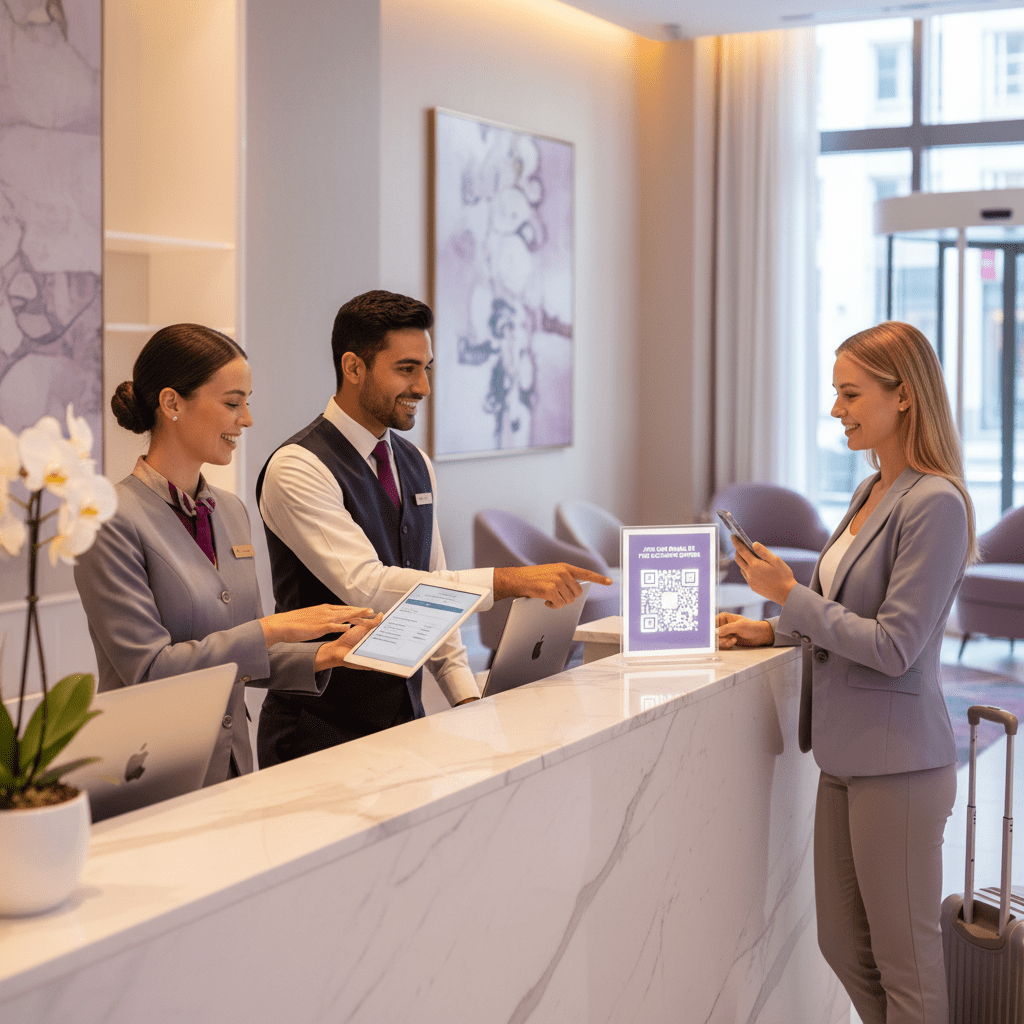
Front desk teams can make this easy. Train staff to say something simple like, “Want our local tips and special offers by email?” That one line can do a lot. And if your hotel has Wi-Fi, QR codes in rooms work well too. Guests scan, enter an email, and get access. Clean and simple.
On the website side, keep sign-up forms useful. People will share an email if they get something real back. Exclusive room offers, early sale alerts, or a free “Local’s Guide to [City]” can work well. I’ve seen hotels do this without making the site feel spammy. No giant pop-up jumping in their face every 4 seconds. Just a gentle exit-intent offer that shows up as they leave.
Here’s a quick look at the best guest email list ideas:
| Method | Where it works | Why guests say yes |
|---|---|---|
| Check-in opt-in | Front desk | They already trust you |
| Room QR code | In-room Wi-Fi | Fast and low effort |
| Website form | Homepage or offers page | They want deals |
| Exit pop-up | Leaving the site | A lead magnet feels like a bonus |
But there’s one part you can’t skip: consent. GDPR asks for clear, active opt-in, and CCPA wants clear disclosure about how you use data. So your booking engine should have a plain marketing checkbox that people can tick on purpose, not a hidden one. No sneaky stuff. If you serve international guests, this matters even more.
Hotels that build lists the right way usually get better hotel email marketing strategies later, because the guests actually want to hear from them. And that means stronger guest communication strategies, better pre-arrival emails, and more chances to increase hotel direct bookings without paying OTA fees every time.
If your current setup feels messy, a cloud system like Ease My Hotel can help bring booking management and guest communication into one place. That makes it a lot easier to collect emails at the right moments and keep everything organized.
And honestly? That’s the whole point. Build the list now. The rest gets easier from there.
2. Mapping the Guest Journey: Core Hotel Email Marketing Campaigns
Ever book a hotel and then get one email that feels helpful, and another that feels like a pushy sales pitch from 2009? Yeah. Guests notice that stuff fast.
The better way is to map the guest journey in three acts: pre-stay, in-stay, and post-stay. Simple idea. Big payoff.

Pre-stay: build the buzz
This is where pre-arrival emails do the heavy lifting. A warm welcome note, check-in details, parking info, or a nudge about spa bookings can make the trip feel smoother before the guest even arrives. Plus, this is a great spot for small upsells like late checkout, dinner reservations, or room upgrades. Not in a cheesy way. Just useful.
In-stay: keep it smooth
Not every hotel uses in-stay emails, but they can help if they stay short and friendly. Think Wi-Fi details, breakfast hours, or a quick note about the pool closing at 6 PM. If something goes wrong, a fast message can save the day. Actually, wait, maybe not save the whole day, but it can stop a small annoyance from becoming a bad review.
Post-stay: ask, thank, invite back
This is where post-stay email campaigns really shine. A thank-you message, a review request, and a gentle offer for a future direct booking can turn one visit into two. And that matters, because a one-point lift in hotel review scores has been linked to higher occupancy and ADR in hospitality research (online reputation and hotel revenue study).
Here’s a simple view of the flow:
| Stage | Main goal | Example email |
|---|
| Pre-stay | Build excitement and add revenue | Welcome, upgrade offer, trip tips |
| In-stay | Improve the current visit | Wi-Fi info, service update, hours reminder |
| Post-stay | Loyalty, reviews, repeat visits | Thank-you, review ask, comeback offer |
This kind of hotel customer lifecycle marketing is what turns digital marketing for hotels into something smarter than one-off blasts. It helps hotels stay useful before, during, and after the stay.
And that’s the real shift. Not just sending emails. Building guest communication strategies that keep the relationship going long after checkout.
3. The Pre-Stay Sequence: From Confirmation to a Warm Welcome
You know that little rush after booking a trip? The plans start to feel real fast. Bags get pulled out. Someone checks the weather. And suddenly, people have questions. Lots of them.
That’s why the pre-stay email series matters so much in digital marketing for hotels. It keeps guests calm, informed, and a little excited too. It also gives you a quiet chance to grow direct booking value before the stay even begins. Nice, right?
Step 1: Make the booking confirmation feel useful
A plain receipt is fine. But a better confirmation email can do more.
Think of it as the first real hello after the booking. Add a warm message from the manager, a link to your “Plan Your Visit” page, and quick notes about breakfast hours, parking, or the spa. If you have a local guide with restaurants, beach spots, or family activities, this is a great place to share it.
Here’s the thing. Guests often ignore boring emails. But they usually open ones that help them get ready.
A good confirmation email can include:
- A thank-you note from the hotel
- Check-in and check-out basics
- Amenity highlights like pool, gym, or free breakfast
- A link to your local guide or trip planner
- A small line like, “Reply if you need anything before arrival”
And yes, this is also a clean place to build trust. People feel better when the next steps are clear.
Step 2: Send an upsell email about 7 days out
A week before arrival is a sweet spot. The trip is close enough to feel real, but there’s still time to add extras.
This is where pre-arrival emails can help with room upgrades, spa packages, airport pickup, dinner reservations, or late checkout. Keep it light. Not salesy. More like, “Want to make your stay easier?” than “BUY NOW OR ELSE.”
I’ve seen hotels pair these offers with simple useful stuff, like a local weather forecast or packing tips. That works because it feels helpful, not pushy. If it’s cold in Chicago, say so. If the beach town gets windy after 4 pm, mention that too.
For example, a family hotel might offer:
| Offer | Why it works |
|---|---|
| Room upgrade | Guests like more space and a better view |
| Spa package | Helps guests relax before arrival |
| Dinner reservation | Saves them from last-minute stress |
| Late checkout | Feels like a small luxury |
And because hotel email marketing strategies work best when they feel personal, try matching the offer to the guest type. A couple on a weekend trip does not want the same message as a business traveler.
Step 3: Send the final details email 24 to 48 hours before arrival
This one is all about making check-in easy. Really easy.
Guests are often on the move by now, and that means fewer questions, less patience, and more chances for small mix-ups. So send the final details email with check-in time, directions, parking notes, and mobile check-in options if you have them. Also answer the questions people ask all the time. Where do I park? Can I arrive early? Is there late-night front desk help? Simple stuff. Huge relief.
This is where hotel marketing automation saves time for your team. A well-timed automated email sequence for hotels can handle the basics before the guest ever reaches the desk. And that means fewer repeated calls, less front desk friction, and a smoother first impression.
A strong final email usually includes:
- Check-in and check-out times
- Map or directions link
- Parking instructions
- Mobile check-in link, if available
- Wi-Fi details or where to find them
- A contact number for late arrivals
And if your hotel uses a cloud system like Ease My Hotel, this kind of guest communication can be much easier to manage from one place. Booking updates, guest messages, and timing all stay in the same flow. Less chaos. More calm.
That matters because the average cost of a direct booking is often much lower than an OTA booking. Industry sources put direct customer acquisition cost around 4% to 14% of revenue, while OTA commission can land in the 15% to 30% range, with Booking.com often cited around 10% to 25% and a 15% average as noted in Booking.com fee breakdowns. So every guest you guide toward a smooth direct stay can help protect margin.
The best pre-stay emails don’t feel like marketing. They feel like service. And that’s the trick.
Useful, timely, human. That’s what guests remember.
4. The Post-Stay Campaign: Securing Loyalty and Future Bookings
The guest is gone… but the story isn’t over.
That’s the funny part about hotel email marketing. A lot of hotels spend all their energy before check-in, then go quiet after checkout. But the stay is still fresh in the guest’s mind, and that’s a sweet spot for digital marketing for hotels. If you wait too long, the moment slips away. Fast.
1) Send a thank-you email within 24 hours
This one should feel warm, not stiff. A short note with the guest’s name, room type, or stay dates makes it feel human. Something like, “Thanks for staying with us, Maya. We hope the lake view and breakfast hit the spot.” Simple. Kind. Real.
Then add one clear next step: leave a review.
Don’t bury the link. Don’t make people hunt for it. Just give them one easy button for Google or TripAdvisor and ask while the stay is still in their head. That matters because a one-point bump in hotel review scores can raise occupancy and average daily rate, and guests trust reviews a lot. One study found that a one-point gain in review rating makes people 13.5% more likely to book (online reputation and hotel revenue study). Wild, right?
A good thank-you email usually includes:
- A short personal thank-you
- A direct review link
- A small reminder of what they enjoyed
- A soft invite to come back
And yes, this is a great place to keep your hotel customer lifecycle marketing moving. The guest just had a good experience. Don’t let that good feeling disappear into the inbox void.
2) Send a win-back email in 30 to 60 days
Now we’re playing the long game.
This email should not scream, “Please book now!!!” That’s the fastest way to get ignored. Instead, send something helpful and a little interesting. A blog post about new local attractions. A chef recipe from the hotel restaurant. A guide to the best spring events in town. Stuff like that.
It keeps your brand in the guest’s mind without acting thirsty. And that’s the trick with post-stay email campaigns. They work best when they feel like a friendly check-in, not a sales nudge.
Here’s a simple setup:
| Email Type | Timing | What to Send |
|---|---|---|
| Thank-you + review | 24 hours after checkout | Personal note and review link |
| Win-back nurture | 30 to 60 days later | Local tips, hotel story, chef recipe |
| Re-booking offer | 90 days or stay anniversary | Personal offer for another direct booking |
If you’ve got a cloud system like Ease My Hotel in place, this kind of guest communication gets a lot easier to manage. You can keep booking data, guest notes, and follow-up timing in one spot. Less hunting. More sending.
3) Use the stay anniversary or 90-day offer
This is where things get personal in a good way.
A guest who stayed for their birthday weekend or family trip will usually remember the place if you remind them at the right time. So send a segmented offer tied to their last visit. Mention the room type, the season, or even the reason for the trip if you know it. That little detail can make the email feel special instead of generic.
Something like:
“It’s been 90 days since your last stay with us. Want to come back for another weekend in the city? Here’s 15% off direct booking for returning guests.”
That’s way better than a random blast to everyone.
And this is where automated email sequences for hotels really shine. One good trigger can bring a guest back without extra desk work or awkward phone calls. Plus, direct repeat bookings usually cost less than OTA bookings, so even one return stay can protect margin better than a room sold through a third-party site.
A strong re-booking offer might include:
- A guest-specific discount code
- A direct booking link
- A small perk like late checkout
- A note that references the last stay
Actually, wait, there’s one more thing. Timing matters. A beach resort might do well with a 90-day offer before summer, while a city hotel might get better results around local event season. Same idea. Different rhythm.
A simple post-stay flow that works
| Stage | Goal | Best Message |
|---|---|---|
| 24 hours post-checkout | Reviews and gratitude | Thank-you email |
| 30 to 60 days later | Keep the brand warm | Local story or useful content |
| 90 days or anniversary | Bring them back | Exclusive repeat-stay offer |
The best hotel email marketing strategies don’t stop at booking. They keep going after the bed is made and the towels are folded. That’s where loyalty grows.
And honestly, if your team is still doing this by hand, it might be time for a better setup. A platform like Ease My Hotel can help centralize guest communication, booking data, and follow-up emails so your staff spends less time patching things together. More order. Less chaos.
That’s the real win. One stay can turn into two. Then three. And that’s where the smarter side of digital marketing for hotels starts to pay off.
Try Ease My Hotel for free.
No lock-in contracts. Cancel anytime
5. Advanced Hotel Marketing Automation: Segmentation & Personalization

You know that odd moment when an email feels like it was written just for you? Not creepy. Just useful. That’s the bar now.
Basic blasts can still work, sure. But if you want stronger digital marketing for hotels, segmentation is where things start to get interesting. Instead of sending the same message to every guest, split your list into groups that make sense. Business travelers. Families. Couples. Guests who booked direct. Guests who came through an OTA. Guests who stayed once and vanished. Yep, even the quiet ones.
Start with the groups that matter
A business traveler usually wants speed, parking, and a clean invoice. A family wants space, breakfast, and maybe a pool that isn’t packed by 8 a.m. A couple? Probably looking for late checkout, a spa package, or a room with a view.
That kind of split helps your hotel email marketing strategies feel less random. And it can help increase hotel direct bookings too, since people are more likely to click when the offer actually fits their trip.
A simple segment table can help you sort it out:
| Segment | What they care about | Email angle |
|---|---|---|
| Business traveler | Fast check-in, Wi-Fi, invoices | Early check-in, parking, quiet rooms |
| Family | Space, meals, fun | Suite upgrades, breakfast, pool time |
| Couple | Comfort, extras, privacy | Spa weekend, dinner, late checkout |
| Direct booker | Loyalty, perks | Return offer, VIP note |
| OTA guest | Trust, value | Direct booking incentive next time |
And then there’s RFM. That stands for recency, frequency, and monetary value. Fancy name, simple idea. Who stayed recently? Who comes back a lot? Who spends more? Those guests usually deserve different messages, because they act differently.
Use behavior, not guesswork
This part is pretty cool. You can set up automated email sequences for hotels based on what people do on your site.
If someone starts a booking and quits halfway, send a booking abandonment email. If they look at your spa weekend page but never finish, send a note with spa photos or a small perk. If they open your winter package twice, that’s a clue too. Not magic. Just patterns.
Here’s a quick list of triggers that tend to work:
- Booking abandonment on your website
- Browse abandonment after package views
- Welcome email after first direct booking
- Re-activation for guests who have gone quiet
- Follow-up after a special offer click
These guest communication strategies can feel small, but they add up fast. And because email ROI in travel and hospitality can land around the same strong range seen across email marketing overall, it’s worth paying attention to the details. One recent hospitality benchmark also showed that segmented sends can drive much better booking results than plain mass emails, which matches what many hotels are already seeing in practice (hospitality email benchmark data).
Test one thing at a time
I know, testing sounds boring. But it works.
A/B testing helps you learn what actually gets a guest to click. Try two subject lines. Or two images. Or one offer versus another. Just don’t change everything at once, or you won’t know what helped.
You can test things like:
- Subject lines
- Photos of rooms or amenities
- Offer type, like 10% off versus late checkout
- Call-to-action buttons
- Send time
For example, a spa package email might test “Your weekend escape is waiting” against “Spa perks for your next stay.” One of those will usually win. Probably not by a mile. But enough to matter.
And if you’re tracking the results, don’t stop at opens. Look at clicks, bookings, and revenue. That’s the real score.
If your team wants to keep all this in one place, a cloud platform like Ease My Hotel can help centralize booking data, guest communication, and automation across your property. That makes segmentation easier, because the system already knows who booked, when they stayed, and what they did next.
The best hotel marketing automation doesn’t feel automated at all. It feels like someone remembered the guest. And honestly, that’s what makes it work.
6. Measuring Success: The KPIs That Truly Matter for Your Hotel Campaigns
Ever send an email and feel weirdly proud because the open rate looks nice… but bookings didn’t move? Yep. That shiny number can fool you.
For digital marketing for hotels, the real question is simple: did the email make money? If not, the open rate is just a pat on the head. Nice, but not the point.
Start with the money metrics
The first numbers to watch are conversion rate, email-attributed revenue, and average order value. These tell you if hotel email marketing strategies are actually helping the business or just filling a report.
A few examples:
| KPI | What it tells you | Why it matters |
|---|---|---|
| Conversion rate | How many email clicks become bookings | Shows whether the campaign is effectively driving room bookings |
| Email-attributed revenue | Total revenue generated from the email campaign | Helps measure the direct financial return of the campaign |
| Average order value | Average amount spent per booking | Indicates upsell performance and guest spending behavior |
If one pre-arrival email brings in a room upgrade plus dinner, that’s more useful than 500 opens from people who never clicked. Funny how that works.
Keep an eye on list health
A strong guest list is a living thing. It needs a little care.
Track list growth rate, unsubscribe rate, and click-through rate. If your list is growing but clicks are falling, something’s off. Maybe the offers feel bland. Maybe the timing stinks. Or maybe the guests who joined never really wanted your emails in the first place.
Here’s a quick check:
- List growth rate: Are you adding new guests faster than you lose them?
- Unsubscribe rate: Are people leaving after one or two sends?
- CTR: Are guests actually clicking through to book or learn more?
Benchmarks for travel and hospitality in 2024 show average open rates around 42% to 45%, with CTR often near 2% to 2.5% (2024 hospitality email benchmarks). But I’d still say click and booking numbers matter more than any open stat. Open rates can look decent even when revenue is flat. Strange, but true.
Use UTM links so you can trace bookings
This part is pretty handy. Add UTM parameters to every email link so you can see where traffic came from in Google Analytics. Something like utm_source=email&utm_campaign=summer-spa-offer can show you which campaign brought in visitors and which one got ignored.
Then pair that with unique promo codes for each campaign. That way, you can see redemptions inside your booking engine or PMS without guessing.
If your team uses a cloud system like Ease My Hotel, it can be much easier to keep guest communication, booking data, and campaign tracking in one place. Less hunting around. More clear answers.
A simple ROI check
Use this:
ROI = (Email revenue - campaign cost) / campaign cost x 100
And if you want a quick sanity check, ask this instead: did the campaign bring in more direct bookings than it cost to send?
That’s the heart of it. Not vanity. Not fluff. Just real results.
When your hotel marketing automation is measured this way, you can see which pre-arrival emails, post-stay email campaigns, and re-booking offers are actually helping. Then you can do more of what works and drop the stuff that eats time.
And honestly, that’s where email starts feeling less like a task and more like a profit tool. Which, let’s be real, is the whole point.
7. Start Building Your Direct Booking Engine Today
You know that feeling when a small fix saves you a whole afternoon? Email can do that for hotels. And more than that, it can quietly pull more guests away from OTAs and back to your own site.
That’s the big idea here. A smart email program is one of the strongest parts of digital marketing for hotels because it helps you own the guest relationship, not rent it from someone else. OTA bookings can take a 10% to 25% cut from the stay, while direct bookings often land closer to 4% to 14% in total cost. That gap adds up fast. Really fast.
Here’s a quick 3-step plan you can start this week:
- Set up a value-driven email capture form on your website. Give people a reason to join, like local tips, special rates, or a city guide. Keep it simple. No weird pop-ups that feel like a trap.
- Automate one pre-stay and one post-stay sequence. A welcome email before arrival and a thank-you after checkout can already move the needle.
- Tag every email link with UTMs. That way, you can see what clicks turned into bookings. No guessing. No spreadsheet detective work.
| Step | What to do | Why it helps |
|---|---|---|
| 1 | Build a useful sign-up form | Grows your guest list with people who want to hear from you |
| 2 | Send simple automated emails | Saves staff time and keeps guests engaged |
| 3 | Track links with UTMs | Shows which campaigns bring revenue |
And if your team wants one place to handle bookings, guest messages, and follow-up timing, a cloud tool like Ease My Hotel can help keep it all in one spot. Less chasing. More clarity.
The best part? You do not need a giant team to start. You just need a clear plan and a few emails that feel helpful.
So if you’ve been relying on OTAs alone, this is your sign to shift a little more power back to your property. Build the list. Set the flows. Track the clicks. Email is not just another channel. It is a direct line to better margins, stronger guest communication strategies, and a booking engine you actually own.
Try Ease My Hotel for free.
No lock-in contracts. Cancel anytime