
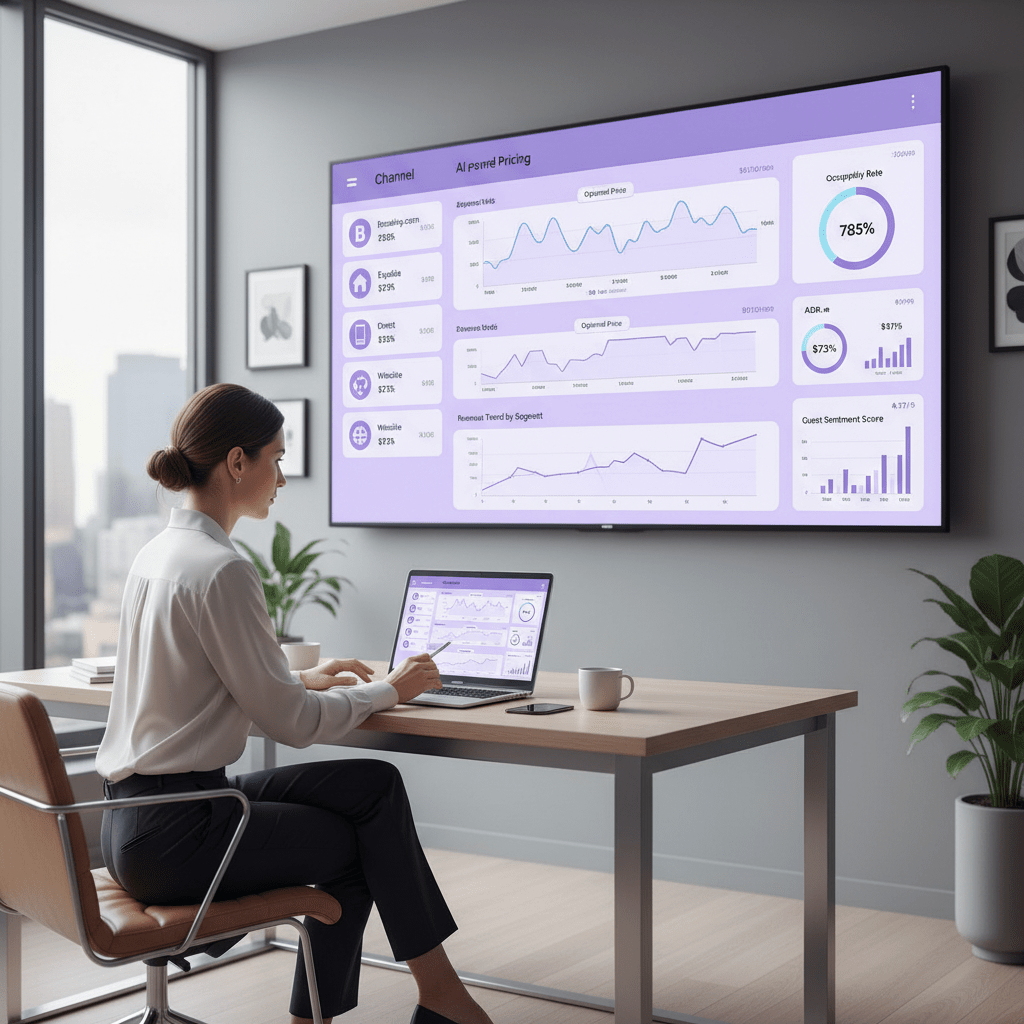
Introduction: Why Your 2024 Channel Strategy Is Already Outdated for 2026
You know that feeling when your phone updates, and suddenly half your apps look weird? Hotel distribution is kind of like that right now. Except the stakes are a lot bigger.
By the end of 2026, online travel bookings are projected to reach $1.2 trillion, up from $1.0 trillion in 2024, and nearly 65% of all global travel gross bookings will happen online [Phocuswright report on 2026 online bookings]. That means the way guests find, compare, and book rooms is changing fast. And if you’re still running your listings the same way you did in 2024, you’re probably leaving money on the table.
The tricky part? Hoteliers have to manage more channels, more data, and more guest behavior shifts without making the day harder. We’re talking OTAs, direct bookings, Google Travel, AI search, and new booking paths that pop up almost overnight. Messy. Real messy.
So here’s the good news. This article breaks down the biggest hotel distribution trends for 2026 and shows you how to optimize listings in hotel channel managers so you can keep up, stay visible, and make smarter revenue moves. We’ll keep it practical. No fluff. Just what actually helps.

The Evolving Hotel Distribution Landscape: A 2026 Forecast
A few years ago, picking hotel channels felt a bit like setting a schedule and leaving it alone. OTAs here. Direct bookings there. Done.
Not anymore.
By 2026, the booking flow is moving toward a living system, not a fixed list. Travelers hop from Google to OTAs to hotel sites to social apps, and sometimes an AI assistant does the shopping for them. Phocuswright says online gross bookings are headed to $1.2 trillion by the end of 2026, and nearly 65% of global travel gross bookings will happen online. That is a huge shift. And it changes how we think about hotel distribution.
So the old pick your top channels and stick with them playbook? It is wearing out fast.
Now we need a more active hotel channel mix. One that changes with demand, guest type, and device behavior. Three big shifts are driving that change:
| 2026 shift | What it means for hotels |
|---|---|
| Hyper-personalization with AI | Travelers expect offers that match their trip, not generic room lists |
| Channel types are blending | OTAs, metasearch, search, social, and AI tools are all crossing over |
| Attribute-based selling is growing | Guests want to book the room features they care about, like views, beds, or breakfast |
That is a lot to juggle. But it also opens doors.
AI is a big part of this. Not the sci-fi kind. Just smart tools that help hotels price better, sort demand faster, and show the right room to the right person. We are also seeing channel lines blur. A Google search can feel like a booking site. An OTA can act like a search engine. And AI tools are starting to send guests straight into booking paths without the usual clicks.
Plus, travelers want smoother trips from start to finish. They do not want to hunt through clunky listings or rebuild their search on every site. They want speed, trust, and a booking journey that feels made for them. If your listings are still written for a static internet, they will feel old pretty fast.
This is where channel manager best practices start to matter more than ever. The hotels that win in 2026 will keep improving hotel online visibility, watch hotel channel management trends closely, and adjust fast. Not once a quarter. More like all the time.
And honestly? That is where a good platform like Ease My Hotel can help, since it keeps booking, guest communication, and channel control in one place. Less switching. Fewer missed updates. A lot less chaos.
Your Command Center: The Role of the Channel Manager in 2026
Think of your channel manager like the front desk brain behind the scenes. Not just a rate pusher. Not just a place to flip inventory on and off. In 2026, it’s the spot where your whole distribution picture comes together.
That matters more now, because booking behavior is moving fast. Phocuswright projects online gross bookings to hit $1.2 trillion by the end of 2026, and nearly 65% of global travel gross bookings will happen online. So if your channel manager is still acting like a simple update tool, it’s already behind.
A future-ready channel manager should connect the dots between your PMS, CRM, and BI tools. That way, you’re not guessing. You’re looking at one clean view of rates, demand, guest behavior, and channel profit. One source of truth. Nice, right?
Here’s what to look for:
| Feature to look for | Why it matters in 2026 |
|---|---|
| AI-driven recommendations | Helps spot rate shifts and booking patterns faster |
| Advanced analytics | Shows which channels bring real profit, not just volume |
| Strong API connectivity | Keeps PMS, CRM, and other tools in sync |
| Real-time two-way updates | Helps prevent overbooking and stale rates |
| Smart automation rules | Lets you react fast to demand changes |
And yes, AI is showing up everywhere here. Next-generation channel managers are starting to suggest rate moves, flag weak-performing channels, and even support smarter guest messaging. Some teams are already seeing big lifts from that kind of setup, like better ADR and fewer manual mistakes.
Actually, wait, the best part might be this: a good system doesn’t just save time. It helps you make cleaner calls. You can spot which OTA is worth it, which direct channel needs a push, and where your hotel listing optimization on OTAs needs work. That’s how you start improving hotel online visibility without drowning in tabs and spreadsheets.
So if you’re comparing tools, ask one simple question. Does this channel manager just move rates, or does it help me run the whole hotel distribution strategy? That answer tells you a lot.
For hotels using Ease My Hotel, this is where the unified dashboard really helps. Booking management, OTA control, guest communication, and reporting all sit in one place, which makes it easier to react fast and keep the hotel channel mix in shape.
Trend 1: Mastering AI-Driven Dynamic Pricing and Personalization
You know that moment when a guest lands on your site, looks around for 12 seconds, and disappears? That tiny exit can cost real money. And by 2026, that kind of leak will hurt even more.
AI in hotel revenue management is moving past simple rate checks. It’s no longer just, “What is the competitor charging?” It’s starting to ask, “What will people book next Tuesday after that concert downtown, and which room type will they want?” That shift matters for anyone trying to figure out how to optimize listings in hotel channel managers 2026.
Here’s the deal. Predictive pricing looks at more than rivals. It can use demand forecasts, local events, weather, booking pace, stay length, and guest history to set smarter rates. Some hotels are already seeing solid lifts from AI pricing tools, with RevPAR gains reported from 5% to 35% in different cases. That’s not small change. That’s payroll money.
So what should you do with your channel manager? Start with these steps:
- Set rules for event spikes, like conferences, holidays, and sports weekends
- Build offers for guest groups, like families, business travelers, or long-stay guests
- Use package deals, such as breakfast, parking, or late checkout
- Test rate changes by channel, not just across all channels at once
But wait, there’s more. Personalization is not only about price. It’s also about what people see.
If your channel manager supports content APIs, you can update listing descriptions, photos, and promos based on search behavior or guest profile. For example, a couple searching for a weekend escape might see spa photos and quiet-room copy. A business traveler might get Wi-Fi, desk space, and breakfast front and center. That kind of hotel listing optimization on OTAs can help improve hotel online visibility fast.
A quick table helps make this real:
| Guest type | What to show | What to offer |
|---|---|---|
| Families | Larger rooms, pool, breakfast photos | Family package, kids stay deal |
| Business travelers | Desk, fast Wi-Fi, express check-in | Early check-in, work-friendly bundle |
| Couples | View photos, quiet rooms, spa shots | Romance package, late checkout |
| Long-stay guests | Kitchenette, laundry, room layout | Weekly rate, parking discount |
This is where next-generation channel managers can really help. Not by doing the thinking for you. By making fast updates possible without ten logins and a headache. That’s also where a platform like Ease My Hotel fits in nicely, since it keeps booking control, guest communication, and channel updates in one place.
And honestly? If your listings still feel generic in 2026, they may get skipped by both people and AI tools. Weird, right? But that’s the game now.
Trend 2: Optimizing for the Convergence of Metasearch, OTAs, and Direct Channels
You know that moment when a guest searches on Google, checks TripAdvisor, peeks at Instagram, and then books somewhere else entirely? Yep. That’s the mess now. And it’s getting messier in a very normal, very annoying way.
By 2026, hotel channels won’t feel like neat little boxes anymore. Google Travel, OTA listings, and direct booking pages are blending together, so travelers can move from search to booking without even thinking about it. In fact, online gross bookings are projected to reach $1.2 trillion by the end of 2026, with nearly 65% of global travel bookings happening online [Phocuswright report on 2026 online bookings]. That’s a big shift, and it changes how we look at the best hotel distribution channels.
So what does that mean for your hotel channel mix? Simple. Balance matters more than ever. If one channel eats too much profit, it can look busy on paper and still hurt your bottom line. That’s why channel manager analytics should track more than bookings. Look at commission, ad spend, promo costs, and cancellation rates too.
| Channel | What to check | Why it matters |
|---|---|---|
| OTAs | Commission, cancellation rate, booking volume | High volume can hide thin profit |
| Google Travel | Click cost, conversion, parity gaps | Great for direct demand if managed well |
| Direct site | Traffic source, booking value, repeat stays | Usually the strongest long-term return |
| Social media | Assisted bookings, audience age, click-throughs | Helps younger travelers find you |
Now here’s the deal. If you want to compete on metasearch, your direct booking rate has to show up cleanly and stay competitive. That means near-real-time rate sync, strong room photos, and clear perks like breakfast, flexible cancel rules, or late checkout. Also, keep your Google Business Profile sharp. A lot of travelers click there first, and then they compare straight from that page. No drama. Just speed.
Actually, wait, there’s a better way to say it: don’t just chase traffic. Chase profit. A good channel manager can help you spot which paths bring the right guests, not just more clicks. That’s where platforms like Ease My Hotel help, since booking management, OTA control, and reporting sit in one dashboard. Less guesswork. Less tab chaos.
And one more thing. Social media is creeping into booking too, especially for younger travelers. Instagram and TikTok may not drive most hotel reservations yet, but they do shape what people trust. So if your listings are clear across every channel, you’re already ahead of a lot of properties that still treat each site like a separate island. Weird, right?
The hotels that win in 2026 won’t just be everywhere. They’ll be consistent, quick to update, and smart about where profit really comes from.

Try Ease My Hotel for free.
No lock-in contracts. Cancel anytime
Trend 3: Capturing the Long-Tail with Niche and Specialized Channels
Ever notice how one guest wants a rooftop pool, while another just wants a quiet desk and fast Wi-Fi? That tiny split is where a lot of hotels miss out.
By 2026, the smartest hotel distribution plans won’t just chase the big OTAs. They’ll also tap into long-tail distribution. That means smaller, highly focused booking channels for wellness travelers, eco guests, digital nomads, surf lovers, and even people hunting for yoga retreats on a Tuesday night.
Funny enough, these smaller channels can feel less flashy than the big names. But they often match guests better. And better match usually means better bookings.
Here’s the deal. If your hotel is near a hiking trail, a meditation studio, or a coworking district, you do not need to shout to everyone. You just need the right people to find you. That’s where a niche OTA or specialty travel site can work hard for you.
| Niche channel type | Best fit for | What to highlight |
|---|---|---|
| Wellness sites | Resorts, spas, retreats | Yoga space, spa menus, quiet rooms |
| Eco-travel sites | Lodges, homestays, green hotels | Refill stations, local food, low-waste practices |
| Digital nomad sites | City hotels, aparthotels, long-stay stays | Fast Wi-Fi, desk space, laundry, kitchenettes |
| Adventure travel sites | Mountain stays, coastal stays, rural properties | Gear storage, early breakfast, shuttle options |
The cool part is that modern next-generation channel managers make this test a lot less risky. You can use the connectivity library to spot new channels, connect them faster, and test them without blowing up your whole setup. No giant gamble. Just a small, smart trial.
Actually, wait, this is where a lot of hotel channel management trends get practical. If a niche channel starts sending the right guests, you can grow it. If it does not, you pull back and move on. Easy enough.
When you build these listings, don’t write them like a generic hotel ad. Be specific. Say you’ve got a yoga studio, a quiet garden, or a work-ready room with strong Wi-Fi. For a digital nomad site, that fast connection might matter more than a fancy lobby photo. For a wellness listing, the calm vibe matters more than the bar menu.
And that’s really the point. Long-tail channels can help improve hotel online visibility without fighting the same noisy crowd over and over. They also fit nicely into a smarter hotel channel mix, especially if you’re trying to increase direct bookings strategy 2026 alongside OTA traffic.
If you’re using a platform like Ease My Hotel, this gets even easier because booking control, OTA updates, and channel tracking sit in one place. So you can test niche channels, watch the numbers, and keep your day from turning into spreadsheet soup.
One more thing. Niche guests are often looking for a match, not just a bed. Give them that match, and they tend to stick around longer.

Your Action Plan: How to Optimize Listings in Hotel Channel Managers for 2026
You know that little panic when bookings slow down and you are not sure why? Yeah, that feeling. It usually means the problem is not one thing. It is a mix of channel mix, weak listings, and rules that have not been touched in months.
So let us fix that.
Step 1: Run a full channel audit
Start with your channel manager data. Look at each channel one by one. Not just bookings. Check commission, cancellation rate, average stay, ADR, and how much work each channel creates for your team. If one OTA brings volume but eats profit, that is not a win. That is noise.
Use a simple scorecard like this:
| Channel | Bookings | Cost to sell | Guest match | Keep, fix, or cut |
|---|---|---|---|---|
| OTA 1 | High | High | Medium | Fix |
| Direct site | Medium | Low | High | Grow |
| Google Travel | Medium | Low | High | Grow |
| Niche OTA | Low | Low | Very high | Test |
The goal is to optimize hotel channel mix, not just fill rooms. If the data says a channel does not fit your target guest, pull back.
Step 2: Refresh every listing like a real guest will see it
Now look at the content itself. A lot of hotel listing optimization on OTAs still feels like it was written in 2018. That will not hold up in 2026.
Use clear room names, like King Bed with Balcony and Ocean View. Use strong photos with bright light and no clutter. Add short videos or 360 tours when the channel allows it. List real perks like breakfast, parking, or late checkout. Include honest policy notes so nobody feels tricked later.
And please, do not hide the good stuff. If you have got a rooftop pool, spa, or work desk, say it out loud. Put it near the top. People skim fast.
For channels like Expedia and Booking.com, content quality really matters. Better photos, better descriptions, and complete amenity info can help with improving hotel online visibility and search placement.
Step 3: Set smart automation rules
This is where next-generation channel managers start earning their keep. Set rules for rates, availability, and restrictions so you are not doing everything by hand late at night.
Try rules like these. Raise rates when demand spikes from events or holidays. Add stop-sells on weak channels during peak dates. Open low-cost channels only when occupancy drops. Tighten minimum stays on busy weekends. Push direct booking perks when OTA costs get too high.
This is also where AI in hotel revenue management can help. It can spot booking pace changes, local events, weather shifts, and competitor moves much faster than a spreadsheet ever will.
Step 4: Match the listing to the guest
A family does not want the same message as a business traveler. And a long-stay guest is looking for something else again. So use your channel manager to keep your content and offers lined up with the guest type.
| Guest type | Best content angle | Best offer |
|---|---|---|
| Families | Pool, space, breakfast | Family package |
| Business travelers | Wi-Fi, desk, fast check-in | Early check-in |
| Couples | Quiet rooms, views, spa | Romance deal |
| Long-stay guests | Kitchenette, laundry, work space | Weekly rate |
That kind of setup supports the future of hotel distribution without making your team crazy.
Step 5: Review and tweak every week
Do not set this once and walk away. Check the numbers weekly. See which channels are bringing the right bookings. See which images get more clicks. See where guests drop off.
That is the real answer to how to optimize listings in hotel channel managers 2026. Not one big fix. A bunch of small ones, done often.
If you want one place to keep booking management, OTA control, guest communication, and reporting together, a platform like Ease My Hotel can make that work a lot smoother. Less jumping around. Fewer missed updates. A cleaner day.
And honestly, that is what most hotels need right now. Not more chaos. Better control.
Conclusion: Build a Distribution Strategy That Adapts and Wins
If 2024 felt busy, 2026 is going to feel fast. Really fast.
We’re moving into a hotel distribution setup where AI personalization, channel convergence, and niche markets all matter at the same time. Guests are bouncing between Google, OTAs, direct sites, social apps, and now AI tools that can shop for them in seconds. Phocuswright expects online gross bookings to reach $1.2 trillion by the end of 2026, with nearly 65% of global travel bookings happening online, so this isn’t a small shift. It’s the new normal Phocuswright’s 2026 online bookings forecast.
So what wins? A smart channel manager. Not one that just pushes rates around, but one that helps you see profit, track demand, and keep your hotel channel mix in shape.
That means:
- Using AI in hotel revenue management for faster pricing moves
- Keeping hotel listing optimization on OTAs fresh and clear
- Watching hotel channel management trends instead of guessing
- Testing the best hotel distribution channels for your property type
- Building an increase direct bookings strategy 2026 that actually fits your guest mix
But wait, there’s a simpler way to think about it. If your system helps you react fast, you’re in a better spot than most.
So here’s the move: schedule a review of your current channel manager and distribution mix this week. Check what’s working, what’s stale, and where you’re losing money. Then update your listings, tighten your rules, and trim the dead weight. Small fixes. Big difference.
Try Ease My Hotel for free.
No lock-in contracts. Cancel anytime