
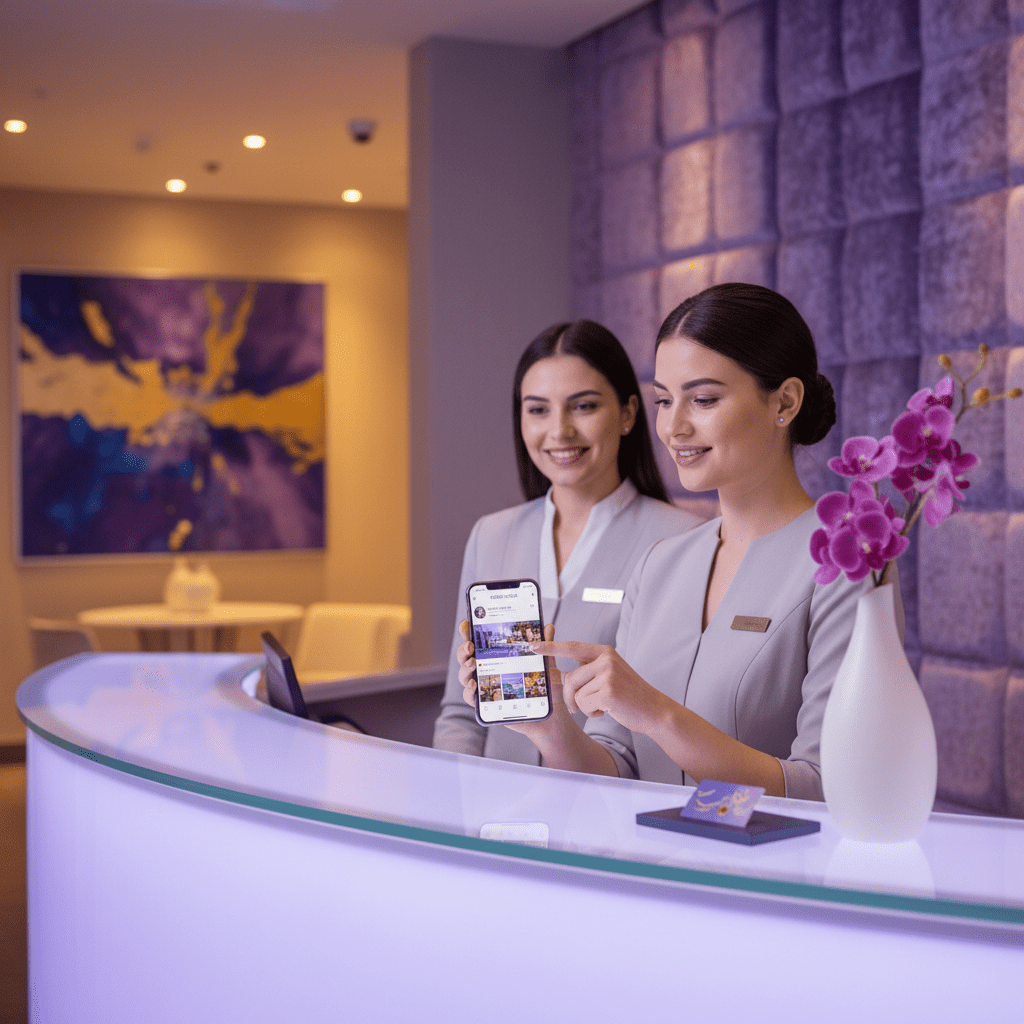
Mastering the Digital Front Desk: Why Your Hotel’s Success Hinges on Social Media
You know that moment when someone lands on your hotel page, scrolls for 8 seconds, and decides if they trust you? That’s the new front desk. And for a lot of travelers, social media is where that first yes, or no, happens.
People don’t just book a room anymore. They check the vibe. They watch short videos. They peek at guest photos. They read comments. They ask, “Does this place feel real?” That’s why digital marketing for hotels has become bigger than ads and website updates. It now has to include a smart hotel social media strategy that builds trust before a guest ever clicks “book now.”
For hotels, resorts, hostels, and homestays, social media is more than a nice extra. It helps increase hotel bookings online, shapes your brand, and gives guests a reason to choose you over the place next door. Plus, it can support guest engagement strategies that keep people talking long after checkout.
In this guide, we’ll walk through the full road map. First, how to plan your social media goals. Then, how to pick the right platforms, create content people actually want to see, and use influencer marketing for hotels without wasting budget. We’ll also look at hotel marketing trends and simple ways to track results, including measuring hotel marketing ROI.
And if you’re trying to keep daily ops clean while marketing gets more busy, a tool like Ease My Hotel can help centralize bookings, guest communication, and reporting so your team isn’t chasing tabs all day. Because nobody needs one more spreadsheet from 1997.

The New Five-Star Service: How Social Media Redefines the Guest Journey
You know that feeling when you see one beach photo and suddenly you’re pricing flights? That’s the first step of the guest journey right there. A reel of sunrise coffee, a rooftop pool, or a tiny balcony with a wild view can spark real travel desire fast. And for hotels, that dreamy first glance is where digital marketing for hotels starts to pull its weight.
This is the Discovery & Dreaming phase. People are not booking yet. They’re just picturing themselves there. That means your hotel social media strategy should lean hard into photos, short videos, room tours, and local moments. Think breakfast plates, spa clips, and the street outside your door. For social media for luxury hotels, this matters even more because guests want a feeling, not just a room.
Then comes Planning & Validation. Now people are checking if your place is real, clean, and worth the price. Social proof does a lot of the talking here. Tagged guest photos, quick replies to comments, and honest reviews can make the difference between “maybe” and “booked.” One strong comment from a past guest can do more than a polished ad. Weird, right? But that’s how people shop now.
A simple table helps map it out:
| Guest Phase | What They Want | What to Post |
|---|---|---|
| Discovery & Dreaming | A feeling and a place to picture | Reels, scenic photos, room tours |
| Planning & Validation | Proof they can trust you | Reviews, tagged posts, Q&A, FAQs |
| Experience & Advocacy | A stay worth sharing | Guest moments, story mentions, thank-you posts |
The last step is Experience & Advocacy. Once guests arrive, social media can still help. Share event updates, breakfast specials, spa hours, or a fun local tip in Stories. After checkout, ask for tagged posts and guest photos. That kind of content supports guest engagement strategies and helps increase hotel bookings online later, too.
If you’re juggling all this with front desk work, OTAs, and guest messages, a tool like Ease My Hotel can help keep bookings, guest communication, and reporting in one place. Less scrambling. More time for the stuff guests actually notice.
Platform Paralysis: How to Choose the Right Social Media Channels for Your Hotel
Ever post on three platforms, then stare at your phone thinking, “OK… now what?” Yeah. Been there. The trick is not being everywhere. The trick is being where your guests already hang out.
For digital marketing for hotels, platform choice should match your brand and your guest type. A luxury resort in Goa has a different job than a business hotel near an airport in Chicago. Same goes for a hostel, a homestay, or a big city chain. Different guests. Different scroll habits.
The big three: where most hotels start
| Platform | Best For | What Works Best |
|---|---|---|
| Visual storytelling and brand feel | Room shots, reels, stories, behind-the-scenes clips | |
| Community and paid ads | Local offers, event posts, guest reviews, targeted ads | |
| TikTok | Younger travelers and fast reach | Fun videos, quick room tours, staff moments, trends |
Instagram is usually the easiest win for hotels. It fits photos, short reels, and that polished look people expect from hospitality marketing ideas. If you run social media for luxury hotels, Instagram can help sell mood, space, and service before a guest even sees a rate.
Facebook still matters too. A lot of travelers use it for local search, group tips, and event discovery. Plus, its ad tools can be handy if you want to increase hotel bookings online with a tighter audience, like families, couples, or people traveling to your city for a concert.
TikTok is the wild card. It’s not just dance clips anymore. A smart 20-second room tour or a funny front desk moment can get more eyes than a polished ad. That makes it a strong pick for younger guests and for brands that don’t mind showing a little personality.
And then there are the side players.
Pinterest works well for travel planning boards. People pin honeymoon ideas, weekend escapes, and wedding stays there all the time. LinkedIn is better for corporate travel, MICE, and meeting planners who need a place that feels reliable and professional. If your hotel hosts conferences or business groups, LinkedIn can help bring in the right leads.
So how do you pick? Start with these three questions:
- Who is your ideal guest?
- What kind of stay do they want?
- Which platform matches your brand vibe?
If you run a quiet resort, focus on Instagram and Pinterest. If you’re a city hotel with business travelers, lean on Facebook and LinkedIn. If you’re a lively hostel or a trendy stay for Gen Z, TikTok may deserve more of your time. And if your team is small, don’t try to feed every app at once. That’s how content goes stale and nobody wants that.
I’d say this: pick two main platforms first, then do them well. Use a tool like Ease My Hotel to keep bookings, guest messages, and reports in one place, so your team spends less time switching tabs and more time making the stay feel smooth. That little shift can make your hotel social media strategy a lot easier to manage.
Creating Your Blueprint: A 5-Step ‘Hotel Social Media Strategy’
You can post pretty pictures all day and still get nowhere. Harsh? Maybe. But I’ve seen it happen. The hotels that win at digital marketing for hotels usually have a plan, not just a phone full of room shots and a hope for the best.
So let’s make one.
Step 1: Set goals that actually mean something
Likes feel nice. Comments are fun. But neither one pays for a room night by itself. That’s why your hotel social media strategy needs real goals. Think beyond vanity metrics and ask, “What do we want this to do for the business?”
A few good goals might look like this:
- Increase website referral traffic from social media by 20% in 90 days
- Get 50 qualified leads for a wedding package each month
- Drive 15 direct bookings from Instagram Stories every week
- Grow saved posts on room tours by 30%
See the difference? These goals point to action. They help you track what’s working and what’s just noise. That also makes measuring hotel marketing ROI a lot less fuzzy later on.
Step 2: Know who you’re talking to
This part gets skipped a lot. And it’s a big miss.
A family on summer break, a business traveler, and a couple on a honeymoon do not want the same thing from your feed. Not even close. Families want space, easy parking, and maybe a pool that keeps kids busy for 40 minutes. Business travelers care about Wi-Fi, quiet rooms, and fast check-in. Couples want mood, privacy, and a little romance.
So build guest personas. Keep them simple. You don’t need a giant slide deck with charts nobody reads. Just answer a few basic questions:
- Who are they?
- Why are they traveling?
- What would make them book faster?
- What kind of post would they stop for?
That’s where content marketing for hospitality starts to feel personal instead of generic. And honestly, people can spot generic from a mile away.
| Guest Type | What They Care About | Content Ideas |
|---|---|---|
| Family Traveler | Space, safety, fun | Pool reels, kid-friendly meals, nearby attractions |
| Business Traveler | Speed, comfort, Wi-Fi | Room desk setup, check-in clips, meeting space photos |
| Couple | Mood, privacy, special touches | Sunset views, spa moments, dining shots |
Step 3: Build a content calendar you can stick to
Here’s the thing. Great ideas are nice. Consistency is better.
A content calendar keeps your posts steady, which matters a lot for hotel marketing trends right now. People trust brands that show up often, not just when someone on the team has extra time between guest calls. If your page goes silent for three weeks, that trust starts to wobble.
A simple weekly rhythm could look like this:
- Monday: Room or property feature
- Wednesday: Guest tip or local spot
- Friday: Reel or short video
- Sunday: Guest photo, review, or story highlight
That cadence doesn’t have to be perfect. It just has to be repeatable. And if your team is small, batch-create content once a week. Shoot five reels in one afternoon. Write captions while the photos are fresh. Save drafts. Future-you will be very grateful.
Actually, scratch that. Future-you will be thrilled.
Step 4: Match content to the guest journey
Not every post should try to sell a room right away. Some posts should spark interest. Some should build trust. Some should help people picture themselves there.
That’s where a layered plan works best. For social media for luxury hotels, this might mean elegant room videos early on, then guest reviews and service clips later. For a hostel, it could be group activities, city guides, and quick staff introductions. Different stays. Different energy.
And if your property has wedding or event spaces, use that. Share setup photos, happy couple moments, and behind-the-scenes clips. Those are perfect for people searching for hospitality marketing ideas that feel real, not stiff.
Step 5: Keep the work simple behind the scenes
A strong plan can still fall apart if your tools are messy. If bookings live in one place, guest messages in another, and reports in a third, your team spends half the day clicking around. Nobody needs that chaos.
That’s why a system like Ease My Hotel can help. It brings booking management, guest communication, and reporting into one dashboard, which makes it easier to keep your social media plan connected to real hotel activity. Less switching. Less stress. More time to focus on content that helps increase hotel bookings online.
And yes, that includes influencer marketing for hotels too. If you invite creators or local travel voices, you’ll want clean booking info, fast replies, and a smooth handoff. Bad ops can ruin a great campaign fast.
So start small. Set one clear goal. Pick one guest type. Plan one week of posts. Then build from there. That’s how a hotel social media strategy starts feeling less like a chore and more like a system that actually works.
Fueling Your Feed: The Four Content Pillars of ‘Content Marketing for Hospitality’
Ever notice how one great hotel post can make you stop scrolling? Maybe it’s a pool at sunset. Maybe it’s a tiny plate of pastries on a white tablecloth. Or maybe it’s just a smiling staff member who looks like they actually want you there. That’s not luck. That’s smart content marketing for hospitality.
For digital marketing for hotels, your feed should do more than look pretty. It should help people picture the stay, trust the people behind it, and see a reason to book now instead of later. So let’s keep this simple. Four content pillars can carry a lot of the load.
1. The Experience
This is the eye candy. The stuff people save, share, and send to their travel buddy with a quick, “Wait, look at this.”
Show off your best parts. Rooms with a view. A pool that begs for a lazy afternoon. Breakfast plates that feel a little too good for a Tuesday. Short video tours work well here, too, because people want to feel the space before they get there. For social media for luxury hotels, this pillar matters a lot, since guests usually buy the feeling first and the room second.
A few easy ideas:
- Quick Reels of sunrise, pool time, or room service
- Photo carousels of suites, lobbies, and dining spaces
- 15-second clips of spa treatments or balcony views
- Before-and-after event setups for weddings or meetings
The best part? You’re not just selling a bed. You’re selling the trip, the mood, the memory.
And yes, that can help increase hotel bookings online. People book what they can imagine.
2. The People
This one gets skipped a lot. And honestly, that’s a mistake.
People don’t book buildings. They book trust. So let guests meet the humans behind the desk, the kitchen, and the scenes they never see. A post like “Meet our Concierge” or “Say hi to Maya, who remembers your coffee order by day two” does more than fill a feed. It makes the place feel real.
You can also share:
- A short story about how the hotel started
- Staff birthdays, work anniversaries, or team wins
- Local cleanup days or charity work
- A peek at how your team prepares for check-in rush hour
Funny enough, this kind of post often gets more love than a polished room shot. Weird, right? But people like people.
If you run a hostel, homestay, or resort, this works even better because guests usually want a warm, personal touch. That’s a big part of guest engagement strategies, too.
3. The Value
Here’s where your hotel becomes useful, not just nice to look at.
Share local guides. Show guests the best coffee shop near your lobby. Post weekend event calendars. Drop a rainy-day list. Give quick travel tips for airport rides, early check-ins, or what to pack for monsoon season. This kind of content marketing for hospitality keeps your brand in people’s minds before, during, and after the trip.
You can also post things like:
| Value Post Type | Why It Works |
|---|---|
| Local food guide | Helps guests plan their day |
| Event calendar | Brings in last-minute bookings |
| Travel tips | Makes your hotel look helpful |
| Limited-time offer | Gives people a reason to act now |
This is also where you can nudge direct bookings without sounding pushy. A special package, a free breakfast deal, or a stay-plus-dinner offer can help increase hotel bookings online in a natural way.
And if your team is juggling guest messages, bookings, and follow-ups all day, a tool like Ease My Hotel can keep things in one place. Less back-and-forth. More time for good content.
4. The Proof
This last pillar is the quiet closer.
People trust other people more than ads. So post guest photos, tagged stories, reviews, and short clips from real stays. A happy guest on a balcony can do a lot more than a slick caption. Plus, it gives your feed a lived-in feel.
You can build this into your routine by:
- Reposting guest Stories with permission
- Sharing review screenshots in branded templates
- Asking for short video testimonials at checkout
- Highlighting event guests, wedding groups, or family trips
If you’re thinking about influencer marketing for hotels, this pillar matters there too. A creator visit works best when it leads to honest, everyday content that feels believable.
The big idea is simple. Mix beauty, people, usefulness, and proof. That’s how digital marketing for hotels starts to feel less like a chore and more like a steady booking engine. Not flashy. Just solid. And pretty hard to ignore.

Try Ease My Hotel for free.
No lock-in contracts. Cancel anytime
Amplifying Your Voice: Mastering UGC and ‘Influencer Marketing for Hotels’
Ever notice how a traveler trusts a phone video from a real guest more than a glossy ad? Yeah, that’s not random. We all do it. A shaky clip of breakfast by the pool, a tagged Story from a weekend stay, or a quick room tour can feel way more honest than a polished promo.
That’s why user-generated content, or UGC, matters so much in digital marketing for hotels. It gives your property proof. Real people. Real moments. Real trust. And if you pair that with smart influencer marketing for hotels, you can reach new guests without making your feed feel fake.
Make your property easy to share
If you want guests to post, give them something worth posting about. Simple, right? But people need a little nudge.
Try creating a few “Instagrammable” spots around the property. A bright mural near the lobby. A breakfast corner with good light. A rooftop seat with a view. Even a tiny sign with your hotel name can help guests tag you without thinking too hard. Those small touches can fuel guest engagement strategies in a natural way.
You can also run a branded hashtag contest. Keep it easy.
- Ask guests to share a photo or short reel
- Use one short hashtag tied to your property
- Offer a small prize, like a free lunch, spa add-on, or one-night upgrade
- Repost the best entries on your page
This works especially well for social media for luxury hotels, where the stay itself is part of the content. But it also works for hostels, homestays, and resorts. People like to feel seen. And when they see their post shared by the hotel, they usually share again. Funny how that works.
Why micro-influencers often beat the big names
Here’s the thing. Bigger isn’t always better.
A creator with 800,000 followers may look exciting on paper. But a micro-influencer with 12,000 loyal followers can often bring better trust, better comments, and better booking intent. Micro-influencers usually sit in the 5k to 50k range, and their audience tends to feel closer to them. More like a friend than a billboard.
That can matter a lot for content marketing for hospitality. A local food creator, a family travel account, or a couple who posts honest stay reviews can make your hotel feel real fast. They’re often a better fit for measuring hotel marketing ROI too, because you can watch clicks, saves, codes, and direct inquiries more clearly.
A quick comparison:
| Creator Type | Best For | Watch For |
|---|---|---|
| Micro-influencer | Trust, local reach, niche guests | Small but loyal audience |
| Mega-influencer | Huge awareness | Lower personal engagement |
| Local creator | Community buzz | Strong fit, but limited scale |
If your goal is to increase hotel bookings online, micro-influencers often give you more bang for the budget. Not always. But often enough that it’s worth a hard look.
How to set up a clean collaboration
A good creator visit doesn’t happen by luck. It needs clear details. No guessing. No “we’ll figure it out later.” That usually turns into chaos.
Start with a simple brief. Share the stay dates, the property story, the key spots to film, and the tone you want. If you want a breakfast clip, say so. If you need a reel, a carousel, and three Stories, write that down. It saves everybody a headache.
Also, be clear about deliverables. A paid partnership usually means you pay cash for agreed posts, usage rights, or both. A contra deal means the stay or meal is exchanged for content. Both can work, but they’re not the same. And both need to be spelled out before check-in.
Here’s a simple checklist:
- Write the brief
- Agree on content deliverables
- Set posting dates
- Decide on payment or contra terms
- Get approval rules in writing
If you’re managing this alongside bookings, messages, and staff tasks, a system like Ease My Hotel can help keep guest details, communication, and reporting in one place. That matters more than people think, especially when a creator arrives and the front desk is already busy.
The best influencer marketing for hotels feels human. Not forced. Not overly scripted. Just a real stay, a real voice, and a clear setup that lets both sides know what success looks like. And when you get that mix right, UGC keeps working long after the creator has checked out.

From Likes to Bookings: Measuring Hotel Marketing ROI on Social Media
You know that tiny thrill when a post gets 200 likes? Nice. Feels good. But here’s the real question: did it fill a room?
That’s the part a lot of hotels miss. Likes, follows, and pretty comments can look great on a dashboard, but they don’t pay staff, fix a leaking tap, or move a guest from “maybe” to “booked.” So if we want smarter digital marketing for hotels, we have to measure the stuff that ties back to money.
Start with clean tracking links
If you only do one thing, do this. Add UTM parameters to every link you share on social media. That sounds fancy, but it’s just a tracking tag at the end of a URL.
For example:
In Google Analytics 4, that link can help you see where the click came from, which post got attention, and if people moved into your booking engine. So instead of guessing, you can watch website clicks, booking engine sessions, and actual conversions from social media.
Actually, wait. There’s a better way to say it: you’re not just posting and hoping anymore. You’re tracing the path.
A simple tracking setup might look like this:
| Channel | UTM Source | UTM Medium | UTM Campaign |
|---|---|---|---|
| Instagram reel | social | weekendescape | |
| Facebook ad | paidsocial | familyoffer | |
| TikTok video | tiktok | social | roomtour |
Know the difference between vanity and value
Vanity metrics are the ones that make us smile fast. Likes. Followers. Views. They’re not useless, but they can fool you if you stop there.
Action metrics tell you what’s really happening. These are the numbers to watch:
- Click-through rate on “Book Now” buttons
- Lead form submissions for weddings or events
- Booking engine starts
- Completed reservations
- Attributed revenue from social posts or ads
If a post gets 9,000 views but zero bookings, that’s a loud hint. If another post gets only 600 views and brings in 4 direct bookings, that one did the heavy lifting.
That’s the kind of thinking that makes measuring hotel marketing ROI feel less cloudy.
A simple ROI formula that works
Here’s the basic formula:
ROI = (Revenue from social media – Cost of social media) / Cost of social media × 100
Let’s say your Instagram campaign brought in $4,800 in room revenue. You spent $1,200 on content, ads, and creator fees.
ROI = ($4,800 – $1,200) / $1,200 × 100 = 300%
That means you got $3 back for every $1 spent. Pretty solid.
But what about bookings that came in from social and weren’t tracked cleanly? That’s where unique discount codes help. A code like SUNSET10 can tell you a booking came from a specific post, creator, or campaign. It’s not perfect, but it gives you a clear trail, especially if your hotel social media strategy is running across Instagram, Facebook, and influencer marketing for hotels at the same time.
Keep the numbers close to the work
If your team uses a tool like Ease My Hotel, it gets easier to line up marketing with real booking data because booking management, guest communication, and reporting live in one place. That helps cut down on messy spreadsheets and makes it simpler to see which social posts actually increase hotel bookings online.
And honestly, that’s the goal. Not just more noise. More room nights.
So track the link. Watch the booking. Check the revenue. Then do more of what works. That’s how social media stops being a guessing game and starts acting like a real sales channel.
Your Next Check-In: Turning Social Media Strategy into Profitable Bookings
Social media is not just a side task anymore. It’s part of digital marketing for hotels, and it can help bring in real money when you use it with a plan.
Here’s the short version. Pick the right platforms for your guests. Build posts around the four content pillars. Use guest photos and creator content to add trust. Then watch the numbers that matter, not just likes. That’s how a hotel social media strategy starts pulling its weight.
And if you’re still posting without a clear goal, pause for a second. Audit your Instagram bio today. Does it say what you offer? Does it have one clean booking link? If not, fix that first. Then plan one behind-the-scenes post for next week. A simple kitchen clip, a room setup, or a sunrise prep shot can do more than you think.
Small step. Real progress.
That’s how we increase hotel bookings online without making the whole thing feel heavy.
Try Ease My Hotel for free.
No lock-in contracts. Cancel anytime