

Introduction: Beyond Bookings – Building Your Hotel’s Brand with Social Media
Ever notice how a guest can scroll for 20 seconds and pick a hotel without ever opening a booking site? Wild, right. That tiny moment matters a lot.
Hotels are up against OTAs that take a cut of every stay, and that can sting. So the big question is simple: how do you get more direct bookings without shouting into the void?
That’s where social media marketing for hotels steps in. It’s not just about pretty photos. It helps with hotel brand building, guest engagement strategies, and yes, it can help you increase direct bookings too. People don’t only book rooms. They book vibes, trust, and memories.
And the numbers back that up. A 2024 travel report found that social media and influencers shape travel choices in a big way, with 73% of travelers saying influencer recommendations led to booking decisions and 61% finding trip ideas on social media. You can see that trend in channels like Travel Age West’s travel influencer report.
For hotels, that means your social feed is part brochure, part welcome desk, part loyalty club. A smart hotel marketing strategy can turn casual viewers into fans, and fans into repeat guests. Nice little chain reaction.
In this guide, we’ll keep it practical. First, we’ll look at why hospitality social media matters so much right now. Then we’ll compare the best platforms, like Instagram, Facebook, TikTok, and Pinterest. After that, we’ll break down hotel Instagram marketing, Facebook for hotels, TikTok travel trends, and hotel influencer marketing. And near the end, we’ll look at how to measure ROI without guessing.
If you’re trying to do more with less, this is a good place to start. Especially if your front desk, OTA listings, and marketing team all feel a little too split up (been there). Let’s fix that.

Why a Strong Social Media Presence is Non-Negotiable for Modern Hotels
You know that moment when someone’s planning a trip and just starts scrolling? Not booking. Just dreaming. That’s where hotel social media does its best work.
People don’t move in a straight line anymore. They see a beach reel on Instagram, save a cute room on Pinterest, then ask their friend, “Would you stay there?” A day later, they’re checking rates. Maybe two days. Maybe ten. But the trip starts way before the booking page.
That shift matters a lot for social media marketing for hotels. Your feed is no longer just a nice extra. It’s part of the guest’s first look at your hotel brand building. And if you’re trying to increase direct bookings, that first look can make or break the next step.
Social media also gives hotels something OTAs can’t really copy. Voice. Personality. A real face.
A guest can DM a question about parking, late check-in, or a birthday upgrade and get a fast reply. That kind of back-and-forth helps with guest engagement strategies and hotel customer service before, during, and after the stay. No waiting around. No cold form letters. Just quick help when people need it.
And here’s the part I really like. Authentic content builds trust. A photo of a lobby is fine. But a real guest story, a staff hello, or a short room tour feels alive. That’s the stuff people remember. It sticks in their head longer than a slick OTA listing, and brand recall can turn into a direct booking later.
The numbers back this up too. One 2024 travel report found that 73% of travelers said influencer recommendations shaped booking decisions, and 61% found trip ideas on social media Travel Age West’s travel influencer report. That’s not a tiny trend. That’s how a lot of travelers are choosing where to go.
So if your hotel marketing strategy still treats social as an afterthought, you’re likely missing the dreaming phase and the planning phase. Both matter. A lot.
Think of it this way: OTAs help people compare. Social helps people care. And once a traveler cares, direct bookings get a lot easier.
How to Choose the Right Social Media Platforms for Your Hotel’s Goals
Not every hotel needs to be on every app. And honestly, that’s a relief.
If you’re running a busy property, the goal is not to post everywhere and hope for the best. The goal is to pick the few spots where your guests already spend time, then show up well. That’s how social media marketing for hotels starts to feel manageable.
Here’s a simple way to think about it:
| Platform | Best for | Best content | Good for hotel goals |
|---|---|---|---|
| Visual storytelling | Reels, Stories, carousels | Hotel Instagram marketing, brand building, direct bookings | |
| Community and ads | Video, photo posts, Groups | Guest updates, loyalty, Facebook for hotels | |
| TikTok | Younger travelers | Short, real videos | TikTok travel trends, discovery, reach |
| Trip planning | Pins, carousels | Wedding travel, retreats, inspiration | |
| Business travel and B2B | Articles, team updates | Corporate stays, partnerships, hotel marketing strategy |
Think of Instagram as your show window. It’s great for room tours, pool shots, rooftop sunsets, and those little details that make people say, “OK, I want to stay there.” It works well for hotel brand building because the feed can feel polished without feeling stiff.
Facebook is a different beast. It’s usually better for community building, local ads, event promos, and guest loyalty. If your property hosts weddings, weekend events, or repeat business travelers, Facebook for hotels can still pull its weight.
TikTok is where things get playful. Short clips, staff moments, quick room reveals, and travel tips can reach younger guests fast. A lot of brands use TikTok travel trends to show personality, not perfection. That works.
Pinterest helps with planning. People save ideas there for later, which is perfect for honeymoon stays, spa weekends, and destination trips. LinkedIn is smaller for leisure, but it can help with corporate travel and partnerships.
So how do you choose? Use this quick check:
- Audience demographics. Where does your guest actually hang out?
- Content format strengths. Do you have good photos, video, or written stories?
- Advertising capabilities. Can the platform help you increase direct bookings or reach a local group?
The smart move is usually 2 to 3 platforms, not 6. Really. Trying to be everywhere usually means being kind of average everywhere. And that helps nobody.
If your guests are mostly couples and leisure travelers, Instagram and Pinterest may be your best bet. If you’re trying to reach younger travelers, Instagram plus TikTok is a strong pair. For business guests or repeat local visitors, Facebook and LinkedIn may fit better.
The point is simple. Match the platform to the guest, not your fear of missing out. And if you want help keeping booking data, guest messages, and channel updates in one place, a tool like Ease My Hotel can help your team stay organized while you grow your hospitality social media presence.

Try Ease My Hotel for free.
No lock-in contracts. Cancel anytime
Mastering Instagram: The Visual Powerhouse for Hospitality Marketing
A guest sees your hotel on Instagram. One look. Maybe two. And that tiny pause can turn into a booking later that night. Funny how that works.
Instagram is a big deal for social media marketing for hotels because people don’t just scroll there. They dream there. They save room shots, pool views, breakfast spreads, and sunset reels for later. For hotel Instagram marketing, that means your feed should feel like a mini trip, not a flyer.
Start with strong photos. Real light beats fake polish most of the time. Show the room at golden hour, the lobby with people in it, and the little things that make a stay feel easy, like a coffee setup or a balcony view. That kind of hotel brand building feels human. And humans book with feeling.
Then use Reels. A quick behind-the-scenes clip of housekeeping setting up a suite, a chef plating dinner, or a staff member showing the fastest route to the beach can get way more reach than a still post. Some hotels also use Reels to ride TikTok travel trends style content without changing platforms too much. Short, casual, real. That usually works.
Stories are where daily guest engagement strategies shine. Polls, question boxes, room tour votes, and simple countdowns for weekend offers keep your hotel top of mind. Try things like:
- “Which view would you pick?”
- “Ask us anything about check-in”
- “Spa day or pool day?”
- “Tap to see tomorrow’s breakfast special”
OK, this next part is actually pretty cool. Hotel influencer marketing can bring in fresh guests without sounding stiff. Look for travel creators who match your property, not just anyone with a big follower count. A creator with 18,000 loyal followers who loves boutique stays may help more than a random account with 400,000 people who never travel.
A smart collab often includes:
- A free stay in exchange for honest content
- A Reel, a few Stories, and one feed post
- A clear ask for location tags and your hotel handle
- Permission to reuse the content on your own page
That last one matters. A lot.
Also, don’t forget the basics. Put your city, booking link, and a short line about what makes your hotel special in your bio. Use location tags on every post. Add a few hashtags that fit real search habits, like #hotelnight, #boutiquehotel, or #travelinstyle, but don’t stuff them like a suitcase before a long trip.
And yes, ask guests to share too. A simple sign at check-in or a story mention can help nudge user-generated content. A guest photo from a real stay can feel more trustworthy than any ad. Plus, it gives your feed a nice lived-in feel.
If you want one easy next step, pick three post ideas for this week, then track which one gets saves, shares, and DMs. That’s the stuff that helps increase direct bookings over time. And if your team wants help keeping bookings, guest messages, and campaign updates in one place, a tool like Ease My Hotel can make the daily work feel a lot less messy.
Leveraging Facebook: Building Community and Driving Bookings with Targeted Ads
Facebook gets called “the old one” a lot. But that’s a lazy take.
For hotels, Facebook still pulls real weight. It’s not just a place to drop pretty photos and hope people care. It works well for guest updates, local news, repeat-stay perks, and yes, ads that can help you increase direct bookings without wasting spend on the wrong crowd.
Think of it like this. Instagram gets people to dream. Facebook helps you stay in touch.
That matters for hospitality social media because your past guests are often your easiest warm audience. You already have trust. You already have a stay behind you. So a private Facebook Group for loyalty members or repeat guests can be a smart move. Share early access to packages, last-minute room deals, or event invites there. Keep it simple. Keep it useful. Nobody wants a noisy group that feels like a coupon dump from 2012.
A good group can also help with guest engagement strategies. Ask for photo contest entries. Share local restaurant tips. Post a rain-day activity list for the weekend crowd. And if someone had a good stay, give them a reason to come back before they drift off into another tab.
Now, let’s talk about ads.
Facebook Ads can look fancy, but the idea is pretty plain: show the right offer to the right people. Hotels can target users by location, age, interests, and life events. That means you can reach people who are recently engaged, planning a honeymoon, searching for family trips, or looking at travel content near your city. You can also build lookalike audiences from past bookers, newsletter signups, or loyalty members. Handy, right?
Here’s a simple ad plan:
| Goal | Audience | Offer |
|---|---|---|
| Direct bookings | People who visited your site | Limited-time room discount |
| Weddings | Recently engaged couples | Honeymoon or wedding package |
| Loyalty | Past guests | Return-stay perk or free breakfast |
| Local stays | Nearby travelers | Weekend escape package |
What I like most is how Facebook fits into the bigger hotel marketing strategy. It can support your brand building, keep your name in front of guests, and help you share the kind of offers that feel personal instead of pushy.
Also, Facebook still works well for hotels that have a mix of ages in their audience. Millennials use it. Gen X uses it. Boomers do too. That broad reach makes it useful for family trips, group stays, and business travel.
If your team is juggling bookings, messages, and promos across too many tools, a platform like Ease My Hotel can help keep your booking data and guest communication in one place while your Facebook efforts do their job in the background.
Tapping into TikTok: Reaching the Next Generation of Travelers with Authentic Video
You know that weird little scroll where one video turns into ten? That’s TikTok for hotels. And for a lot of younger travelers, it’s where trip ideas start.
TikTok is a big deal for social media marketing for hotels because its feed can push a small property in front of a huge crowd, fast. The app likes fresh, real clips. Not glossy ad stuff. Not stiff scripts. Just people, places, and moments that feel true. That’s why it can work so well for hotel brand building on a tight budget.
And the reach is no joke. Travel content on TikTok has exploded, and a lot of users say the app changed how they plan trips. That makes it a strong tool if you want to increase direct bookings without pouring money into old-school ads all day.
So what should a hotel post? Keep it simple:
- A day in the life of a front desk agent
- A quick tour of one unique room feature
- A local coffee shop, beach, or market near your hotel
- A staff pick for a rainy-day plan
- A trend clip with a funny hotel twist
Honestly, the low-production stuff usually wins. A phone video shot in natural light can do better than a polished clip that feels like a corporate training tape. Weird, right? But it’s true. TikTok users tend to like content that feels human, quick, and a little messy in a good way.
Here’s the deal. If your team can show real guest moments, behind-the-scenes work, or fun local tips, you’re also building guest engagement strategies without trying too hard. One front desk smile. One suitcase joke. One room view at sunset. That’s often enough to make someone stop scrolling.
Also, TikTok and hotel influencer marketing can work hand in hand. A creator who loves travel, food, or family trips can show your property in a way that feels natural. And if they post about a breakfast spread or a pool day, that content can keep living long after the stay is over.
If you’re wondering where to start, pick one trend, one staff story, and one local experience this week. Then post, watch, and learn. If your audience is mostly under 40, this is probably one of the easiest places to meet them where they already are.
And if your team needs help keeping booking data, guest messages, and social updates from getting scattered across five tools, Ease My Hotel can help bring it all into one place.
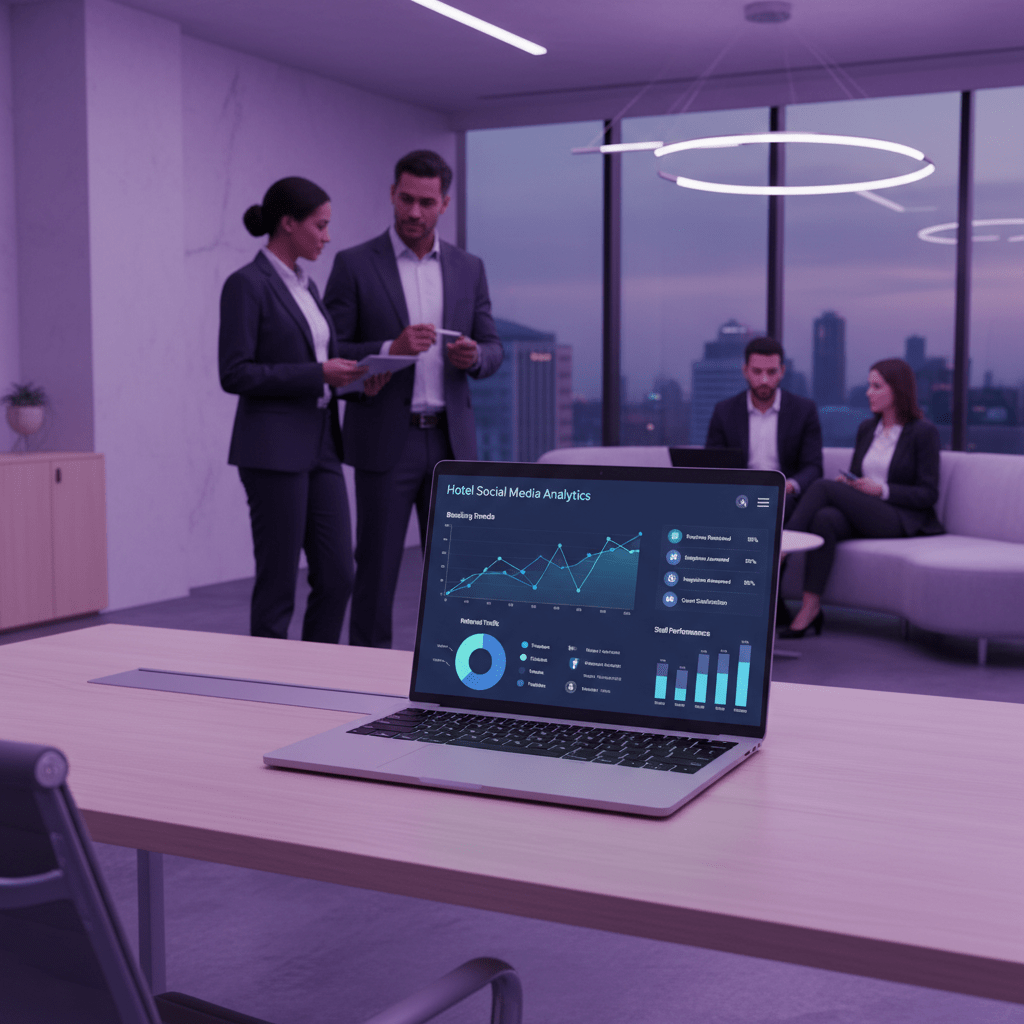
Measuring What Matters: Tracking the ROI of Your Hotel’s Social Media Marketing
A hotel can get 500 likes and still miss the point. Ouch, I know. Pretty post, not much proof.
If you want social media marketing for hotels to help the business, you need to look past vanity metrics. Likes are nice. Followers look good in a report. But they don’t pay the bills. What you really want is a clear line from post to visit to booking.
Start with three numbers:
| KPI | What it tells you | Why it matters |
|---|---|---|
| Engagement rate | How people react to your posts | Shows if your content feels real and useful |
| Website referral traffic | How many visitors come from social | Tells you which platform sends people to your site |
| Conversions | How many visitors book | Shows if social media helps increase direct bookings |
That’s the heart of hotel marketing strategy. Not just reach. Not just applause. Actual action.
And yes, you can track it.
Use Google Analytics 4 and UTM tags on every link you share. That means each Instagram Story link, Facebook post, or TikTok bio link should have a little tag on the end so you know where the click came from. For example: utm_source=instagram&utm_medium=social&utm_campaign=summer_promo.
Then check your Traffic Acquisition report in GA4. You’ll see which platform sends visitors, which pages they land on, and how many complete a booking. That’s much cleaner than guessing, which is a hobby nobody enjoys.
You can also watch for non-money wins. These matter too. Look for:
- More positive guest reviews that mention your social posts
- More brand mentions on Instagram, TikTok, and Facebook
- More user-generated content from real stays
- More DMs asking about rooms, dates, or packages
Those signals tell you your hospitality social media is doing its job. They help with hotel brand building and guest engagement strategies, even before the booking happens.
The tricky part? Social traffic usually converts at a lower rate than search traffic. That’s normal. People on social are often just getting inspired. But inspired guests still book later, and a lot of travel decisions start there. One travel report found that 73% of travelers said influencer recommendations shaped booking decisions, and 61% found trip ideas on social media.
So here’s the simple move: pick one platform, tag every link, check your bookings every month, and keep the content that drives real action. If you want your hotel Instagram marketing or Facebook for hotels efforts to feel less like a guess and more like a plan, tools like Ease My Hotel can help keep booking data, guest messages, and team updates in one place.
Conclusion: A Focused Social Media Strategy is Your Key to Direct Bookings
Social media marketing for hotels works best when it’s focused. Not flashy. Not scattered. Just clear, steady, and aimed at the people who actually want to stay with you.
And that’s the real win here. Instagram helps with hotel brand building because it shows your rooms, your style, and your vibe. Facebook works for community, loyalty, and ads that can help increase direct bookings. TikTok opens the door to new guests who love quick, real video and fresh ideas. Different jobs. Different tools.
The mistake a lot of hotels make is trying to be everywhere at once. That gets messy fast. Better to pick the channels that fit your guests, then show up in a way that feels human. That’s how hospitality social media starts to pay off.
So here’s the move: choose one platform from this guide, commit to a steady content plan for 90 days, and track what happens. Watch saves, clicks, DMs, and bookings. Keep the posts that work. Drop the ones that don’t. Simple, really.
If you want your hotel marketing strategy to feel less like guesswork and more like progress, start small and stay with it. One good channel. One clear message. One honest plan. That’s where growth usually starts.
Try Ease My Hotel for free.
No lock-in contracts. Cancel anytime