

Breaking the Cycle of One-Time Guests: Why Your Hotel Needs a Community, Not Just a Marketing Funnel
Ever notice how a guest can love your hotel, post a great photo, and still book somewhere else next time? Yep. That happens a lot.
And for hotels, that hurts twice. You lose the repeat stay, and you often pay more to get a new guest in the first place. In hospitality, getting a new booking can cost far more than keeping an old one, and OTA commissions can take a big bite out of room revenue. That’s why a smart social media marketing strategy for hotels needs to do more than chase likes or clicks. It should build real connection.
Here’s the shift: stop treating social media like a loudspeaker. Start using it like a meeting place.
Travel planning already happens there. People use social media to research trips, find places to stay, and get ideas from other travelers. So your hotel’s content has a job to do before the stay, during the stay, and after checkout. Not just sell. Build trust. Keep the conversation going. Grow guest loyalty for hotels one post, one reply, one shared moment at a time.
In this article, we’ll walk through a step-by-step plan for digital marketing for hospitality that leans into community. We’ll look at how to build a hotel brand online, create hotel social media engagement that feels real, use Instagram marketing for hotels the right way, and shape a customer community strategy that supports direct bookings and better guest experience online. And yes, we’ll keep it practical.
Because a hotel social feed should do more than look pretty. It should make people want to come back.

Section 1: The Foundation – Shifting from Broadcasting to Relationship Building
Ever post a room photo, get a few likes, and still hear crickets when you want a return booking? Yeah. That’s the trap.
A lot of hotel social media still acts like a billboard. Post the deal. Push the package. Repeat. That can bring eyeballs, sure, but it usually doesn’t build much trust. And trust is what gets people to come back. In hotels, that matters a lot because getting a new guest can cost way more than keeping one you already have. Some hospitality benchmarks put acquisition at 5x to 20x more than retention, and OTA commissions can eat 15% to 40% of a booking.
So what does a better social media marketing strategy for hotels look like?
It looks less like broadcasting and more like talking. You answer comments. You share guest stories. You post behind-the-scenes clips from the kitchen, front desk, or rooftop bar. You make room for people to react, ask, laugh, and come back later. That’s how you start building a hotel brand online that feels human.
And here’s the cool part. A community model helps your hotel social media engagement in more than one way. Loyal guests often share photos, tag your property, and tell friends about their stay. That kind of user content feels real because it is real. People trust peer posts way more than polished ads. So now your guests are doing some of the talking for you. Nice, right?
Think of your social channels as a digital lobby. Past guests can pop in. Future guests can look around. Current guests can share what they’re up to. That space should feel warm, open, and worth coming back to. Not just pretty. Not just promotional. A place where people feel welcome.
| Broadcast model | Community model |
|---|---|
| Posts promotions | Starts conversations |
| Chases quick clicks | Builds guest loyalty for hotels |
| Talks at people | Talks with people |
| Focuses on reach | Focuses on trust and repeat stays |
If you’re using Instagram marketing for hotels, TikTok clips, or even Facebook updates, ask one simple question before you post: will this help someone feel like they belong here? If the answer is yes, you’re on the right track. If not, tweak it.
For teams using tools like Ease My Hotel, this is where things get smoother too. When guest messages, booking details, and service notes live in one place, it’s easier to keep the social side personal without dropping the ball on the back end. That’s good for the hotel customer experience online and better for your team’s sanity.
Start with connection. The bookings usually follow.
Section 2: Platform Strategy – Choosing the Right Digital Spaces for Your Hotel’s Brand
Not every hotel needs to be everywhere. Honestly, trying to post on five platforms with a tiny team is a fast way to get tired and weirdly invisible.
So let’s keep this simple. Pick the places where your guests already spend time, then do those really well.
Which platforms work best?
| Platform | Best for | Why it works |
|---|---|---|
| Boutique, luxury, and leisure travel | People use it for trip ideas and pretty visuals | |
| Inspiration and trip planning | Great for room decor, wedding stays, and mood boards | |
| Local community and repeat guests | Good for groups, events, and updates | |
| TikTok | Younger travelers and discovery | Short clips feel real and get shared fast |
| Business travel and corporate stays | Helps with meetings, events, and B2B trust |
Instagram and Pinterest are strong for visual hotels. If your property has a rooftop pool, a great breakfast spread, or a room with crazy good light, these platforms can show that off fast. TikTok is a whole different beast. It tends to work best for short clips like behind-the-scenes moments, staff shout-outs, room tours, and local finds. And yes, travelers really do use it for search now.
Facebook still has a place too. It’s useful for local events, guest groups, and people who want updates without all the flashy stuff. LinkedIn matters more for hotels that want corporate bookings, meeting spaces, or travel planners in the mix. Not glamorous, maybe. But profitable? Often, yes.
Here’s the part many teams miss: choose platforms based on your guest, not on trends. A family-friendly resort and a city business hotel should not post the same way. One may lean into family photos, kid-friendly activities, and weekend offers. The other might focus on meeting rooms, fast Wi-Fi, and easy booking for work trips. That’s how you start building a hotel brand online that actually fits the people you want.
If you’re running a smaller team, focus on 1 or 2 platforms first. Really. Don’t spread yourself thin and end up doing all of them badly. A strong Instagram and a lively Facebook group can beat a sleepy presence on everything else. Plus, when your booking management, guest messages, and channel updates live in one place with tools like Ease My Hotel, it gets easier to keep your social media marketing strategy for hotels consistent without losing track of the day-to-day.
The goal isn’t to post more. It’s to show up where your next guest is already looking.
Section 3: Content Pillars for a Thriving Hotel Community
You know that hotel feed that looks nice, but feels cold? Pretty pics. No pulse. That’s usually the sign something’s missing.
If you want a strong social media marketing strategy for hotels, you need a few clear content pillars. Not random posts. Not just deal drops. A real rhythm that helps people feel like they know your place before they even arrive. And after they leave too.
Here are the three that usually work best.
1) Go behind the scenes
People love seeing the real stuff. The chef plating a signature dish. The front desk team setting up for a busy Friday. The housekeeper arranging the final pillow just right. Tiny moments. Big trust.
Why? Because hotel guests don’t only book a room. They book a feeling. And behind-the-scenes content helps with hotel social media engagement because it shows the humans behind the stay. That matters a lot for building a hotel brand online that feels warm instead of stiff.
This kind of content also works well on TikTok and Instagram marketing for hotels. Short clips, quick voiceovers, a staff hello, a day-in-the-life video… these are the posts people stop for. Not because they’re flashy. Because they feel real.
2) Champion user-generated content
This one is gold. Seriously.
When guests post their own photos or videos, it gives your hotel social proof without sounding salesy. In fact, people trust peer content way more than polished ads. One source says 84% of people trust brands more when they use user content, and 92% trust peer recommendations over ads. That’s a pretty loud signal for anyone working on guest loyalty for hotels.
So create a branded hashtag. Repost guest stories. Ask for permission, of course. Then feature the best moments on your feed, in Stories, or on a Facebook group for past guests. That kind of customer community strategy makes people feel seen. And when people feel seen, they tend to come back.
A simple UGC table can help your team stay organized:
| UGC idea | Where to share it | Why it helps |
|---|---|---|
| Guest room selfies | Instagram feed | Builds trust and social proof |
| Pool videos | TikTok or Reels | Shows the stay in motion |
| Wedding photos | Pinterest and Facebook | Great for future event bookings |
| Breakfast shots | Stories | Makes the experience feel real |
3) Be the local expert
This one gets overlooked a lot.
Your hotel is not just a bed. It’s a gateway. So share the coffee shop down the street. The small art gallery. The taco place your staff actually likes. The hidden beach walk or Sunday market. That’s the kind of content that helps with digital marketing for hospitality because it gives people a reason to pick your property over a random place nearby.
It also supports social media for direct bookings. If someone thinks, “Oh, this hotel already knows the area,” you’ve made the trip easier in their head. And that’s no small thing.
Try posts like these:
- “3 places locals grab breakfast near us”
- “A rainy-day plan for your weekend stay”
- “Our favorite date-night spot, 5 minutes away”
- “What to do after check-in on a Friday”
That’s smart hotel customer experience online, too. You’re helping before the stay even starts.
The best part? These pillars don’t need huge budgets. They need consistency, a little personality, and a team that knows what story it wants to tell. If your ops team uses a tool like Ease My Hotel, it gets easier to keep guest details, booking notes, and service updates in one place, so your social posts can stay personal without adding chaos in the back office.
And that’s the sweet spot. Real people. Real place. Real reasons to come back.
Try Ease My Hotel for free.
No lock-in contracts. Cancel anytime
Section 4: A 360-Degree Engagement: Connecting with Guests Before, During, and After Their Stay
You know that nice little moment when someone books your hotel and starts daydreaming about the trip right away? That is your opening. Do not waste it.
A strong social media marketing strategy for hotels should keep the chat going at every step. Before the stay. During the stay. After checkout too. Because guests do not just want a room. They want a whole experience. And if you stay present in a friendly way, you are far more likely to build guest loyalty for hotels instead of seeing them vanish after one visit.
Before the stay: build the buzz
Start simple. Share pre-arrival tips like parking info, check-in times, pool hours, or the best time to catch sunset from the rooftop. People love feeling prepared. It cuts down on stress. Plus, it gives your hotel customer experience online a helpful, real-person feel.
And do not be shy in comments and DMs. If someone asks whether the breakfast buffet is open on weekdays, answer fast. If someone is planning a birthday weekend, help them picture it. A short reply can do more than a fancy ad sometimes.
Stories work well here too. Try a countdown sticker for an upcoming holiday weekend or a new room reveal. Little things. Big curiosity. If you have the budget, use targeted ads for people who already visited your booking page. That keeps your hotel top of mind without being pushy. Kind of like a friendly tap on the shoulder.
During the stay: give people something to share
This is where the fun starts.
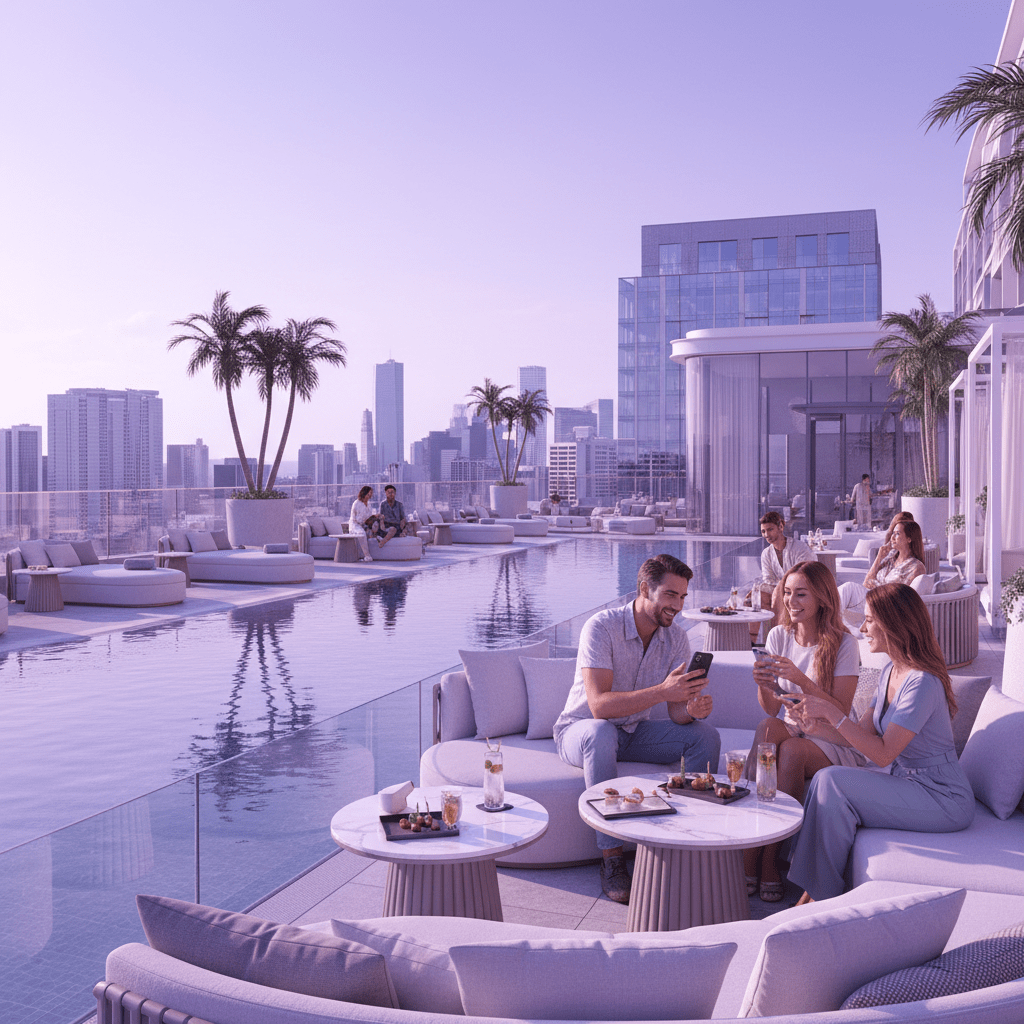
Make a few spots on property easy to photograph. A bright lobby wall. A pool with great light. A breakfast nook with a fun sign. These photo-friendly corners make hotel social media engagement easier because guests naturally want to post them. And honestly, people already do this on vacation. Might as well make it easy for them.
Some hotels even go bigger. Think rooftop views, bold art pieces, or a lobby setup that makes people stop and pull out their phones. It works because the stay feels shareable. Not forced. Just good-looking in a natural way.
You can also run a simple contest. Maybe the best guest photo of the week gets a free cocktail, late checkout, or a room upgrade on the next stay. Nothing wild. Just enough to get people posting. Then respond quickly to tags, mentions, and Stories. A fast like or comment can make a guest feel seen. And seen guests usually remember you.
If your team uses a property management tool, this part gets easier too, since guest communication and booking details can live in one place. That means fewer missed messages and a smoother handoff between social, front desk, and operations.
After the stay: keep the thread alive
This is the part most hotels skip. And it is a big miss.
Post guest content after their trip, with permission of course. Send a thank-you message. Mention something personal if you can, like their anniversary stay or family trip. That kind of follow-up feels human, not canned. It also helps with social media for direct bookings because it reminds people you remember them.
And here is a smart move: offer a small welcome-back discount through social media or DM for their next booking. Not a giant sale. Just enough to say you would love to see them again. That can be a quiet nudge that brings someone back sooner than planned.
The money side matters here too. Retaining a guest is usually far cheaper than finding a new one. In hospitality, acquiring a new guest can cost 5x to 20x more than keeping one, and OTA commissions can take 15% to 40% of a booking. So every reply, repost, and follow-up is not just nice. It is smart business.
Here is a simple way to think about it:
| Stage | What to do | Why it helps |
|---|---|---|
| Before stay | Share tips, answer DMs, use countdowns | Builds excitement and cuts confusion |
| During stay | Create photo spots, run photo contests, reply fast | Boosts sharing and hotel social media engagement |
| After stay | Repost guest content, send thank-yous, offer return perks | Helps turn one stay into a repeat visit |
That is the full circle. Not just marketing. Relationship building.
And if you do it well, your feeds stop feeling like ads. They start feeling like a place guests want to keep coming back to.
Section 5: Activating Loyalty with Social-First Programs & Exclusivity
You know that nice little moment when a guest comments on your post for the third time this week? That’s not just a random like. That’s a signal. A pretty loud one.
And here’s the thing. Guests who already care about your hotel are usually easier to keep than new people are to win. In hospitality, getting a new guest can cost 5x more than keeping an existing one, and in some cases it’s even 15x to 20x more. Plus, OTA commissions can take 15% to 40% of a booking. So if someone is already engaging with your brand on social, why not give them a little extra love? Makes sense, right?
Try a social VIP idea
You don’t need a giant points program to start. You can make a small “Social VIP” group for people who often like, comment, tag, or share guest photos. Then give tiny perks. A free coffee. Early room upgrade notice. First look at a new package. Nothing wild. Just enough to say, hey, we see you.
That kind of customer community strategy works because it feels personal. Not corporate. And it can nudge more social media for direct bookings too, since people like being on the inside.
Here’s a simple example:
| Social action | Small reward | Why it works |
|---|---|---|
| Shares a guest photo | Free coffee on next stay | Feels personal and easy |
| Comments often | Early access to offers | Builds habit and loyalty |
| Tags friends in posts | Surprise room perk | Sparks more word-of-mouth |
| Posts a review video | Invite to VIP updates | Rewards real effort |
Use private spaces for loyal fans
Instagram Close Friends can be great for quick, cozy updates. Think last-minute deals, new package teasers, or a sneak peek at a rooftop event. It feels special because not everyone gets in.
A private Facebook Group can go deeper. You can share travel tips, ask for opinions, post polls, and offer first access to weekend deals. It’s better for back-and-forth chat, while Close Friends is better for that little VIP glow.
And yes, both can support building a hotel brand online without making your feed feel salesy.
Run contests people actually want to join
Skip the boring “follow and tag 3 friends” thing if you can. It’s fine, but it’s kind of empty. Ask for a memory instead.
Try prompts like:
- Comment your favorite stay with us
- Share the best part of your last trip
- Tell us what made your anniversary visit special
- Post your favorite lobby photo and tag us
That kind of post gets better hotel social media engagement because people tell stories, not just click buttons. And stories stick.
Also, user content matters. A lot. Around 84% of people say they trust brands more when they use user-generated content, and 92% trust peer recommendations more than ads. That’s a big deal for any digital marketing for hospitality plan.
So keep the rewards small, the tone warm, and the invite clear. If your social feed makes loyal guests feel like part of the crew, you’re not just posting anymore. You’re building a real home base for repeat stays.
Section 6: Measuring What Matters: Tracking Loyalty and ROI from Your Social Media Strategy
Likes are nice. But they don’t pay the bills.
If you’ve ever watched a post get tons of hearts and still no bookings, you already know the problem. A strong social media marketing strategy for hotels needs to look past vanity stats and ask a bigger question: did this help us build guest loyalty for hotels, or did it just look busy?
Start with the numbers that show real community health. Look at engagement rate, comments per post, UGC mentions, direct message volume, and the tone of those messages. Are people asking real questions? Are they tagging friends? Are they sharing their stay? Those are the clues that your hotel social media engagement is doing more than filling a feed.
Here’s a simple scorecard:
| Metric | What it tells you | Why it matters |
|---|---|---|
| Engagement rate | How often people interact | Shows true interest |
| Comments per post | How much people talk back | Signals community, not silence |
| UGC mentions | How often guests share your brand | Builds trust and reach |
| DM volume and sentiment | What people ask and how they feel | Helps with hotel customer experience online |
| Social referral traffic | Who clicks through to book | Connects social media for direct bookings |
Now for the part that lots of hotels skip. Track bookings tied to social posts. Use UTM links in your bio and story links so you know where traffic comes from. Add a promo code for one campaign, like SUMMERSTAY25 or ROOFTOP10, and keep it tied to a single platform. It sounds old school, but it works. Clean data beats guesswork every time.
And don’t stop at clicks. Set up social listening so you can hear what guests are saying before it turns into a review problem. You’ll spot brand sentiment, competitor chatter, and repeat pain points faster. If guests keep saying the Wi-Fi was slow or the check-in felt clunky, that’s not just feedback. That’s a fix list.
From what I’ve seen, this is where a tool like Ease My Hotel can help too. When booking data, guest messages, and staff notes sit in one place, it’s easier to connect social activity with real stays and return visits. That makes it simpler to spot what’s working in your digital marketing for hospitality and what needs a reset.
The goal isn’t to count everything. It’s to count the right stuff. Because a feed full of likes is nice. A feed that brings people back? Way better.

Conclusion: Your Hotel Is More Than a Room—It’s a Community
A guest clicks follow. They like a post. They leave a kind review. Then, a few months later, they book again. That’s the shift we want.
A strong social media marketing strategy for hotels is not just about getting attention once. It’s about building a space where people feel known, remembered, and happy to come back. That means picking the right platforms, sharing content that feels real, showing up before, during, and after the stay, and checking the numbers that actually matter.
And yes, the money side matters too. In hospitality, getting a new guest can cost 5x more than keeping one, and sometimes it’s closer to 15x or 20x. So every comment, repost, and friendly reply can do more than fill a feed. It can help build guest loyalty for hotels and support more social media for direct bookings.
Here’s the big idea: stop chasing one-time clicks. Start building a customer community strategy that makes people want to stay, share, and return.
This week, pick one community-building content pillar and plan three posts. Start small, stay steady, and focus on conversation over conversion.
Try Ease My Hotel for free.
No lock-in contracts. Cancel anytime