
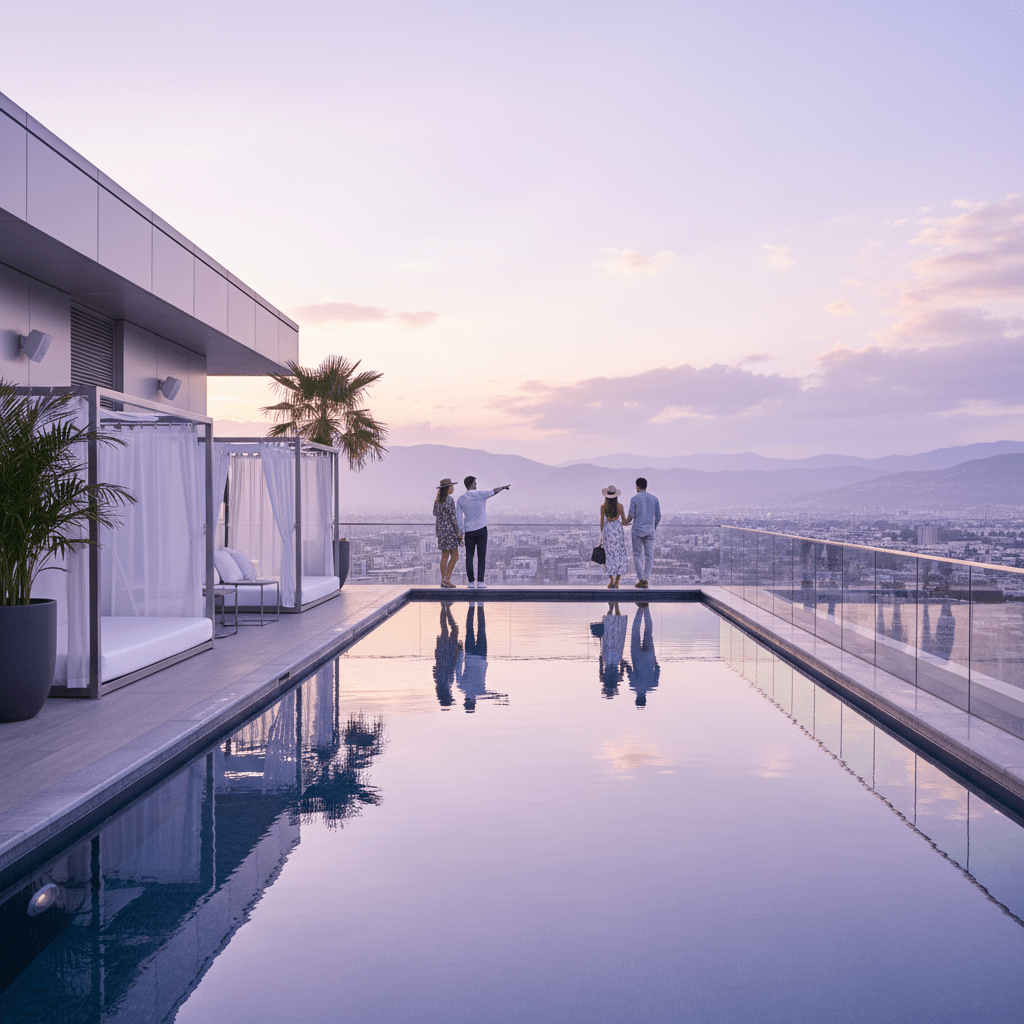
Capturing Stays and Hearts: Why Visuals Are the Key to Modern Hotel Marketing
You can feel it in about two seconds. A traveler scrolls past a blurry lobby shot, then stops cold on a bright rooftop pool video. That little pause? That’s the whole game.
In a 2024 Statista survey, over 40% of U.S. social media users said influencers shaped their travel choices, and 78% said social media pushed them to explore new places, like hotels and attractions (Statista travel influence survey). So yeah, visuals matter. A lot.
Generic hotel photos don’t do much anymore. Stock images feel flat. And in social media marketing for hotels, flat gets skipped.
This guide is here to help hotel marketers move past basic photos and build a smarter hotel social media strategy. We’ll look at visual content for hotels, hotel video marketing, UGC, Instagram for hotels, and hotel marketing visuals that can help increase hotel bookings with social media. Not with fluff. With stuff you can actually use.
And if you’re thinking, “OK, but where do I even start?” good. That’s exactly what we’re getting into.
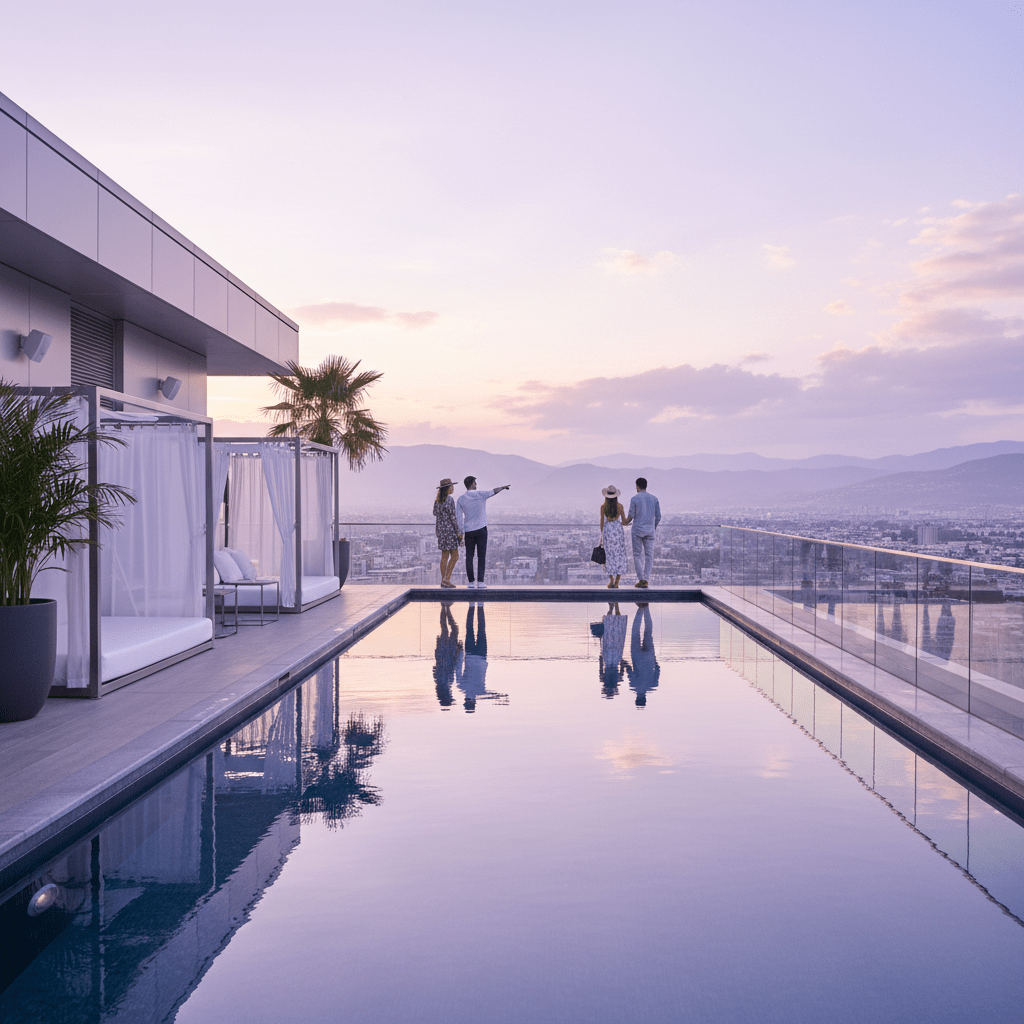
1. Why Visual Content is the Cornerstone of Your Hotel’s Social Media Strategy
Think about the last hotel you saved on Instagram. Odds are, you did not bookmark a paragraph about room types. You saved the pool view, the breakfast spread, or that tiny balcony with the city lights. That is how travel works now.
People want to feel the stay before they book it. A strong photo or short video lets guests picture themselves by the rooftop bar, in the spa, or walking into a sunlit suite with coffee in hand. Facts matter, sure. But visuals create desire, and desire is what gets someone to click.
Actually, wait, there’s a better way to say it. Visuals give travelers a little preview of their own story. That is a big deal in social media marketing for hotels, because hotel stays are personal. They are not just rooms. They are memories, family trips, work trips, anniversary weekends, and all the little moments in between.
A clear visual identity also helps you stand out from the copy-and-paste look of OTA listings. You know the ones. Same angle. Same white walls. Same “luxury” photo that could be anywhere. Your hotel marketing visuals should feel like your place, not a template.
Here’s a simple way to think about it:
| Visual style | What it says |
|---|---|
| Bright, airy rooms | Calm, clean, restful |
| Bold nightlife shots | Fun, social, energetic |
| Family pool scenes | Easy, playful, welcoming |
| Quiet spa moments | Rest, care, slower pace |
| Meeting room shots | Focused, polished, business-ready |
That is visual storytelling. And it helps you attract the right guest, not just any guest. A luxury traveler wants elegance. A family wants space and ease. A business traveler wants speed, comfort, and trust. So your hotel social media strategy should match the kind of stay you want to sell.
Reels, guest photos, and short clips also pull more attention than flat posts. Hospitality brands have seen Reels engagement climb to 6.92% in 2024, up from 4.5% the year before, and they get about twice as many comments as static posts (Instagram post interaction by format). That tells us something pretty plain: people want motion, mood, and a sense of place.
So if your feed feels a little stale, start there. Better visuals. Clearer story. More of what your guest wants to imagine.
And if your team needs help keeping bookings, guest messages, and daily ops in one place while you build your social media for hospitality plan, a tool like Ease My Hotel can help keep the back end from turning messy while the front end gets all the attention.
2. Before You Shoot: Building a Solid Visual Content Blueprint
You know that moment when a hotel feed looks… kind of random? One post is a cocktail glass. The next is a hallway. Then a blurry spa towel. It happens fast, and it makes the whole brand feel unsure.
That’s why we start with a plan.
A simple visual blueprint keeps your hotel social media strategy from turning into a photo dump. And it doesn’t need to be fancy. Really. Just a few clear choices will save you a ton of time later.
Start with a basic style guide
Pick one look and stick with it.
Make a tiny brand sheet with:
- A mood board with 8 to 12 sample images
- A color palette with 3 to 5 main colors
- A photo style, like light and airy, dark and moody, or bright and energetic
- One rule for editing, so every post feels like it came from the same hotel
If your property is a beach resort, maybe your hotel marketing visuals lean soft, sun-washed, and calm. If you run a city hotel with a rooftop bar, maybe you want sharper contrast and more night shots. There’s no perfect answer. Just a clear one.
Map your top USPs first
Before you shoot anything, list your top 3 to 5 unique selling points. Not the generic stuff. The real stuff.
Ask:
- What do guests rave about?
- What do we sell better than nearby hotels?
- What would make someone choose us over a chain property?
Then match each USP to a visual idea. For example:
| USP | Visual idea |
|---|---|
| Balcony view | Sunrise time-lapse from the room |
| Signature restaurant | Chef plating a local dish |
| Spa | Steam, candles, quiet hands-on details |
| Family-friendly space | Kids by the pool with parents nearby |
| Business travel setup | Fast check-in and a clean work desk |
This is where social media marketing for hotels gets smarter. You stop posting just to post. You start showing proof.
And proof works. Travelers are more likely to trust what they can see, and visual content often builds more confidence than plain text. That matters a lot for travel, since booking a stay is a high-consideration choice. A quick visual can answer the little question in a guest’s head: “Can I picture myself there?”
Build content pillars so your calendar does not get boring
Now, split your ideas into content pillars. Think of these as your repeatable buckets. Easy to plan. Easy to balance.
Try these:
- Culinary: breakfast spreads, cocktails, chef clips, dining room mood
- Wellness: spa moments, pool shots, gym tours, quiet corners
- Local Experiences: nearby cafes, markets, walks, day trips
- Behind the Scenes: housekeeping, check-in flow, staff stories
- Guest Experiences: user-generated content for hospitality, reviews, celebrations, event stays
This mix helps your social media for hospitality feel alive, not repetitive.
And here’s a small but useful thing: the right pillar can also guide format. A rooftop sunrise clip works great as hotel video marketing on Instagram for hotels. A local neighborhood guide might do better as a carousel or a pinned post. A guest photo can feel perfect for a story or reel, especially if you’ve got permission to share it.
OK, this next part is actually pretty handy. When your blueprint is set, your team can move faster, your content looks tighter, and your hotel promotion ideas are easier to repeat without starting from scratch every week.
Need help keeping the rest of the operation calm while your content team gets creative? A platform like Ease My Hotel can help centralize bookings, guest messages, and day-to-day tasks so your staff isn’t juggling five tabs and a prayer.

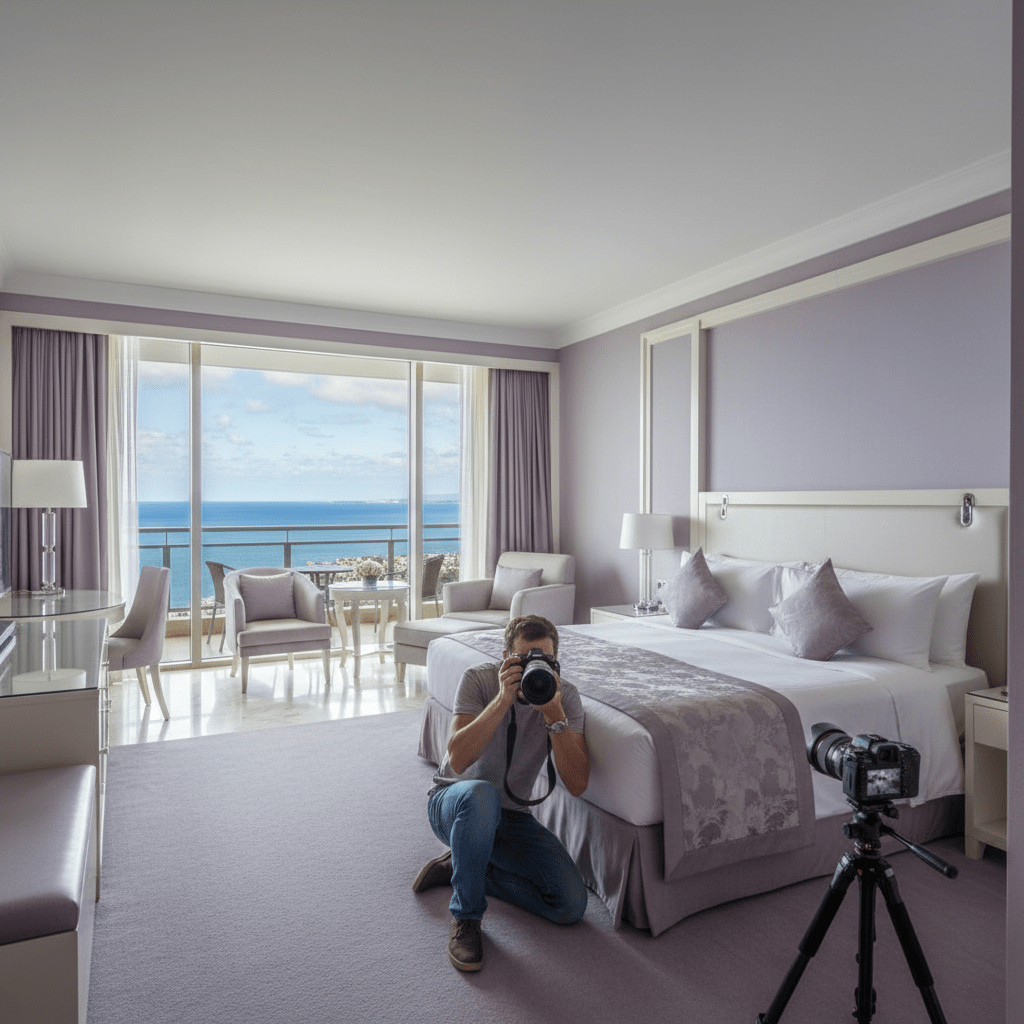
3. Capturing Your Property’s Best Angles: A Practical Hotel Photography Guide
You know that feeling when a hotel photo makes you want to pack a bag right now? That’s not luck. It’s smart framing, good light, and a shot list that doesn’t miss the good stuff.
And yes, the good stuff matters. Travelers are still very visual. In fact, over 40% of U.S. social media users said influencer content shaped travel choices, and 78% said social media pushed them to explore new places like hotels and attractions Statista’s travel influence survey. So if your photos feel a little sleepy, people notice. Fast.
The essential hotel shot list
Start with the photos guests actually want to see. Not just a pretty lobby. The whole stay story.
| Area | Must-have shots |
|---|---|
| Rooms & suites | Wide room view, bed detail, bathroom, view from window, work desk |
| Amenities | Pool, spa, gym, lounge, rooftop, kids’ area |
| Food & beverage | Breakfast spread, signature dish, cocktails, chef plating, dining room mood |
| Exterior & architecture | Front entrance, signage, building at day and night, standout design details |
| Lifestyle | Guest reading by the window, couple by the pool, friends at dinner, staff greeting arrivals |
A little note here: lifestyle shots do a lot of heavy lifting. They help people imagine themselves there. And that can build trust before they ever click book.
DIY hotel photography tips that work
You don’t need a fancy camera to get solid hotel photography tips in place. A good phone and steady hands can go pretty far.
- Use natural light near windows when you can.
- Shoot in the morning or late afternoon for softer light.
- Try the rule of thirds. Keep the main subject off-center.
- Use leading lines like hallways, railings, or paths to pull the eye in.
- Clean the frame. Seriously. One stray cord can ruin a great shot.
- Shoot at golden hour for warm, calm light that makes spaces feel more inviting.
The best part? These simple moves can make your visual content for hotels look much more polished without turning the process into a full production day. You’re not filming a Marvel movie. You’re showing a place people might sleep, eat, relax, and spend money.
Actually, wait. That last part is the point.
Keep your look steady with mobile editing
If every photo looks different, your feed starts to feel noisy. That’s where editing apps help.
A few top picks:
- Lightroom Mobile for clean control and interior shots
- Snapseed for quick fixes and a free, strong toolset
- VSCO for soft, moody hotel vibes
- Afterlight for simple travel edits
Use one preset or editing recipe across your posts. Same brightness, same tone, same feel. That kind of visual consistency makes your hotel social media strategy look planned, not random. And that helps your brand feel easier to trust.
If you want to go one step further, ask your team to save 3 to 5 favorite edits for different content pillars. One for rooms. One for food. One for sunset shots. That way, your social media for hospitality stays fast and tidy.
And if your bookings, guest messages, and team tasks are all pulling in different directions, Ease My Hotel can help keep the back end steady while your hotel marketing visuals do the front-end work.
Try Ease My Hotel for free.
No lock-in contracts. Cancel anytime
4. Beyond Still Images: How Hotel Video Marketing Drives Deeper Engagement
A room can look nice in a photo. Sure. But a 20-second video can make it feel alive.
That’s the magic of hotel video marketing. People don’t just want to see the bed and the balcony. They want motion. Light. A little mood. The door opening. The curtain moving. Someone pouring coffee by the window. Tiny things. Big impact.
And the numbers back that up. Hospitality Reels saw engagement rise to 6.92% in 2024, up from 4.5% the year before, and they get nearly twice as many comments as static posts (Instagram post interaction by format). So if your feed still leans only on still images, you’re probably leaving attention on the table.
Short-form video that works fast
For instagram for hotels, short clips are the easiest win. Keep them between 15 and 60 seconds. That’s the sweet spot for most social-first content.
Try videos like these:
- Quick room tours with one smooth walkthrough
- Staff clips that show a warm check-in or breakfast service
- Satisfying cleaning shots, like fresh linens or a sparkling pool
- “A day at our hotel” clips with trending audio
- Before-and-after clips for renovated rooms or event spaces
These don’t need to be fancy. They just need to feel real. Funny enough, a slightly imperfect clip can sometimes work better than a too-polished one because it feels more human.
Why a longer tour still matters
Now, short video is great for reach. But a 2 to 4 minute hosted tour on YouTube can do something different. It helps people picture the full stay.
Think lobby. Then room. Then spa. Then restaurant. Then maybe the rooftop or meeting space. A good tour answers the questions a traveler already has in their head, without making them dig around your site for 12 minutes.
That kind of hotel video marketing works well for guests who are close to booking but still unsure. They want the details. They want to know if the suite really looks like the photos. They want to hear the vibe from a real person, not just read copy.
Here’s a simple flow for a hosted tour:
- Start at the entrance.
- Show the check-in path.
- Walk through a standard room.
- Move to premium rooms or suites.
- Finish with amenities and local perks.
That’s it. Clean and clear. No need to overcomplicate it.
What drone footage can do that ground video can’t
You know that “wow” feeling you get when you see a resort from above? That’s drone footage doing its job.
Aerial video shows scale in a way ground-level shots just can’t. It can make a beachfront property feel open and sunny. A city hotel can look sharp against a skyline. A mountain lodge can feel tucked away in the best possible way.
It also helps guests understand location fast. Is the hotel right by the water? Near the airport? Close to downtown? Drone shots can answer that in seconds.
But here’s the deal. If you use a drone, get permission first and follow local rules. Guests don’t love surprise flyovers, and neither do airports.
Best video mix for hotel social media strategy
If you’re building a stronger social media marketing for hotels plan, don’t rely on one video type. Mix them up.
| Video type | Best use |
|---|---|
| 15 to 60 second Reels | Fast reach, trends, room teasers |
| 2 to 4 minute tours | Booking confidence, full property story |
| Drone clips | Location, scale, and first-impression impact |
The best hotel social media strategy usually blends all three. Short clips help people find you. Longer videos help them trust you. Drone footage gives them the “oh, wow” moment.
And if your team needs one place to keep bookings, guest messages, and daily work from getting messy while you build out social media for hospitality, Ease My Hotel can help keep the back end steady while your visual content does the heavy lifting.
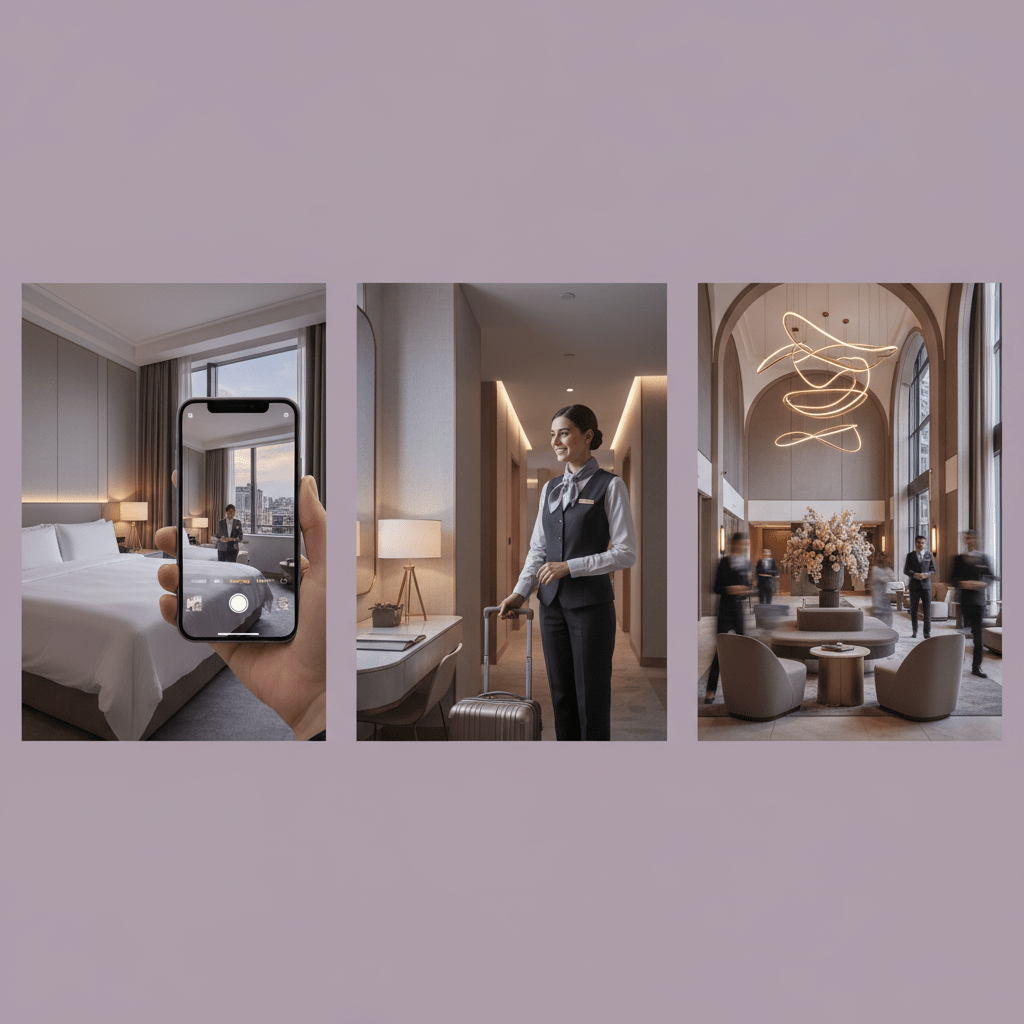
5. Building Trust with User-Generated Content (UGC) and Influencer Marketing
You know what feels more believable than a polished hotel ad? A real guest holding a coffee on your balcony, with messy hair and a huge smile. That kind of post has life in it. And people trust life.
That trust matters a lot in social media marketing for hotels. A 2024 Statista survey found that over 40% of U.S. social media users said influencer content shaped their travel choices, and 78% said social media pushed them to explore new places like hotels and attractions (Statista travel influence survey). So yes, user-generated content for hospitality is not just nice to have. It can help increase hotel bookings with social media.
How to get better UGC
The trick is to make sharing easy.
Try a few hotel promotion ideas:
- Create one or two “Instagrammable” spots. A rooftop swing. A flower wall. A neon sign near the bar.
- Run a simple hashtag contest. Keep it short and easy to remember.
- Put a sign at check-in that says guests can tag the hotel to get featured.
- Share guest posts in Stories, then on the feed if they say yes.
And don’t make people guess what happens next. Say, “Tag us to be featured” or “Use #YourHotelName for a chance to be reposted.” Clear wins.
Why micro-influencers often work better
Big names can look shiny. But micro-influencers, usually in the 5k to 50k follower range, often bring better results for hotels because their audience is smaller and more focused. They also tend to sound more real. Less billboard. More friend who knows a great brunch spot.
Look for creators who already post about travel, food, family trips, or local stays. Check their comments too. Are people actually talking, or just dropping emoji chains? That tells you a lot.
If you’re setting up a partnership, keep it simple and clear:
| What to cover | Why it matters |
|---|---|
| Stay dates and room type | No confusion later |
| Number of posts or videos | Everyone knows the deliverables |
| FTC disclosure | Keeps the post honest |
| Content rights | Lets you reuse good content safely |
| Approval steps | Helps avoid awkward surprises |
| Cancellation terms | Protects both sides |
The golden rule for reposting
Here’s the part people skip, then regret later. Always get explicit permission before reposting a guest photo or video. Always. Not “usually.” Not “if it looks public.” Get the yes.
Then give credit. Tag the creator. Mention their name. If they ask for edits, listen. It’s their content first.
UGC can also beat polished brand content in trust. Research from Crowdriff says 92% of consumers trust word-of-mouth and UGC more than traditional brand ads, and UGC ads get 73% more favorable comments than standard ads (Crowdriff UGC stats). That’s a big deal for hotel social media strategy, because trust is usually what tips someone from “maybe” to “book now.”
OK, this next part is worth repeating. If your team can collect guest content, credit it well, and pair it with the right micro-influencers, your hotel marketing visuals start to feel human. Not staged. Human.
And if you need a system that keeps bookings, guest messages, and staff tasks from getting messy while your social media for hospitality grows, Ease My Hotel can help keep operations calm in the background.
6. Tailoring Your Visuals: A Platform-by-Platform Optimization Guide
A photo that shines on Instagram can flop on Facebook. Weird, right? But it happens all the time.
That’s why your social media marketing for hotels needs a platform plan, not just pretty pictures. Each channel has its own mood, its own audience, and its own job. If you match the content to the platform, your hotel marketing visuals work harder without feeling forced.
Instagram: polished, lively, and a little aspirational
Instagram is still the place for strong first impressions. Think clean grid, bright rooms, and Reels that show movement. In hospitality, Reels reached a 6.92% engagement rate in 2024, up from 4.5% the year before, and they get nearly twice as many comments as static posts (Instagram post interaction by format). So yes, video-first is the smart move here.
Use Instagram for:
- Reels that show room tours, pool moments, or food service
- Stories with polls, Q&As, and staff takeovers
- A polished feed that feels clear and steady
- UGC that makes the stay feel real
Stories are also a good place for the less perfect stuff. A quick breakfast clip. A behind-the-scenes hallway shot. A housekeeper fluffing pillows before check-in. That kind of social media for hospitality content feels warm, not staged.
Facebook: detail, events, and longer stories
Facebook is still great for people who want more context. It works well for photo albums, event pages, and longer videos. If you’re announcing a spa refresh, for example, a post like “A Look Inside Our Spa Renovation” can do better here than on a fast-moving feed.
Try using Facebook for:
- Big photo albums from weddings, renovations, or seasonal decor
- Longer videos that explain property updates
- Event banners for brunches, holiday dinners, or live music nights
- Local offers that need a little more room to breathe
It’s less about quick flash and more about helpful detail. And for some guests, that’s exactly what they want before they book.
Pinterest: dream it now, plan it later
Pinterest is a different beast. People go there to save ideas. Not just scroll. That makes it a strong fit for hotel promotion ideas that feel dreamy and useful at the same time.
Build boards around themes like:
- Dream Wedding Venues
- Local Travel Guides
- Boutique Hotel Design Inspiration
- Weekend Getaway Ideas
- Spa Retreat Planning
Pinterest travelers are usually in planning mode, so your images should feel aspirational and clear. Think strong vertical photos, room details, wedding setups, and local experiences. Pinterest also has a long shelf life, which is nice because one good pin can keep working for months.
Match the platform to the job
Here’s the simple rule: Instagram builds desire, Facebook builds context, and Pinterest builds future plans.
| Platform | Best visual style | Best content goal |
|---|---|---|
| Polished, vertical, social-first | Discovery and engagement | |
| Albums, banners, longer posts | Events and details | |
| Vertical, aspirational, search-friendly | Planning and saves |
And here’s the part people miss. A single photo can be reused three ways if you tweak the crop, caption, and hook. That saves time. It also keeps your hotel social media strategy from turning into a full-time editing marathon.
If you want one practical next step, start with your best room photo and adapt it for each platform. Then watch what gets saved, shared, and clicked. That tells you a lot more than guesswork ever will.
And if your team wants to keep bookings, guest messages, and daily ops steady while your visual content for hotels keeps growing, Ease My Hotel can help keep the back end calm so your front-end marketing can do its job.
7. From Likes to Bookings: Measuring the ROI of Your Visual Content
A pretty post is nice. A post that brings a booking? That’s the real win.
So let’s talk about what to watch. Not vanity numbers. Not just hearts and smiles. If you’re using social media marketing for hotels, you want signs that people are moving closer to a stay.
The metrics that actually matter
Start here:
- Engagement rate: Are people liking, commenting, saving, and sharing?
- Save and share rate: Do they want to keep it or send it to a friend?
- Profile visits: Did the post make them curious enough to tap your name?
- Website clicks: Are they heading to your booking page?
- Direct bookings from social: Can you trace the reservation back to the post?
Likes are fine. But saves and clicks tell a better story. A guest who saves your rooftop pool reel on Tuesday and books on Friday is giving you a pretty clear hint.
Use UTM links so you can track the path
Here’s the simple version. Add UTM tags to the links you share on social. That way, Google Analytics can show which posts send traffic and bookings.
Try this flow:
- Open Google’s Campaign URL Builder.
- Paste your booking page link.
- Add
utm_source=instagram. - Add
utm_medium=social. - Add
utm_campaign=summer_offer. - Add
utm_content=reel_1for one visual, thenutm_content=photo_1for another. - Copy the tagged link and use it in your post bio, story link, or ad.
Then check traffic in Google Analytics 4. Simple. Clear. No guessing.
Test one visual against another
A/B testing sounds fancy, but it’s really just comparing two versions.
For example, test:
| Version A | Version B |
|---|---|
| Lifestyle photo with guests by the pool | Empty pool shot with no people |
| Bright breakfast spread | Close-up of one plated dish |
| Room with soft daylight | Same room at night with warm lamps |
Run both in paid social ads with the same audience and budget. Then look at clicks, saves, and booking-page visits. Sometimes the empty room works better. Sometimes the human moment wins. I know, annoying. But data usually settles the argument fast.
Research on travel visuals backs this up. A 2024 Statista survey found over 40% of U.S. social media users said influencer content affected their travel decisions, and 78% said social media pushed them to explore new destinations, restaurants, or attractions (Statista travel influence survey). Plus, hospitality Reels reached 6.92% engagement in 2024, up from 4.5% the year before (Instagram post interaction by format). So yes, visuals can move people.
The best part? You do not need a giant budget to learn what works. You just need clean tracking, a few smart tests, and the patience to follow the numbers instead of the guesswork.
If you want a smoother way to keep bookings, guest messages, and daily tasks in one place while your hotel social media strategy grows, Ease My Hotel can help keep operations steady behind the scenes.
Start Creating Visuals That Convert Today
So here’s the simple truth. Pretty photos are nice, but pretty photos alone won’t carry your hotel marketing. A strong social media marketing for hotels plan needs strategy, real moments, and a mix of visuals that feel honest.
Think of it like this: first, plan your hotel social media strategy. Then, use different kinds of visual content for hotels, like pro photos, user-generated content for hospitality, and hotel video marketing. After that, match each post to the right platform. And keep watching the numbers so you can improve as you go.
That matters because visuals really do move travel choices. A 2024 Statista survey found that over 40% of U.S. social media users said influencer content shaped their travel decisions, and 78% said social media pushed them to explore new places like hotels and attractions Statista travel influence survey. Plus, hospitality Reels saw engagement rise to 6.92% in 2024, up from 4.5% the year before Instagram post interaction by format.
That’s the playbook:
- Strategize first
- Mix pro shots, UGC, and video
- Tailor content to each platform
- Measure, then tweak
Your first task: audit your hotel’s Instagram grid and spot the biggest visual gap. Then schedule 1 hour this week to create the first piece of content that fills it. Seriously. One hour.
If your back end feels messy while your content gets better, a tool like Ease My Hotel can help keep bookings, guest messages, and daily work in one calm place.
Try Ease My Hotel for free.
No lock-in contracts. Cancel anytime