

Introduction: Why Manual Revenue Management Is No Longer Enough for Modern Hotels
Ever had one of those weeks where the hotel is packed on Tuesday, quiet on Thursday, and then somehow sold out again by Saturday? That’s the daily puzzle. And if you’re still pricing rooms with spreadsheets and gut feel, money is probably slipping through the cracks.
A lot of hotels are still doing it the old way. As of 2024, about 16% of revenue pros still don’t use a revenue management system, and many still lean hard on spreadsheets and reports instead of a hotel revenue management system or hotel pricing optimization software. That means missed chances. Missed rate hikes. Missed upsells. Just… missed revenue.
The shift to revenue management in the hotel industry isn’t a fancy extra anymore. It’s how smart hotels stay steady when demand jumps around, competitors change rates in minutes, and guests book across OTAs, direct sites, and mobile channels all at once. Manual pricing just can’t keep up with that pace.
But here’s the good part. Modern dynamic pricing tools for hotels can do a lot of the heavy lifting for you. They look at booking pace, past demand, market signals, and more, then help set better rates without all the late-night guesswork. A modern RMS is more than yield management technology. It’s a practical way to protect profit.
This guide will walk you through the tools, the benefits of revenue management software, and what to look for while choosing a hotel RMS. We’ll also cover the RMS implementation process so you know what happens after you pick a system. And if your property uses a cloud setup like Ease My Hotel, you’ll see how a unified dashboard can make room pricing, bookings, and day-to-day work a lot easier to manage.
Pretty simple, really. Less guessing. Better pricing. More control.

1. The Foundation: What is a Hotel Revenue Management System (RMS)?
Ever watched a hotel room jump from empty to sold out, then back to empty again after a last-minute cancel? Wild stuff. And it happens fast.
A hotel revenue management system, or RMS, is software that helps hotels sell the right room, to the right guest, at the right time, for the right price. That’s the simple version. The practical version? It takes a pile of data and turns it into smarter room rates without all the hand-wringing.
Here’s the deal. A modern RMS looks at things like occupancy, competitor rates, local events, booking pace, and past demand. Then it either suggests the best price or sets it for you automatically. That’s why people call it automated revenue management. It’s not magic. It’s just faster than a person with ten tabs open and a headache.
The old way was slow and messy. Managers leaned on spreadsheets, reports, and gut feel. Rates stayed flat for too long. And by the time someone noticed demand was up, the good dates were already gone. A hotel pricing optimization software tool fixes that by adjusting prices in real time, which is a big deal for hotels that sell on OTAs, direct sites, and mobile apps all at once.
Think of it like airline pricing. Seats get pricier as the plane fills up. Hotel rooms work the same way, except the system is watching more signals at once. Occupancy. Weather. A concert downtown. A conference across town. All of it can shape demand.
The best part? You don’t have to watch every number yourself. A good hotel revenue management system becomes part of your daily rhythm. It helps you spot gaps early, price smarter, and react before revenue slips away.
What it usually tracks
| Data source | What it tells the RMS |
|---|---|
| PMS data | Bookings, stay history, front desk activity |
| CRS data | Inventory flow and reservations |
| Competitor rates | How your pricing compares |
| Market demand | Events, season, local trends |
| Booking pace | How fast rooms are selling |
And that matters because hotels that move from manual pricing to modern systems often see a 5% to 20% lift in RevPAR. Some reports even point to 15% to 20% gains, which is hard to ignore.
If your property is still pricing rooms by instinct alone, this is the moment to rethink it. Especially if you already use a cloud setup like Ease My Hotel, because a unified dashboard can make room pricing, bookings, and day-to-day hotel work feel a lot less scattered.
Pretty simple, really. Less guessing. Better rates. More control.
2. Core Features Every Modern Hotel Pricing Optimization Software Should Have
You know that moment when Tuesday looks dead, then a trade show fills the lobby by lunch? That’s the kind of swing a hotel price tool needs to keep up with. Fast.
1) Dynamic pricing and automation
This is the big one. Good hotel pricing optimization software should update rates across all channels in real time, based on rules you set or AI-style recommendations. So if demand jumps, prices can move right away instead of waiting for someone to notice after the damage is done.
Think of it like airline pricing. Not fancy. Just smart.
A modern hotel revenue management system should watch occupancy, pace, events, and pickup, then help push the right rate to your booking engine, OTAs, and direct site. That matters because hotels using modern RMS tools often see a 5% to 20% bump in RevPAR, and some reports point to 15% to 20% lifts after switching from manual methods, according to Hotel Tech Report RMS data.
2) Competitor rate shopping
But pricing in a vacuum? That’s risky.
Your RMS should also track competitor rates and show where you stand in the market. If the hotel across town drops rates for a concert weekend, you want to know before your phone starts ringing with “why are we more expensive?” calls.
Here’s the deal. Competitor rate shopping helps you see the pattern, not just one random number. It shows if rivals are undercutting you, matching you, or quietly raising rates while you’re still sitting on old pricing. And that gives you room to react without guessing.
3) Forecasting and reporting
OK, this next part is actually pretty cool.
The best systems don’t just price rooms. They also give you hotel business intelligence tools that show forecasts, pacing, and key KPIs like RevPAR, ADR, and occupancy. Some dashboards also show cancellations, no-shows, and booking pickups. Handy stuff. Maybe even a little addictive.
| Feature | Why it helps |
|---|---|
| Forecasts | Shows expected demand by day or week |
| Pacing reports | Compares on-the-books business to last year |
| KPI dashboard | Tracks RevPAR, ADR, occupancy, and more |
| Channel view | Shows which sources are booking best |
| Calendar heat map | Makes busy and soft dates easy to spot |
This kind of reporting helps with more than pricing. If the forecast shows a soft week ahead, you can adjust staffing, send a promo, or tighten up discounts. If group business starts to block out high-value transient demand, you’ll catch it sooner.
And if your team uses a cloud setup like Ease My Hotel, a unified dashboard can make it much easier to keep pricing, bookings, guest info, and day-to-day work in one place. Less tab chaos. Less double entry. More time to think.
A good RMS should feel calm, not confusing. If it can automate rate changes, show the market clearly, and give you clean forecasts, you’re already ahead of a lot of hotels still stuck in spreadsheet mode.
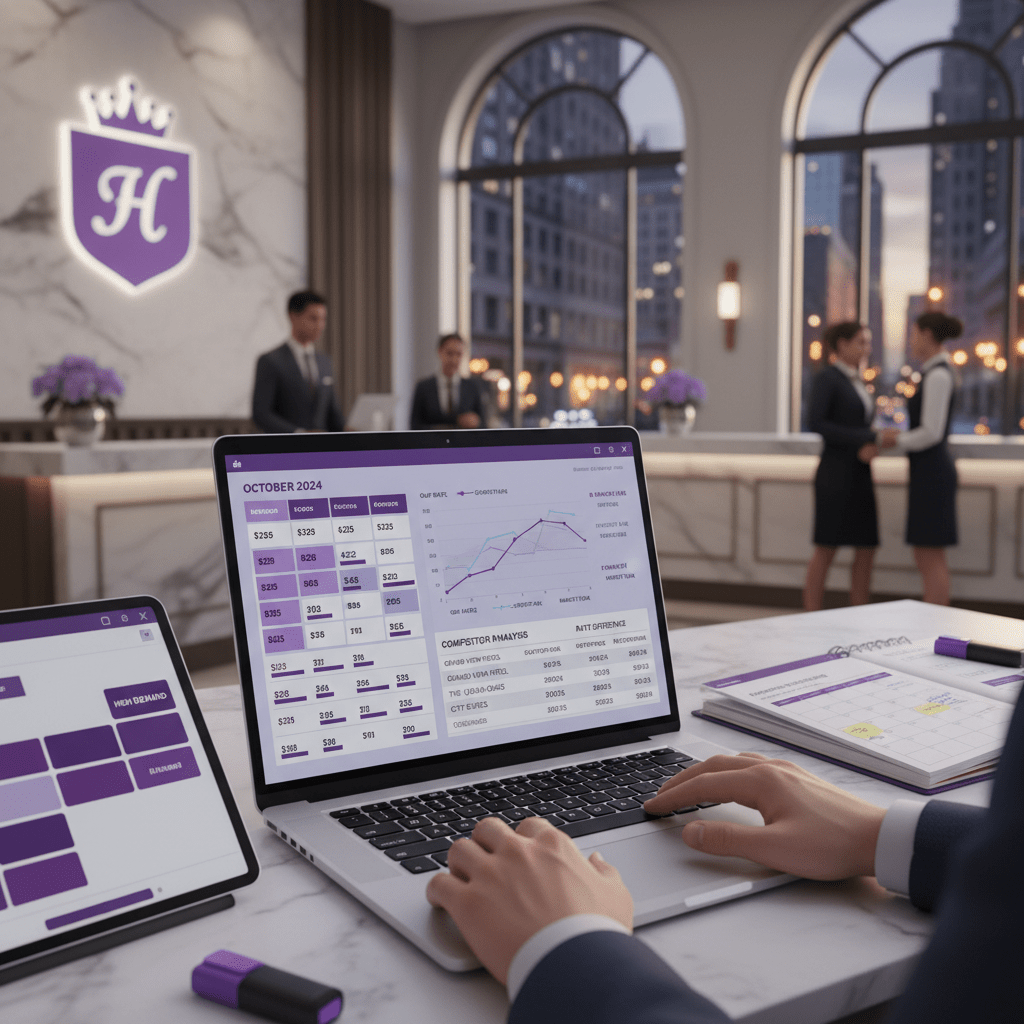
3. Navigating the Market: Types of Hotel Revenue Management Systems
You know that moment when your team says, “Wait, why did the rate change again?” Yep. That’s usually where the type of RMS starts to matter.
Not all revenue management in the hotel industry works the same way. Some systems are simple and rule-based. Others use machine learning and keep learning as bookings roll in. And some live on their own, while others sit inside a PMS or CRS like they were born there.
Rule-based vs. AI-driven systems
A rule-based hotel revenue management system follows if-then logic. For example, if occupancy hits 80%, raise the rate by 10%. Clean. Easy. Pretty predictable.
That can work well for a small inn or a boutique hotel with just a few room types. But it can also get stuck. Fast. If a concert gets announced or a storm cancels flights, the rules don’t know that unless someone updates them.
AI-driven hotel pricing optimization software is more flexible. It looks for patterns in booking pace, cancellations, weather, events, and competitor rates. Then it keeps adjusting. Often without much hand-holding. That kind of automated revenue management is usually a better fit for larger hotels, city properties, and multi-property groups.
Actually, wait – there’s a middle ground too. Some hotels start with rules, then move into smarter models once their team gets comfortable.
Standalone vs. integrated systems
A standalone RMS runs on its own. It can be a strong choice if you want a best-of-breed tool and don’t mind connecting it to other systems.
An integrated RMS sits inside your PMS or CRS. That can feel easier at first because your team sees fewer screens and fewer logins. But there’s a trade-off. Some built-in tools are simple and may not go as deep on forecasting or market signals.
Here’s a quick look:
| Type | Best for | Watch out for |
|---|---|---|
| Standalone RMS | Hotels that want deeper pricing control | Needs clean integrations |
| Integrated RMS | Teams that want one dashboard | May have fewer advanced features |
| Rule-based | Small properties with simple demand | Needs manual updates |
| AI-driven | Busy markets and bigger teams | Takes time to trust at first |
Open API vs. closed ecosystems
This part gets ignored way too often.
If your RMS can’t talk well with your channel manager, booking engine, or marketing tools, you’ll spend more time fixing data than using it. Open API systems make life easier because they connect with more tools and let data move both ways. Closed systems can work fine, but they sometimes box you in.
And that matters for hotels using cloud tools like Ease My Hotel, since a connected setup can bring room pricing, guest info, bookings, and staff work into one flow instead of five messy ones.
So, while choosing a hotel RMS, ask one simple question: does it fit how your hotel really works? Not how a sales demo makes it look. That’s the real test.
4. A Step-by-Step Guide to Choosing and Implementing the Right RMS for Your Hotel
You know that sinking feeling when your rates look fine on paper, but the weekend still underperforms? Yeah. That’s usually the point where a hotel starts looking for a better system.
And honestly, choosing a hotel RMS does not have to be a giant headache. It just needs a clear plan.
Step 1: Audit your needs and goals
Before you sit through demos and shiny slide decks, pause and ask one plain question: what problem are we trying to fix?
Maybe your team wants to save time on pricing. Maybe weekend ADR keeps slipping. Or maybe your forecasts are so off that staffing feels like guesswork. Write it down. Keep it simple.
A good start is setting 2 or 3 measurable goals, like:
- Raise weekend ADR by 8%
- Cut manual pricing work by 10 hours a week
- Improve forecast accuracy for next-month occupancy
That way, you’re not buying software because it sounds nice. You’re buying it because it helps a real gap.
If you use a cloud setup like Ease My Hotel, this is also the moment to look at your current flow. Where do bookings, guest info, and pricing feel messy? Where do people copy the same data twice? Those pain points tell you what kind of hotel revenue management system you need.
Step 2: Evaluate vendors and run real demos
Now comes the part where sales teams try to impress you. Fine. Let them. But keep your list tight.
Shortlist vendors based on your hotel type, room count, budget, and tech stack. A 20-room homestay and a 180-room city hotel won’t need the same setup. Makes sense, right?
During demos, ask questions that match your day-to-day mess, not their polished pitch. Here are a few good ones:
| Question to ask | Why it matters |
|---|---|
| How does it connect with our PMS, CRS, and channel manager? | You need clean, two-way data flow |
| Can staff see why the system made a rate change? | Clear logic builds trust |
| What results have similar hotels seen? | Helps you judge real ROI |
| How long does setup take? | Lets you plan without surprises |
| What training and support do we get? | Good support helps adoption stick |
Also ask about dynamic pricing tools for hotels, forecasting, and competitor rate shopping. But don’t stop there. Ask if it can handle your room types, your booking channels, and your pace changes during busy weekends or event nights.
And if the vendor can’t explain the hotel pricing optimization software in simple words, that’s a red flag. A big one.
Step 3: Plan the RMS implementation process
This part matters more than people think.
A mid-sized hotel often needs about 8 to 12 weeks to get an RMS fully in place. That window usually covers data checks, system setup, training, and a soft go-live with support. Rush it, and you’ll pay for it later.
Here’s a clean way to think about the rollout:
Clean your dataOld rate codes, duplicate profiles, messy room names… all of that can trip up the system. If the data is sloppy, the output will be sloppy too.
Train the team earlyFront desk, revenue, sales, and managers all need to know what the RMS does and does not do. If people fear the system, they won’t use it. And then the whole thing turns into very expensive shelfware.
Start in phasesDon’t flip every switch on day one. Begin with recommendations only. Then move to partial automation. Then, once everyone’s comfortable, open up more automation.
That phased approach helps with trust. And trust matters. A lot.
Common problems usually show up in three places: poor data migration, weak PMS integration, and low staff buy-in. The first one creates bad pricing. The second one creates sync problems. The third one creates silence, which is somehow worse.
Actually, wait. The best rollout advice is probably this: treat implementation like a hotel opening, not a software install. Plan it. Walk through it. Test it. Then test it again.
If you do that, the benefits of revenue management software show up faster. Better rates. Fewer manual tasks. Less chaos at 4 p.m. on a sold-out Friday.
And if you want a smoother path, a unified platform like Ease My Hotel can help keep bookings, pricing, guest messages, and operations in one place while your RMS gets settled in.
Pretty simple, really. Clear goals. Good questions. A rollout your team can actually live with.
Try Ease My Hotel for free.
No lock-in contracts. Cancel anytime
5. Maximizing ROI: Integrating Your RMS with the Broader Hotel Tech Stack
You know what gets messy fast? A nice pricing plan that never reaches the right screen. Happens all the time. And then everyone wonders why the numbers look off.
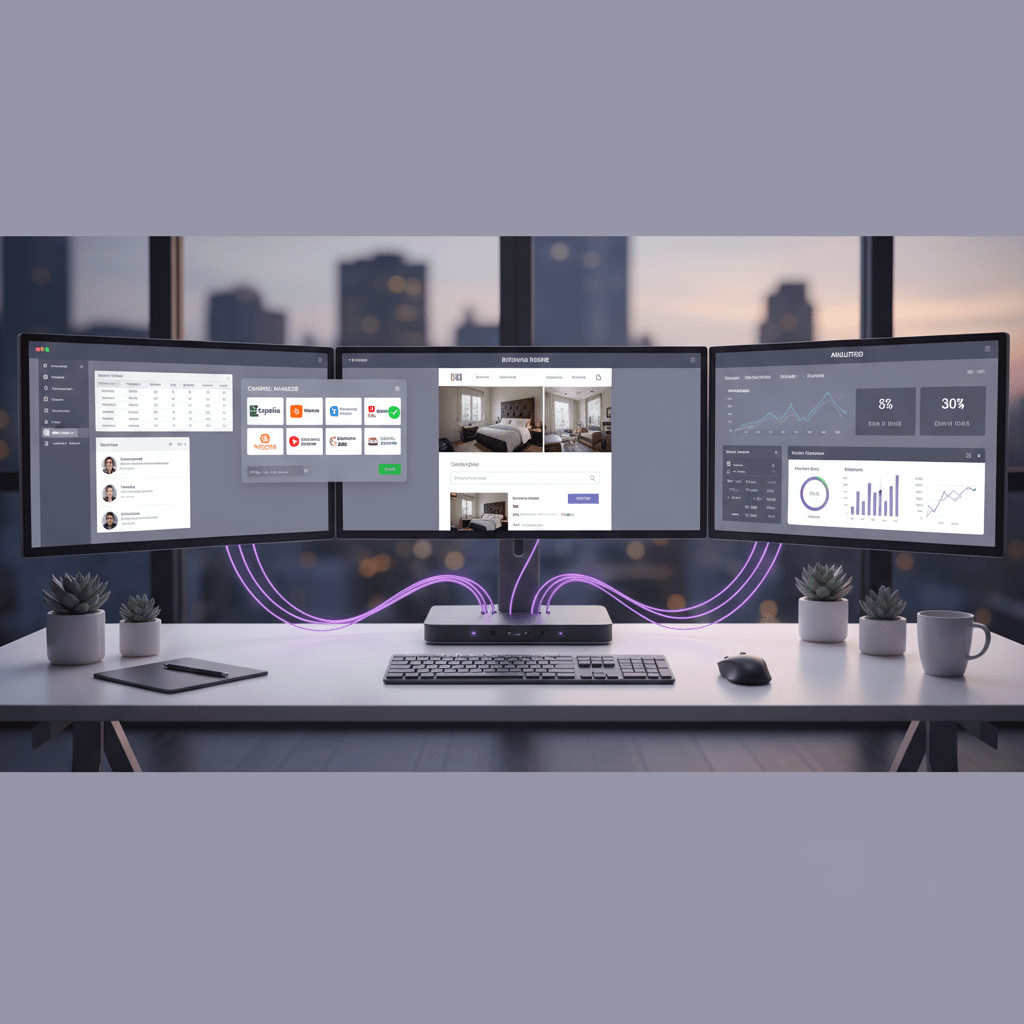
A hotel revenue management system only works well if it talks to the rest of your tools. That means your PMS, channel manager, booking engine, CRM, and BI tools all need to play nice together. If they don’t, you get slow updates, wrong rates, and a whole lot of extra work for the front desk team. Nobody needs that.
PMS and RMS: the core connection
This is the big one. Your RMS and Property Management System should connect both ways in real time. Why? Because the PMS holds the live room inventory, stay details, and reservation changes. The RMS needs that data right away so it can price rooms with a clear picture of what’s open, what’s booked, and what just got canceled.
If that link is weak, things go sideways. A room gets sold twice. A rate changes too late. Or your team ends up fixing numbers by hand at 9 p.m. because the system didn’t sync fast enough. Not fun.
With a solid PMS connection, automated revenue management gets a lot cleaner. The RMS can react to pickup, cancellations, and stay changes without lag. That’s where the real benefits of revenue management software start to show up.
Channel manager and booking engine: push rates live
Here’s the thing. Great pricing means nothing if it stays stuck in a dashboard.
Your channel manager and booking engine should receive RMS updates right away, so rate changes flow out to OTAs and your direct website without delay. That way, the price you set in the morning is the price guests actually see by lunch. No guessing. No awkward mismatches.
This matters a lot for revenue management in the hotel industry, especially when demand spikes from a concert, a holiday weekend, or a big local event. If your hotel pricing optimization software spots a rate increase, the new price needs to go live fast. Otherwise, you leave money on the table. And sometimes a lot of it.
CRM and BI: smarter marketing, better guest insight
This part is easy to skip, but it can be a real big deal.
When your RMS shares data with CRM and hotel business intelligence tools, you start seeing patterns that help beyond room pricing. You can spot which guest segments book early, which ones cancel more, and which channels bring in your best-value stays. That helps marketing send better offers and helps sales focus on the right guests.
It also makes forecasting feel less like a wild guess. If your data shows repeat guests booking longer stays in shoulder season, your team can shape offers around that. If soft dates keep showing up, you can plan promos before the empty rooms start hurting revenue.
| Integration | Why it matters |
|---|---|
| PMS + RMS | Keeps room inventory and reservation data in sync |
| Channel manager + RMS | Pushes pricing updates to OTAs and direct sites fast |
| Booking engine + RMS | Shows the right live rate to direct bookers |
| CRM + RMS | Helps with guest targeting and repeat-booking insights |
| BI tools + RMS | Gives deeper reporting on demand, pace, and value |
And if your setup is cloud-based, a unified platform like Ease My Hotel can make this whole flow a lot less painful. Booking management, guest communication, channel control, and day-to-day ops in one place? That’s less tab chaos and fewer copy-paste mistakes.
The short version: an RMS shouldn’t sit alone. It should feed your whole stack. That’s how you get cleaner pricing, faster updates, and better control over profit.
6. The Future of Revenue Management in the Hotel Industry: What’s Next?
Ever notice how one empty room can turn into three different money chances? A stay, sure. But also breakfast, a spa visit, maybe a late checkout. That’s where the future is heading.
The next wave of revenue management in the hotel industry is not just about rooms anymore. It’s about total revenue management. That means hotels will keep looking at room pricing, but they’ll also price and plan around F&B, spa, meetings, parking, and other extras. So instead of chasing only RevPAR, teams will watch numbers like TRevPAR and total guest value too.
And honestly, that makes sense. A guest who books a room might also book dinner, a massage, and a meeting space. Why leave that on the table?
Here’s the deal. Future hotel revenue management system tools will get much better at hyper-personalization. They’ll use guest data to build smarter offers for repeat visitors, weekend travelers, business guests, and groups. Not just “one room, one rate” anymore. More like, “this guest usually books early, likes breakfast, and often upgrades.” That kind of detail can shape room pricing, packages, and add-ons in a way that feels more natural.
AI and machine learning will push this even further. New dynamic pricing tools for hotels will likely look at weather, flight delays, search trends, event calendars, and maybe even social chatter to spot demand shifts sooner. A few years from now, that may be normal. Weird, right? But pretty useful.
A Cornell University study found AI-powered RMS users saw about a 7.2% revenue lift over traditional methods, which is a pretty strong hint about where things are going Cornell research on Total Hotel Revenue Management.
| What’s changing | What it means for hotels |
|---|---|
| Total revenue focus | More income from rooms, food, spa, and events |
| Hyper-personal offers | Better packages based on guest behavior |
| AI-driven pricing | Faster, smarter rate changes |
| Better forecasting | Less guesswork for staffing and promos |
But here’s the good part. Even with all this tech, people won’t disappear from the process. Revenue managers will spend less time on manual pricing and more time on strategy, guest value, and cross-team decisions. So the role gets sharper, not smaller.
If you’re using a cloud platform like Ease My Hotel, this future feels a lot easier to reach. A unified dashboard can help bring bookings, guest communication, channel control, and daily ops into one place, which is a solid starting point for smarter pricing later on.
So yes, the future looks more automated. But it also looks more human in a strange way. More personal. More connected. And way less stuck in spreadsheet land.
Conclusion: Transform Your Hotel’s Profitability with Smart Technology
If you’ve ever watched a quiet Tuesday turn into a sold-out Saturday, you already know the drill. Hotel demand moves fast. Fast enough that spreadsheets and guesswork usually can’t keep up.
That’s why revenue management in the hotel industry is no longer just for big chains. A modern hotel revenue management system helps small inns, hostels, resorts, homestays, and multi-property groups price smarter, save time, and make better calls all week long. And the payoff can be real. Hotels that move to modern RMS tools often see a 5% to 20% RevPAR lift, with many reports pointing to 15% to 20% gains, plus 20 to 40 hours saved each month by cutting manual work Hotel Tech Report’s RMS review.
But the best part? It’s not just about higher room rates. It’s about clearer thinking. Better forecasts. Less stress at the front desk. And more room to focus on guests instead of chasing tabs and rate sheets.
So if you’re choosing a hotel RMS, start simple:
- Audit your pain points first
- Pick a system that fits your property size
- Train your team well
- Treat the RMS like a long-term partner, not a quick fix
If your hotel already runs on a cloud setup like Ease My Hotel, that next step gets a lot easier. A unified dashboard for bookings, guest communication, and daily operations can help everything work together more smoothly.
Pretty simple, really. Better data. Smarter pricing. Stronger profit.
Try Ease My Hotel for free.
No lock-in contracts. Cancel anytime