
Introduction: Why Your Best Marketing Content Is Already Written by Your Guests
You know that one hotel with the shiny photos and the catchy headline? It still loses to the place with a pile of fresh guest reviews. Weird, right? But that’s how booking behavior works now. Guests trust other guests more than polished copy, and that trust shows up in clicks, rankings, and booked rooms.
A 2024 Accor report found that 97% of hotel guests check reviews before booking, and 67% skip reviews older than six months. That means old feedback gets stale fast. Fast. If your listing still talks like it was written last year, you’re probably missing a big chance to improve hotel OTA ranking and increase hotel bookings 2026.
Here’s the part lots of hotels miss. They collect reviews, smile at the nice ones, maybe reply to a few… and then do nothing else. The feedback never makes it back into the listing itself. So the same praise and the same pain points keep living in separate silos. That’s a problem.
This guide will show you how to optimize listings in hotel channel managers 2026 by using guest reviews the smart way. We’ll look at how hotel channel manager software can help you integrate guest reviews hotel-wide, use feedback to update listings, improve hotel reputation management, and turn social proof in hospitality into more direct trust. Plus, we’ll keep it practical, so you can start with what you already have.
If you’ve got an OTA listing strategy, a channel management optimization plan, or even just a stack of review emails in your inbox, you’re already halfway there. We’ll show you how to turn that noise into a clearer story for travelers. And yes, it can help your team save time too.
The 2026 Booking Algorithm: Why Guest Reviews Are Your Most Critical Ranking Factor
Ever notice how two hotels can look almost the same online, yet one keeps getting the bookings? That’s not luck. It’s trust, and trust shows up in reviews, reply speed, and how fresh that feedback looks.
Guest reviews now sit right at the center of hotel OTA ranking. Booking sites like Booking.com and Expedia keep getting smarter about user behavior, so they look past pretty photos and ask a simple question: which place feels safest to book? Review score matters. Recency matters. Response rate matters too. And yes, the little details pile up fast.
A 2024 Accor report found that 97% of travelers check reviews before booking, and 67% skip reviews older than six months. That’s huge. It means a glowing review from last winter may already feel old to a guest planning a trip this week. Fresh feedback has more pull.
Here’s the thing though. Reviews don’t just help you show up. They help you get clicked. Hotels in the top 10 sort positions on Expedia can get 62% of clicks, which is a pretty loud reminder that visibility and trust move together. Better reviews can also support a higher ADR, since reputation strength gives rate managers more room to price with confidence. One study tied a 1% jump in online reputation to a 0.89% rise in ADR and a 1.42% lift in RevPAR Cornell/STR/ReviewPro findings.
Think of reviews as trust currency. Good ones make people feel safe. Recent ones make your listing feel current. And helpful responses show you’re paying attention, which matters more than most hoteliers think. If someone sees fast replies, honest comments, and strong scores, the booking choice gets a lot easier.
So if you’re working on how to optimize listings in hotel channel managers 2026, don’t treat reviews like side noise. They’re part of the ranking system now. Use hotel channel manager software that helps you integrate guest reviews hotel-wide, keep an eye on sentiment, and turn that feedback into stronger listings. That’s channel management optimization in the real world.
And if your OTA listing strategy still ignores review recency? That’s probably the first thing to fix. Start with your top channels, update the copy using feedback to update listings, and keep your strongest guest phrases front and center. Quiet room. Fast WiFi. Great breakfast. Guests already told you what sells.
Unlocking Your Channel Manager for Reputation Management
You know what’s funny? A lot of hotels already have the tools they need. They just don’t use them like a single system.
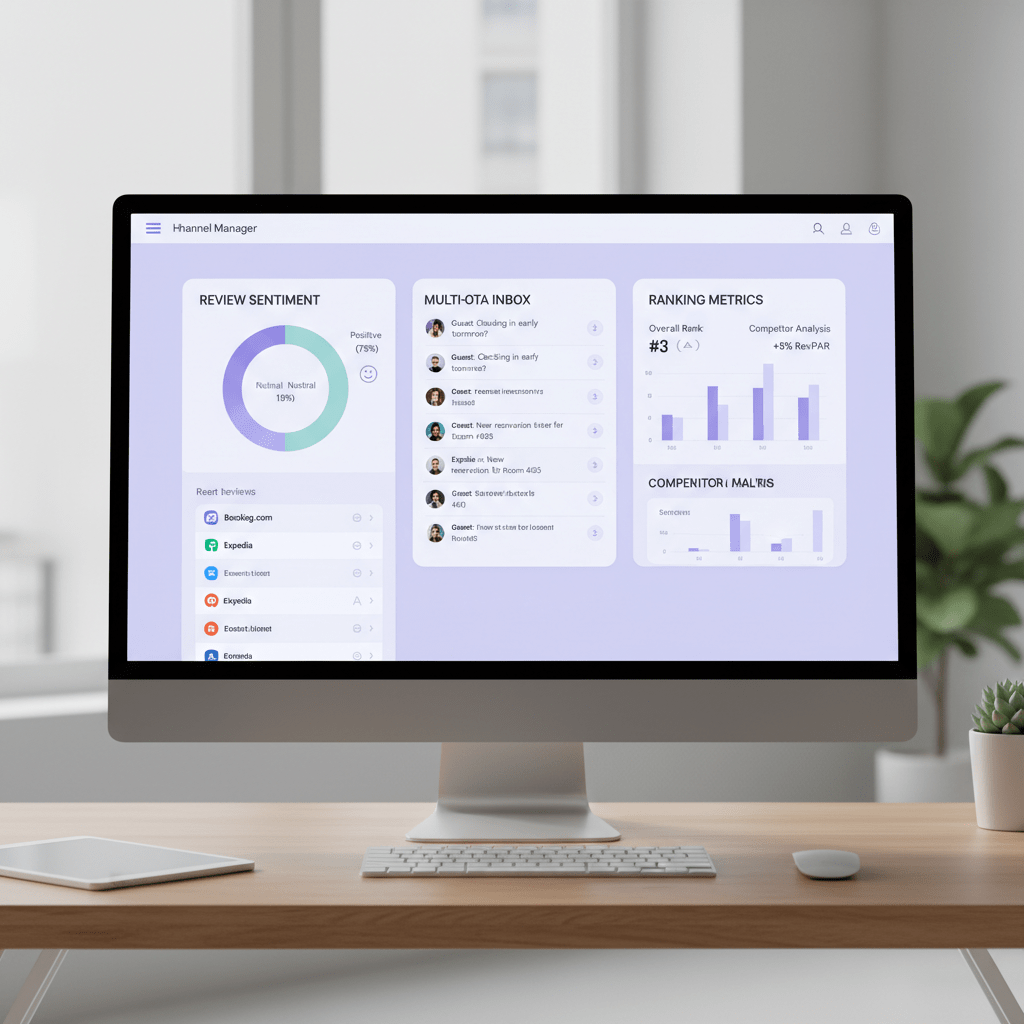
That’s where hotel channel manager software starts to pull its weight. Review integration means your feedback from Booking.com, Expedia, Airbnb, and other OTAs lands in one place. One dashboard. One view. No more hopping from tab to tab like you’re chasing a train that keeps moving.
Here’s the real win. You save time, and you miss less. If your team has to log into five different extranets just to check what guests said last night, stuff gets skipped. A review gets buried. A reply gets delayed. Then the guest feels ignored. Not great.
A centralized review setup also helps your team sound like one team. That matters. When your front desk manager, GM, and marketing lead all answer in the same voice, your hotel reputation management feels steady and trustworthy. Guests notice that stuff. They may not say it out loud, but they feel it.
What review integration should do
Look for tools that give you more than a list of comments. The better ones help you spot patterns fast.
| Feature | What it helps with |
|---|---|
| Sentiment dashboard | Shows if guests feel happy, mixed, or annoyed |
| Automated response templates | Saves time on common replies |
| Review reporting tools | Tracks trends over weeks and months |
| Multi-OTA inbox | Pulls reviews from many sites into one place |
| Team access controls | Lets the right staff reply without chaos |
Some hotel channel manager software even adds AI-supported response drafting. That can help with automated review responses, especially for simple praise like “clean room” or “great breakfast.” But don’t let it get too cookie-cutter. Guests can spot a canned reply from a mile away. And honestly, they hate it.
A good review workflow usually looks like this: collect the feedback, sort it by platform, spot the common themes, reply fast, then use what you learned to update listings. That last part is the piece many teams skip. They answer reviews, then never change the listing copy. Weird, right?
If you want to improve hotel OTA ranking and increase hotel bookings 2026, this loop matters. You’re not just answering guests. You’re feeding better info back into your OTA listing strategy. So if people keep saying “quiet rooms” or “fast WiFi,” those words should show up in the listing itself.
That’s the heart of channel management optimization. Not more work. Better use of the work you’re already doing.
And if you’re using Ease My Hotel, this gets a lot easier because your booking management, guest communication, OTA and channel manager, and day-to-day ops all live in one cloud-based dashboard. Less switching. Fewer misses. More room to act on the feedback that keeps showing up.
A quick tip? Start by checking whether your current setup lets you sort reviews by source, score, and date. If it does, you’re already closer than you think.
How to Optimize Listings in Hotel Channel Managers: A 3-Step Feedback Loop
You know that moment when a guest says, “We booked because your breakfast sounded amazing”? That’s not just a nice compliment. That’s copy you can use.
And honestly, it’s kind of wild how many hotels miss this. They already have the words travelers trust most. They’re just sitting in reviews, reply threads, and inboxes.
So let’s fix that.
A simple feedback loop can help you work out how to optimize listings in hotel channel managers 2026 without starting from scratch. The idea is pretty basic: listen, edit, then push the update everywhere through your hotel channel manager software. That’s channel management optimization in plain English.
Step 1: Mine reviews for golden keywords
Start with your 4 and 5 star reviews. Not the one-off praise. Look for repeats.
Are people saying:
- “fast WiFi”
- “quiet location”
- “amazing breakfast”
- “super clean rooms”
- “friendly front desk”
Those are your golden keywords. Real guest language. The kind that builds social proof in hospitality because it sounds human, not polished to death.
Here’s the trick. Don’t just copy those words into one listing and call it done. Use your channel manager to update the same message across every OTA. Booking.com. Expedia. Airbnb if that fits your property. All of it.
If guests keep praising the bed, say it. If they love the view, say it. But keep it true. No fluff. No weird stretch.
For example, if three guests in a row mention a “quiet room,” your listing can say:
Quiet rooms and a restful stay near the city center.
Small change. Big effect.
Step 2: Use negative feedback to set better expectations
This part feels a little awkward at first. But it works.
If guests keep saying rooms are small, don’t hide it. Reframe it.
Try wording like:
Cozy, efficiently designed rooms for short stays and city breaks.
See the difference? You’re not pretending the room is huge. You’re helping the right guest self-select.
That matters for hotel reputation management because it cuts down on mismatch. And fewer surprises usually means fewer grumpy reviews later. Pretty simple.
Use this same idea for other pain points too:
| Guest comment | Better listing wording |
|---|---|
| “Small bathroom” | Compact bathroom with smart storage |
| “Limited parking” | On-site parking available, subject to space |
| “Noisy street” | Best for guests who want a central location |
| “Basic breakfast” | Simple breakfast options to start your day |
This isn’t spin. It’s clarity. And clarity helps improve hotel OTA ranking because travelers feel like the listing matches the stay.
Step 3: Announce fixes right in the listing
Now this is where things get fun.
If reviews point out a problem and you fix it, say so. Don’t be shy.
Upgraded the WiFi? Put that in the listing.
Renovated bathrooms? Say it.
New mattresses? Yep, mention those too.
Something like:
Now with newly upgraded fiber WiFi throughout the property.
Or:
Recently refreshed rooms with better bedding and brighter lighting.
That’s using feedback to update listings in a way guests can see fast. And when your channel manager pushes that update to every OTA at once, you save a ton of manual work.
This is where Ease My Hotel fits in nicely. Since it brings booking management, guest communication, OTA control, and daily operations into one cloud-based dashboard, your team can make one change and push it across channels without bouncing between five systems. Less chaos. More consistency. Nice trade.
A simple 3-step loop you can keep using
| Step | What you do | What it helps with |
|---|---|---|
| 1 | Pull repeated praise from reviews | Stronger listing copy |
| 2 | Reword weak spots honestly | Better guest expectations |
| 3 | Post real upgrades fast | Higher trust and more bookings |
If you do this every month, your OTA listing strategy stays fresh. And that matters a lot because review recency carries real weight. Guests are not reading old copy forever. They want the latest story.
So start small. Pick your top channel first. Scan the last 20 reviews. Pull out the phrases people keep using. Then update the listing tonight, not “someday.”
That’s how hotels turn guest feedback into action. And action into more direct trust.
Try Ease My Hotel for free.
No lock-in contracts. Cancel anytime
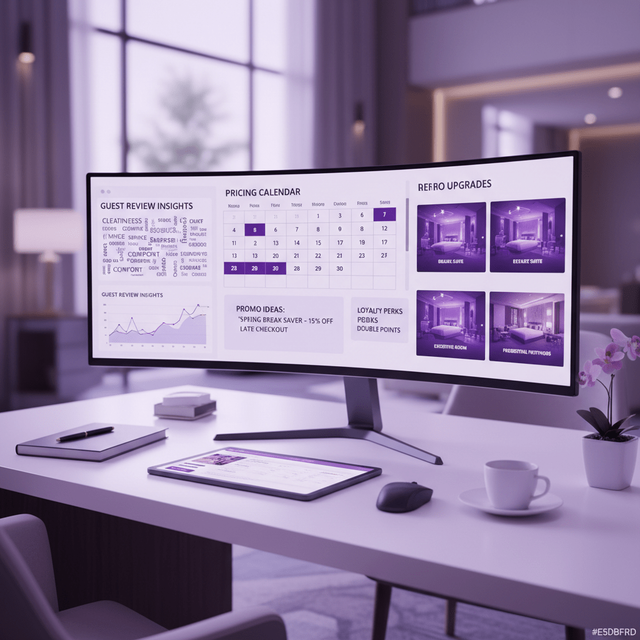
Advanced Strategy: Linking Review Data to Pricing and Promotions
You know that moment when your sold-out weekend suddenly turns into a slower Tuesday? That gap can feel random… but it usually isn’t. Guests are telling you what they love, what they skip, and what they’ll pay more for if you package it right.
That’s why review data should not just sit in your inbox. It can shape pricing, promos, and even which room types get a little extra push. If your hotel keeps getting praised for spotless rooms or a dreamy pool, that’s not just nice feedback. That’s a hint.
Here’s the simple idea: if guests keep saying one thing is better than your competitors, you can charge with a little more confidence. A hotel that leads the pack on cleanliness, for example, may have room to lift rates because that praise builds trust fast. Research linked to Cornell, STR, and ReviewPro found that even a 1% rise in online reputation can lift RevPAR by 1.42% hotel revenue impact findings. That’s not pocket change. Not even close.
Use positive sentiment to back your rate moves
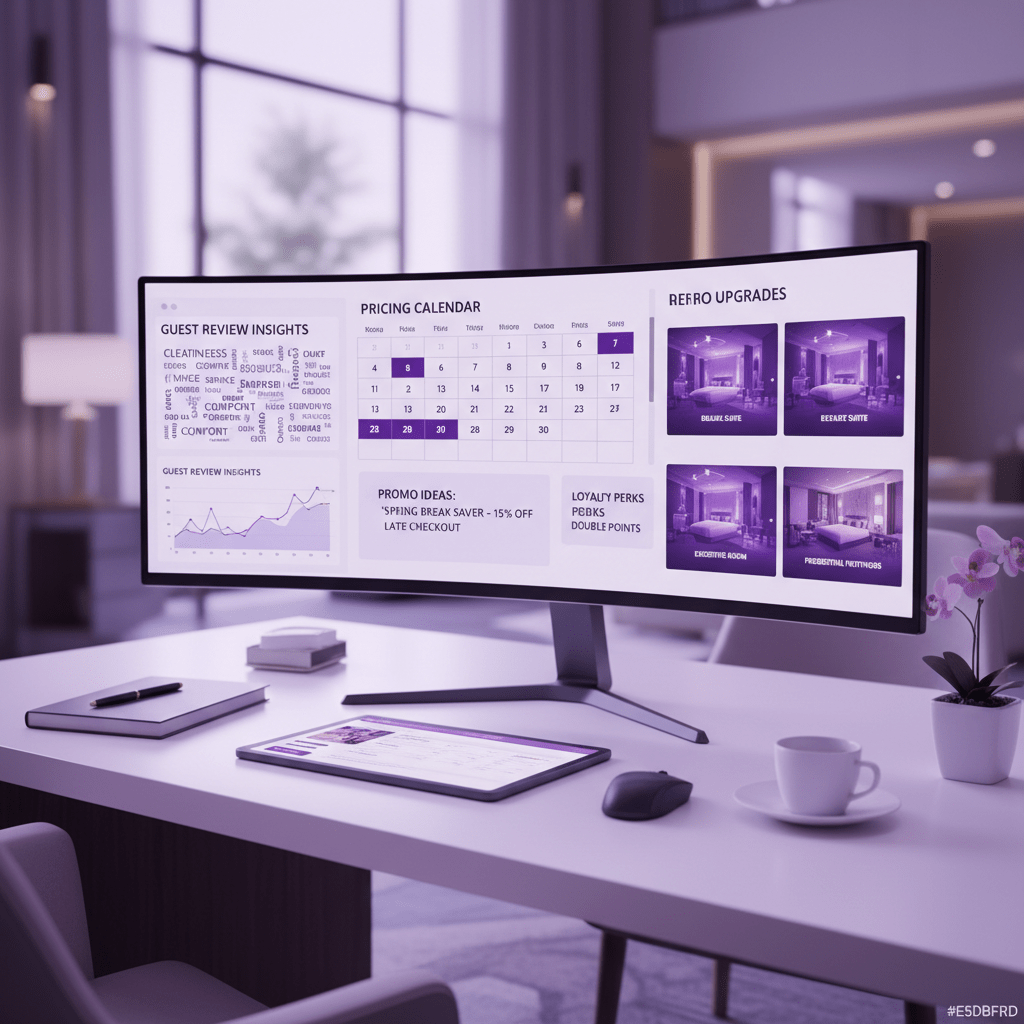
This is where hotel channel manager software starts to feel pretty smart. Some tools can sort review sentiment by theme, so you can see if guests keep loving your breakfast, pool, WiFi, or housekeeping. If your scores for cleanliness or service are clearly stronger than nearby hotels, that gives you a real reason to test a higher ADR.
And no, this doesn’t mean you crank rates for no reason. It means you connect guest praise to pricing in a way that makes sense. If travelers keep calling your rooms spotless and your beds comfy, that value should show up in your rate plan.
A simple way to think about it:
| Review strength | Pricing idea |
|---|---|
| Best cleanliness score in your area | Test a small ADR lift on peak dates |
| Guests rave about the pool | Add a summer package with pool access |
| Breakfast gets repeat praise | Bundle breakfast into a higher-value offer |
| Fast WiFi gets mentioned often | Promote it for work trips and remote stays |
Build promos from what guests already love
This part is fun. Actually, wait… it’s more than fun. It can be a nice revenue move too.
If guests keep talking about your pool, that’s your sign to create a “Summer Pool Package” and push it through every OTA. If families mention your breakfast, turn that into a “Family Stay + Breakfast” offer. If couples keep calling out quiet rooms or a good view, make that the headline in your promo copy.
That’s using feedback to update listings and offers at the same time. And with a good OTAs listing strategy, you can send the same package message across Booking.com, Expedia, Airbnb, and any other channel that fits your property. Less guesswork. More consistency. Nice and tidy.
Here’s a quick example:
- Guests say the pool is a hit
- You build a pool-centered summer promo
- You add matching photos and short copy
- Your channel manager pushes it across all OTAs
Pretty simple. But it works.
Peek at competitor reviews, then lean into your strengths
This is the sneaky-smart part.
Look at public reviews for nearby hotels. What are guests complaining about there? Bad breakfast? Slow check-in? Noisy rooms? Once you spot the weak spots, you can quietly double down on the things your property does better. Maybe your breakfast gets better comments. Maybe your front desk is faster. Maybe your rooms feel calmer.
Then put that into your listing and photos. Not in a braggy way. Just clearly. Travelers compare these things all the time, even if they don’t say it out loud.
If a competitor keeps getting dinged for weak breakfast, your listing can highlight:
Hot breakfast options served daily
If they get complaints about noise, you can say:
Peaceful rooms for a better night’s sleep
That’s competitor analysis without making it weird. It gives your property a sharper edge and helps improve hotel OTA ranking by matching what guests actually want.
A small word on timing
Review data changes fast. So should your pricing and promos. If a new wave of guests starts praising your spa or your new mattresses, update the offer while that praise is fresh. Don’t wait three months and hope people remember.
And if your team is juggling bookings, guest messages, HR, accounting, and channel updates in separate tools, this gets messy fast. Ease My Hotel helps pull booking management, guest communication, OTA and channel manager tasks, and daily ops into one cloud-based dashboard. That makes it easier to spot what guests are saying and act on it without bouncing around all day.
So yes, your reviews can help improve hotel OTA ranking, increase hotel bookings 2026, and support smarter pricing too. The trick is to treat them like live business signals, not just kind words from happy guests.
Start with one strength. One promo. One rate test. Then see what the market tells you.
The Future of Listing Optimization (2026 and Beyond)
You know what’s coming next? Hotels won’t just read reviews anymore. They’ll start guessing what to do with them before your team even logs in. Wild, right?
That shift is already showing up in traveler behavior. A 2024 Accor report found that 97% of guests check reviews before booking, and 67% skip reviews older than six months. So if your listing still sounds stale, it’s going to feel stale too. No surprise there.
AI will start doing the first draft for you
Right now, hotel channel manager software can help you collect reviews and spot common themes. But the next step is bigger. AI tools will likely move past simple sentiment checks and start suggesting exact copy changes for your OTA listing strategy. Think: “Add fast WiFi,” “highlight family rooms,” or “swap this line for a clearer one.”
And here’s the really handy part. These tools can test two versions of a listing and see which one gets more clicks or bookings. That means less guesswork. More “show me what works.”
Listings will change by guest type
This is where things get a little smarter. A family traveler may care about breakfast, space, and pool access. A business guest might care more about WiFi, desk space, and quick check-in. Soon, systems may use review data to shift the message based on who’s looking.
So one person sees “quiet rooms and easy parking.” Another sees “great for work trips and early meetings.” Same hotel. Different angle. That’s hyper-personalized listing content, and it fits right into how to optimize listings in hotel channel managers 2026.
Reviews will trigger action, not just replies
The best future systems won’t stop at automated review responses. They’ll also flag ops problems and send tasks to the right team. If guests keep saying the air con is weak, the system can alert maintenance. If housekeeping gets repeat complaints, the manager sees a pattern fast.
That closes the loop. Reviews go in. Fixes come out. Then the listing gets updated with the new truth.
| Review signal | Future response |
|---|---|
| Repeat WiFi complaints | Create a tech task and update the listing after the fix |
| Guests praise breakfast | Push that phrase higher in the OTA description |
| Families mention room space | Show family-friendly copy to similar travelers |
| Cleanliness praise drops | Alert housekeeping before scores slide further |
What this means for hotels right now
If you want to improve hotel OTA ranking and increase hotel bookings 2026, start building the habit now. Pull review themes into your listings. Keep your wording fresh. Watch for patterns.
And if you’re using Ease My Hotel, this gets easier because booking management, guest communication, OTA and channel manager tools, and daily operations sit in one cloud-based dashboard. That makes it simpler to spot a review, act on it, and keep the listing in sync.
A small note before we wrap this section: the future isn’t just more automation. It’s better timing, cleaner guest language, and fewer gaps between what people say and what your listing shows. That’s the real win.
Conclusion: Turn Your Guests into Your Best Marketers
Guest reviews are not just leftovers from a stay. They’re the story travelers trust most.
And if we’re being honest, that story changes fast. A great review from last summer won’t carry you forever, since most guests skip older feedback after six months. So the hotels that win in 2026 will be the ones that keep listening, keep updating, and keep their listings sounding like real life.
Here’s the simple play:
- Mine reviews for repeated words and phrases
- Update descriptions so they match what guests really say
- Use hotel channel manager software to push changes across every OTA at once
That’s how you turn social proof in hospitality into better trust and more clicks. It also helps improve hotel OTA ranking and can support a lift in bookings without making your team do extra busywork.
If you want a quick place to start, do a feedback audit this week. Pull your last 20 reviews, look for repeated praise and pain points, then compare that with your live listings. If the words don’t match, fix that gap first.
Small step. Big payoff.
And if your current setup feels messy, tools like Ease My Hotel can make the whole thing easier with one cloud-based dashboard for booking management, guest communication, OTA and channel manager tasks, and daily operations. Less tab-hopping. More action.
2026 is going to be more review-driven, not less. So let your guests do the talking, then make sure your listing keeps up.
Try Ease My Hotel for free.
No lock-in contracts. Cancel anytime