
The Silent Revenue Killer: How Minor Housekeeping Lapses Lead to Major Reputation Damage
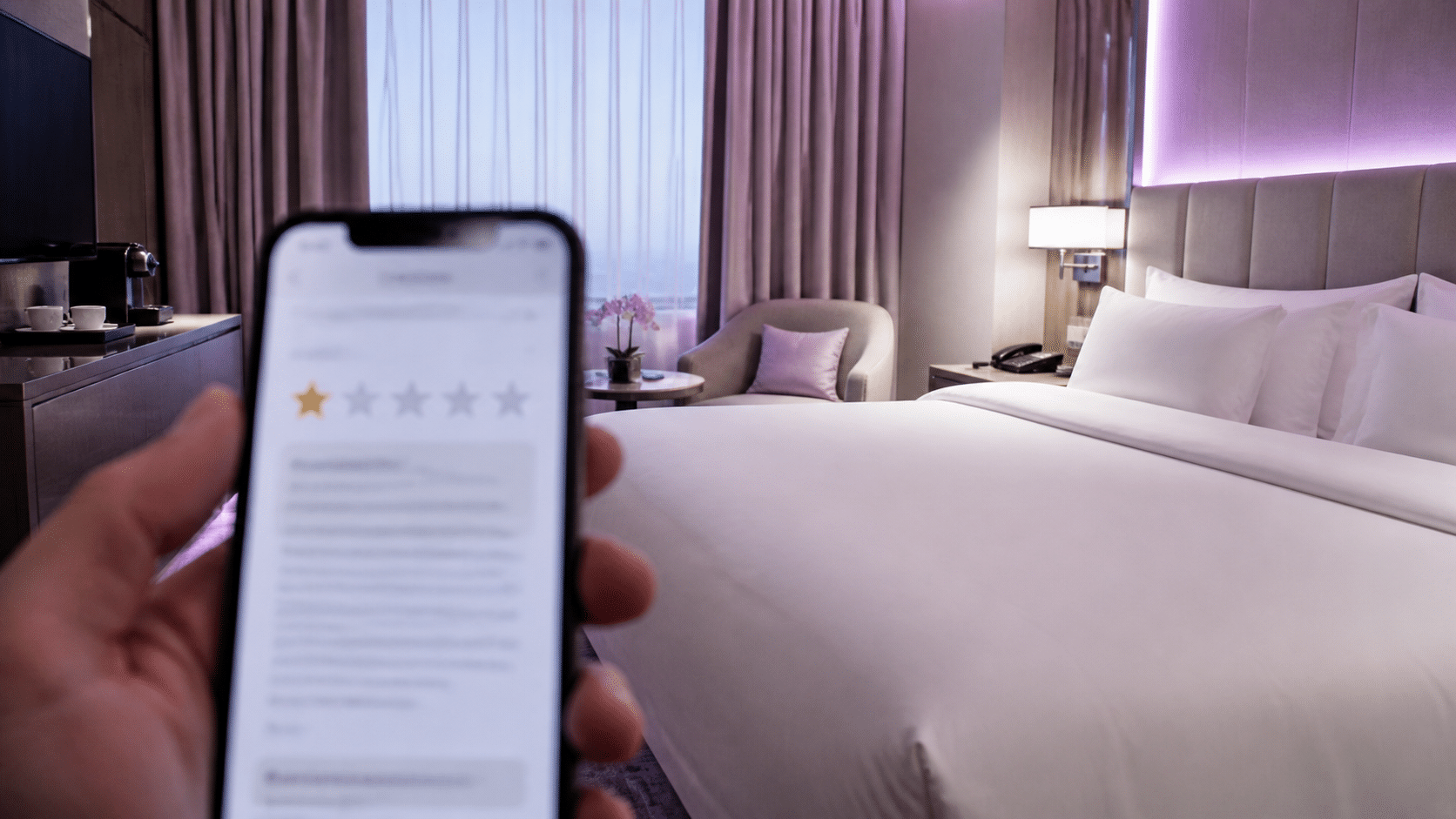
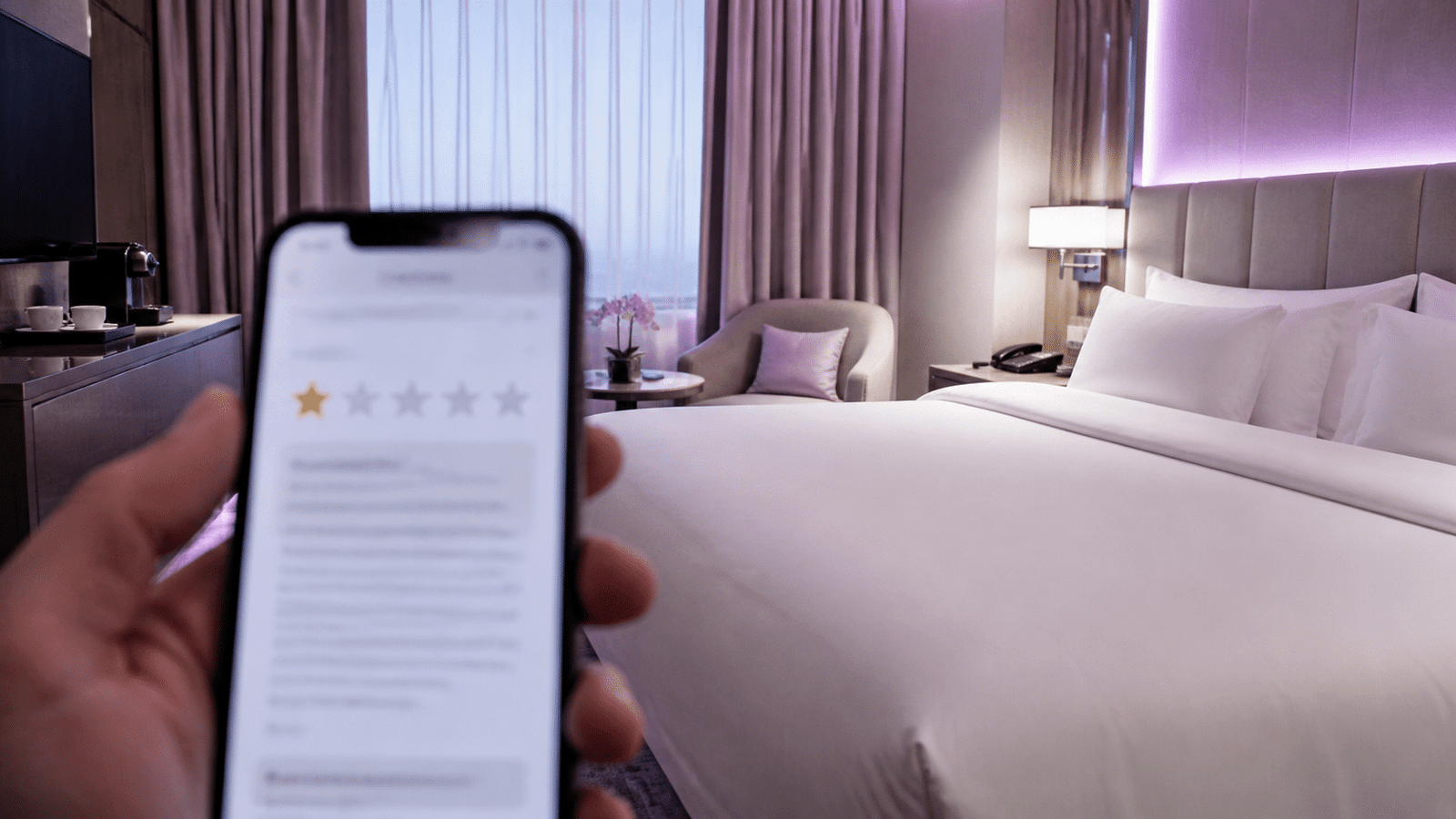
Picture this: a traveler books your hotel after scrolling through dozens of options. They arrive tired, they just want a clean room. Instead, they find a hair on the bathroom floor, a dusty headboard, and a faint smell they can’t quite place. By morning, they’re typing a one-star review that 50 future guests will read before deciding to book somewhere else.
That’s not a dramatic hypothetical. That’s Tuesday.
Research consistently shows that room cleanliness is the single leading reason guests leave a negative review — ahead of noise complaints, slow service, or even price. And the financial damage spreads fast. A one-star drop in your online rating is commonly estimated to put 5–9% of your annual hotel revenue at risk. For a mid-size property, that’s not a rounding error. That’s a significant chunk of your operating budget, gone — because of a missed surface or a miscommunication between housekeeping and the front desk.
Here’s what makes this especially frustrating for property managers right now: you’re already dealing with housekeeping turnover rates that exceed 60% annually at many properties, rising labor costs, and guests whose expectations keep climbing. Maintaining consistent standards feels harder than ever. And when your team is constantly onboarding new staff, the chances of something slipping through the cracks go up every single week.
But here’s the thing — most of the housekeeping mistakes that actually hurt your reviews aren’t catastrophic failures. They’re small, repeatable, fixable gaps. A missed high-touch surface. A maintenance issue that nobody logged. A room marked clean before it actually was.
This guide is built to help you spot those gaps before your guests do. We’ll walk through 7 of the most common and costly housekeeping errors heading into 2026 — and what you can actually do about each one.
Mistake #1: The Surface-Level Clean – Ignoring High-Touch and Hidden Areas
You know that moment when a guest walks into a freshly made room and still feels… off? The bed looks fine. The towels are folded. But something isn’t right.
Nine times out of ten, it’s the stuff nobody cleaned. Or cleaned wrong.
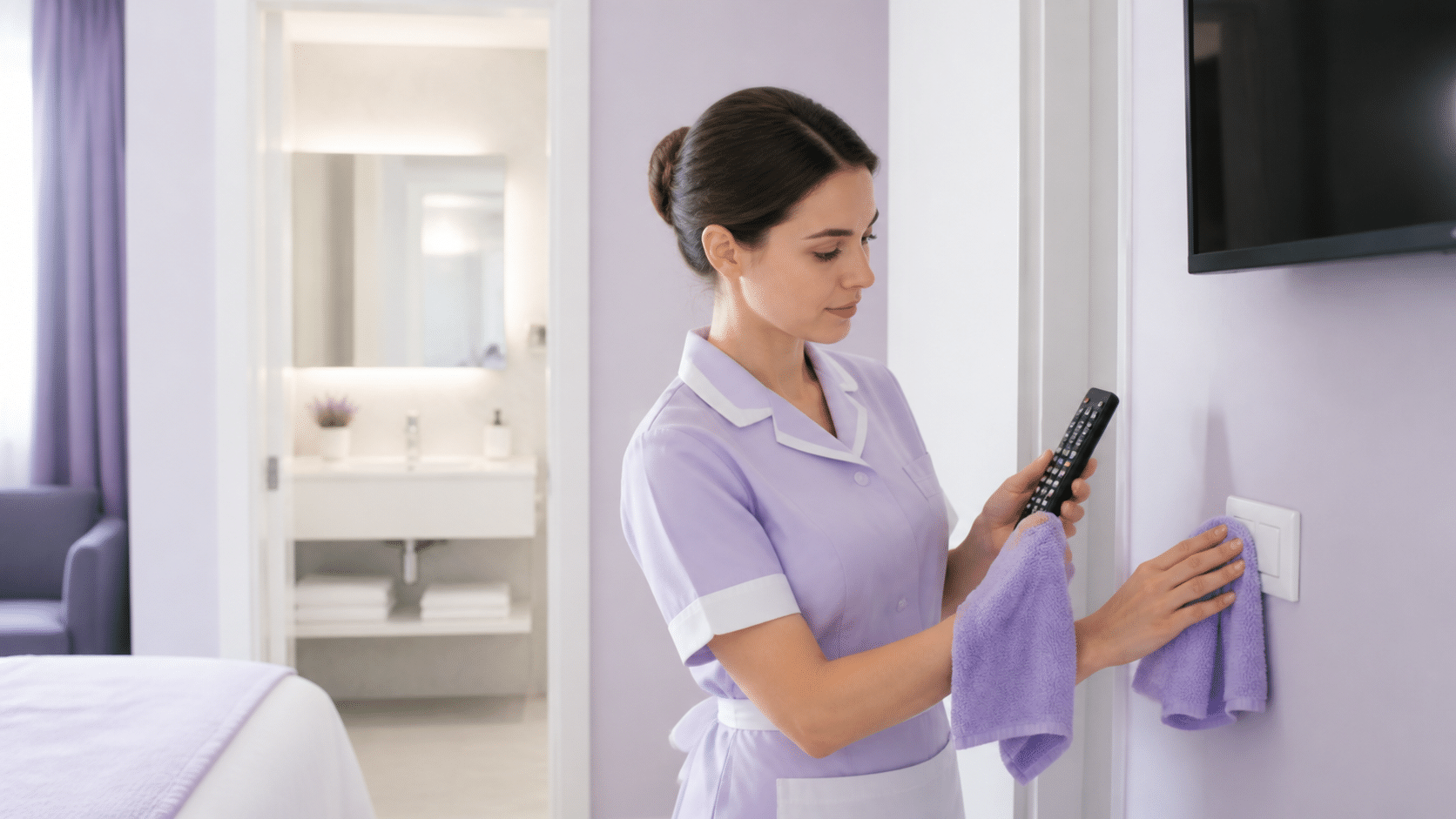
High-touch surfaces are the silent offenders of hotel cleanliness. We’re talking TV remotes, light switches, thermostat panels, hair dryers, door handles, and the inside of the minibar. The American Hotel & Lodging Association’s Safe Stay guidelines specifically call these out — remote controls, toilet handles, nightstands, in-room control panels, and luggage racks are all surfaces that need disinfecting every single turnaround. Not occasionally. Every time.
But here’s what happens in practice: a housekeeper has 25 minutes to turn a room. They strip the bed, wipe down visible surfaces, scrub the toilet, and get out. The remote? Maybe. The light switch by the door? Probably not. Under the bed? Almost definitely not.
And guests notice. Maybe not consciously — but that dusty headboard or the hair left on the bathroom floor registers as “this place isn’t clean” even if the guest can’t articulate why.
The Smell Problem Nobody Talks About
Odor is actually the first cleanliness signal a guest encounters. Before they touch anything, before they pull back the duvet — they smell the room. And that first impression sticks.
Lingeringodors from previous guests, stale air, or even overpowering chemical smells from cleaning products can create an immediate negative response. Some guests associate strong chemical smells with hospitals. Others associate any unusual smell with something being hidden. Neither association is good for your reviews.
Proper ventilation during cleaning, using appropriately dosed products (not “more product = cleaner room”), and addressing the actual source of odors — rather than masking them with sprays — makes a real difference here.
Cross-Contamination: The Invisible Risk
This one is easy to miss in training, and it’s a genuine hygiene problem. If a housekeeper uses the same cloth on the toilet and then wipes down the sink or the bathroom counter, they’re not cleaning — they’re spreading contamination from one surface to another.
Current CDC guidance and AHLA protocols both emphasize cleaning from less-contaminated areas toward more-contaminated ones, and using dedicated tools for different zones. Color-coded cloths, separate supplies for bathrooms versus living spaces, and clear sequencing in your SOPs are the fixes here. They’re not complicated — but they have to be trained, not assumed.
What Actually Gets Missed Most Often
Based on consistent cleanliness complaints across guest reviews, here are the surfaces that show up again and again as overlooked:
| Surface | Why It Gets Missed | Guest Impact |
|---|---|---|
| TV remote | Small, easy to skip | Frequently touched; visible buildup |
| Light switches | Not in standard visual scan | Fingerprints, grime buildup |
| Thermostat/control panel | Treated as décor, not a surface | Sticky residue is noticeable |
| Under the bed | Out of sight | Hair, dust, previous guest items |
| Hair dryer | Rarely on any checklist | Hair, residue, visible neglect |
| Luggage rack straps | Easy to ignore | Dirt transfers to guest bags |
| Bathroom door handle (inside) | Missed in bathroom clean sequence | One of the highest-touch spots in the room |
The fix for most of this isn’t more time or more staff. It’s a specific, documented checklist that names these surfaces explicitly — not just “wipe down surfaces” but “wipe remote, light switches, thermostat, hair dryer, and door handles” as line items. When it’s on the list, it gets done. When it’s implied, it gets skipped.
Some hotels have started using UV blacklight inspections as a quality audit tool — shining a light over surfaces to reveal residue that’s invisible under normal lighting. It’s a useful visual check. Worth noting: a blacklight reveals fluorescent residue but isn’t proof a surface is pathogen-free — it’s an audit signal, not a substitute for proper protocol. But as a training tool or a spot-check method during inspections? It can be pretty eye-opening for staff who think a surface looks clean.
Bottom line: surface-level cleaning that misses high-touch areas and hidden spots is the most common housekeeping mistake — and one of the easiest to fix with the right checklist and a clear training standard.
Mistake #2: Inconsistent Standards Across Rooms and Shifts
You know what’s almost worse than a consistently bad hotel? An inconsistent one.
At least with a consistently bad property, guests know what they’re getting. But when one guest checks into a spotless room and the next person — same room type, same rate — finds a dusty shelf and a re-used soap bar? That’s the kind of thing that makes people feel like the whole operation is a bit of a lottery.
And that perception sticks in reviews. Hard.
The Turnover Problem Makes This Way Worse
Here’s the reality of running a housekeeping team in 2025: housekeeping turnover already exceeds 60% annually at many properties, and some hotels are pushing past 80%. That means you’re constantly cycling through new staff — people who are still figuring out the property, still learning the products, still guessing at what “clean” actually means in your specific context.
When experienced staff leave, they take institutional knowledge with them. The new housekeeper doesn’t know that Room 214 has a tricky corner behind the bathroom door that always gets missed. They don’t know the morning shift has a different supervisor who checks things differently than the afternoon team. So they do their best — and their best is inconsistent, because nobody gave them a precise standard to work from.
That’s not a people problem. That’s a systems problem.
Guesswork Is the Enemy of Consistency
When your SOPs say “clean the bathroom” instead of “scrub toilet bowl, wipe seat and base, clean mirror top to bottom, wipe faucet handles, scrub sink, then mop floor in that order” — you’re leaving every step open to interpretation.
One housekeeper interprets “wipe down surfaces” as a quick pass with a damp cloth. Another does a thorough job on everything visible. A third is rushing because she’s been assigned 18 rooms in a 6-hour shift and the afternoon supervisor is already asking for status updates.
Guest in Room 101 gets a great experience. Guest in Room 108 writes a review.
The research backs this up pretty clearly. A 2025 operations study found that standardizing housekeeping activities and training staff under consistent supervision reduced average room-cleaning time by more than 50% while improving guest-reported room quality. That’s not a small margin. That’s the difference between a property that runs smoothly and one that’s constantly firefighting cleanliness complaints.
What Inconsistency Actually Costs Your Brand
Here’s something property managers don’t always think about: inconsistency doesn’t just create individual bad reviews. It creates a pattern that makes your property look poorly managed.
A guest can forgive one bad experience if they believe it was a fluke. But when they read five reviews in a row that say “sometimes great, sometimes terrible” — that’s a red flag. It signals that nobody’s really in charge of quality. And that impression is harder to shake than a single cleanliness complaint.
For hotels trying to build a reliable brand reputation, inconsistency is actually a bigger long-term threat than the occasional mistake. Mistakes happen. Patterns suggest nobody’s paying attention.
The Fix Is Simpler Than You Think
Standardization doesn’t require a massive overhaul. It requires three things:
- A written SOP that names specific tasks — not categories. “Wipe remote, light switches, thermostat” not “clean electronics.”
- Visual standards — photos of how a correctly made bed looks, where toiletries go, what a properly set minibar looks like.
- Consistent inspection criteria across all shifts — so the morning supervisor and the afternoon supervisor are grading rooms by the same standard.
That last one is underrated. You can have a perfect SOP and still get inconsistent results if different supervisors have different interpretations of “good enough.”
Properties that have implemented structured, documented cleaning standards alongside supervisor calibration sessions have reported improvements in inspection scores and positive cleanliness mentions in guest reviews. The mechanism is straightforward: when every person on your team — regardless of shift, experience level, or how long they’ve been with the property — is working from the same documented standard, the variance shrinks.
That’s consistency. And consistency is what turns a mediocre review into a good one, and a good one into a great one.
Mistake #3: Communication Gaps Between Housekeeping and the Front Desk
You know that sinking feeling when you check into a hotel, drop your bags, and then someone knocks on the door? Not to bring you fresh towels — but because the system still has your room listed as occupied by the last guest.
That’s a communication breakdown. And it happens more than anyone in hospitality wants to admit.
The front desk assigns a room that housekeeping hasn’t finished cleaning. An early arrival waits 90 minutes in the lobby while a housekeeper works through a stack of paper room slips with no idea that a guest is standing downstairs. A “Do Not Disturb” sign gets ignored because the morning supervisor passed a verbal note to the afternoon shift and something got lost in translation.
These aren’t freak accidents. They’re the predictable result of running housekeeping and front desk operations as two separate islands.
The Problem With Manual Systems
Walkie-talkies. Phone calls. Paper lists passed between shifts. These methods work — sometimes — but they’re basically running a real-time relay race where someone always drops the baton.
Here’s what actually happens in practice. A housekeeper finishes Room 214, radios the supervisor, and the supervisor calls the front desk. By then, the front desk agent has changed, or the line was busy, or the note got written on a slip that’s now under a coffee cup. The room board still shows “dirty” when a guest is standing there with their luggage.
Real guest reviews reflect this exact problem. One TripAdvisor review of a Spark by Hilton property described arriving to find an unclean room with an unmade bed — and when the guest went back to reception, the clerk explained that the front desk had received no communication from housekeeping about room status at all. The replacement room was still being cleaned. The guest waited. Then they wrote about it.
That’s not a one-off. It’s a pattern that shows up again and again in cleanliness complaints — and it rarely mentions dirt. It mentions being walked in on, being made to wait, feeling like nobody knew what was going on. The review says “disorganized.” The real problem was a broken communication chain.
What This Looks Like in Your Reviews
Guests don’t always know the operational reason for what went wrong. They just know that the hotel felt chaotic. And that impression sticks.
When room-readiness delays push past the stated check-in time — say, arriving at 4pm when check-in was promised at 3pm — guests don’t think “there must have been a miscommunication between housekeeping and the front desk.” They think “this hotel is poorly run.”
And that’s the brand damage. Not the delay itself, but the impression of disorganization it creates.
How Modern Systems Fix This
This is one of the more straightforward problems to solve — but only if your tools are set up for it.
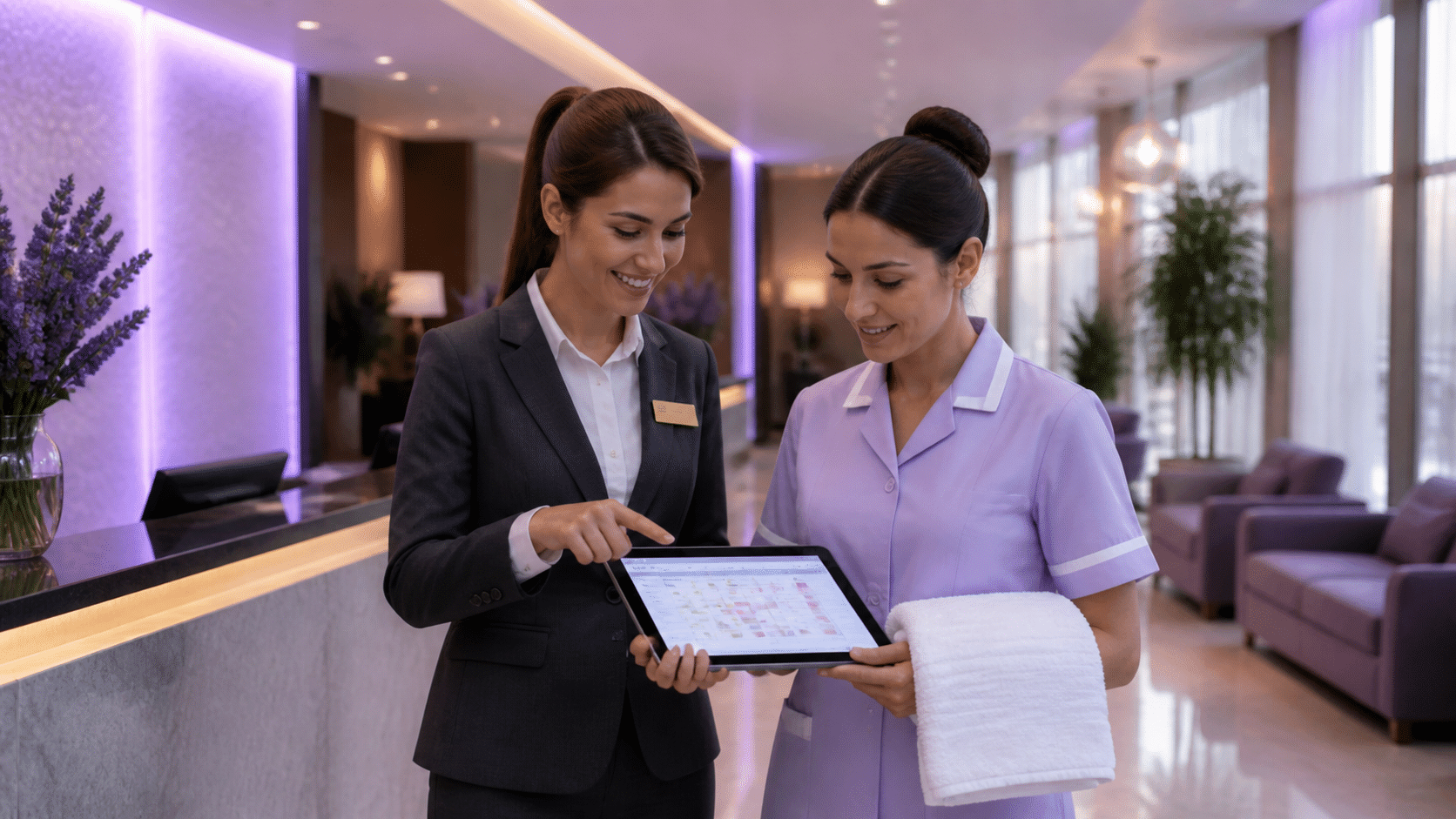
A modern property management system creates a single shared view of room status that both housekeeping and front desk update in real time. When a housekeeper finishes a room, they update it from a mobile device. The front desk sees it immediately. No phone call. No paper slip. No relay race.
Industry reporting suggests 89% of hoteliers save between two and ten or more hours per week through their PMS, while selected deployments report up to 30% faster room turnover after integrating housekeeping workflows. These are vendor-reported figures, so treat them as directional rather than guaranteed — but the mechanism makes sense. When everyone sees the same information at the same time, delays caused by bad communication drop.
Platforms like Ease My Hotel are built around exactly this kind of centralized visibility — mobile room-status updates, maintenance tracking, and a unified dashboard that keeps housekeeping and front desk working from the same data rather than talking past each other.
The key controls that actually prevent the scenarios above:
- One shared room-status source of truth — no more “I thought they called”
- Mobile updates from the floor — the housekeeper marks it done, the front desk sees it immediately
- Maintenance holds visible to reception — so a clean-looking room with a broken AC doesn’t get assigned
- Priority flags for early arrivals and VIPs — housekeeping knows who’s waiting before the lobby situation becomes a review
- Inspection status separate from cleaning status — a room isn’t “ready” until it’s been checked, not just cleaned
None of that is magic. It’s just replacing a broken relay chain with a system where everyone sees the same thing at the same time. Simple in theory. Big difference in practice — and in your reviews.
Try Ease My Hotel for free.
No lock-in contracts. Cancel anytime
Mistake #4: Neglecting Maintenance Issues and Reporting
Here’s something that doesn’t get talked about enough in housekeeping circles: your cleaning staff aren’t just cleaners. They’re the first — and sometimes only — people who go into every single room on your property, every single day.
That makes them your best early-warning system.
A housekeeper walking into Room 312 will notice the slow drain before the guest checks in. They’ll see the water stain forming on the ceiling tiles before it becomes a leak. They’ll smell the mildew starting behind the shower caulk before it turns into a mold problem that takes a room offline for a week. But only if there’s a system that actually captures what they find.
Without that system? The observation disappears. The housekeeper finishes the room, marks it clean, and moves on. The next guest checks in and discovers the broken towel bar, the flickering bathroom light, or the AC unit that’s making a noise it really shouldn’t be making. And then they write a review that says the room felt neglected.
They’re not wrong.
Small Problems Have a Nasty Habit of Getting Expensive
A dripping faucet is a 10-minute fix. Left for two weeks, it can become a failed seal, a water-damaged vanity, and a room that needs to be taken out of service for repairs. A 2024 TrustYou analysis found that room maintenance issues were the most negatively impactful factor on guest satisfaction in the U.S. and EMEA, reducing review scores by as much as 9.5 points. That’s a staggering number for something that often starts as a $20 repair.
And the revenue math gets ugly fast. A room taken offline for emergency repairs isn’t generating any income. A guest who discovers a maintenance problem that was obviously there before they arrived doesn’t just leave a bad cleanliness review — they leave a review that says your hotel is poorly managed. That’s a harder hole to climb out of.
Common small issues that spiral when nobody logs them:
| Issue | If Ignored, Becomes… | Potential Outcome |
|---|---|---|
| Dripping faucet | Failed seal, water damage | Room offline, costly repair |
| Slow drain | Full blockage, backup | Emergency plumber, guest complaint |
| Cracked grout or caulk | Water behind tiles, mold | Major bathroom remediation |
| Flickering light | Electrical fault | Safety issue, room closure |
| Weak AC performance | Full unit failure | Guest complaint, room reassignment |
| Loose towel bar | Falls off the wall | Injury risk, guest incident report |
None of these start as big problems. They just get treated like someone else’s job to report.
The Fix Is a Clear Reporting Path
The issue usually isn’t that housekeeping staff don’t notice these things. They do. The issue is that there’s no easy, reliable way to hand that information off to someone who can actually do something about it.
Verbal reports get forgotten between shifts. Sticky notes on the supervisor’s desk pile up. PMS text fields get used as a dumping ground for informal notes that nobody’s tracking or acting on.
What actually works is a simple, specific reporting path: the housekeeper spots the issue, logs it in a system that creates a trackable record, and that record gets assigned, prioritized, and followed up on. Not someday. That shift.
Modern hotel management platforms — including Ease My Hotel — handle this by letting housekeeping staff flag maintenance issues directly from a mobile device while they’re still in the room. The issue gets attached to that specific room’s record, front desk can see that the room has an open maintenance item before assigning it, and the maintenance team gets the information they need without a phone call chain.
That’s the difference between a system and a relay race. And it’s what keeps a $15 faucet washer from becoming a $1,500 repair and a week of lost occupancy.
Your housekeeping team is already in every room. Give them a way to report what they find — and a reason to believe that report will actually get acted on. That’s how small issues stay small.## Mistake #5: Using Outdated Tools and Inefficient Task Management
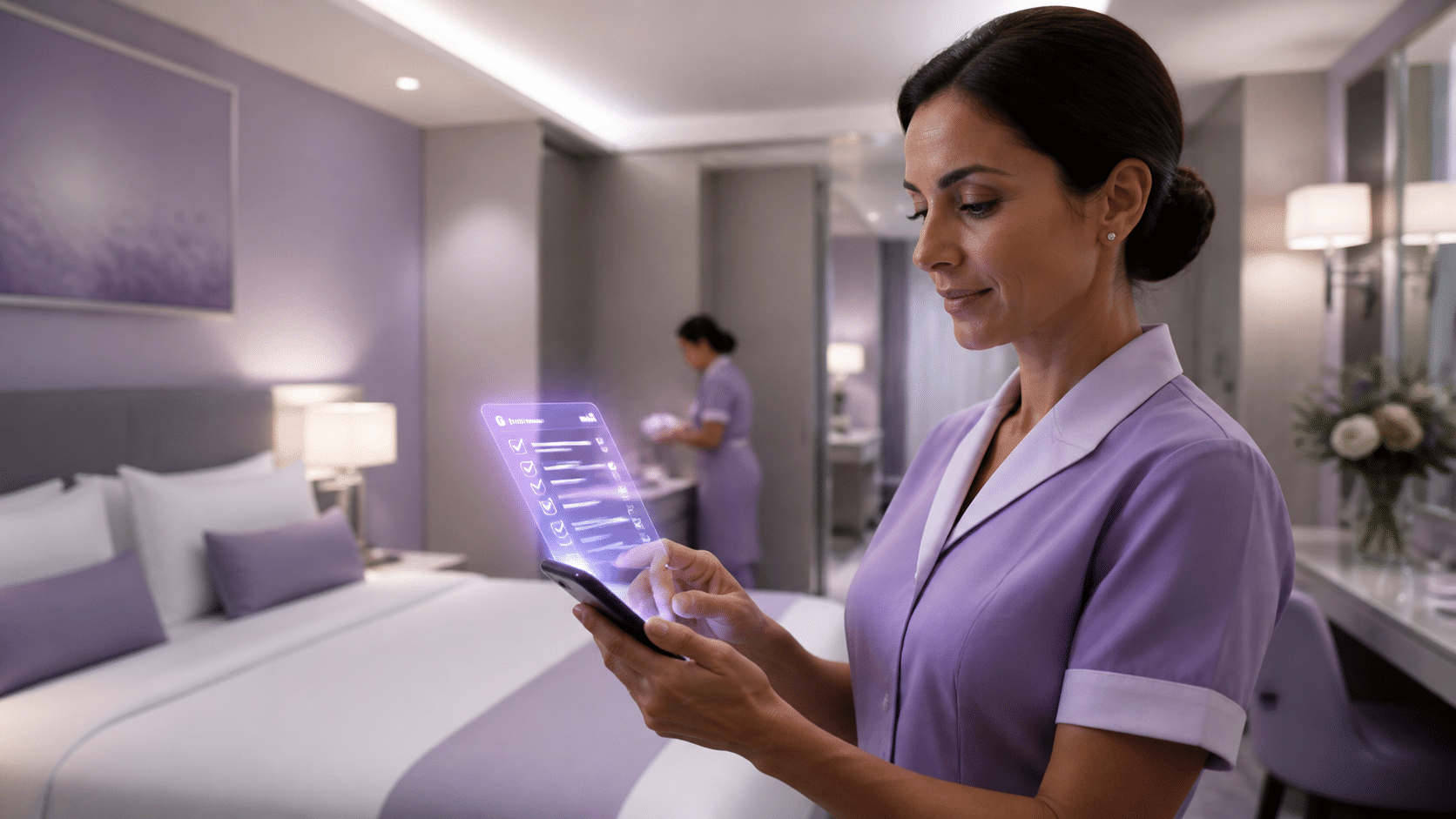
Here’s a scenario that probably sounds familiar.
It’s 11am on a Saturday. Checkout rush is hitting. Your housekeeping supervisor has a clipboard with 30 rooms on it, a walkie-talkie that keeps cutting out, and two new staff members who started on Thursday and aren’t sure which rooms are stayovers versus checkouts. Somewhere on that clipboard is a note about a VIP arriving at 2pm who needs a specific room — but the afternoon supervisor doesn’t know about it yet because that note was written in pencil and the clipboard lives at the front desk.
This is what paper-based task management actually looks like in practice. And it’s still running housekeeping operations at a lot of hotels.
The problem isn’t that paper checklists are inherently bad. A good checklist, physically printed, can work fine. The problem is that paper can’t update in real time. It can’t tell a housekeeper that Room 312 just became a priority because a guest is waiting in the lobby. It can’t tell a supervisor that one attendant has finished her last four rooms faster than expected and could absorb two more. It can’t log a maintenance issue, track who completed what, or give a manager a snapshot of where every room stands at any given moment.
Paper just… sits there.
The Hidden Cost of Manual Scheduling
When you’re scheduling housekeeping manually, you’re essentially making educated guesses. Who’s available today? How many rooms is each person realistically covering? Which floors should be done first based on arrivals?
Those decisions take time. A lot of it, actually. And they’re being made fresh every single day — often by a supervisor who’s also managing a team, fielding questions from the front desk, and trying to remember which of the new hires is still learning the linen folding standard.
The knock-on effects are real. Uneven workloads mean some housekeepers are rushing through rooms while others have gaps. Rushed rooms mean missed surfaces, skipped high-touch items, and the kind of small errors we covered in Mistake #1. And rushed, overworked staff don’t stay. Housekeeping turnover already exceeds 60% annually at many properties — and inefficient, manual working conditions are a direct contributor to that number.
This is where the mistakes we’ve talked about so far start to compound. Inconsistent standards (Mistake #2), communication gaps with the front desk (Mistake #3), missed maintenance reports (Mistake #4) — a lot of these problems are symptoms of the same root cause: your team is operating without the right tools, and it’s costing them time, clarity, and job satisfaction.
What Digital Task Management Actually Changes
When housekeeping assignments come through a mobile app or a connected platform rather than a clipboard, a few things shift immediately.
First, the supervisor gets real-time visibility. Not “I think Maria finished Floor 3” but an actual status update, timestamped, on a screen. Second, room assignments can be dynamically adjusted — if a late checkout pushes back a priority room, the system reflects that. Third, completion is trackable. You can see not just what was done, but when, and by whom.
This matters more than it sounds. Modern housekeeping modules — like what you’d find in a platform such as Ease My Hotel — can handle automated task creation when a guest checks out, room-specific instructions for attendants, priority flags for early arrivals, and inspection workflows that keep a room from being released until it’s actually been checked. All in real time. All without a phone call.
The efficiency gains reported from these kinds of systems are notable. Industry reporting suggests 89% of hoteliers save between two and ten or more hours per week through an integrated PMS — and selected deployments have reported up to 30% faster room turnover after connecting housekeeping workflows. Those are vendor-adjacent figures, so take them as directional. But the mechanism is straightforward: when you remove manual coordination from the process, the process gets faster and more consistent.
Better Tools, Better People Outcomes
There’s one more angle here that doesn’t get talked about enough.
The research on employee empowerment is pretty consistent: when people have clear priorities, timely information, and the right tools to do their jobs, they tend to perform better and feel better about their work. A 2025 hospitality study found that employee empowerment had a positive relationship with job satisfaction, motivation, and organizational loyalty — and that job stress from unclear, chaotic working conditions pulled in the opposite direction.
If your housekeeping team is starting every shift guessing at assignments, chasing updates through a walkie-talkie chain, and manually reconciling paper slips at the end of the day — that’s not just inefficient. It’s a recipe for the kind of burnout that feeds your turnover numbers.
And every time a housekeeper leaves, you restart the cycle. New hire, inconsistent standards, more gaps. Which brings us right back to the reviews.
Swapping paper for a connected, mobile-first task management system isn’t a luxury upgrade. For most properties, it’s the infrastructure fix that makes every other housekeeping improvement actually stick.## Future-Proofing Your Reputation: Turning Housekeeping into a Competitive Advantage for 2026
Here’s where most hotels get stuck.
They fix a housekeeping problem after a guest complains. The review goes up, the manager reacts, the team gets a reminder, and things improve — for about two weeks. Then another guest complains about something different. Rinse, repeat.
That’s a reactive operation. And in 2026, reactive isn’t going to cut it.
The hotels that are actually pulling ahead right now aren’t just fixing problems faster. They’re catching them before guests ever see them. That shift — from firefighting to prevention — is what separates a property with a 4.2 rating that’s slowly trending down from one with a 4.6 that keeps climbing.
And the math behind this is hard to ignore. Labor costs are rising. Guests expect more. Daily housekeeping is now a need-to-have amenity. The question isn’t whether you can afford to invest in better operations. It’s whether you can afford not to.
What a Data-Driven Operation Actually Looks Like
Proactive housekeeping management means your team isn’t guessing. Supervisors know exactly which rooms are behind, which staff member has capacity, and which room has an open maintenance item before the front desk assigns it to an arriving guest. That visibility comes from a connected system.
When your PMS tracks inspection scores, maintenance reports, and room-readiness timestamps over time, patterns emerge. You can see what’s really happening across the property in real time.
The Brand Upside Nobody Talks About
Consistent, excellent housekeeping doesn’t just protect your rating. It lets you charge more. Excellent cleanliness protects revenue by reducing the complaints that drag down review scores, booking demand, and pricing power. That’s the ROI of getting housekeeping right.
The seven mistakes we’ve walked through in this guide are all fixable. Better checklists, documented SOPs, real-time communication, a clear maintenance reporting path, and the right tools to tie it all together — none of this requires a massive budget.
It requires a decision to stop reacting and start running a proactive operation.
The tools exist. The question is whether you’ll use them before your next bad review — or after.
From Cost Center to Revenue Driver: Reinventing Your Housekeeping Strategy
Let’s be honest about something.
Most hotels still treat housekeeping as a cost to manage rather than an asset to invest in. It’s the department that gets squeezed first when budgets tighten, the team that’s hardest to staff, and the operation that only gets attention when something goes wrong.
But here’s the math that should change that thinking: hotel labor compensation rose 22.1% between 2019 and 2024, while hours worked at the typical property fell 7.4%. You’re paying more for less time. That means every wasted minute — every re-clean, every miscommunication, every maintenance issue that slipped through — costs more now than it did five years ago.
The seven mistakes in this guide aren’t random. They’re connected. Missed high-touch surfaces (Mistake #1) get worse when standards vary by shift (Mistake #2). Inconsistency gets worse when housekeeping and the front desk aren’t talking (Mistake #3). Maintenance issues compound when nobody logs them (Mistake #4). And all of it gets harder to fix when your team is still running on clipboards and walkie-talkies (Mistake #5).
Fix the system, and the individual mistakes get easier to prevent.
Room cleanliness is the leading reason guests leave a negative review, and a one-star drop in your rating puts 5–9% of annual revenue at risk. Those aren’t abstract numbers. That’s real occupancy, real rate, real revenue — lost because of problems that are genuinely fixable.
Here’s your action item for this week: audit your current housekeeping process. Are assignments still going out on paper? Is room status getting communicated by phone call or radio? Is there a clear path for a housekeeper to log a maintenance issue and actually see it get resolved?
If the answer to any of those is “no” or “kind of” — that’s where to start.
A unified hotel management system like Ease My Hotel brings housekeeping, front desk, and maintenance into one shared view — real-time room status, mobile task assignments, maintenance tracking, and inspection workflows, all in one place. No relay race. No dropped information. Just a team that knows what needs to happen and when.
Stop treating housekeeping as a fixed cost. The hotels pulling ahead right now are the ones treating it as a competitive advantage — and they’re using smarter operations to get there.
Try Ease My Hotel for free.
No lock-in contracts. Cancel anytime