
The High Stakes of Social Media in a Crowded Hotel Market
You know that sinking feeling when you boost a post, spend the money, and… nothing? Maybe a few likes. A couple comments. But no direct bookings. That’s the part hotel teams talk about in hushed tones over coffee.
And it’s not just you. Travelers are now using social media to pick where they go, and many even book from what they see there. One recent travel stat roundup says 75% use social media to choose a trip, and 62% have booked a hotel or Airbnb straight from social content source. So yes, people are watching. A lot.
But here’s the hard truth. Hotels are not just fighting for attention. They’re up against OTA ad machines with giant budgets, and that makes every social media marketing hotel industry dollar feel like it has to do three jobs at once. Build trust. Create desire. Drive direct bookings.
That’s why random boosting usually falls flat. A real hospitality social media strategy needs more than likes. It needs a clear path from scroll to stay. Think hotel social media advertising with a goal, Facebook ads for hotels that retarget warm travelers, Instagram marketing for hotels that shows the room in motion, and social proof for hotels that makes people think, “OK, this place looks legit.”
This article is here to help with that. We’ll move past the fluffy stuff and into a system that can actually increase hotel bookings social media brings in. No smoke. No guessing. Just a smarter way to turn hotel marketing campaigns into revenue.
And if your current setup feels messy, that’s normal. Most hotels are juggling bookings, guest messages, OTAs, and marketing all at once. Tools like Ease My Hotel can help centralize the booking side, guest communication, and daily ops, so your team has more room to focus on ads that do real work.
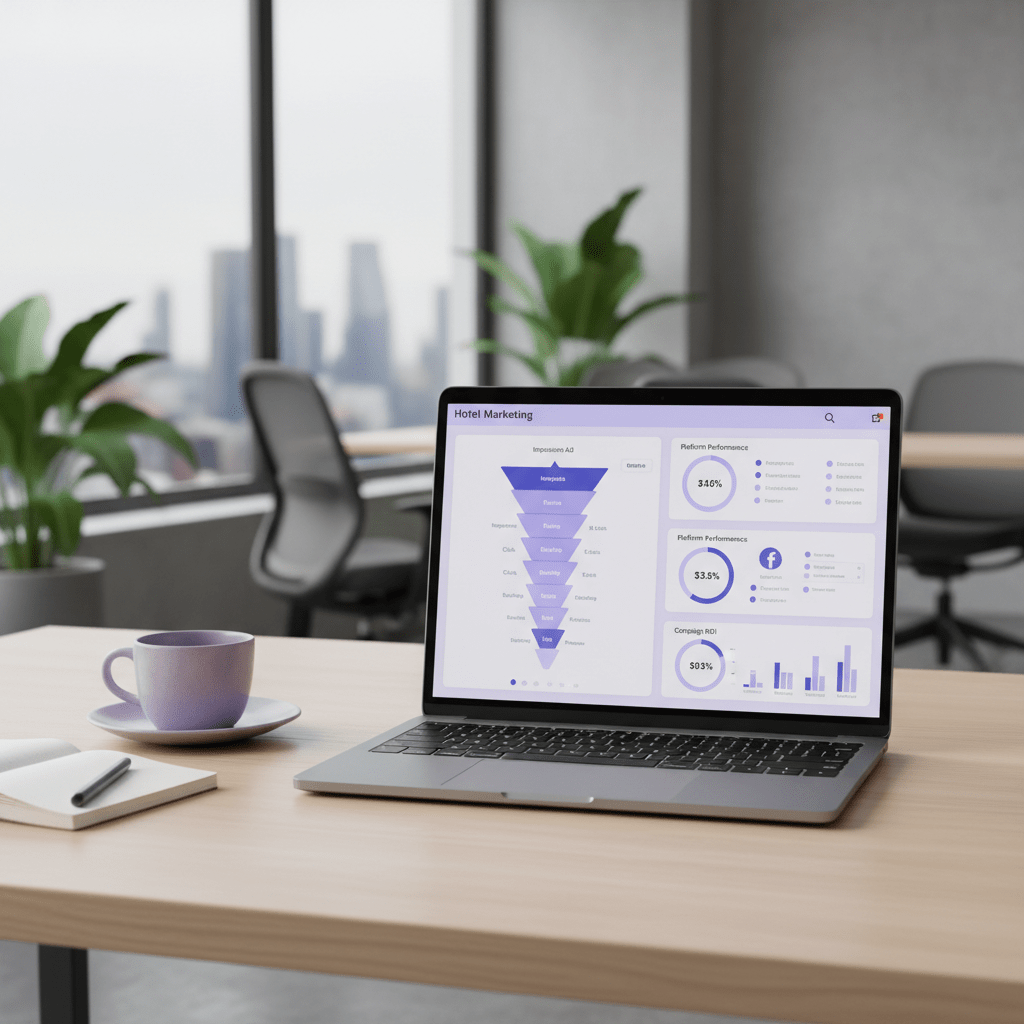
Section 1: From Awareness to Booking: Building Your Hotel’s Social Media Ad Funnel
Ever notice how some hotel ads feel like a postcard, while others feel like a nudge to book right now? Big difference. And if you’re spending money on social media marketing hotel industry campaigns, that difference matters a lot.
Here’s the deal: most travelers don’t go from first glance to checkout in one hop. They move in stages. First they notice your place. Then they think about it. Then they book. A smart hospitality social media strategy follows that path instead of yelling “Book Now” at people who’ve never heard of you.
1. Top of Funnel: Get Seen
This is the awareness stage. The goal is simple. Reach new travelers who fit your area, your vibe, or your price point. Don’t ask for the booking yet. Not yet.
Best ad types here:
- Short videos and Reels of the rooms
- Pool shots, breakfast spreads, and local views
- Guest clips and UGC for hospitality
- Light brand stories that feel real, not polished to death
Why video? Because travel people watch it. A lot. One study says 66% of travelers watch videos while planning a trip, and short-form ads can pull much better clicks than static images video ad performance study.
2. Middle of Funnel: Keep the Interest Warm
Now they know you. Maybe they watched 15 seconds of your Reel. Maybe they clicked your website and left. Maybe they saved your post and got distracted by a group chat. It happens.
This is where Facebook ads for hotels and Instagram marketing for hotels really start to work. You can show:
- Room details
- Nearby attractions
- Reviews and social proof for hotels
- Package ideas like weekend stays or family deals
- Behind-the-scenes clips from your team
The goal here is to bring people back. Not hard sell them. Just remind them why your place looked good in the first place.
3. Bottom of Funnel: Close the Booking
Now we’re talking booking intent. These are people who already visited your site, checked rates, or watched most of your video. This is the right time for a stronger offer.
Use:
- Limited-time discounts
- Free breakfast or parking offers
- Direct booking perks
- Date-based promos for slow weeks
This is where you want a clean call to action like “Check Rates” or “Reserve Your Stay.” A cold audience usually won’t bite on “Book Now” right away. That ad spend gets burned fast. Like lighting a match in a windy parking lot.
A quick funnel view
| Funnel stage | Main goal | Best ad style | CTA |
|---|---|---|---|
| Top | Reach new travelers | Reels, short video, lifestyle shots | Learn More |
| Middle | Re-engage interest | Carousels, reviews, UGC, room tours | See Rooms |
| Bottom | Get the booking | Offers, retargeting ads, urgency promos | Book Direct |
And timing matters too. Leisure hotel bookings often take 7 to 30 days, so a 30-day retargeting window is a smart place to start. That gives your hotel marketing campaigns room to work without chasing people too soon.
If you’re trying to increase hotel bookings social media brings in, think like a traveler, not a marketer. Show the dream first. Then the proof. Then the offer.
And if your ads are pulling clicks but not bookings, your funnel may be upside down. That’s a fixable problem. Tools like Ease My Hotel can help you keep booking, guest, and ops info in one place so your team can focus on the ads that actually drive direct bookings.
Section 2: Platform Deep Dive: Where to Invest Your Hotel’s Ad Budget for Maximum Impact
If you’ve ever stared at a blank ad dashboard and thought, “OK… now what?”, you’re not alone. Picking the right platform can feel like a messy room with too many keys and no clear label.
Here’s the thing. For most hotels, Meta should get the first look. That means Facebook ads for hotels and Instagram marketing for hotels. Why? Because Meta gives you strong targeting, lots of ad formats, and a pretty smooth path from scroll to booking. You can run Stories, Reels, and Carousel ads without making things weird or overcomplicated. And for hotel social media advertising, that mix works.
Meta is also where a lot of booking intent starts. Travel studies show 75% of travelers use social media to choose where to go, and 62% have booked a hotel or Airbnb from something they saw there travel booking stats roundup. That’s a big deal. Not just likes. Real money.
Why Meta usually wins first
Meta tends to be the best starting point for a hospitality social media strategy because it can do a little bit of everything:
- Reach new travelers
- Retarget website visitors
- Show room tours and guest clips
- Push direct booking offers
And short video matters a lot here. Travel ads with video usually beat static images, and Instagram Reels often get more attention than feed posts. So if you’ve got a clean 15-second room walkthrough or a breakfast spread that looks like a mini vacation, use it.
What about TikTok?
Funny enough, TikTok is not just for dance clips and snack reviews. It’s a strong play for younger travelers, especially Gen Z and Millennials. TikTok skews young, with about 67% of users under 34, so it’s a smart place to reach people who book based on vibe, not just price.
But don’t make it stiff. TikTok works best when it feels real. Quick clips. Staff moments. Pool views. A guest walking into a sunlit suite. That kind of thing. It’s less “commercial” and more “I want to go there right now.”
And Pinterest? Yes, really.
Pinterest gets ignored a lot, which is kind of funny because it fits some hotel types beautifully. If you run a wedding venue, spa resort, design-led hotel, or even a boutique stay with a strong visual style, Pinterest can pull in people who are already planning.
That’s the big win. Pinterest users are often in idea mode. They’re saving dream trips, wedding boards, and weekend getaway ideas. So if your hotel looks great in photos and serves a specific trip purpose, Pinterest can help you show up earlier in the booking thought process.
A simple budget split to start with
| Platform | Best for | Creative that works | Budget share to test |
|---|---|---|---|
| Meta | Broad reach, retargeting, direct bookings | Reels, Stories, Carousels | 60% |
| TikTok | Younger travelers, experience-led content | Short vertical video, UGC for hospitality | 25% |
| Planning-heavy trips, weddings, design stays | Styled images, mood boards, destination pins | 15% |
That split isn’t magic. It’s just a sane place to begin if you’re trying to grow hotel marketing campaigns without spraying money everywhere.
A quick note on data and trust
If you’re using guest lists for targeting, keep consent in mind. Hotels need clear opt-in before uploading customer data to Meta audiences. Also, iOS privacy changes made tracking a little noisier, so first-party data and server-side tracking matter more now than they used to.
So yes, the platform choice matters. But the creative and the tracking matter too. A lot.
If your goal is to increase hotel bookings social media brings in, start with Meta, test TikTok if your audience is younger, and keep Pinterest in the mix for planning-heavy trips. Then watch your hotel social media ROI, not just the likes. That’s where the real story is.
And if your booking, guest, and ops tools are spread across five tabs, it gets harder to see what’s working. Ease My Hotel can help centralize booking management, guest communication, and daily operations in one cloud-based dashboard, so your team has a cleaner setup for ads that drive direct bookings.
Try Ease My Hotel for free.
No lock-in contracts. Cancel anytime
Section 3: Pinpoint Targeting: How to Find Guests Who Are Ready to Book
You know that weird moment when someone clicks your ad, pokes around your site, and then vanishes? Yeah. That’s not failure. That’s a clue.
In social media marketing hotel industry campaigns, the best money usually goes to people who already showed interest. Not random scrollers. Real travelers. The ones who checked rates, looked at room types, or started the booking page and then got pulled away by a text message from their group chat. We’ve all been there.
Start with Custom Audiences
Custom Audiences are your best friend here. They let you retarget people who already know your hotel.
Focus on:
- Website visitors from the last 30 days
- People who visited the booking page
- Guests who started a reservation but did not finish
- Past guest lists, if you have clear consent
That last part matters. If you’re uploading guest emails for Meta targeting, get explicit opt-in first and keep your privacy policy clear. No shortcuts. A messy list can turn into a compliance headache fast.
And if you want a smarter audience, split your guest list a little. Try top spenders, repeat guests, or people who booked suites before. Those groups often look a lot more like your next best guest than a giant mixed list.
Use travel intent signals on Meta
Meta also gives you travel intent options that are pretty handy. You can reach people who are marked as frequent travelers or currently traveling. That means you’re not guessing. You’re getting closer to people who may already be in trip-planning mode.
Here’s a simple way to think about it:
| Audience type | Why it works | Best use |
|---|---|---|
| Booking page visitors | Already showed strong intent | Retarget with rates or offers |
| Past guests | Know your property already | Push repeat stays |
| Frequent travelers | Likely to book again soon | New guest acquisition |
| Currently traveling | May need a stay now | Last-minute room offers |
Layer your targeting so it feels specific
This is where things get fun. And a little nerdy.
You don’t need one giant audience. You want a tight one. Think: users in New York City who like boutique hotels and are frequent international travelers. Or people in Chicago who watched your Reel, visited your booking page, and stayed with you last year.
That kind of layering usually works better than broad targeting because it cuts out the fluff. Fewer random clicks. More real leads. And with hotel social media ROI, that matters a lot.
A quick note on video and timing
Short video still wins a ton here. Reels and Stories can keep your hotel in front of warm travelers, and the travel booking window often runs 7 to 30 days. So a 30-day retargeting setup gives your hotel marketing campaigns room to breathe.
If your hotel social media advertising feels too broad right now, start smaller. Retarget booking page visitors, build a Lookalike Audience from your best guests, and layer in travel intent. That’s usually a much better path to drive direct bookings than shouting at everyone online.
And if your booking data, guest list, and ops live in different places, it gets harder to build these audiences well. Tools like Ease My Hotel can help keep booking management, guest communication, and property data in one place, so your targeting starts with cleaner info and less guesswork.

Section 4: Crafting Compelling Creatives: Ads That Stop the Scroll & Drive Action
You know that tiny pause before your thumb keeps moving? That’s the whole game. If your hotel ad looks like every other sleepy postcard online, people scroll right past it.
And honestly, I get it. Hotels have a lot to say. But ads only have a second or two to make someone care.
Start with video. Always if you can.
Short video is the star here. A 15-second room tour. A drone shot over the pool. A guest stepping into a suite with that little wow face. That stuff works because it feels real, not staged to death.
Travelers also lean hard on video while planning. One travel ad study found video ads drove a 48% higher sales rate than static ads, and 66% of travelers watch videos while planning a trip video ad study. So yes, the room should move. The breakfast should glisten. The balcony view should do its little magic thing.
A few creative ideas that usually land well:
- Quick room walkthroughs
- Drone footage of the property
- Pool, spa, and breakfast clips
- Staff greetings or check-in moments
- Short guest testimonial videos
But wait, there’s a better way to think about it. Don’t just show a room. Show the stay.
UGC and social proof do a lot of heavy lifting
Guest photos, reviews, and short clips from real travelers can make hotel social media advertising feel less like an ad and more like a recommendation. That matters. People trust people.
Ask guests for permission before you reuse their content. A simple tagged post, a written note, or a quick email reply can help keep things clean. Same goes for reviews. Pull a short quote, add the guest name if they agreed, and pair it with a real image from the property.
This is where social proof for hotels really shines. A smiling guest on the rooftop bar often sells better than a polished brand graphic. Weird, right? But it’s true.
Build offers that feel like a win
A plain discount can work. Sure. But a stronger offer usually feels more helpful than cheaper.
Try offers like:
| Offer type | Why it works | Example |
|---|---|---|
| Value-add | Makes the stay feel richer | Book Direct for a Free Room Upgrade |
| Package deal | Bundles more into one choice | Stay + Spa Credit |
| Timing-based offer | Fills slower dates | Midweek Escape with Late Checkout |
| Direct booking perk | Gives a reason to skip OTAs | Free Breakfast When You Book Direct |
That last one matters a lot. Hotels often pay 15% to 30% commission on OTA bookings, while direct bookings can land around 4% to 5% in processing and booking costs. So even a small perk can protect the margin OTA commission explainer.
Keep the ad simple
One message. One action. That’s it.
If the ad shows a spa, say spa. If it shows a suite, lead with the suite. And if you’re using a 30-day retargeting setup, pair the creative with a clear next step like “See Rooms” or “Book Direct.”
Honestly, that’s often what turns a nice scroll-stopper into a booking tool.
If your team is building these campaigns and trying to keep track of bookings, guest info, and ops at the same time, a unified setup helps. Ease My Hotel can keep booking management, guest communication, and daily workflows in one place, so your ads have a better shot at driving direct bookings.
Section 5: Measuring What Matters: Tracking ROI and Proving Success
OK, so the ads are live. People are clicking. Maybe a few are booking. But how do you prove it without guessing? That’s the part most hotel teams really want to see.
The good news is, you don’t need a giant analytics brain. You just need to track the right things.
First, know what the Meta Pixel does
Think of the Meta Pixel like a tiny helper on your website. It watches what people do after they click your ad. Did they view a room? Start a booking? Finish the reservation? That’s the kind of trail it leaves behind.
So if someone sees your Instagram ad for a weekend stay, clicks, checks rates, and books later that night, the Pixel helps connect those dots. Without it, you’re kind of flying blind. With it, you can see which hotel social media advertising is bringing in real interest, not just pretty traffic.
And if you’re using Ease My Hotel to keep booking management and guest data in one place, it gets a lot easier to line up what happened on the site with what happened in your ad account.
The 3 metrics that matter most
Here’s the short list I’d keep on your dashboard:
| Metric | What it tells you | Simple goal |
|---|---|---|
| ROAS | How much money you got back for every ad dollar | Higher than 4:1 is a solid start |
| Cost Per Booking | How much you spent for one reservation | Keep this below your direct booking value |
| Booking Conversion Rate | How many visitors became guests | Watch for steady growth over time |
ROAS, or return on ad spend, is the big one. If you spend $100 and bring in $500 in room revenue, that’s a 5:1 ROAS. For many hotels, that’s a healthy sign. Cost per booking matters too, because it shows if your Facebook ads for hotels or Instagram marketing for hotels are too pricey to keep running. And booking conversion rate tells you how well your site turns social traffic into actual stays.
For hotel direct bookings, a conversion rate around 3% to 8% is a useful benchmark to watch against. If you’re way below that, the issue might be the ad, the offer, or the booking page itself.
Don’t skip UTM tags
UTM parameters sound fancy. They’re not. They’re just little labels added to your links so Google Analytics can tell where traffic came from.
Use them on every social ad link. At minimum, tag:
- utm_source
- utm_medium
- utm_campaign
- utm_content
That way, you can see if your Reels ad outperformed your Story ad, or if Facebook drove better booking behavior than TikTok. Nice and clear.
A simple setup might look like this:
?utm_source=instagram&utm_medium=paid_social&utm_campaign=summer_escape&utm_content=room_tour_video
That little string can save a ton of confusion later. Especially when a booking happens days after the first click. And with hotel booking windows often stretching 7 to 30 days, tracking over time is the only way to get the full story.
Keep the focus on bookings, not vanity
Likes are fine. Shares are nice. But hotel marketing campaigns should be judged by revenue, not applause.
So check your numbers weekly. Look at ROAS, cost per booking, and booking conversion rate together. If the Pixel shows people are landing but not booking, your landing page may need work. If UTM data shows one platform brings better guests than another, move budget there.
That’s the real win. Less guesswork. More direct bookings. And a lot less, “Wait… did that ad even work?”
If your team is trying to keep booking data, guest communication, and daily ops organized while running ads, a platform like Ease My Hotel can help keep the whole thing cleaner. That way, your social media marketing hotel industry efforts are tied to real numbers, not crossed fingers.
Your Actionable Blueprint for Profitable Hotel Social Media Advertising
So here’s the clean version. Build the funnel first, then pick the platforms, then speak to the right guests, then make the ads worth a click, and track everything that moves. Simple. Not easy, but simple.
If you’re tired of giving OTAs a huge slice of every booking, social media marketing in the hotel industry can help you take some of that power back. And not in a fluffy “brand awareness” way. In a real, money-in-the-bank way. Recent travel research shows 75% of travelers use social media to choose where to go, and 62% have booked a hotel or Airbnb from something they saw there travel booking stats.
That means your hotel social media advertising should do five jobs:
- Build awareness with short video
- Keep warm travelers interested
- Target people who already showed intent
- Use strong creative with UGC for hospitality and social proof for hotels
- Measure ROAS, cost per booking, and direct bookings with real tracking
Honestly, that’s the whole play.
Start with Meta. Use Facebook ads for hotels and Instagram marketing for hotels to reach, retarget, and convert. Add TikTok if your audience skews younger. Keep Pinterest around for planning-heavy trips. Then set up a 30-day retargeting window, because leisure booking decisions usually stretch across days, not minutes.
And please, don’t trust likes as the finish line. Hotel social media ROI comes from bookings, not applause.
A smart hospitality social media strategy gives you a stronger direct booking channel and less dependence on OTA fees that can run 15% to 30% per stay OTA commission guide. That margin matters.
If you want the first real step, do this today: set up your Meta Pixel, add UTM tags to every ad link, and plan one funnel-based campaign for your best room or package. Then watch what happens.
And if your booking, guest, and ops data are spread across too many tabs, tools like Ease My Hotel can help keep booking management, guest communication, and daily workflows in one place. That makes it a lot easier to run hotel marketing campaigns that actually drive direct bookings.
Try Ease My Hotel for free.
No lock-in contracts. Cancel anytime