

Introduction: Moving Beyond Spreadsheets and Generic Software
Ever tried closing the books for a hotel that never really sleeps? One minute you’re checking room charges, then a banquet bill pops up, then the bar needs a correction, and someone from housekeeping is asking about a missing minibar item. It gets messy fast.
That’s the hotel life. Rooms, food and drink, events, spa, parking, retail, guest fees… it all adds up in ways a plain spreadsheet just can’t keep up with. A mid-size hotel may have 5 to 10 revenue areas, and that means your accounting can’t live in one neat little box.
And here’s the thing. Generic tools like QuickBooks or Xero can work for basic books, but hotels need more than basic. They often create extra manual work, split data across systems, and leave managers guessing until the end of the month. That’s a rough way to run a property, especially when labor costs already eat up a big chunk of revenue.
In fact, hotels that switch to industry-specific accounting systems can cut manual data entry by up to 80% and finish month-end close much faster, sometimes in under 24 hours hospitality technology automation research. Pretty wild, right?
This guide will walk through the must-have features in a real accounting software for hotels setup. We’ll look at hotel financial reporting, PMS integration for accounting, USALI standards, and the tools that help a hotel accounting system actually fit the way hospitality works. If you’re looking at the best accounting software for small hotels or a larger back office software for hotels stack, this should help you make a smarter pick.

1. The Foundation: Why a Hotel-Specific Chart of Accounts, AP, and AR Matter
A hotel’s money map gets messy fast. One guest pays for a room, another books a banquet, and someone in the spa charges a massage to a folio that also has parking and a late checkout fee. Pretty wild stuff. And if your books can’t sort that cleanly, you end up guessing instead of knowing.
That’s why accounting software for hotels needs a hotel-shaped chart of accounts, not a generic one. The Uniform System of Accounts for the Lodging Industry, or USALI, is the guide many properties use for hotel financial reporting. It gives you a clear way to separate rooms, food and drink, spa, and other departments so your hotel accounting system tells the real story, not a blended mess. The 12th Revised Edition is the latest version, and it helps owners compare results across properties with the same basic layout USALI 12th edition overview.
General Ledger and Chart of Accounts
A flexible CoA matters because hotels are not one big bucket. A mid-size hotel may have 5 to 10 revenue areas, so the ledger needs room for all of them. If your system can’t tag revenue and expense by department, you lose sight of where money comes from and where it leaks out. That’s a bad setup for budgets, taxes, and owner reports.
Accounts Payable: Lots of Vendors, Lots of Rules
AP is where hotel life gets busy. You may pay food suppliers, linen services, pest control, music vendors, OTAs, and laundry partners in the same week. The right hospitality finance software should handle invoice approval flows, split costs by department, and keep OTA commissions in the right place. Otherwise, a banquet invoice might land in rooms, or a minibar charge gets buried in general ops. Not fun.
Here’s a simple view of what AP has to juggle:
| AP Task | Why It Matters in Hotels |
| Split invoices by department | Keeps labor, food, and guest supply costs clear |
| Approve bills before payment | Stops surprise charges and duplicate payments |
| Track OTA commissions | Protects true room revenue numbers |
| Handle many small invoices | Helps with perishables and guest items |
Accounts Receivable: More Than Just Invoices
AR in hotels has its own twists. You’re not just sending a bill and waiting. You may manage city ledgers, direct billing for corporate guests, deposits for weddings, and payments for large group blocks. Some events also come with partial payments, refunds, and date changes. That means your hotel bookkeeping software needs to track who owes what, what was prepaid, and what still needs follow-up.
And if you’re running a property with multiple billing types, clean AR tools save a ton of back-and-forth. Guests get smoother service. Your front desk team gets fewer headaches. Plus, managers get a clearer path to cash flow.
For hotels that want less manual work, a cloud system like Ease My Hotel can help keep booking, billing, and accounting in one place. That kind of setup is handy for small hotels, hostels, resorts, and chains that want fewer gaps between the front desk and the books.
2. Seamless Integrations: The Key to an Automated Financial Ecosystem
You know that moment when the night audit looks fine at first, and then three tiny mismatches show up before breakfast? Yeah, that. It’s usually the systems talking past each other.
For hotels, integration is the part that keeps the whole money side from turning into chaos. A strong accounting software for hotels setup should connect the PMS, POS, payroll, and purchasing tools so data moves on its own. No copy-paste marathons. No “wait, who entered this twice?” panic.
Why PMS Integration Comes First
PMS integration for accounting is the big one. It should pull daily room revenue, payments, taxes, adjustments, and folio changes straight from the front desk into the ledger. That cuts down the manual night audit grind and helps stop errors like duplicate postings, missing charges, and timing mismatches between the front desk and finance.
And let’s be real. Manual transfer is where stuff breaks. One typo can throw off your hotel financial reporting for the whole day. With a connected hotel accounting system, the close process gets calmer and the team spends less time fixing old mistakes.
A good fit here often includes popular PMS names like Oracle OPERA, Cloudbeds, Mews, Maestro, and Agilysys. If your current setup can’t talk to your PMS, you’re stuck doing back-office babysitting. Not fun.
POS Data Should Flow Right Into the Books
Hotels don’t just sell rooms. Guests eat, drink, book spa treatments, buy gifts, and sometimes charge the whole thing to one folio like it’s no big deal. That’s why POS integration matters so much.
When restaurant, bar, banquet, gift shop, and spa sales sync to the GL, you get a clearer picture of total revenue. You also get better outlet-level reporting, which helps owners see what’s actually making money and what’s just taking up space. For multi-department properties, that clarity is gold.
Here’s a quick look at what integrated systems should handle:
| System | What It Connects | Why It Helps |
| PMS | Room charges, payments, taxes, folio changes | Cuts night audit work and posting errors |
| POS | Restaurant, bar, banquet, spa, shop sales | Gives a full view of hotel revenue |
| Payroll | Wages, hours, labor cost tracking | Helps control the hotel’s biggest expense |
| Purchasing | Orders, invoices, vendor costs | Keeps AP and budgets cleaner |
Payroll and Purchasing Need to Join the Party Too
Labor usually takes the biggest bite out of hotel revenue, often around 30% to 40% or more. So payroll data can’t sit off in a separate corner. It should connect to your accounting software for hotels so managers can watch labor cost by department, spot overtime spikes, and plan schedules with real numbers instead of guesses.
Purchasing matters just as much. When procurement links to accounts payable, you can track spend from order to invoice. That helps with budget control, vendor checks, and forecasting. Also, it makes those endless little invoices for guest supplies, linens, and food costs less painful. Which, honestly, is a small miracle.
For hotels that want one cloud-based place to manage operations, a platform like Ease My Hotel can bring booking, guest communication, accounting, and team management into one dashboard. That kind of setup works well for small hotels, hostels, resorts, homestays, and chains that want fewer moving parts and less manual cleanup.

3. Advanced Reporting & Analytics: Turning Data into Profitability
Ever look at a hotel report and think, “OK… but what does this actually mean?” You’re not alone. A pile of numbers isn’t much help if it can’t tell you which part of the property is doing well and which part is quietly draining cash.
That’s where strong reporting tools inside accounting software for hotels start to pay off. In a hotel, revenue doesn’t come from one place. A mid-size property often has 5 to 10 money-making departments, from rooms and restaurants to spa, parking, and event space. So if your hotel accounting system only shows one flat profit number, you’re missing a lot of the story.
Custom Dashboards That Show the Right Numbers
The best accounting software for small hotels and larger chains should give you a dashboard that makes sense at a glance. Not a wall of clutter. You want the numbers that matter most right up front, like:
- ADR, or Average Daily Rate
- RevPAR, or Revenue Per Available Room
- GOPPAR, or Gross Operating Profit Per Available Room
- Occupancy
- Labor cost by department
- Cash flow and unpaid balances
These numbers help managers spot trouble fast. For example, if RevPAR looks fine but GOPPAR keeps slipping, you may have a cost problem, not a sales problem. That’s a big difference. And it changes the fix.
A good dashboard also helps with the daily stuff. Front desk leaders can check pace. Owners can see trends. Finance teams can stop digging through spreadsheets like it’s 2009. Which, honestly, nobody wants.
Departmental P&L Makes the Truth Easier to See
This part matters a lot. A hotel financial reporting tool should break out profit and loss by department, not just by property. That means separate P&Ls for Rooms, Food & Beverage, Spa, and other outlets.
Why does that help? Because not every department pulls its weight the same way. A busy restaurant can look great on the surface but still lose money after labor and waste. A spa might bring in less revenue but still produce healthier margins. Without department-level reporting, those details get blurred.
And once the numbers are clean, decisions get easier. Should you add another bartender on Friday nights? Is the banquet team overstaffed? Is that gift shop really worth the rent? The P&L helps answer all of that without guesswork.
Here’s a simple view of what to watch:
| Report Type | What It Tells You | Why It Helps |
| Rooms P&L | Room revenue, labor, and department costs | Shows if your core business is healthy |
| Food & Beverage P&L | Restaurant, bar, and banquet results | Helps spot waste and weak outlets |
| Spa P&L | Treatment income and staffing costs | Shows if wellness services are pulling their weight |
| Property-wide P&L | Full hotel income and expenses | Gives the big picture for owners and managers |
Forecasting That Moves With the Market
Static budgets are nice on paper. But hotels don’t live on paper. They live with school holidays, weather swings, convention traffic, airline delays, and random last-minute group bookings.
So your hospitality finance software should support dynamic forecasting and budgeting tools. That means you can build budgets from real history, current occupancy forecasts, booking pace, and even market trends. If your forecast only changes once a year, it’s already behind.
Actually, wait, there’s a better way to think about it. A good forecast should feel alive. If bookings jump for next month because of a local music festival, your revenue plan should shift with it. If demand softens, you should see that too, fast enough to adjust labor and spending before the month gets away from you.
Some modern hotel software now adds AI help for this part, using booking patterns and past performance to predict demand. That doesn’t replace human judgment. It just gives your team a smarter place to start.
For hotels using a cloud platform like Ease My Hotel, this kind of reporting can sit beside booking tools, guest communication, and accounting in one place. That makes it easier to see what’s happening across the property without jumping between five different screens. Pretty handy, right?
The real win is this: better reporting helps you move from “we think” to “we know.” And that’s where profit starts to feel less mysterious.

Try Ease My Hotel for free.
No lock-in contracts. Cancel anytime
4. Streamlining Daily Operations and Ensuring Tax Compliance
You know that sinking feeling when the night audit is half done, the front desk is already busy, and one tiny charge is off? Yeah. Hotels do not get a calm little pause between “close the books” and “start the day.”
That’s why the right accounting software for hotels needs to handle the daily grind without turning it into a full-time fire drill. A traditional night auditor can spend 3 to 6 hours a night balancing folios, posting room charges, checking POS totals, and building reports. Good hotel night audit software can shrink that to a few exception checks instead of a long manual cleanup hospitality automation research.
Night audit should not eat the whole night
A solid hotel accounting system pulls data from the PMS, POS, and payment tools on its own. So instead of copying numbers from one screen to another, your team can review what actually needs attention. Missing folio charge? Easy to spot. Duplicate posting? Easier to catch. Weird timing issue between the front desk and finance? Also easier.
And that matters because manual transfers cause the same headaches over and over. Duplicate entries, missed revenue, wrong tax amounts, and OTA mismatches can all pile up fast. One typo can throw off the whole day. Seriously. One tiny typo.
Taxes and fees need to be handled the right way
Hotels don’t just deal with room revenue. They deal with lodging taxes, city fees, tourism fees, resort fees, and sometimes all of them at once. In New York City, for example, guests can face layered taxes and fees that push the total burden above 14%. That’s a lot of moving parts for any back office software for hotels to track without help NYC hotel tax details.
A good hospitality finance software setup should:
- calculate taxes by location automatically
- apply resort and tourism fees correctly
- keep tax reports ready for filing
- match charges to the right stay dates and folios
- keep records clean for audits
If the software can’t do that, your team ends up double-checking every bill. And nobody has time for that during check-in rush.
Multi-property groups need one clear view
For hotel chains or owners with more than one property, things get trickier. You need to compare hotels side by side, roll up financials into one report, and move shared costs between properties without creating a spreadsheet mess. The latest USALI format also helps here, because it gives everyone the same reporting structure to work from.
Here’s a quick look at what multi-property accounting should support:
| Need | Why It Helps |
| Consolidated reporting | Shows the full picture across all properties |
| Shared chart of accounts | Keeps comparisons fair and clean |
| Inter-company entries | Handles shared services and transfers |
| Property-by-property views | Makes weak spots easy to spot |
A cloud-based system like Ease My Hotel can help centralize booking, billing, and accounting in one place for hotels, hostels, resorts, homestays, and property groups. That means less hopping between tools and less cleanup later.
Actually, that’s the real win here. Less guessing. Less rework. More time to run the property like a human being, not a spreadsheet machine.
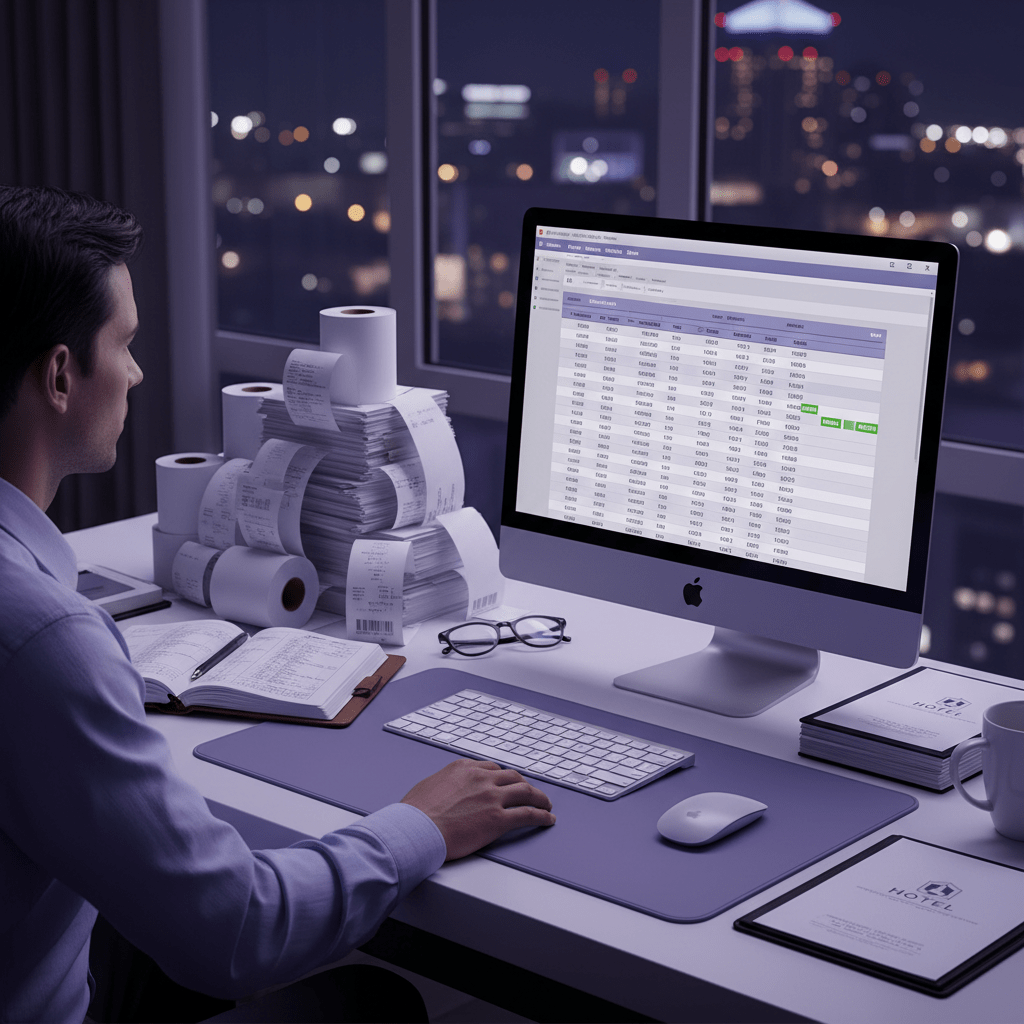
5. Beyond the Code: Evaluating Usability, Deployment, and Vendor Support
You can buy the fanciest hotel accounting software in the stack, but if your front office manager hates using it, what’s the point? I’ve seen that happen. Nice demo, messy daily life.
That’s why cloud-based hotel accounting software keeps winning. It’s easier to reach from anywhere, usually needs less IT help, and tends to cost less upfront than old on-premise setups. For a hotel team that’s already juggling check-ins, late arrivals, and a breakfast rush, that flexibility matters a lot. Cloud systems also fit the way modern hospitality works, since owners, GMs, and accountants may all need the same numbers at different times.
On-premise still has a place for some groups. Some properties like more control over their servers and data. But it also brings heavier setup, more maintenance, and a bigger load for your tech team. For most small hotels and mid-size groups, cloud is simply the easier road.
Can your team actually use it?
This part gets skipped way too often. And it shouldn’t.
The best accounting software for hotels should feel clear enough for a GM, department head, or even a night manager who isn’t an accountant. If people need three trainings just to find a report, that’s a bad sign. A clean layout, simple menus, and quick search tools can save hours of grumbling later. Seriously.
Look for vendors that give you:
- step-by-step onboarding
- live training or recorded lessons
- help with chart of accounts setup
- hands-on support during go-live
- plain-language guides, not tech soup
A good setup also matters for speed. For a 100-room independent hotel, a new system can often be rolled out in about 6 to 12 weeks, depending on data cleanup and training needs cloud hospitality implementation timeline. That sounds fast, and it is. But only if the vendor knows hotels, not just software.
What kind of support do you get after launch?
Hotels don’t close at 5 p.m. Neither should your support line.
This is where a lot of generic back office software for hotels falls short. Hotel teams need help that understands PMS integration for accounting, OTA mismatches, night audit software issues, tax codes, and the weird little billing problems that show up at 2 a.m. If support staff can’t talk through those problems in hotel language, you’ll be stuck explaining the same thing over and over.
Ask vendors these questions during a demo:
- How do you handle our PMS and POS setup?
- What does training look like for non-accountants?
- Do you offer 24/7 help, or only business hours?
- Can you support multi-property reporting later on?
- How long does it usually take to go live?
Also, think about fit. A cloud platform like Ease My Hotel can help hotels, hostels, resorts, homestays, and property chains keep booking, billing, and accounting in one place. That can make the switch feel less scary and a lot more manageable.
And honestly? That’s the real test. Not just whether the software looks good in a sales demo, but whether it still works when your team is tired, busy, and trying to get through a full house without mistakes.
Conclusion: Making a Strategic Investment in Your Hotel’s Financial Future
Picking accounting software for hotels is not just a back-office buy. It shapes how your property makes money, tracks costs, and spots trouble before it grows teeth. And honestly, in a hotel, that matters every single day.
The biggest wins usually come from three things. First, strong PMS integration for accounting so your room revenue, taxes, and folios move without extra copy-paste work. Second, USALI standards that keep hotel financial reporting clear and easy to compare. Third, forecasting tools that help you react fast when bookings shift or labor costs creep up.
A mid-size hotel often has 5 to 10 revenue areas, so a generic tool can get messy fast. Industry research also shows hotels using automated systems can cut manual data entry by up to 80% and close books much faster hospitality technology automation research. That’s not a small tweak. That’s real time back.
So here’s your next move: audit your current financial process and find the top 3 bottlenecks. Maybe it’s night audit, maybe it’s AP, maybe it’s reporting. Once you know the pain points, you can pick the hotel accounting system that actually fits your property.
If you’re ready for a cleaner setup, a cloud platform like Ease My Hotel can help bring booking, billing, and accounting into one place for hotels, hostels, resorts, homestays, and property chains. Less mess. More control. That’s the goal.
Try Ease My Hotel for free.
No lock-in contracts. Cancel anytime