
Breaking Free From OTA Fees: The Shift to a Direct Booking Model
Ever notice how a “simple” Airbnb booking can feel less simple once the fees hit? On Airbnb alone, hosts are now paying a flat 15.5% host fee, and Vrbo and Booking.com can land in the same rough zone or higher. That’s a big chunk of every stay. And yep, it adds up fast.
But here’s the part most hosts learn the hard way: on OTAs, you’re often renting your own customers. You get the booking, but the platform owns the relationship. So when the stay is over, you’re left with less profit and no easy way to bring that guest back on your own terms.
That’s why so many hosts are looking at how to get direct bookings from Airbnb in a smarter way. Not by being pushy. Not by breaking rules. But by creating a guest experience that people remember, trust, and want again.
Because the real win is repeat business. A guest who loves your place once is much more likely to book direct next time. They already know the home, the area, and the vibe. They just need a better path to come back.
So the best airbnb direct booking strategy is pretty simple to say, but harder to do well: make the stay so smooth, warm, and useful that guests want to skip the middleman next time. That’s how you increase direct bookings for vacation rental income without feeling like you’re chasing people around the internet.
And when it clicks? Pure magic.
Instead of paying platform fees over and over, you start building a direct booking website for Airbnb guests, stronger guest trust, and a business that feels a lot more yours.
What this shift really means
Direct bookings are not just about saving money. They help you reduce Airbnb commission fees, talk to guests in a more personal way, and build a guest list you can actually use for future stays. That’s the long game. The good kind.
With the right vacation rental marketing, a happy guest today can turn into a direct guest next season, next year, and maybe even tell their friends. That’s how hosts move from one-off stays to steady repeat business. And honestly, that’s a much calmer way to grow.
1. Why Direct Bookings Are the End Goal for Savvy Hosts
You know that little gut punch when a guest books through Airbnb, then you see how much gets shaved off the top? Yeah. That feeling.
Direct bookings fix a lot of that. They let you keep more of each stay, since you’re not handing over a slice to the platform every single time. Airbnb now charges hosts a flat 15.5% host fee, and other big sites can land in the same ballpark or a higher fee breakdown from Triad Vacation Rentals. That’s money you could use for better photos, a smarter welcome gift, or just… profit. Nice for once.
But the money part is only half the story.
When you drive direct bookings, you get to build a real brand, not just a listing on someone else’s shelf. People remember names, styles, and little touches. They don’t always remember the OTA they clicked on. If your place feels warm, clear, and easy, guests start to see you as the host worth coming back to.
And that matters because repeat guests are gold. They already trust you. They already know the bed is comfy, the Wi-Fi works, and the check-in won’t be a headache. That means less time spent chasing new leads and more time serving people who already like what you do.
Here’s the part that gets overlooked a lot: your guest data. On Airbnb, that relationship is pretty boxed in. But with direct booking marketing, you can build an email list of past guests and send helpful notes, return offers, or local updates. A simple thank-you email after checkout can turn into a second stay later on. Maybe even a third.
That’s where tools like Ease My Hotel can help too. A unified booking and guest communication setup makes it easier to keep track of repeat visitors, message them at the right time, and keep all your property info in one place without bouncing between five tabs like it’s 2017.
So if you’re trying to figure out how to get direct bookings from Airbnb, start here: think beyond one stay. Think brand, think guest list, think repeat business. That’s the real win.
2. The ‘Guest-to-Direct’ Funnel: Your Strategic Roadmap
You know what usually gets missed? The moment the booking is confirmed.
That’s where this whole thing starts. Not after checkout. Not six months later. Right away. Because if you want to convert Airbnb guests to direct bookings for a future stay, the guest journey has to feel good from day one.
Here’s the simple three-step flow:
| Phase | What to do | Why it works |
|---|---|---|
| 1. The Wow Experience | Make the stay smooth, warm, and easy | Happy guests remember you |
| 2. The Bridge | Collect contact info the right way, after check-in | Keeps you in line with Airbnb rules |
| 3. The Nurture | Send helpful follow-up messages after the stay | Gives guests a reason to book direct next time |
1) The Wow Experience
This is the stay itself. Clean place. Fast Wi-Fi. Clear check-in. Good local tips. No weird mystery instructions taped to the fridge. People notice this stuff.
A great guest experience for repeat bookings starts with the basics, but it goes a little deeper too. Answer the common questions before they ask them. Send a simple pre-arrival note. Share the Wi-Fi code, parking details, checkout time, and a few local spots they’ll actually want to try. That kind of care sticks.
2) The Bridge
Now the careful part. You can collect contact info in ways that stay within Airbnb’s rules, but not before booking and not for the current reservation. Think in-property tools after check-in, like a Wi-Fi sign-in page or a guest guide that invites them to opt in. No pressure. No tricks.
If you’re building a direct booking website for Airbnb guests later on, this bridge matters a lot. It gives you a clean path to stay in touch without crossing the line.
3) The Nurture
After checkout, send a thank-you note. Keep it short and real. Then, later on, share a return guest offer, local event ideas, or a little reminder that they can book direct next time.
That’s the key. You’re not asking them to ditch Airbnb for this trip. You’re just giving them a better option for the next one.
And if you want this to run without a mess of tabs and sticky notes, a system like Ease My Hotel can help keep booking management and guest communication in one place. Less chaos. More repeat business.
Funny enough, that’s usually how hosts increase direct bookings for vacation rental growth without sounding salesy at all.
3. Phase 1: Crafting an Unforgettable Stay (Pre-Arrival & Check-In)
You know that tiny moment when a guest first unlocks the door? That’s the one. Not the booking. Not the checkout. The first 10 seconds inside the place.
If the room feels calm, clean, and easy, you’re already ahead.
Start before they arrive
A good pre-arrival message does more than say “see you soon.” It answers the stuff guests always ask anyway. Wi-Fi. Parking. Checkout time. Where to eat. What’s nearby if they land hungry after a long drive.
And honestly, a plain Airbnb message can feel a little cold. So send something warmer by email after the booking is confirmed, with real help inside it. A short note with a few local events, a farmers market, or a live music night nearby can make the stay feel personal before they even pack a bag.
That’s a simple way to drive direct bookings later too, because guests remember who made things easy.
Make check-in feel like a relief
Nobody wants to stand outside squinting at a messy text message while holding luggage. Been there. It’s annoying.
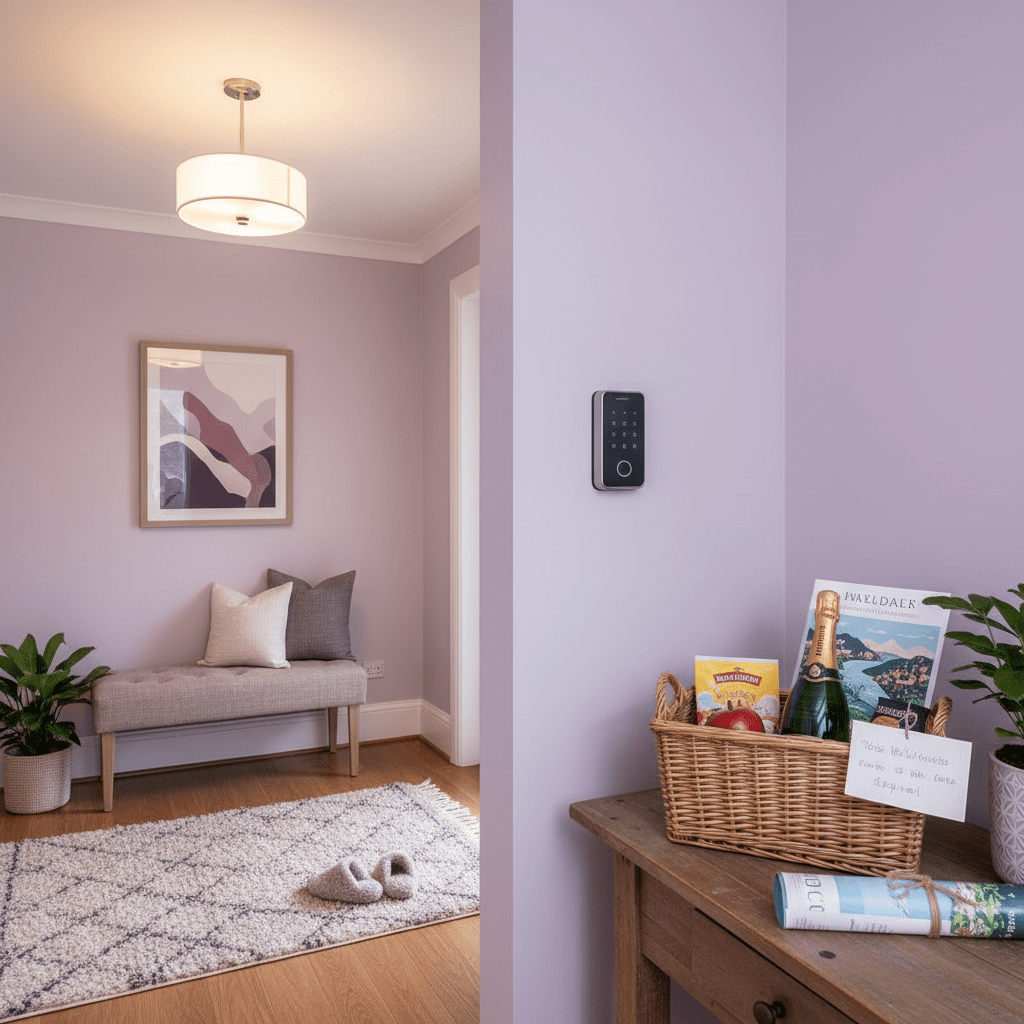
Keyless entry helps a lot. So do clear directions with photos or a short video. Show the gate. Show the lockbox if you still use one. Show the front door. The less guessing, the better. A warm light on inside, a tidy entryway, and clear signs can do a lot of the heavy lifting too.
Here’s a quick look at what guests like best:
| Check-in touch | Why it works |
|---|---|
| Keyless entry | Fast and easy arrival |
| Photo or video guide | Less confusion |
| Simple door code steps | Fewer support messages |
| Bright, clean entry space | Strong first impression |
Add a little wow right away
This part does not need to be fancy. A small welcome basket. A handwritten note. A local snack. Maybe a playlist already playing on a smart speaker when they walk in. That kind of thing sticks.
Funny enough, it’s often the tiny stuff that helps convert Airbnb guests to direct bookings later. Not because it screams “book direct now,” but because it says, “this host gets it.”
If you’re using Ease My Hotel or a similar system, this is where unified guest communication really helps. You can keep arrival notes, booking details, and guest info in one place instead of digging through emails and texts like a detective from 2009. That saves time, cuts mistakes, and gives you a smoother guest experience for repeat bookings.
And that’s the whole game here. Make the first stay feel easy, personal, and a little bit special. The second booking gets a lot easier after that.
4. Phase 1 Continued: Elevating the In-Stay Experience to Build Loyalty
Ever had a guest ask, “Do you know a good coffee spot nearby?” and suddenly you’re part host, part local guide, part problem solver? That’s the sweet spot. Not fancy. Just useful.
Give them the local stuff they’ll actually use
A good guidebook should feel like a friend’s text, not a tourist flyer from a rack by the elevator. Yes, list the big sights. But also add the taco truck down the street, the quiet beach at sunrise, the bookstore with the cat, and the bakery that sells out by 10 a.m. Stuff people talk about later.
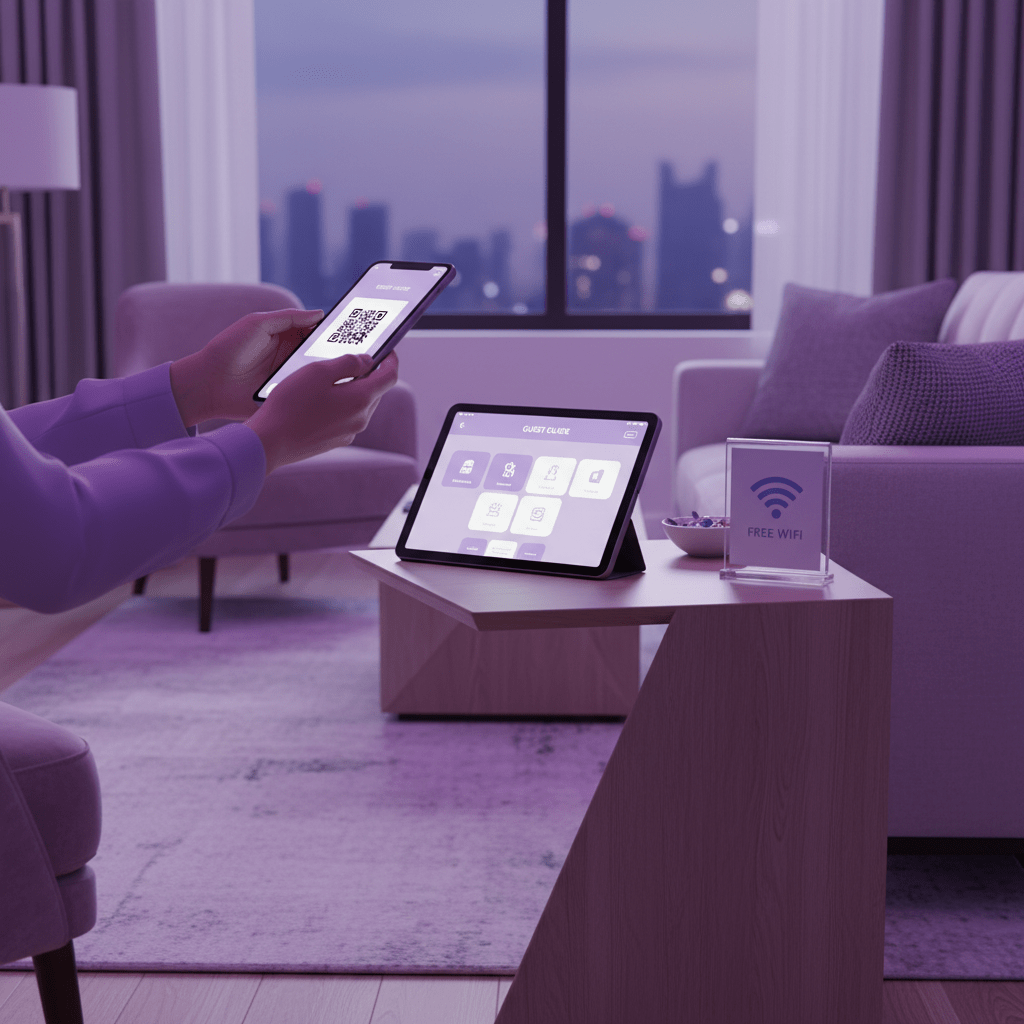
Tools like Hostfully or TouchStay can help you build a digital guidebook that keeps all this in one place. That means guests can find check-in notes, restaurant picks, house rules, and local tips without digging through old messages. It’s a simple way to improve the guest experience for repeat bookings, and it cuts down on the same questions over and over. Nice little win.
And here’s the thing. Guests usually remember the places that made them feel clued in, not the ones that sent them to the same three tourist traps everyone else gets. The more your guide feels local and real, the more your stay feels personal.
Be the helpful human, not the silent host
Things go wrong. A lock battery dies. The coffee maker acts weird. Someone can’t find the extra blanket. It happens.
But how you respond matters a lot. If a guest messages at 9:40 p.m. about a missing corkscrew and you send back a quick, kind reply with a fix, that sticks. If you can drop off a spare or point them to a backup in minutes, even better. I’ve seen guests forgive small hiccups fast when they feel looked after.
That kind of service helps convert Airbnb guests to direct bookings later because it builds trust. You’re not just renting a room. You’re showing up like a real person.
Add a few things people remember
Small comforts can make a stay feel special in a way guests don’t forget. A few ideas:
- A coffee or espresso bar with good beans
- A desk with a real chair, not a wobbly stool
- Board games, books, or even a deck of cards
- Fast Wi-Fi and a charger by the bed
- A cozy lamp and a soft throw blanket
Those things sound simple. They are. But simple works.
Actually, wait, there’s a better way to say it: simple things done well are what guests talk about later. And that talk turns into better reviews, more trust, and more direct booking interest next time.
If you’re using Ease My Hotel, this part gets easier too. A single dashboard for guest messages, stay details, and booking info means fewer missed notes and less chaos on busy days. That leaves more room for the stuff guests really notice.
And that’s the big idea here. Make the stay useful, warm, and easy to remember. Then the next booking doesn’t feel like a hard sell. It feels obvious.
5. Phase 2: The Bridge – Ethically Capturing Guest Info for Direct Communication
You know that moment after a guest says, “We loved it here”? That’s your opening. Not a hard sell. Just a quiet little bridge.
The trick is to make it feel helpful, not sneaky.
Try a soft pitch that actually feels nice
Put a small QR code in your welcome book or on a table sign. When guests scan it, send them to a simple page that says something like, “Join our loyalty list and get a discount on your next stay direct.” That’s it. Clean. Friendly. No weird pressure.
This works best as a loyalty program for future stays, not the current one. You’re not asking them to switch this booking. You’re just giving them a better path for next time. That keeps your airbnb direct booking strategy on the right side of the line and helps you convert Airbnb guests to direct bookings later.
Wi-Fi can help too
A Wi-Fi captive portal can be a smart bridge if it’s set up the right way. Guests see a login page before they get online, and you can invite them to share an email for future offers. The key part? Be clear. Tell them the email is for future direct booking updates and stay offers, not for their current stay.
This is where a tool like StayFi or a similar setup can help, but the real win is the process. Separate guest Wi-Fi. Clear consent. No hidden tricks. That’s how you build trust while still growing your list and trying to increase direct bookings for vacation rental income.
Give them something worth trading an email for
People won’t hand over their email for nothing. Fair enough.
So offer a digital guide right inside your guest book or guide app. Think:
- Our Ultimate Local Hiking Guide
- Family-Friendly Itinerary
- Rainy Day Ideas Near Town
- Best Coffee Shops and Breakfast Spots
That kind of value feels useful right away. And if you’re using a digital guidebook tool, this gets even easier. Platforms like Hostfully, TouchStay, and RueBaRue all lean into guest guides, email capture, and better guest experience for repeat bookings. That matters, because good stays usually lead to better reviews and more return interest later.
Here’s the deal. You’re not collecting emails just to collect them. You’re building a tiny path back home for the guest. A place to send a thank-you note, a local event update, or a book direct offer next season.
And if you want to keep all that organized without a pile of sticky notes and half-read inboxes, Ease My Hotel can help centralize guest communication and booking management in one place. That makes the whole bridge a lot less messy.
It’s a small step. But it’s a smart one.
Try Ease My Hotel for free.
No lock-in contracts. Cancel anytime
6. Phase 3: Nurturing the Relationship to Secure the Direct Booking
You know that nice feeling when a guest says, “We’ll be back”? That’s the moment to hold onto. Not with a hard pitch. Just with a simple follow-up that feels helpful and real.
Send the perfect post-stay email
A good post-stay email does three jobs at once. It thanks the guest, asks for an Airbnb review, and leaves the door open for a future direct booking. Keep it short. Keep it warm. And make the ask easy.
Here’s a simple format that works:
| Part | What to say |
|---|---|
| Thank you | Mention the stay and say you loved hosting them |
| Review request | Ask for a review on Airbnb while the trip is still fresh |
| P.S. offer | Share a private code or link for their next direct stay |
A little note like, “P.S. We’d love to host you again next time. Book direct on your next trip and use code RETURN10 for 10% off,” keeps things friendly. It also fits your airbnb direct booking strategy without sounding pushy.
And yes, timing matters. Send it within 24 hours of checkout. That’s when the stay still feels warm in their mind.
Keep in touch, but not too much
You do not need to email past guests every week. Honestly, that would get old fast.
A light-touch plan, about 4 to 6 times a year, is usually enough. Think seasonal updates, local events, and a quick reminder about their return guest discount. Spring flowers. Summer festivals. Fall weekends. Holiday stays. Simple stuff.
Here’s a nice rhythm:
- Spring: new local spots and weather tips
- Summer: event calendar and beach or pool reminders
- Fall: weekend getaway ideas
- Winter: holiday dates and cozy stay offers
- Bonus note: a birthday or stay anniversary email
This kind of vacation rental marketing keeps your place in their head without being noisy. And since hospitality emails tend to get strong engagement, it gives you a real shot at increasing direct bookings for vacation rental income over time.
Create a clean “Book Direct” page
If a guest is interested, don’t send them on a scavenger hunt. Give them one simple place to land.
A direct booking website for Airbnb guests does not have to be fancy. It just needs to look professional and feel easy to trust. Clear photos. Straight pricing. A short list of perks. And one big button that says something like “Book Now” or “Check Availability.”
A basic landing page should include:
- Great photos of the property
- A clear direct booking offer
- Guest reviews or star ratings
- Mobile-friendly design
- One strong call-to-action above the fold
That’s it. No clutter. No mystery. If you want to build a direct booking website for Airbnb without a huge mess, tools like Lodgify or OwnerRez can help get the job done. And if you’re already using Ease My Hotel, you can keep booking management and guest communication in one place, which makes follow-up a lot less chaotic.
The big idea here is pretty simple. You’re not chasing every guest. You’re giving the right guests a clear next step. And once they’re back in your orbit, direct bookings get a whole lot easier.
7. The Host’s Tech Stack: Tools to Power Your Direct Booking Engine
You know that messy feeling when bookings live in three places, guest emails are in a fourth, and your calendar looks like a puzzle? Yeah. Nobody needs that life.
If you want to figure out how to get direct bookings from Airbnb without creating more work, the tech stack matters a lot. Not because software is magic. It’s not. But the right tools do make it easier to convert airbnb guests to direct bookings, keep your dates synced, and stop double bookings before they start.
Start with a direct booking website builder
A direct booking website for Airbnb guests does two jobs. It gives people a place to book, and it makes your place look legit. Guests want clear photos, easy pricing, and a page that loads fast on a phone. That’s pretty much it.
A few names come up a lot:
| Tool | Best for | Watch out for |
|---|---|---|
| Lodgify | Hosts who want an all-in-one setup with site builder, channel manager, and booking engine | Starter plans can include booking fees |
| OwnerRez | Hosts who want strong control and lots of setup options | Feels a bit more hands-on |
| Uplisting | Hosts who want cleaner ops and calendar sync | Not as beginner-friendly for some users |
Lodgify is often the easiest place to start if you want to build a direct booking website for airbnb and keep things simple. OwnerRez is more of a power-user pick. Uplisting sits in the middle for many hosts who care a lot about process and calendar sync.
Don’t skip the PMS
A property management system, or PMS, is the thing that keeps your calendars from fighting each other. Your own website. Airbnb. Vrbo. Booking.com. All of it needs to talk to each other.
That matters because one wrong calendar update can ruin a whole weekend. And let’s be honest, nothing says “bad day” like a guest showing up while someone else is still in the unit.
A PMS helps you:
- Sync dates across channels
- Track guest details in one place
- Send cleaner messages
- Keep payments and notes organized
- Reduce airbnb commission fees by making direct bookings easier to manage
That’s a big deal for vacation rental marketing too, because the more smooth your back end is, the easier it gets to increase direct bookings for vacation rental growth.
Add email tools that don’t get in the way
You do not need a giant marketing machine. Most hosts just need a simple way to keep a guest list and send a few smart messages.
Tools like Mailchimp or Flodesk work well for that. They’re easy to use, and they’re good for:
- Welcome emails
- Return guest offers
- Seasonal updates
- Local event notes
- Stay anniversary nudges
That said, email only works if people actually open it. Travel and hospitality emails usually do pretty well, so a short, personal message can go a long way. A thank-you note after checkout, then a friendly offer later, is often enough to drive direct bookings without sounding salesy.
A simple stack for most hosts
If I had to keep it plain, I’d say this:
- Pick a website builder that can take direct bookings.
- Use a PMS so your calendars stay synced.
- Add an email tool so you can stay in touch.
- Keep everything easy to read and easy to update.
That’s the heart of a solid airbnb direct booking strategy. Not fancy. Just steady.
And if you want one more layer of help, Ease My Hotel can sit in the middle of your booking management and guest communication. That gives you one place to check bookings, follow up with past guests, and keep the whole system from turning into a sticky-note jungle.
At the end of the day, the best tech stack is the one you’ll actually use. Simple wins. Every time.
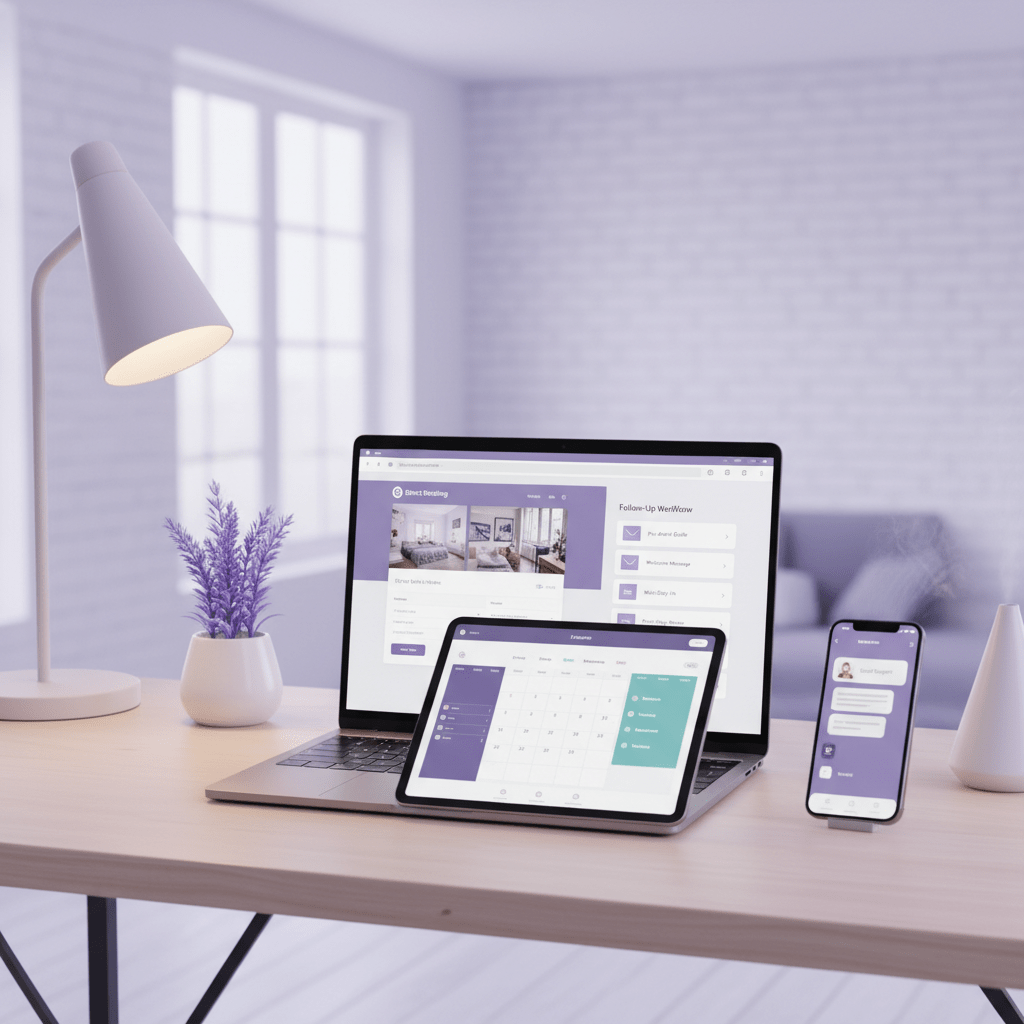
Your Journey to Independence: Building a Business, Not Just a Listing
A guest who comes back is a quiet little win. A guest who books direct next time? That’s a bigger one.
This whole shift is not just about better reviews or a nicer inbox. It’s about building a more profitable business that doesn’t lean on one platform forever. And yes, repeat guests usually cost far less to keep than finding brand-new ones. That means every good stay can keep paying you back later. Pretty nice, right?
So here’s the short version of how to get direct bookings from Airbnb without making it weird:
- Personalize your next pre-arrival email. Answer the stuff guests ask most, like Wi-Fi, parking, and check-in, before they even ask it.
- Create a QR code for a direct booking discount. Put it in your welcome book or guest guide, and keep it for future stays only.
- Draft your post-stay follow-up email. Thank them, ask for the review, and leave a friendly direct booking offer for next time.
That’s a solid airbnb direct booking strategy in plain English. Simple. Human. Honest.
And if you want the whole thing to feel less messy, tools like Ease My Hotel can help keep booking management and guest communication in one place. That means fewer dropped notes, fewer tabs, and a smoother guest experience for repeat bookings.
The big idea is this: when you improve the guest experience, you’re not just being nice. You’re building trust, repeat business, and a stronger base for vacation rental marketing later on.
Take control of the guest relationship. Keep the ones who love your place. And build something that can hold up long after one listing, one platform, or one season.
Try Ease My Hotel for free.
No lock-in contracts. Cancel anytime