
From Chaos to Cohesion: The Modern Imperative for Integrated Hotel Operations
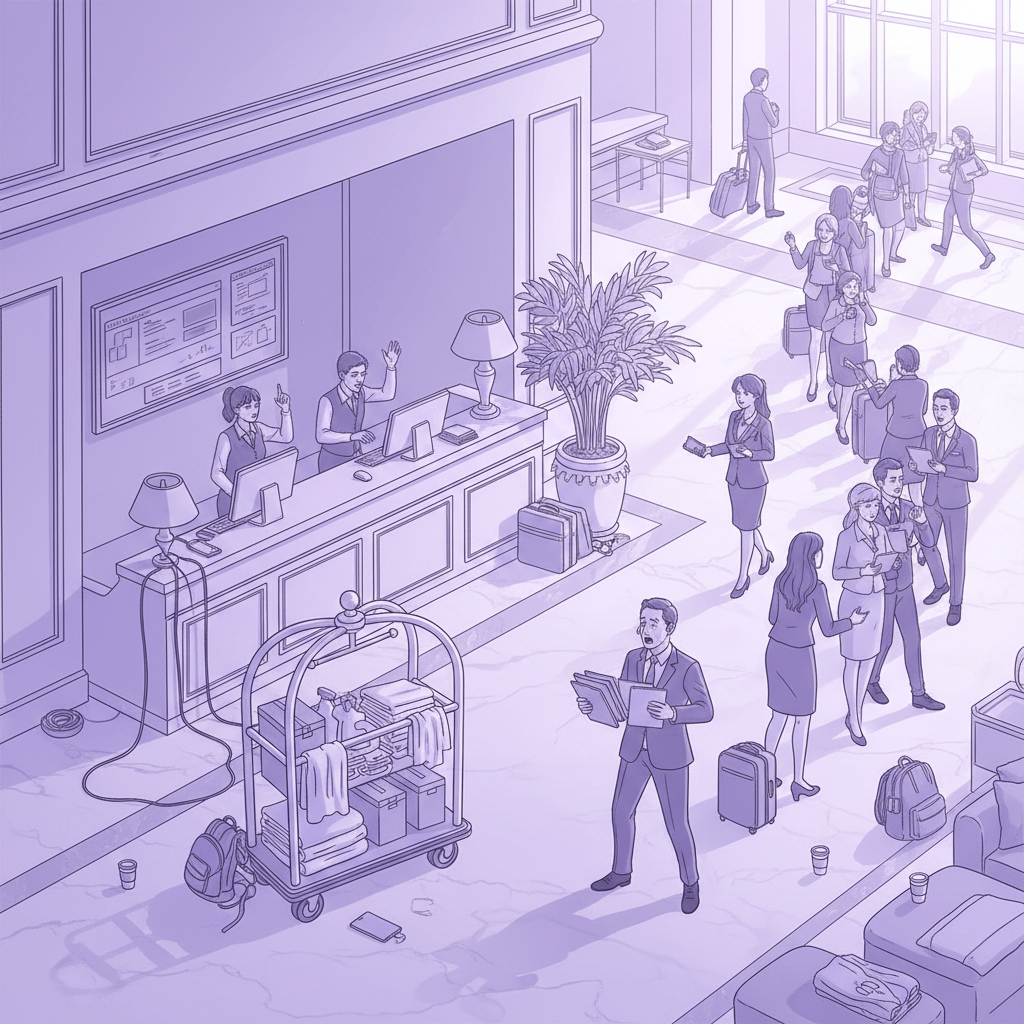
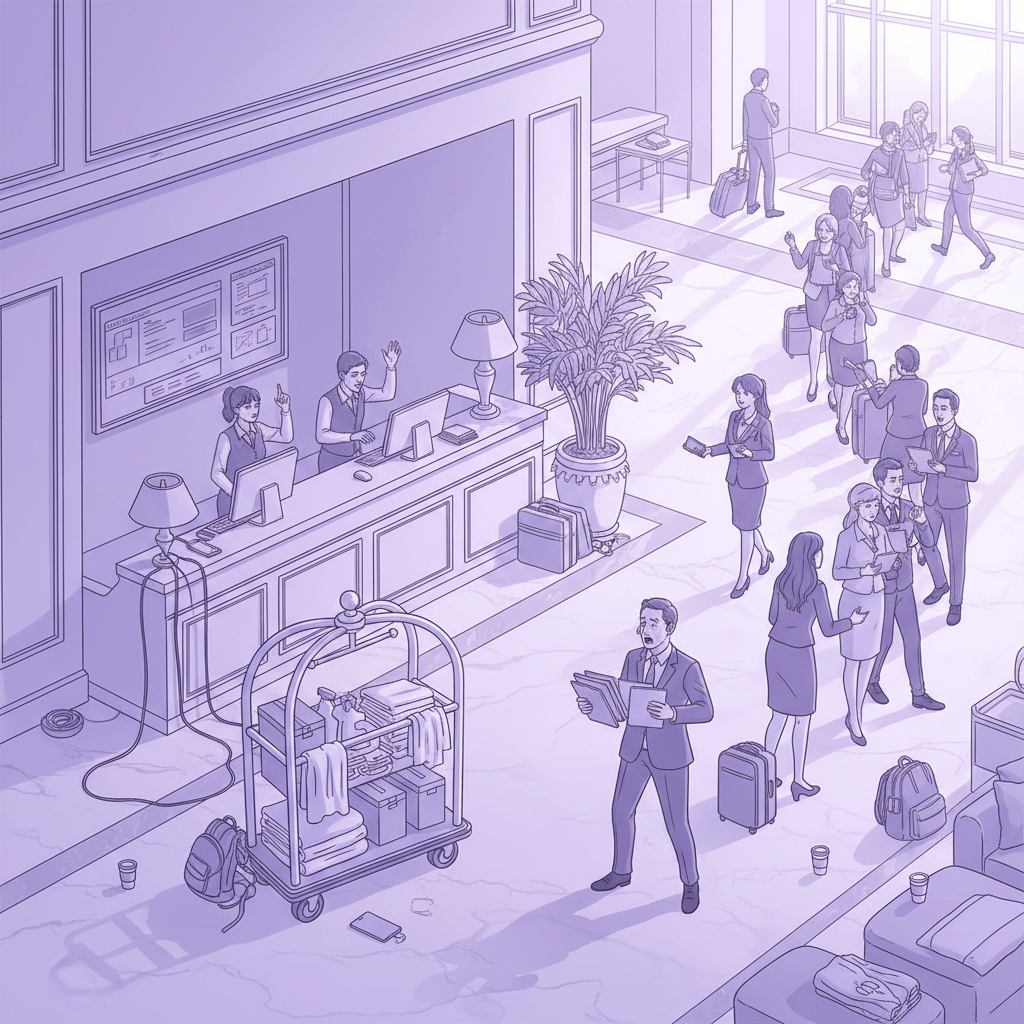
Picture this. It’s 7:40 a.m., the lobby is filling up, housekeeping is still cleaning three rooms, and the front desk has a line of tired guests waiting to check in. Your PMS says rooms are ready. Your housekeeping sheet says they’re not. Accounting is asking about a weird charge from yesterday. And the restaurant POS is sitting in its own little corner, acting like it has nothing to do with the rest of the hotel.
Messy, right?
That’s the daily reality for a lot of hotels. And it gets old fast. One recent hospitality report says 47% of leaders struggle to use data across siloed systems, which pretty much explains why so many teams are stuck making guesses instead of fast calls. When systems don’t talk to each other, hotel operations slow down, staff waste time on double entry, and guest service takes the hit.
That’s where ERP software comes in. Think of it like the central nervous system for the property. It pulls bookings, finance, HR, procurement, inventory, and guest data into one place so managers can see what’s happening now, not last night or next week. The payoff is better hotel operational efficiency, fewer handoff errors, and a much smoother day for everyone.
In this guide, we’ll walk through how to fix hotel operations with ERP software, what gets in the way during adoption, and how hotels can move from scattered tools to a more connected way of working. If you’ve been asking whether an integrated hotel management system can actually help, you’re in the right place.
Why disconnected systems cause so much pain
When a hotel runs on separate tools for PMS, POS, payroll, accounting, and inventory, people spend half their day stitching together info. That’s not strategy. That’s survival mode.
A few common problems show up again and again:
- Staff get scheduled off bad data
- Housekeeping and front desk miss each other’s updates
- Inventory runs short or gets overbought
- Month-end close drags on forever
- Managers can’t spot problems until they’ve already grown
And yes, spreadsheets still end up doing too much of the heavy lifting. Because nothing says “modern hospitality” like five tabs open and a printer jam.
What ERP can fix for hotels
A hospitality ERP system brings the main jobs into one shared setup. Finance, HR, procurement, CRM, analytics, inventory, housekeeping, and even POS links can all work from the same base. That makes improving hotel management with ERP a lot more practical than trying to patch one broken process at a time.
Here’s the deal: the best ERP system for a hotel chain or single property usually helps with:
| Area | What gets better |
|---|---|
| Finance | Faster reports, fewer entry mistakes, cleaner books |
| HR | Easier payroll, better shift planning, less manual tracking |
| Procurement | Smarter buying, simpler vendor follow-up |
| Guest service | Better guest profiles and faster response times |
| Operations | Fewer delays across rooms, inventory, and service teams |
Some hospitality ERP case studies report a 25% drop in admin overhead, plus faster reporting and less manual reconciliation. That’s a pretty nice win if your staff is already stretched thin.
But ERP adoption isn’t plug-and-play
This is the part people skip, then regret later. ERP sounds like a fix, but hospitality ERP implementation challenges are real. Staff may worry the new system will slow them down. Managers may cling to old workarounds. And if the data migration is sloppy, the new system will just make bad data show up faster. Garbage in, garbage out. Simple as that.
Failed ERP projects in other industries have shown what happens when teams rush go-live, skip testing, or don’t get buy-in from the people using the system every day. Hotels have the same risk, maybe more, because so many teams depend on each other during peak check-in and checkout hours.
That’s why choosing an ERP for hotels should never be just an IT decision. It’s a people decision, a process decision, and yes, a guest experience decision too.
A better path for adoption
The good news? Hotels don’t need to fix everything at once.
A phased rollout usually works better. Start with one property or one department. Clean the data first. Test the integrations. Train the team by role, not just by job title. Then keep support close after go-live, because week one is rarely perfect. Actually, wait – it’s almost never perfect.
That’s also where tools like Ease My Hotel fit naturally. Its cloud-based setup brings booking management, guest communication, a unified dashboard, accounting, staff management, restaurant tools, and OTA support into one place. For hotels, hostels, resorts, homestays, and property chains, that kind of setup can make streamlining hotel back-office processes feel a lot less painful.
So if you’re trying to fix hotel operations with ERP software, the goal isn’t just new tech. It’s better flow, fewer errors, and a team that can finally work from the same playbook.
Ready to see where your biggest bottleneck is? Start there. That’s usually where the real win hides.
Defining the Solution: How ERP Software Unifies and Fixes Hotel Operations
Ever had two screens tell two different stories? One says a room is clean. The other says housekeeping is still there. That split-second mix-up can turn into a late check-in, a grumpy guest, and a front desk team that wants to scream into a coffee cup.
That’s why hotel ERP software matters.
A hospitality ERP is not just a fancier PMS. A PMS mostly handles rooms, rates, and reservations. An ERP goes wider. It connects finance, HR, purchasing, inventory, guest data, and reporting in one hotel management system. So instead of each team working in its own little bubble, everyone looks at the same live data.
That idea gets called a single source of truth. Fancy phrase, simple meaning. One guest profile. One vendor record. One room status. One set of numbers. No more, “Wait, which spreadsheet is right?”
Here’s where the benefits of ERP in the hotel industry start to show up fast:
| ERP module | What it helps with | Real day-to-day win |
|---|---|---|
| Finance | Automated reporting, payables, receivables, budgeting | Faster month-end close and fewer manual entries |
| HR | Payroll, labor planning, staff records | Better shift planning and less schedule chaos |
| Procurement | Purchase orders, vendor tracking, buying control | Fewer stockouts and less waste |
| CRM | Guest history, preferences, service notes | More personal stays and better repeat visits |
| Analytics | Live dashboards and tracking | Quicker calls from managers |
And yes, the pain from disconnected tools is real. One hospitality report says 47% of leaders struggle to use data across siloed systems, which lines up with what hotel general managers deal with every day: reactive staffing, messy housekeeping handoffs, broken inventory tracking, and too much spreadsheet juggling.
With the right ERP system for a hotel chain or single property, improving hotel management with ERP becomes a lot less messy. You can automate financial reporting, cut down on duplicate data entry, and make procurement feel less like a scavenger hunt. Guest service gets a lift too, since staff can see booking history, stay patterns, and preferences without digging through five different tools.
And honestly, that’s the big win. Not buzz. Not fancy dashboards for the sake of it. Just a calmer front desk, faster back office work, and a hotel team that can finally breathe a little.

Navigating the Hurdles: Top 5 Hospitality ERP Implementation Challenges
You know that feeling when a hotel upgrade sounds simple on paper, then turns into three weeks of “wait, why is this not syncing?” Yeah. That’s ERP for a lot of hotels if they rush it.
The tricky part is not just picking software. It’s getting people, systems, data, and money all lined up at the same time. And that’s where many hospitality ERP implementation challenges show up.
1. The money question hits first
Let’s start with the one owners care about right away: cost.
ERP can help hotel operational efficiency, but the upfront price can feel like a wall. For a small hotel chain or a mid-sized property using cloud tools, first-year costs often land somewhere around $40,000 to $120,000. Bigger custom setups can run much higher. So yes, the sticker shock is real.
But the bigger headache is ROI. How do you prove the value before go-live? That’s hard when the gains show up in faster close times, fewer errors, and less staff stress. Those things matter, but they’re not always easy to pin to one neat dollar figure.
So before choosing an ERP for hotels, ask:
- What costs are we replacing?
- How many hours are we saving each month?
- Where do we lose money now because of manual work?
That’s the kind of thinking that helps when building a case for improving hotel management with ERP.
2. Changeover can break the day
This one keeps managers up at night.
Hotels can’t just pause operations while a new system comes online. Rooms still need cleaning. Guests still check in. Bills still need posting. If data migration goes wrong, or if the ERP does not connect well with legacy PMS tools, door locks, POS systems, or accounting software, the mess shows up fast.
And once that happens, people stop trusting the system. Fast.
A bad changeover can cause:
- Late room updates
- Wrong room charges
- Inventory mismatches
- Front desk confusion
- Delays at check-in
That’s why phased rollout usually works better than a big-bang launch. Start small. Test the links. Fix the weak spots before rolling out across the whole property or chain.
3. People resist what slows them down
Honestly, this is the toughest part in many hotels.
Front desk teams, housekeeping leads, finance staff, and managers all work in different ways. If new software feels slower, they’ll push back. Not because they hate change, but because they’re already busy and they don’t want one more thing to learn during a packed shift.
Common pushback sounds like this:
- “I can do this faster in my spreadsheet.”
- “We’ve always done it this way.”
- “I don’t have time for training.”
- “What if the system tracks everything I do?”
That last one comes up a lot, by the way. People don’t always say it out loud, but they think it.
The fix is not one big training session. It’s role-based training, repeat support, and a few internal champions who can help others once the system goes live. If you’re working on overcoming resistance to new hotel technology, keep the training simple and tied to real hotel tasks.
4. Picking the wrong system is easy
Actually, wait. Picking the wrong system is easier than people think.
A hotel ERP system has to fit your size, your pace, and your setup. A single property does not need the same depth as an ERP system for hotel chain management. Some hotels need stronger finance tools. Others need better multi-property controls. Some need better restaurant links. Others need stronger OTA support.
And here’s the catch. Many hotel teams do not have a deep in-house IT bench. So they end up depending too much on vendor promises or vague demos. That’s risky.
When choosing an ERP for hotels, ask about:
| Question | Why it matters |
|---|---|
| Can it scale with one property or many? | You do not want to switch systems again in a year |
| Does it work with your PMS and locks? | Bad links cause daily headaches |
| Is support built for hospitality? | Hotel needs are not the same as retail or offices |
| How much setup help is included? | A weak rollout can sink the project |
Cloud tools like Ease My Hotel can make this easier for hotels, hostels, resorts, homestays, and property chains because the setup brings booking management, guest communication, accounting, HRM, restaurant tools, and OTA support into one place. That kind of integrated hotel management system can be a better fit for teams that want less chaos and more control.
5. Bad data ruins good software
This one’s classic. Garbage in, garbage out.
If your guest profiles are messy, your vendor names are all spelled three different ways, and your room or rate codes don’t match across systems, the new ERP will just carry those problems forward. It won’t magically clean them up.
That means old mistakes can turn into:
- Wrong reports
- Bad payroll numbers
- Broken inventory counts
- Duplicate guest records
- Weird financial summaries
So yes, data cleanup is boring. Painfully boring. But it’s one of the most important parts of streamlining hotel back-office processes.
A smart team sets aside time to clean, standardize, and test the data before migration. That step can save weeks of pain later. Maybe months.
The real takeaway
If you’re wondering how to fix hotel operations with ERP software, the answer is not just “buy the system.” It’s plan the rollout, train the people, clean the data, and choose a setup that fits your hotel today and tomorrow.
That’s how improving hotel management with ERP starts to feel real instead of risky.
And once the system fits? The front desk stops guessing, housekeeping gets better updates, finance stops chasing numbers, and the whole place runs a little smoother. Nice, right?
Try Ease My Hotel for free.
No lock-in contracts. Cancel anytime
A Strategic Blueprint for a Smooth ERP Implementation
You know that moment when a plan sounds easy in a meeting, then real life shows up with a stack of problems? That’s ERP for hotels. The good news is, you don’t need a perfect rollout. You need a smart one.
Start small. Really small, if you have to. A phased rollout lets you test the waters without turning the whole property upside down. One department. One property. One module. Then you learn, fix, and move again. That matters because hotels often run on dozens of disconnected systems, and 47% of hospitality leaders say they can’t use data well across siloed tools Workday’s hospitality report. No wonder the front desk and housekeeping keep stepping on each other’s toes.
A phased plan usually works best like this:
| Phase | What to do | What you get |
|---|---|---|
| 1 | Clean data and map current processes | Fewer ugly surprises later |
| 2 | Launch finance and procurement first | Faster reporting and tighter buying control |
| 3 | Add HR, inventory, and housekeeping tools | Better staff planning and smoother room turns |
| 4 | Connect guest-facing features and analytics | Better service and clearer decisions |
And yes, that early win matters. If your team sees one process get easier, they stop thinking of the new hotel ERP software as “that thing IT forced on us.” They start seeing it as help.
Now let’s talk money, because that’s where most owners squint a little.
A business case should go past software price tags. Sure, first-year cloud ERP costs for a small hotel chain can land around $40,000 to $120,000, and that number gets people’s attention fast. But the real question is what you get back over time. Think faster month-end close, fewer manual entries, better inventory control, and less wasted labor. Those gains affect RevPAR, GOPPAR, and guest satisfaction in ways a cheap spreadsheet never will.
So when you’re building the case for improving hotel management with ERP, ask:
- How many hours do we lose to double entry?
- How long does month-end close take now?
- Where do billing mistakes hurt guest trust?
- What do overstaffing and understocking cost us each month?
That kind of thinking helps tie ERP to hotel operational efficiency instead of just setup cost.
But software alone won’t fix anything if people resist it. And they probably will, at first. Front desk teams worry the system will slow them down. Housekeeping leads may not trust the new room status flow. Finance staff might fear extra monitoring. Fair enough. Most people don’t love learning a new tool during a packed shift.
So make the change feel personal in a good way. Tell each team what’s in it for them. For front desk staff, it might mean fewer room-status calls. For housekeeping, it might mean cleaner handoffs. For accounting, it might mean less chasing and fewer mismatched numbers. That’s the kind of message that helps with overcoming resistance to new hotel technology.
A few things help a lot:
- Pick departmental champions who can answer questions fast
- Give role-specific training, not one giant demo for everyone
- Use simple cheat sheets for day-one tasks
- Keep hypercare support on after go-live, because week one is usually messy
Actually, wait, that last part is huge. Keep support close. People need a safety net.
The vendor choice matters too. A pretty demo is nice, but it’s not enough. You want a partner with real hospitality experience, not someone who just says they work with hotels because they once sold software near a resort. Ask for hotel references. Ask how they handle data migration. Ask what their go-live support looks like. And ask if their system has flexible integration APIs, because an integrated hotel management system only works if it can talk to your PMS, POS, accounting, and OTA tools.
Here’s a quick check list for choosing an ERP for hotels:
| Vendor question | Why you should ask it |
|---|---|
| Have you worked with hotels like ours? | Similar problems need similar fixes |
| Can your system scale across one property or many? | You may grow faster than you think |
| How do you handle data cleanup and migration? | Bad data causes bad outputs |
| What hotel modules come ready on day one? | Less custom work, fewer delays |
| Do you offer open APIs? | Easier connections to existing tools |
That last point matters more than people think. If the system can’t connect well, you end up back in the same mess, just with prettier screens.
For hotels, hostels, resorts, homestays, and property chains, Ease My Hotel fits neatly into this kind of plan. Its cloud setup brings booking management, guest communication, accounting, HRM, restaurant tools, and OTA support into one place, which can make streamlining hotel back-office processes feel a lot less painful. And because it’s built for hospitality, it can be a practical choice for teams that want less chaos and more control.
So the blueprint is simple. Start with one clear problem. Prove early value. Train by role. Pick a vendor that knows hotel life, not just software life. Then keep moving, one clean step at a time.
That’s how you fix hotel operations with ERP software without blowing up the whole day.
Choosing the Right ERP for Your Hotel: A Must-Have Feature Checklist
Ever bought a tool that looked great in the demo, then fell apart on day two? Yeah. Hotels feel that pain fast. One bad fit can turn a busy morning into pure scramble.
So let’s keep this simple. If you’re figuring out how to fix hotel operations with ERP software, the right system should help your team work faster, not make them learn a whole new headache.
1) Core functions you should not skip
At the very least, a hotel ERP needs strong finance tools. That means accounting, payables, receivables, budgeting, and clean reporting. If you run more than one property, multi-property support matters too. You don’t want one hotel acting like it lives on another planet.
And it should connect smoothly with your PMS. If your ERP and PMS fight each other, you’ll just move the mess around instead of fixing it. A good setup keeps room status, billing, and guest data lined up in one place.
2) Department-specific tools that save real time
Hotels don’t run on finance alone. The front desk, kitchen, housekeeping, and sales team all need their own help.
| Department | Features to look for | What it helps with |
|---|---|---|
| F&B | Inventory tracking, POS links, cost control | Less waste and fewer stockouts |
| Housekeeping | Room status updates, staff scheduling | Faster room turns and fewer mix-ups |
| Sales and marketing | CRM, group booking tools | Better guest follow-up and more repeat stays |
This is where an integrated hotel management system starts to feel handy. Not flashy. Handy. Big difference.
3) Advanced features that make life easier
If you want long-term hotel operational efficiency, look for BI and analytics too. Recent hospitality research says 47% of leaders struggle to use data across siloed systems, which is why live reporting can be such a relief.
Here’s what good analytics should do:
- Show occupancy and revenue trends
- Help with staffing forecasts
- Give managers and finance teams different dashboards
- Work on mobile so you can check issues on the go
That last one matters more than people think. I’ve seen managers try to run a property from a laptop at a coffee shop. Not ideal. But with mobile access, they can at least see what’s happening before the next fire drill starts.
4) What this looks like in real life
If you’re comparing tools, ask a few plain questions:
- Can this system support our current PMS?
- Does it help with streamlining hotel back-office processes?
- Will it work for one hotel now and an ERP system for hotel chain growth later?
- Can each role see only what they need?
That’s the kind of thinking that helps with choosing an ERP for hotels without getting distracted by shiny extras.
For hotels, hostels, resorts, homestays, and property chains, Ease My Hotel fits neatly into this checklist. Its cloud setup brings booking management, guest communication, a unified dashboard, restaurant tools, HRM, accounting, and OTA support into one place. So if you want improving hotel management with ERP to feel less messy, it’s worth a look.
And honestly, that’s the goal. Less chaos. Better handoffs. A team that can finally stop asking, “Wait, where is that update?”
From Theory to Reality: How Hotels Are Gaining a Competitive Edge with ERP
Here’s the fun part. The theory sounds nice, but the real proof shows up in the daily grind.
Take a boutique hotel in Lisbon with 38 rooms. Before ERP, the accounting team spent about 14 hours a week on manual posting, invoice checks, and payment matching. After moving to one cloud system, that dropped by 60%. That meant two staff members could move from back-office cleanup to guest-facing work, like helping with late check-ins and special requests. Nice, right?
And it wasn’t just about saving time. Guests noticed faster replies, cleaner billing, and fewer mix-ups. The hotel’s satisfaction score went from 4.2 to 4.6 out of 5 over six months. Small jump? Maybe. But in hospitality, that’s a big deal.
A small three-property chain in Thailand had a different problem. Each hotel tracked inventory and purchasing in its own way, which made bulk buying a mess. After rolling out an ERP system for hotel chain management, they standardized finance, stock control, and purchasing across all sites. That gave them one view of expenses, one vendor list, and better buying power. Their monthly food and supply costs dropped by 12%, and month-end closing went from 9 days to 4.
That’s the kind of shift people want when they ask how to fix hotel operations with ERP software.
| Hotel type | What changed | Measurable result |
|---|---|---|
| Boutique hotel | Manual accounting moved into one system | 60% less admin time |
| Boutique hotel | Staff moved to guest support | Better response times and smoother service |
| Small hotel chain | Finance and inventory were standardized | 12% lower supply costs |
| Small hotel chain | Closing process was cleaned up | Month-end close cut from 9 days to 4 |
These wins line up with the benefits of ERP in the hotel industry: less duplicate work, better visibility, and tighter control across teams. And they also show why improving hotel management with ERP is not just about software. It’s about giving your people room to do the work guests can actually feel.
If you’re still stuck in spreadsheet mode, maybe it’s time to look at an integrated hotel management system like Ease My Hotel. It brings booking management, guest communication, HRM, restaurant tools, accounting, and OTA support into one place. For hotels, hostels, resorts, homestays, and property chains, that kind of setup can make streamlining hotel back-office processes feel a whole lot less painful.
Your Next Step: Building a Foundation for Future-Proof Hotel Operations
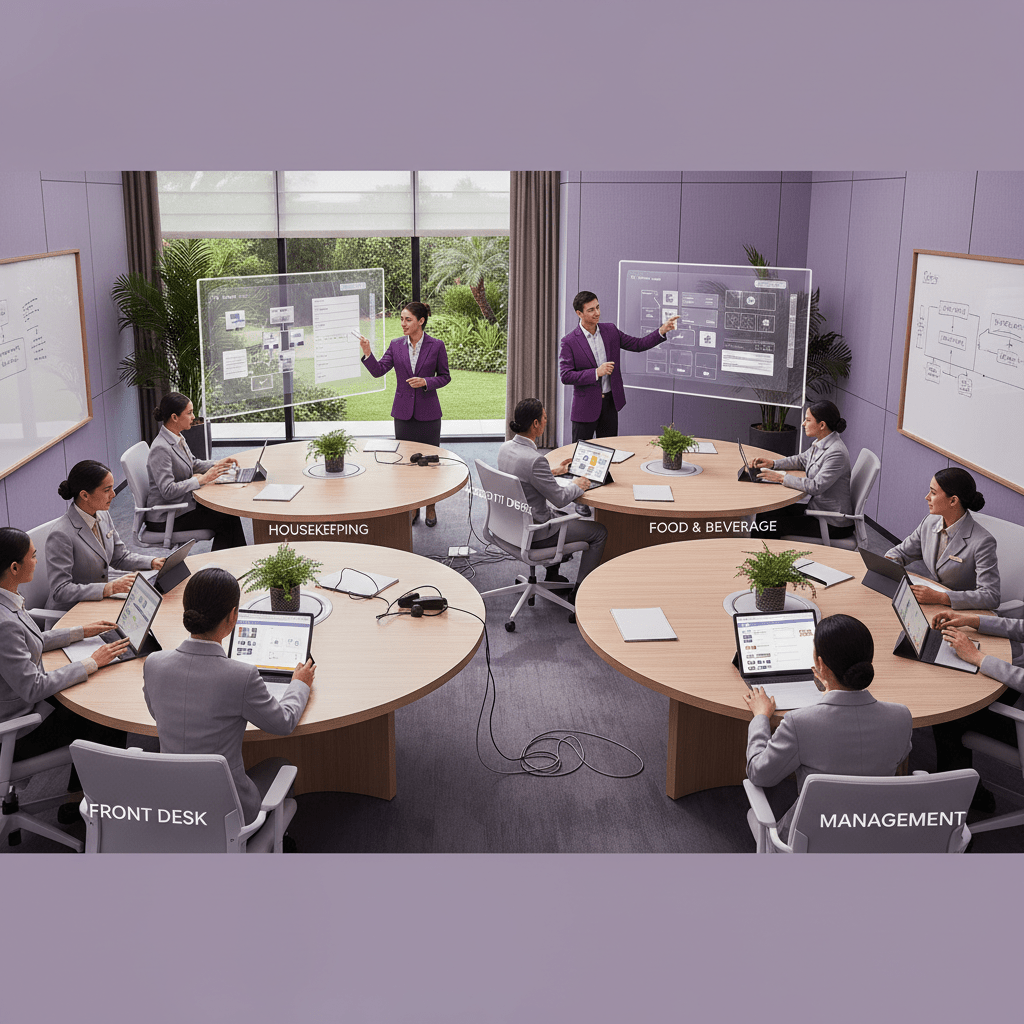
Fixing hotel operations with ERP software is not just a tech move. It’s a people move, a money move, and a daily-work move. The hotels that do it well usually start by naming the real pain points first, then they match the system to the mess instead of hoping the software will magically clean it up.
That matters because hotel teams are still stuck with siloed tools. In fact, 47% of hospitality leaders say their biggest challenge is using data across disconnected systems, which is why staffing, housekeeping, inventory, and billing keep tripping over each other Workday’s hospitality report. But when ERP is planned the right way, the payoff is hard to ignore. Better hotel operational efficiency. Cleaner handoffs. Faster reporting. Happier guests. And yes, less spreadsheet chaos.
The smart first step is simple: run an internal audit. Look at where your team loses time, where errors keep popping up, and where the guest experience gets bumpy. Then map those pain points to the right ERP modules, like finance, HR, procurement, CRM, and analytics. If you’re starting your ERP journey, that audit gives you a clear place to begin.
From there, you can build a plan that fits your hotel, not someone else’s. That’s how improving hotel management with ERP starts to feel real.
Ready to move? Start with one question: where is your biggest operational headache right now? That answer will point you to the first fix.
Try Ease My Hotel for free.
No lock-in contracts. Cancel anytime