
Introduction: Turning Daily Maintenance from a Chore into a Competitive Advantage
Picture this. It’s 11pm, a guest checks into room 214, and the AC rattles like a washing machine full of gravel. Nobody fixes it. By morning, there’s a one-star review sitting on Google with your hotel’s name on it.
Small stuff, right? Not really. In a 2025 Ecolab guest survey, 84% of guests said a bad odor would drop their satisfaction rating by at least two stars. And 60% said they’d think about staying at another hotel next time. That survey measures what guests say they’d do, not actual booking records. Still, the message is clear: little room problems turn into big reputation problems fast.
Here’s the good news. Most of these problems are easy to catch early. That’s where a hotel maintenance checklist for daily operations comes in. It’s a short, repeatable walk-through that finds the flickering light, the slow drain, or the dead thermostat before a guest does. Done right, it protects guest satisfaction, keeps your team out of panic mode, and saves money, since emergency repairs usually cost way more than planned ones.
I’ll be honest: plenty of hotels still run this on clipboards, sticky notes, and memory. (I once saw a whole maintenance “system” that was one very tired whiteboard.) It works until it doesn’t.
So in this guide, we’ll build a full, usable daily checklist together. Then we’ll look at how to roll it out with your team, and how to move from paper to simpler, modern tools. Ready? Let’s get into it.
1. The High Cost of Neglect: Why a Daily Maintenance Checklist is Crucial for Profitability
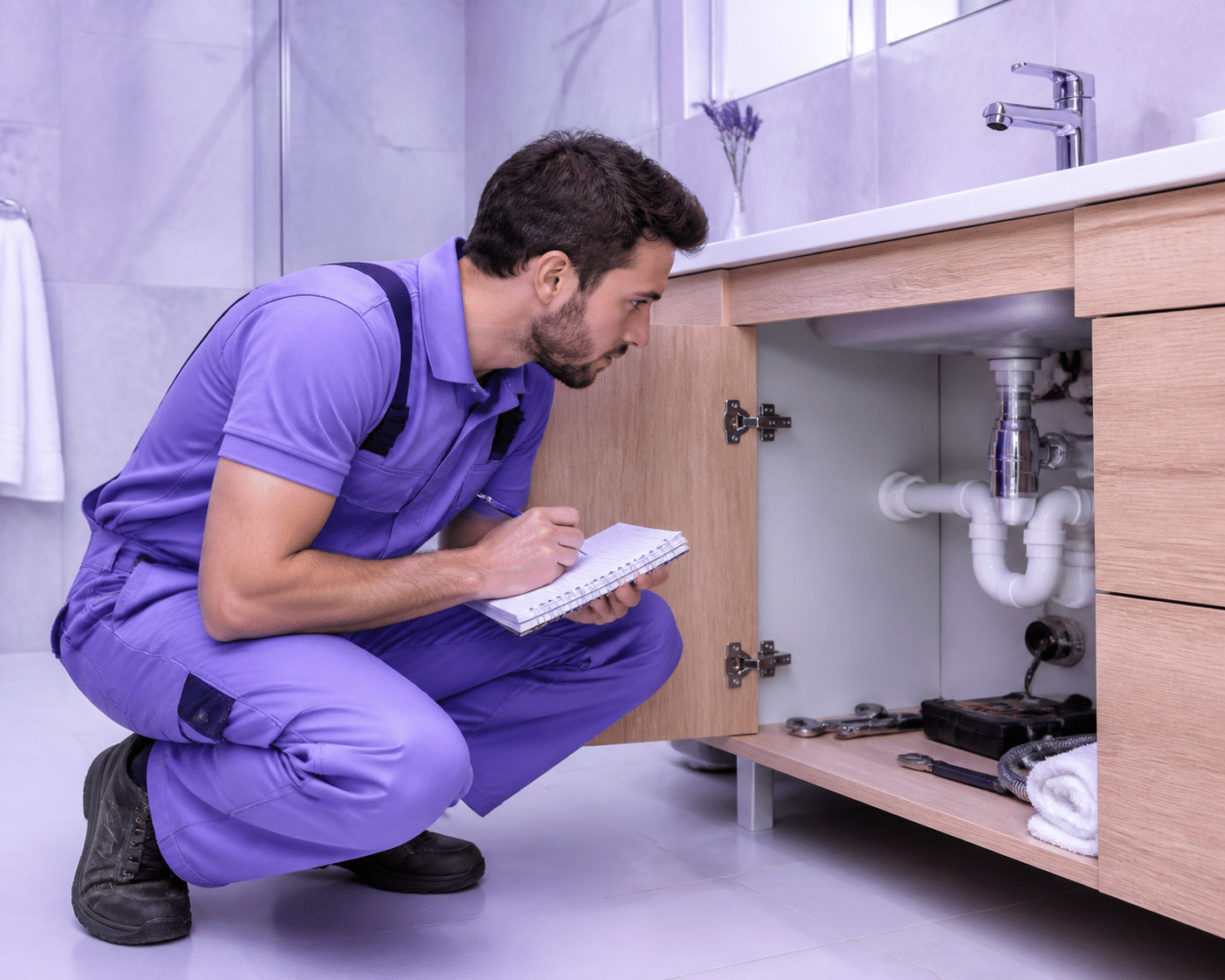
A slow drain doesn’t feel like an emergency. Until it is.
How One Small Issue Snowballs
Here’s how it usually goes. A housekeeper notices a drip under the bathroom sink in room 108. She figures someone else will report it. Nobody does. Two weeks later, you’ve got a swollen cabinet, a musty smell, and a guest who wants to talk to the manager.
Here’s that same story, step by step (an example, not a real invoice):
| Stage | What’s happening | What it costs you |
|---|---|---|
| Day 1 | Small drip, caught on a daily round | A new washer and about 10 minutes of a technician’s time |
| Week 1 | Drip ignored, cabinet starts to soak | Parts, plus a bigger repair visit |
| Week 2 | Water reaches the ceiling below | Two rooms out of service |
| Week 3 | Mold smell, guest complaint, bad review | Refunds, lost nights, damaged reputation |
See the pattern? The fix never gets more fun, only more expensive. Industry guidance often points to a U.S. Department of Energy estimate that reactive repairs cost roughly 3 to 5 times more than planned work on the same equipment. And that’s before you count overtime, rush parts, and comped nights.
What It Does to Reviews and Bookings
Guests don’t see your work orders. They see the room. One hospitality maintenance analysis says maintenance complaints show up in about 12 to 15% of negative online reviews. Published numbers vary a lot by source, so treat that as a rough guide, not gospel.
Speed seems to matter too. A 2024 analysis reported that hotels fixing issues within 20 minutes averaged 4.4 stars on TripAdvisor, while those taking over an hour averaged 3.6. It’s vendor-reported data, so it doesn’t prove cause and effect. But it fits what most managers already feel in their gut.
And repeat guests are worth a lot. HospitalityNet reports that independent hotels see about 10 to 15% repeat guests on a typical night, compared with nearly 60% at major chains. Maintenance alone doesn’t explain that gap. Still, every broken thermostat makes a return visit a little less likely.
Preventive Care Protects What You Own
Your HVAC units, pipes, and kitchen appliances are big purchases. Replace them early and your capital budget takes the hit. Actabl suggests putting HVAC, plumbing, and lighting first, since they affect guest satisfaction and operating costs the most.
Small, regular checks catch worn belts, clogged filters, and slow leaks while they’re still cheap. Equipment lasts longer. Emergency calls drop. Budgets get easier to predict.
So what does a good daily check actually look like? Let’s build it next.
2. The Anatomy of an Effective Daily Hotel Maintenance Checklist
Here’s something that trips up a lot of properties. They write one giant checklist, 90 lines long, and nobody finishes it. A better daily hotel maintenance checklist is really a handful of small ones, each tied to a place on your property.
Split Your Property Into Five Zones
Think of it like a map. Each zone gets its own short list, and each list has a clear focus.
| Zone | What’s in it | Daily focus |
|---|---|---|
| Guest rooms | Bedrooms, bathrooms, suites | AC, lights, toilets, locks, leaks |
| Public areas | Lobby, hallways, elevators | Lighting, floors, elevator doors, odors |
| Amenities | Pool, gym, spa | Water tests, equipment safety, wet floors |
| Back-of-house | Kitchen, laundry | Fridge temps, dryers, drains |
| Exterior and grounds | Entrance, parking, signs, walkways | Outdoor lights, trip hazards, damaged paving |
Walk the zones in the same order every day. Same route, same habits. Some zones also come with rules. For pools, the CDC recommends testing disinfectant and pH at least twice a day, and more often when the pool is busy.
Give Every Line an Owner and a Standard
A checklist with no names on it is just a wish list. Every item needs one person responsible, a time to finish by, and a clear idea of what “done” looks like. Mitti’s hotel checklist guidance says the same thing: assign responsibility, record inspection dates, and write down what you find.
Now, about standards. “AC works” sounds fine. But works how? A rattling unit that blows warm air technically “works.”
So write two levels:
- Working: The AC turns on and blows air.
- Optimal: The room cools to the set temperature in about 15 minutes, with no rattle and no drip.
That tiny change turns “looks fine to me” into something anyone can check. (And it stops the 11pm room 214 situation from the intro.)
Daily Checks vs. Weekly and Monthly Tasks
Not everything belongs on the daily list. If it does, the list gets too long and people start skimming.
Use tiers instead:
- Daily: Things a guest could notice tonight. Burnt-out bulbs, slow drains, a sticky door lock.
- Weekly: Things that wear down slowly. HVAC filters, shower heads, outdoor lighting timers.
- Monthly and beyond: Bigger preventive jobs. Matterport’s frequency-based template includes items like generator load-bank testing and electrical panel checks.
The daily round catches surprises. The longer tiers stop surprises from happening. You need both.
With the structure in place, let’s fill in the first and most important zone: the guest room.
3. The Guest Room Maintenance Checklist: A Room-by-Room Guide to Perfection
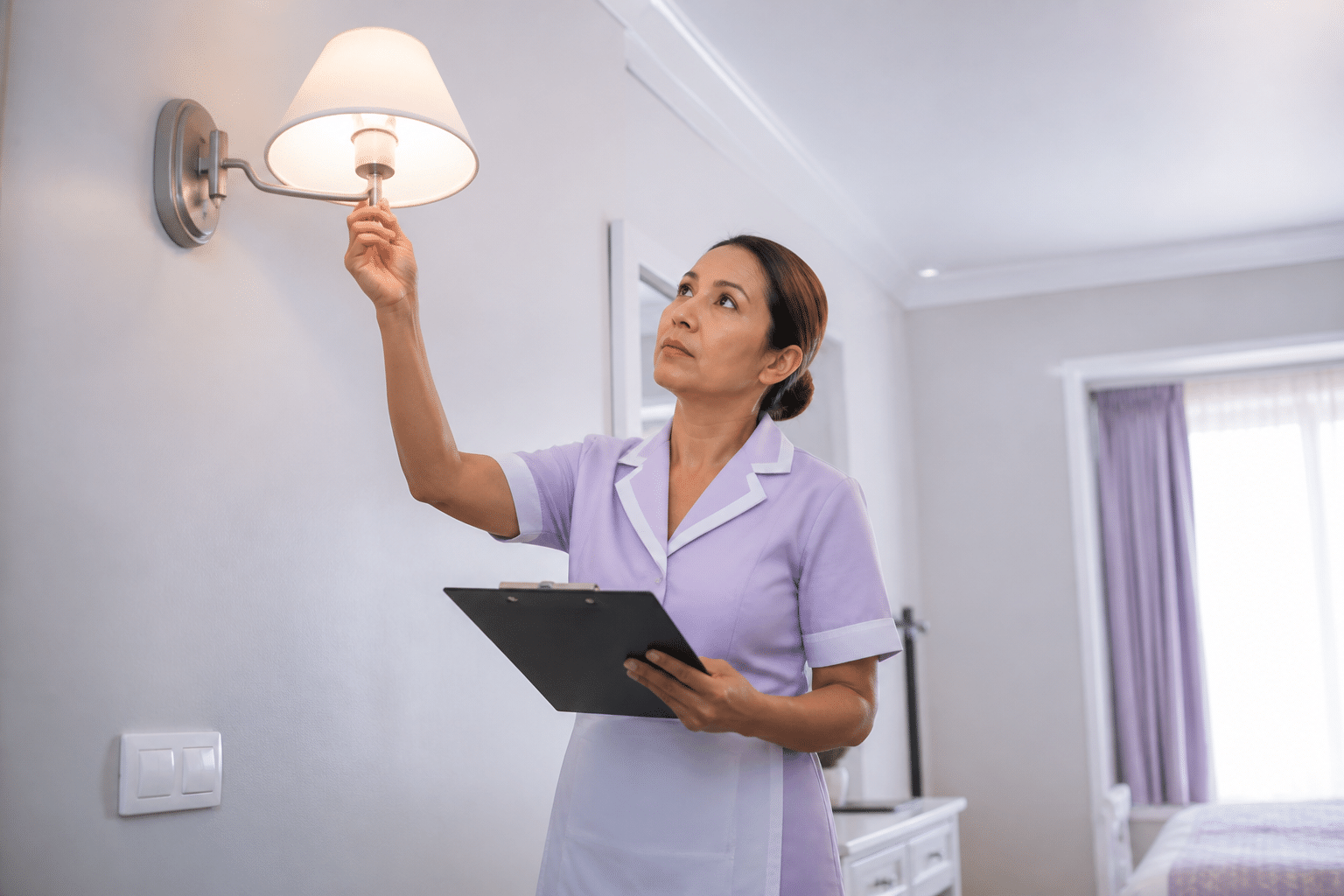
Let’s get practical. Grab a pen (or just keep this open on your phone), because this is the list your team can actually use.
A guest room has a lot of moving parts. But most of what goes wrong falls into five buckets: lights and power, water, air, in-room extras, and the furniture itself. And before any of those, there’s safety.
Safety Checks Come First
Look, a flickering lamp is annoying. A dead smoke detector is a different thing entirely. So check these before anything else, in every room, every day:
- Smoke detector: press the test button or confirm the indicator light is on, and make sure it isn’t covered or hanging loose
- Main door lock and deadbolt: they should turn smoothly and latch every time
- Door hinges, closer, and peephole: no sagging, no gaps, nothing blocked
- Connecting-room doors and balcony or window locks: fully secure
- Emergency exit map and instructions: posted, readable, and the right room
If a safety item fails, don’t wait for the end of the shift. Report it right then and flag the room as unavailable until it’s fixed. For a deeper template that also covers accessible rooms, Matterport’s room-level checklist is a useful reference.
The Room-by-Room Checklist
Here’s the core list. Keep each line a simple yes or no, with a note if the answer is “no.”
Lighting and Electrical
- Every bulb works, including bathroom, closet, and bedside lamps
- Switches click properly and don’t buzz or flicker
- Outlets and USB ports hold a plug firmly and charge a phone
- No cracked plates, exposed wires, or scorch marks
Plumbing
- Faucets run clean, with no drips after you turn them off
- Toilet flushes fully, refills quickly, and doesn’t run on
- Shower gets hot, drains fast, and the head sprays evenly
- Look under the sink for damp spots or soft cabinet wood (remember room 108?)
HVAC
- Thermostat responds and shows the right temperature
- Air blows at a normal strength, with no rattling or strange smell
- Vents are clear of dust and furniture
- No water dripping from the unit
In-Room Amenities
- TV powers on, and the remote has working batteries
- Phone has a dial tone
- Coffee maker heats and the cord looks intact
- Safe opens, locks, and resets properly
- Minibar or fridge is cold, and the door seals shut
Furniture and Fixtures
- Drawers slide without sticking, and handles are tight
- Closet doors, curtains, and blinds open and close
- Windows latch, and the bed frame doesn’t wobble
- Mirrors, headboards, and chairs have no cracks, loose legs, or sharp edges
The MaintainX hotel inspection checklist even includes small details like peephole and lock height, which are easy to forget.
How to Check Without Slowing Housekeeping
Here’s the thing. Your housekeepers are already in every room. The smartest move isn’t adding a second person, it’s adding a 60-second habit.
- Piggyback on turnovers. Housekeepers do a quick test while cleaning: flip the lights, flush the toilet, run the tap, press the TV power button.
- Use the same order every time. Door, bedroom, bathroom, closet. Muscle memory beats a long list.
- Report on the spot. One photo and a room number beats a mental note you’ll lose by room 220.
- Let engineering do the deeper stuff. Thermostat accuracy and AC performance are better left to a technician on a separate daily round.
A printable one-page version of this checklist makes a great addition to the housekeeping cart, and we’ve put a downloadable Daily Guest Room Maintenance Checklist PDF together for exactly that.
Rooms are only half the story, though. Next up: everything guests see outside their door.
4. Public Spaces & Amenities: Expanding Your Checklist Beyond the Guest Room
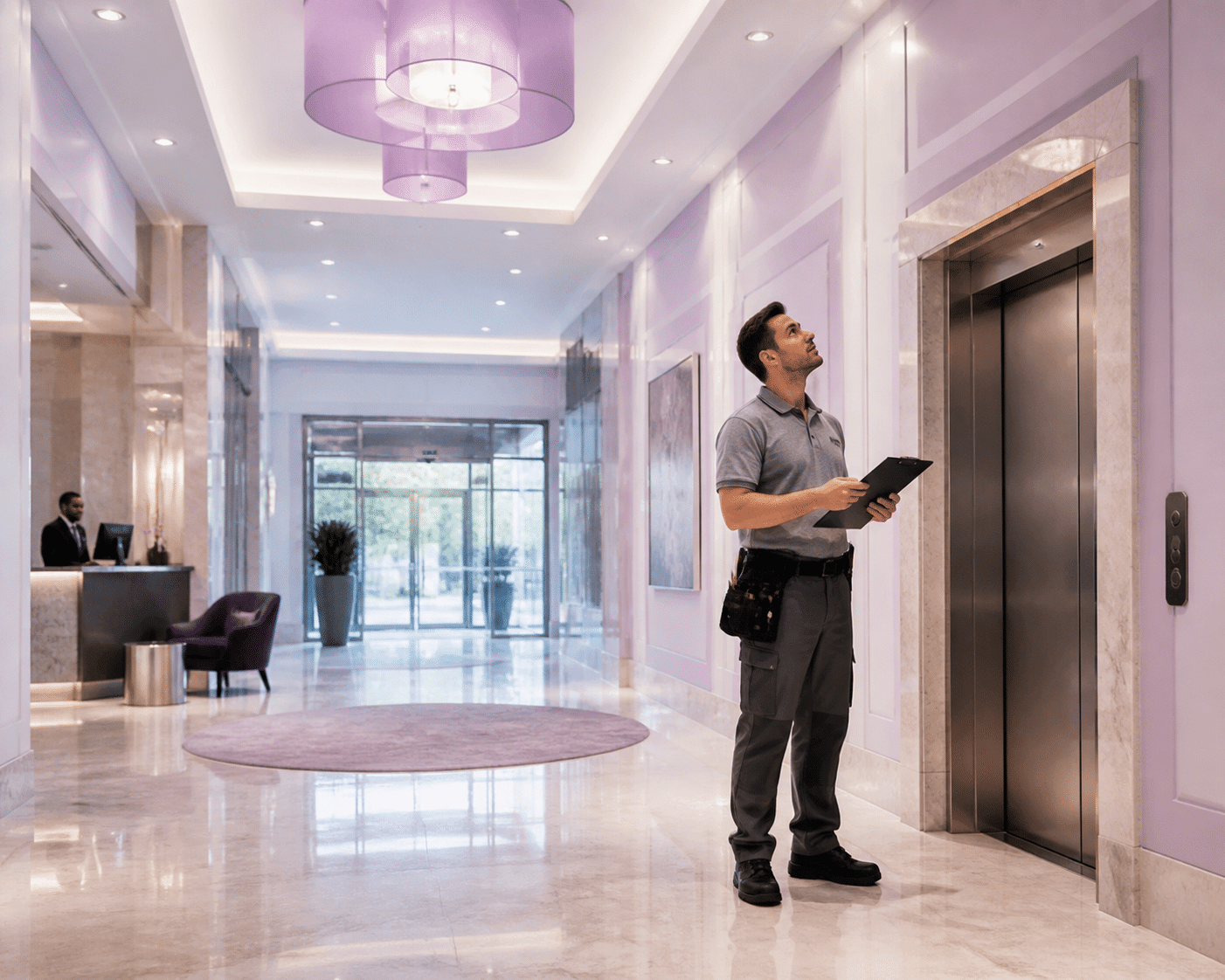
Picture a guest pulling their suitcase through your front doors. Before they ever see a bed, they’ve already judged you. The lobby smells fine, or it doesn’t. The lights are bright, or one is blinking. The elevator works, or it doesn’t.
That’s why your daily checklist can’t stop at the room door.
Why First Impressions Set the Tone
Guests make up their minds fast. One 2024 hotel design study found that guests rated their whole experience higher when the lobby looked appealing and distinctive. It can’t prove a lobby alone drives a rating, but the direction makes sense. A tired entrance makes people expect a tired room.
So treat the lobby, halls, and amenities like the front of a store. They get checked first, every day, before the busy hours start.
Lobby, Hallways, and Elevators
These spots get the most foot traffic, so they wear out the fastest. Walk them at opening and again during a busy stretch, like 5pm check-in. Things change fast once luggage carts start rolling.
Elevators deserve extra care. Rules vary by location, but many places require a formal inspection by a certified inspector at least once a year, and elevator compliance guidance says to display the current certificate where required. Your daily job is simpler: spot trouble early and call the elevator contractor. Staff shouldn’t try repairs they aren’t cleared to do.
| Area | Daily checks |
|---|---|
| Lobby | Entrance glass is clean, all bulbs work, automatic doors open and close fully, floors are dry and undamaged, seating is intact, no odors |
| Reception and luggage area | Counter is tidy, signs are readable, luggage carts roll straight, restrooms are working |
| Hallways | Carpet has no rips, stains, or lifted edges, lights all work, doors close softly, nothing blocks the path |
| Stairwells | Emergency lighting is on, exit signs are lit, handrails are tight, steps are clear |
| Elevators | Buttons all respond, doors stop at sensors, cab is clean and dry, alarm and phone work, certificate is displayed, floors level properly |
Pool, Fitness Center, and Restaurant
Amenities are where small misses turn into safety problems. A wet floor by the pool is a lot worse than a loose drawer pull.
For pools, the CDC’s Model Aquatic Health Code is guidance, not federal law. It only becomes a rule once your state or city adopts it. So check with your local health department, then build the daily list around what they require.
The gym has no single national code either. Local fire, electrical, and safety rules usually apply. A good rule: if a machine looks unsafe, tag it and pull it out of use right away. And the restaurant? Guests notice a wobbly chair faster than almost anything else (and so does your insurance company).
| Area | Daily checks |
|---|---|
| Pool and hot tub | Chlorine near 1 ppm and pH between 7.0 and 7.8 (unless local rules say otherwise), water is clear, deck is free of slip hazards, rescue gear is in place, drain covers and gates are secure, test log is filled in |
| Fitness center | Treadmills, bikes, and weight machines have no loose parts or frayed cables, emergency stops work, wipes are stocked, floors and mirrors are in good shape, first-aid kit is stocked |
| Restaurant and bar | Chairs and tables don’t wobble, lighting is bright enough to read a menu, POS terminals power on and print, fridge temps are right, floors are dry |
Pool water needs testing at least twice a day, and more often when it’s crowded. That one is hard to do from memory. Which brings us to how paper lists start to buckle under all of this, and what to do about it.
Try Ease My Hotel for free.
No lock-in contracts. Cancel anytime
5. From Clipboard to Cloud: How Technology Streamlines Your Hotel Maintenance Operations

Here’s a question. When a housekeeper spots a loose toilet seat in room 312, how long before your engineer actually hears about it?
If the answer is “depends who’s on shift,” you’ve found the real problem. Not the checklist. The path the checklist takes.
Where Paper Checklists Fall Apart
I like clipboards. I really do. They’re cheap and everyone gets them. But they break down in the same four places:
- Lost reports. A sticky note slides off a cart. A page gets coffee on it. The issue just vanishes.
- Slow communication. Housekeeping tells the front desk, the front desk calls engineering, engineering writes it down… somewhere. One hotel-chain case study described this exact handoff for after-hours guest problems, and repairs took four to six hours to even start.
- No data. Is room 214’s AC failing for the third time this month? Paper can’t tell you without someone digging through binders.
- No accountability. When nobody can see who got the task or when, “I thought someone else had it” becomes the standard excuse.
Sound familiar? That’s what fragmented systems feel like day to day.
What a Cloud-Based System Changes
A cloud-based tool like Ease My Hotel puts everything in one place instead of five. Here’s what that looks like in practice:
- Centralized tasks. Every request, whether it’s a dripping faucet or a flickering hallway light, lands in one list with a room number and a name attached.
- Real-time updates. The moment housekeeping logs a problem, engineering sees it on their phone. No phone tag.
- Automated preventive scheduling. Filter changes, pool tests, and weekly checks show up on their own, so nobody relies on memory.
- Data that shows patterns. After a few months, you can spot the rooms, floors, or machines that keep breaking. Then you fix the cause, not just the symptom.
Speed is the part that surprised me most. One vendor-published case study from OxMaint reported a 500-room hotel cutting average technician response time from 47 minutes to 16 after leaving paper behind. It’s a vendor’s own number, so don’t promise it to your boss. But the direction makes sense.
One Dashboard, From Request to Done
Picture a single screen. A request comes in from the front desk at 4:10pm. Housekeeping adds a photo. Maintenance accepts it, fixes it, and marks it complete. You, the manager, watched the whole thing without chasing anyone.
That’s the real win of a unified dashboard. Housekeeping, maintenance, and the front desk all see the same status, so nobody has to ask “did that get fixed?” And because Ease My Hotel also handles bookings and staff management in the same place, a room with an open repair can be kept off the sell list before a guest ever walks into it.
Here’s how the two approaches stack up:
| Manual checklists | Digital maintenance software | |
|---|---|---|
| Efficiency | Reports pass hand to hand, so fixes start late | Alerts go straight to the right person’s phone |
| Accountability | Hard to prove who saw or finished a task | Every task has an owner, a timestamp, and a status |
| Cost | Low upfront, but hidden costs from missed issues and emergency repairs | Monthly software fee, offset by fewer rush repairs and less admin time |
| Reporting | Manual counting, if anyone has time | Repeat issues and response times tracked automatically |
Tools alone won’t fix a messy process, though. The best software still needs a team that actually uses it. So let’s talk about rolling this out without a revolt.
6. Best Practices for Implementing Your Daily Maintenance Program
A great checklist means nothing if your team forgets it by Friday. And in hotels, people come and go fast. Maybe you hired two housekeepers last week, and one of them already quit.
So let’s build a rollout that survives turnover.
Train for Turnover, Not Just Launch Day
Don’t run one big training session and hope it sticks. It won’t. Short, hands-on lessons work better, and role-based training with refreshers after launch is what hotel software guidance keeps recommending.
Here’s a simple setup that fits a busy property:
- Day 1, 15 minutes: Show a new hire how to report one problem. Use a real room and a real leaky faucet.
- Week 1: Pair them with a “super user” on their shift, someone who already knows the app.
- Week 4: A quick refresher. Ask what’s confusing. (Something always is.)
- Hand out a one-page guide. Room number, problem type, photo. That’s it.
Also tell people why it matters. Staff who know that a fast report keeps a room sellable tend to report more.
Fit Checks Into the Day Without Overload
Nobody wants a second job on top of their first one. So keep the ask tiny.
Assign checks by zone, not by task. One housekeeper owns the third floor. One engineer owns the pool and gym. People get to know their zone, and they notice when something’s off. Mobile reporting helps here too. A tap, a photo, a room number, done in under a minute. With Ease My Hotel, a housekeeper’s report goes straight to the maintenance team’s phones, so nobody has to walk down to the office.
Start small, too. A phased rollout beats flipping everything on at once. Try one floor or one type of request for two weeks first. Then add more.
Close the Loop With a Monthly Review
Reporting is only half the job. Staff stop reporting when nothing happens afterward. The Sheraton Waikiki example is a good one: housekeepers reported room problems, calls went out automatically, and overdue tasks escalated to managers. People could see their reports mattered.
Once a month, sit down with your reports for 30 minutes and ask:
| Question | What you do with the answer |
|---|---|
| Which rooms keep showing up? | Plan a deeper repair or replacement |
| Which tasks are always late? | Change the owner or the schedule |
| What did guests find that staff missed? | Add it to the checklist |
| What never fails? | Cut it from the daily list |
That last one surprises people. A checklist should shrink as well as grow.
Pro Tip: Tell your team when a report saves the day. A quick shout-out at the morning huddle, like “Maria’s photo of that leak kept room 108 open,” builds a habit of ownership faster than any rule. Praise the catch, not just the fix.
With training, routines, and reviews in place, you’ve got a program that can run without you hovering over it.
Conclusion: Build a More Resilient and Reputable Hotel, One Check at a Time
Remember room 214 and that rattling AC? It’s a small story with a big lesson. Problems like that don’t announce themselves. They sit quietly until a guest finds them at 11pm.
A daily maintenance checklist isn’t an expense. It’s an investment. It protects guest satisfaction, keeps your team calm instead of scrambling, and saves money, since emergency fixes usually cost 3 to 5 times more than planned ones. That’s a pretty good return for a 60-second habit.
Here’s what we covered:
- Split your property into zones and give every line an owner.
- Check guest rooms, public areas, and amenities in the same order every day.
- Train for turnover, start small, and review your reports once a month.
Paper can get you started. But clipboards lose pages, and sticky notes lose arguments with the wind. A centralized platform like Ease My Hotel puts requests, tasks, and bookings on one dashboard, so a leaking faucet in room 108 goes from a housekeeper’s photo to a finished repair without anyone chasing anyone. That’s where real efficiency comes from. And honestly, it’s a nice edge over hotels still hunting for that tired whiteboard.
The hotels that do well from here won’t be the ones that just buy more tech. They’ll be the ones that connect good tools to steady daily habits. Check by check, that builds a stronger property and a reputation guests can trust.
So here’s your next step.
Stop fighting fires and start preventing them.
Discover how Ease My Hotel’s unified platform can transform your maintenance operations.
Try Ease My Hotel for free.
No lock-in contracts. Cancel anytime