
Introduction: Why Your Most Valuable Guests Are Already in Your Database
Picture this. You spend $180 to win a new guest, and you only spend about $56 to bring one back. That’s the gap one 2026 hospitality benchmark points to, which makes winning a stranger roughly 3.2 times pricier than keeping a friend. It’s a directional number, not gospel (your own market and OTA deals will shift it). But the pattern is hard to ignore.
For a boutique hotel with a small marketing budget, that gap matters a lot. Every dollar you hand to an OTA as commission is a dollar you can’t spend on better linens, a better breakfast or a better team.
Here’s the good news. Your best next guest probably already has a profile in your system.
Competing on Experience, Not Price
You won’t win a price war with a 400-room chain. And honestly, why would you want to? Boutique hotels win on character: the staff member who remembers a guest’s favorite pillow, the room with the odd little reading nook, the local tip that wasn’t in any guidebook.
That kind of personalized guest experience is what makes people come back. It’s also what makes them book direct instead of scrolling through three travel sites again. Even industry consultant Max Starkov has pointed out that acquiring new customers is very expensive, and that repeat guests make up only about 8% to 10% of an independent hotel’s guests on any given night. So there’s real room to grow.
What You’ll Get From This Guide
I’m not going to hand you a vague pep talk about “loyalty.” This article walks you through a step-by-step framework for turning one-time visitors into loyal fans who tell their friends. We’ll cover the money side, what to do before, during and after a stay, and how to measure whether any of it is working.
First up: why repeat guests are worth so much more than most owners realize.
The Financial Case for Loyalty: Unpacking the ROI of Repeat Guests
Let’s talk money. Not the exciting kind, but the kind that pays the electric bill.
Why Lifetime Value Beats a Single Booking
Hotel guest LTV sounds fancy, but it’s simple. It’s what a guest is worth over the whole relationship, not just one stay. Smartness offers an easy formula: average spend per stay, times stays per year, times years as a guest. Picture someone who spends $400 a stay, visits twice a year and sticks around for three years. That’s $2,400. (Revenue, not profit, but still.)
So what do repeat guests actually spend? I looked hard for a solid 2026 number on boutique hotels and couldn’t find one I trust. So I won’t make up a multiplier. What makes sense is this: returning guests already know the place. They’re more likely to book the spa slot, the dinner table or the late checkout, and they usually shop around less on price. Check your own data to be sure. Compare ancillary spend for returning guests against first-timers.
The Commission Math
Now the part that stings. Booking.com’s baseline is about 15%, and Expedia often lands around 18% to 20%, depending on your contract. Every direct booking keeps roughly 15 to 20 cents of each room dollar in your pocket.
Here’s an illustrative $300 stay (swap in your own contract rates):
| Booking path | Commission on a $300 stay | What you keep, before small email and payment costs |
|---|---|---|
| New guest via OTA at 15% | $45 | $255 |
| New guest via OTA at 20% | $60 | $240 |
| Returning guest via direct email offer | $0 | About $300 |
The pressure is real. Adobe and Publicis Sapient found that travel acquisition costs rose more than 35% between 2022 and 2025, while customer lifetime value grew only 4.5%. You’ve probably also heard that a 5% retention bump can lift profits by 25% to 95%. That claim is repeated across industries, so treat it as a direction, not a promise.
Guests Who Do Your Marketing for You
Loyal guests also bring something no ad can buy: credibility. In one March 2025 study, 62% of respondents paid more attention to positive reviews when choosing a hotel. Plus, 59.3% agreed that negative reviews could end their plan to book. A happy regular writes the specific, warm review that tips a stranger over the line.
That’s why simple tools matter. Software like Ease My Hotel keeps bookings and guest messages in one place, so a returning guest never feels like a stranger.
So the money case is clear. Next, let’s look at how to earn that loyalty, starting before the guest even walks in.
The Pre-Arrival Playbook: Setting the Stage for Loyalty Before Check-In
Loyalty doesn’t start at the front desk. It starts the second someone hits “book.” And a lot of hotels go quiet for weeks after that, then wonder why guests feel like strangers on arrival.
Use What You Already Know About the Guest
Your hotel management system is a goldmine here. If a returning guest asked for a quiet room, a firm pillow or a table for their anniversary, that note should show up before they do. Not buried in a text file. Right on the reservation.
Good hotel customer relationship management is mostly this: remember, then act. Imagine a message that says, “Welcome back, Maria. Want the same quiet room on the second floor?” That one line tells her you were paying attention.
One warning, though. Treat a stated preference (like an allergy) differently from a guess (like assuming she wants the spa every time). When in doubt, ask. Guests don’t mind a quick confirmation. They do mind being wrong about.
Build Messages That Feel Personal but Run Themselves
Automation gets a bad rap, but it only feels robotic when it’s lazy. Mews recommends using the guest’s name, confirming arrival date, check-in time, address and parking, then offering a few relevant extras like a room upgrade, early check-in, breakfast or an airport transfer. One clear “manage your stay” button does the rest.
For boutique hotels, a short questionnaire works well too. Prostay suggests sending one about dietary needs, pillow preferences and special occasions around three days before arrival. The questions are specific, so your team can actually do something with the answers.
A few simple rules:
- Send small messages, not one giant email.
- Ask only what you’ll act on.
- Offer upgrades that match the booking, not random promos.
- Let guests reply to a real person.
Here’s a simple timeline you can copy:
| When | What to send | Goal |
|---|---|---|
| Right after booking | Confirmation with a warm welcome | Build trust early |
| 7 days before | Local tips based on guest interests | Get them excited |
| 3 days before | Preference questionnaire plus upgrade offer | Collect useful details |
| 24 hours before | Arrival route, parking, mobile check-in link | Remove surprises |
| Check-in day | Short “your room is ready” text | Skip the desk line |
Make Arrival Painless
Nobody loves standing at a counter with luggage and a toddler. A 2025 survey reported by Hotel Dive found that 64% of respondents wanted to check in on a mobile device. Also, 73% said choosing specific room features mattered to them. So mobile pre-check-in shouldn’t just collect a signature. Let guests pick a bed type or a quieter floor.
This is where tools like Ease My Hotel help, since bookings and guest messages live in one place and your pre-arrival flow can run off the reservation itself.
Get this part right and guests walk in feeling expected. Next, we’ll look at what happens once they’re actually under your roof.
Crafting Unforgettable On-Site Experiences That Build an Emotional Connection
You can send the perfect pre-arrival email and still lose a guest at the front desk. All it takes is one question: “Have you stayed with us before?” She has stayed three times. Ouch.
This is the moment guests decide whether your hotel is just a place to sleep or a place they’d miss.
Put the Guest Profile in Your Team’s Hands
Your staff can’t personalize anything if the information lives in someone’s head, or worse, in a notebook under the desk. They need one screen that shows who’s walking through the door. Stay history, room preferences, past requests, the anniversary note from last spring. Tools like Mews even merge duplicate profiles automatically, so a returning guest doesn’t get treated like a first-timer because she booked once through an OTA.
When the front desk sees that screen, magic happens. “Welcome back, Daniel. We kept a corner room for you again.” Ten seconds. Done. Daniel feels known.
One more thing. Give your team a small budget to fix problems on the spot, say $50 without asking a manager. Ritz-Carlton is famous for this kind of empowerment, and it works for tiny hotels too. A dashboard like the one in Ease My Hotel helps here because everyone sees the same guest notes and request status.
A rule worth taping to the front desk: remember the preference, act on it, then check that it actually happened.
Small Surprises That Cost Almost Nothing
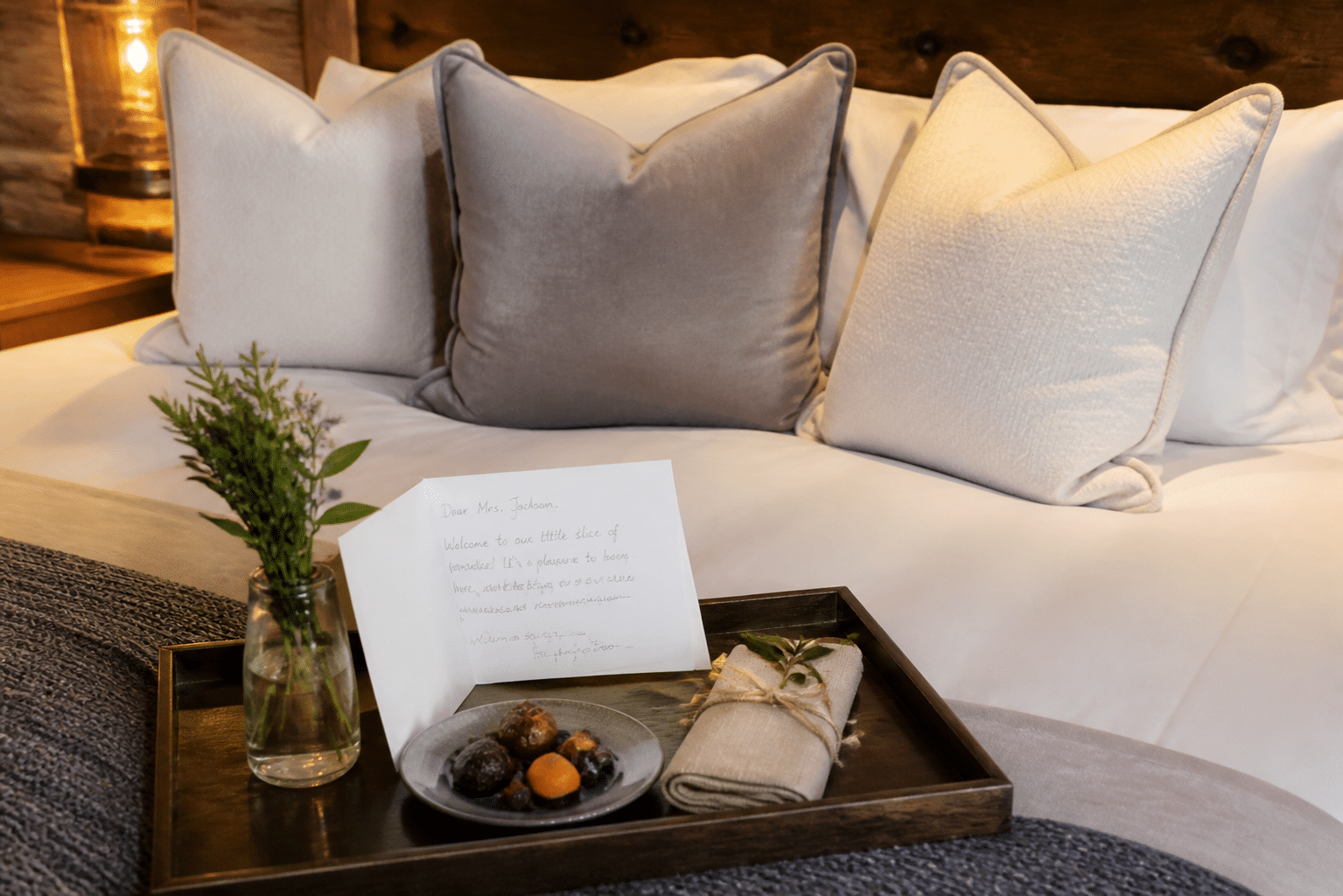
Surprise and delight sounds expensive. It isn’t. The best gestures are small, specific and a little unexpected.
| Gesture | Rough cost per guest | Why it sticks |
|---|---|---|
| Handwritten welcome note with the guest’s name | Under $1 | Nobody expects ink anymore |
| Local artisan snack (cookies, chocolate, jam) | $3 to $5 | Gives guests a taste of the neighborhood |
| “Hidden gem” list from your own staff | Free | Beats any generic guidebook |
| Favorite pillow already on the bed | Free | Proves you listened |
The costs are my own ballpark figures, so run your own numbers. But notice the pattern: each gesture comes straight from something you learned about the guest. A snack from a bakery two streets away says more than a branded water bottle ever will.
And please, don’t give everyone the same thing. A couple celebrating an anniversary and a solo business traveler want very different surprises.
Let Technology Handle the Boring Stuff
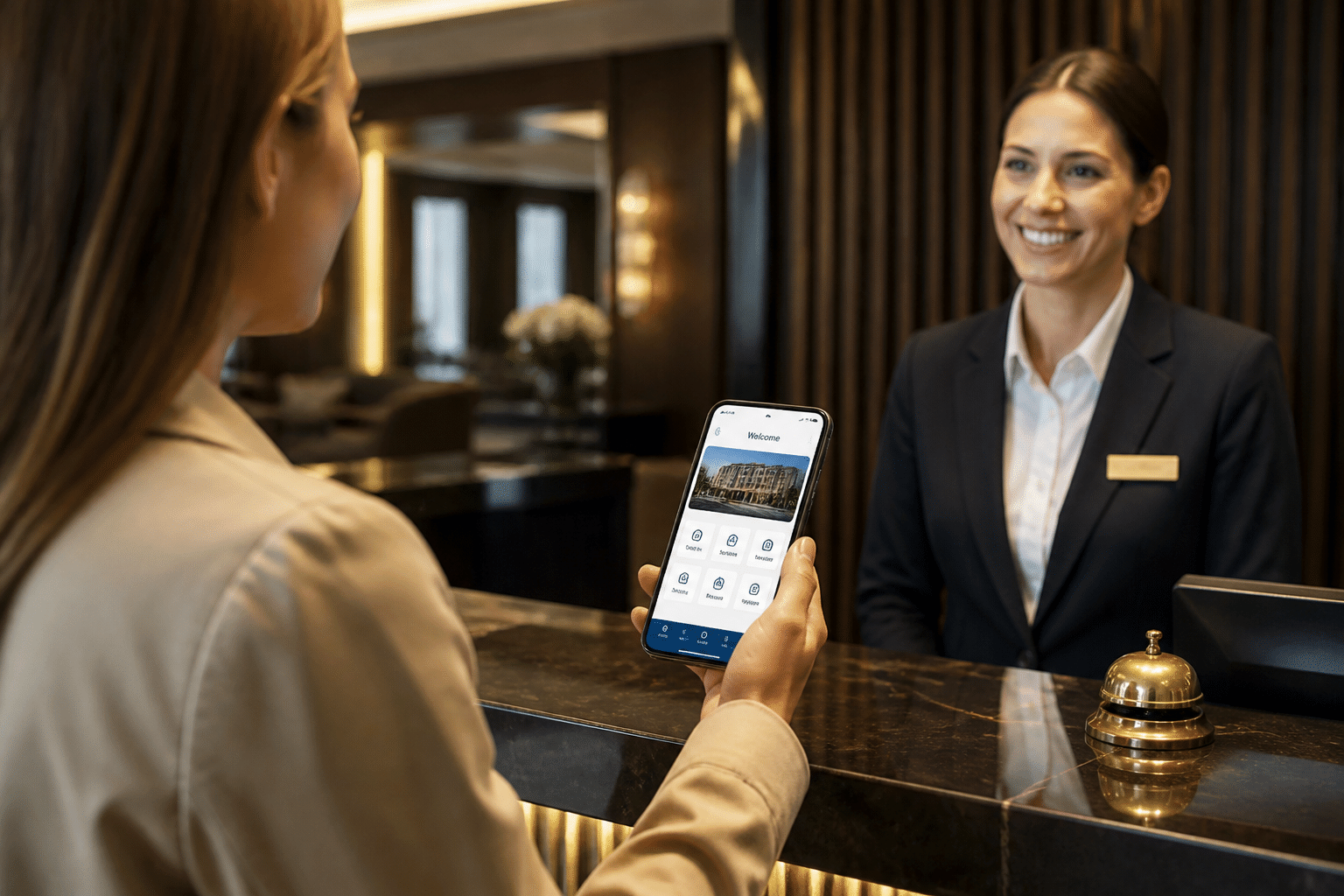
Here’s the part people get backwards. Tech doesn’t make a stay colder. Done well, it frees your team to be warmer.
Think about it. If a guest can message for extra towels or book a dinner table from a guest portal, your staff isn’t stuck running errands or answering the phone. They can walk a guest to the terrace and chat about the sunset instead.
The numbers back this up. In the J.D. Power 2025 North America Hotel Guest Satisfaction Index, guests with the hotel’s app installed scored satisfaction at 699 out of 1,000, compared with 631 for those without it. Problems matter just as much: satisfaction dropped from 677 to 460 when guests hit an issue during their stay. So fast, tracked requests protect the mood you’ve worked to build.
Once the guest checks out, the real relationship work begins. That’s up next.
The Post-Stay Follow-Up: Turning a Great Stay into a Lasting Relationship
The guest checks out. Smiles, waves, gone. And then, at most hotels, nothing happens for months.
That silence is where repeat business quietly dies. The good news? A few simple habits can fix it without a big team or a big budget.
Stop Blasting, Start Segmenting
One email to your whole list feels easy. It also gets ignored. A couple celebrating an anniversary doesn’t care about your midweek corporate rate, and a business traveler doesn’t need your spa package.
So group guests by how they stayed. Start with three buckets:
- First-time leisure: a warm thank-you, a few things they might have missed, and a gentle nudge to book direct next time.
- Repeat business: quick, short offers like a priority room or flexible late checkout.
- Anniversary trip: a note a few weeks before the date next year, with a package that fits.
Tools like Mailchimp let you target by booking history, location, travel preferences and membership status, then automate birthday and anniversary emails. If your guest data lives in your hotel system, pick a platform that connects to it. Otherwise you’ll spend your weekends exporting spreadsheets. (Ask me how I know.)
A Loyalty Program Guests Can Explain in One Breath
Points programs are tough for small hotels. Most guests visit once or twice a year, so points never add up. Keep it simple instead. Here are three models that work without a complicated points currency:
| Model | How it works | Example perk | Best for |
|---|---|---|---|
| Perk-Based | Every returning guest gets the same benefit | Free welcome drink on the next stay | Hotels with mostly leisure guests |
| Stay-Based | A reward after a set number of stays | Stay 3 times, get a room upgrade | Hotels with regular business or weekend visitors |
| Insider Club | Free sign-up for direct bookers | Early access to popular dates plus a 5% direct rate | Hotels with seasonal peaks and a growing email list |
Pick one. Not all three. The perks should be easy to say out loud: early booking access, a complimentary drink, a small discount for booking direct. If your front desk can’t explain it in ten seconds, it’s too complicated.
Also, watch your costs. A free drink might run $4. A 5% discount on a $300 stay is $15, still far less than the $45 to $60 an OTA would take.
Close the Loop on Feedback
A survey nobody reads is just noise. So set it up once and let it run. Send a short email about 24 to 48 hours after checkout, ask one clear question about how likely they are to recommend you, then add one optional “why?” box.
Then comes the human part. Reply to reviews yourself, and make each reply specific. Name the breakfast, the staff member, the terrace. With negative reviews, own the problem, say what you changed and offer to talk privately. Plenty of guests read reviews, and one 2025 paper found 81% of travelers always or frequently read them before booking. Future guests are watching how you answer.
Here’s a simple routine: survey goes out automatically, low scores flag a manager, and every review gets a reply within two days. Ease My Hotel keeps guest messages and booking history together, which makes that kind of routine much easier to repeat.
Now, all of this needs a solid system behind it. That’s what we’ll look at next.
Try Ease My Hotel for free.
No lock-in contracts. Cancel anytime
The Engine Room: How a Unified Platform Powers Your Loyalty Strategy
Everything we’ve covered so far, the pre-arrival notes, the front desk welcome, the follow-up emails, needs somewhere to live. If it lives in five different places, it falls apart by Friday.
One Guest Profile, Every Touchpoint
Think of a cloud-based hotel management system as the central nervous system of your loyalty plan. Ease My Hotel is one example. It keeps bookings, guest messages and stay history together, so each touchpoint adds to one profile instead of starting a new one.
Booking comes in. Preferences get noted. A request gets handled during the stay. Feedback lands after checkout. All of it sits on the same record. So when Maria books again next spring, nobody has to dig through old emails to remember she wanted the quiet room.
Giving Your Team Their Time Back
Let’s be honest about staffing. Turnover is rough, new hires need training, and nobody has spare hours to hand-type reports. When someone new starts on Monday, a shared guest record means they can still sound like they’ve known the guests for years.
Automation does the boring work: reports, confirmations, routine messages. In one real example, Eklo Hotels moved 10 French properties to a cloud system. In a single month they handled 22,142 bookings and recovered more than 738 staff hours, or about two minutes per booking. Your property is smaller, sure. But the idea carries over. Those minutes can go toward walking a guest to the terrace instead of staring at a spreadsheet.
Disconnected tools also cost real money. One 2026 report says up to 13% of hotel operating costs trace back to systems that don’t talk to each other. It credits McKinsey for that number through a secondary source, so treat it as a rough signal.
Connecting the Dots Across Your Tools
Here’s where it gets interesting. When your property system connects to your channel manager, your direct booking engine and your restaurant POS, you stop guessing who your best guests are. You can see it.
| Before: Fragmented systems | After: A unified hotel platform |
|---|---|
| Guest notes in a notebook, an inbox and a spreadsheet | One profile with stay history, requests and messages |
| OTA bookings look like brand new guests | Returning guests recognized across every channel |
| Restaurant and spa spend tracked separately | Room and on-site spend added up per guest |
| Reports built by hand every week | Reports ready on one dashboard |
| New staff learn guest details by asking around | New staff see the full picture on day one |
That full picture is what makes retention smarter. You can spot the guest who books direct twice a year and always orders dinner, then send her an offer that fits. You can also see the guest who came through an OTA and spent nothing extra, and decide how much effort that relationship deserves.
Once the data flows into one place, the next question is simple: how do you know it’s working?
Measuring What Matters: Key KPIs for Tracking Repeat Customer Revenue
You can’t improve what you don’t count. And no, “it feels busier lately” doesn’t count.
The good news is you only need three or four numbers to see if your loyalty work is paying off.
Repeat Booking Rate: Your Main Number
This one tells you how many guests came back. Simple.
Repeat Booking Rate = (Number of Repeat Guests ÷ Total Guests) × 100
Say 200 guests stayed last month and 38 had stayed before. That’s 19%. A 2026 boutique hotel statistics roundup puts the typical range at 15% to 25%. It’s a loose compilation, not a hard rule, so use it as a rough yardstick only.
Check it monthly to spot quick changes. Then look again each quarter, because one slow month can fool you. (Watch for duplicate guest profiles too, since they can make repeat guests look like new ones.)
Direct Booking Ratio: Where the Money Lands
This shows how many bookings came through your own site, phone or email instead of an OTA. Divide direct bookings by all bookings, then multiply by 100.
If 90 of your 260 bookings were direct, you’re at about 35%. That same roundup lists roughly 35% as the average for boutique hotels. Every point you add means fewer commission dollars leaving the building. Compare it with your repeat rate. If both climb together, your follow-up emails are probably doing their job.
NPS and CSAT: The Early Warning Signs
Repeat bookings show up months later. Survey scores show up in days.
- NPS asks how likely a guest is to recommend you. You subtract the share of low scorers (0 to 6) from the share of high scorers (9 to 10).
- CSAT asks how satisfied they were, usually on a 1 to 5 scale. You average the answers.
Survey response rates for post-stay emails often land around 15% to 22%, so don’t panic over small numbers. Just watch the trend. A falling score today often means fewer return stays next year.
Here’s a simple dashboard you can copy. The numbers are sample figures, so swap in your own.
| KPI | This month | Last quarter | What to watch |
|---|---|---|---|
| Repeat Booking Rate | 19% | 17% | Rising for 2 quarters in a row |
| Direct Booking Ratio | 35% | 31% | Stays above your OTA share growth |
| NPS | 52 | 48 | Any drop of 5+ points |
| CSAT (out of 5) | 4.5 | 4.4 | Below 4.0 triggers a manager call |
Once these numbers sit on one screen, you can see what’s working. Next, let’s pull it all together.
Conclusion: Your Blueprint for Sustainable Growth Through Guest Loyalty
So here’s the whole thing in one breath. Know your guest before they arrive. Make the stay feel personal while they’re under your roof. Then keep the conversation going after they leave.
That’s it. Three parts, one loop.
The pre-stay part is about listening: a quick questionnaire, a note about the quiet room, a message that sounds like a real person wrote it. The on-site part is about acting on what you heard, with a pillow already on the bed or a corner room kept aside. The post-stay part is about staying in touch without spamming, with a simple perk guests can explain to a friend. Do all three and your next booking might come straight from your own inbox, with no 15% to 20% commission attached.
Here’s the thing I’d tape to the wall, though. Technology isn’t the star. Your people are. A unified system like Ease My Hotel just clears the clutter, so your team spends less time hunting for notes and more time walking a guest to the terrace. The software keeps the memory. Your staff supplies the warmth.
And you don’t need a big budget or a six-month project to begin.
Your Next Step
Start today by auditing your guest data. Open your system and look at who stayed more than once, who booked direct and who left a note you never acted on. What stories does it tell, and how can you use them to invite your best guests back?
If your data is scattered across inboxes, notebooks and spreadsheets, that’s worth fixing first. You can see how a unified setup works at Ease My Hotel.
Your best next guest is probably already in there. Go say hello.
Try Ease My Hotel for free.
No lock-in contracts. Cancel anytime