
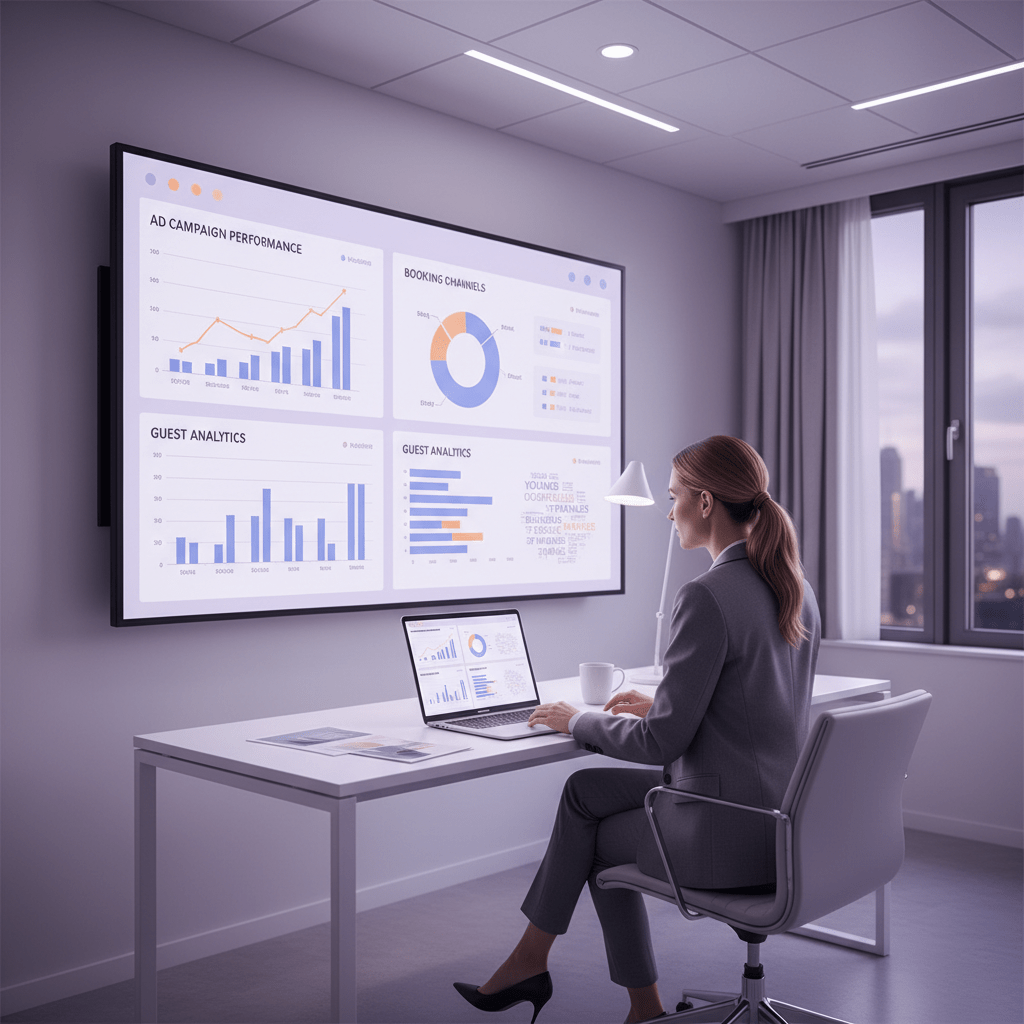
Stop Competing on Price, Start Connecting with Guests: The Power of Targeted Ads
Ever feel like your hotel is stuck in a race to the bottom? One more OTA fee. One more discount request. One more “why didn’t they book direct?” moment.
You’re not alone.
For many hotels, online travel agencies take a big bite out of every booking. Some charge 15% to 30% per stay, which can turn a $200 room into $40 gone before the guest even checks in. That’s a rough trade, especially if you’re trying to drive hotel revenue and improve hotel occupancy rates without giving away the room.
Here’s the better path: targeted digital advertising for hotels. Not broad ads. Not random clicks. Ads that reach the right traveler at the right time. Think Google ads for hotels, Facebook ads for hotels, and smart retargeting that helps you increase direct hotel bookings instead of feeding the OTA machine.
And the good part? You don’t need a giant budget to start. You just need a clear plan, a few hotel marketing strategies, and a setup that speaks to real guest needs.
In this guide, we’ll walk through how to increase hotel bookings with precise campaigns, simple targeting, and a few hotel ad campaign examples you can actually use.
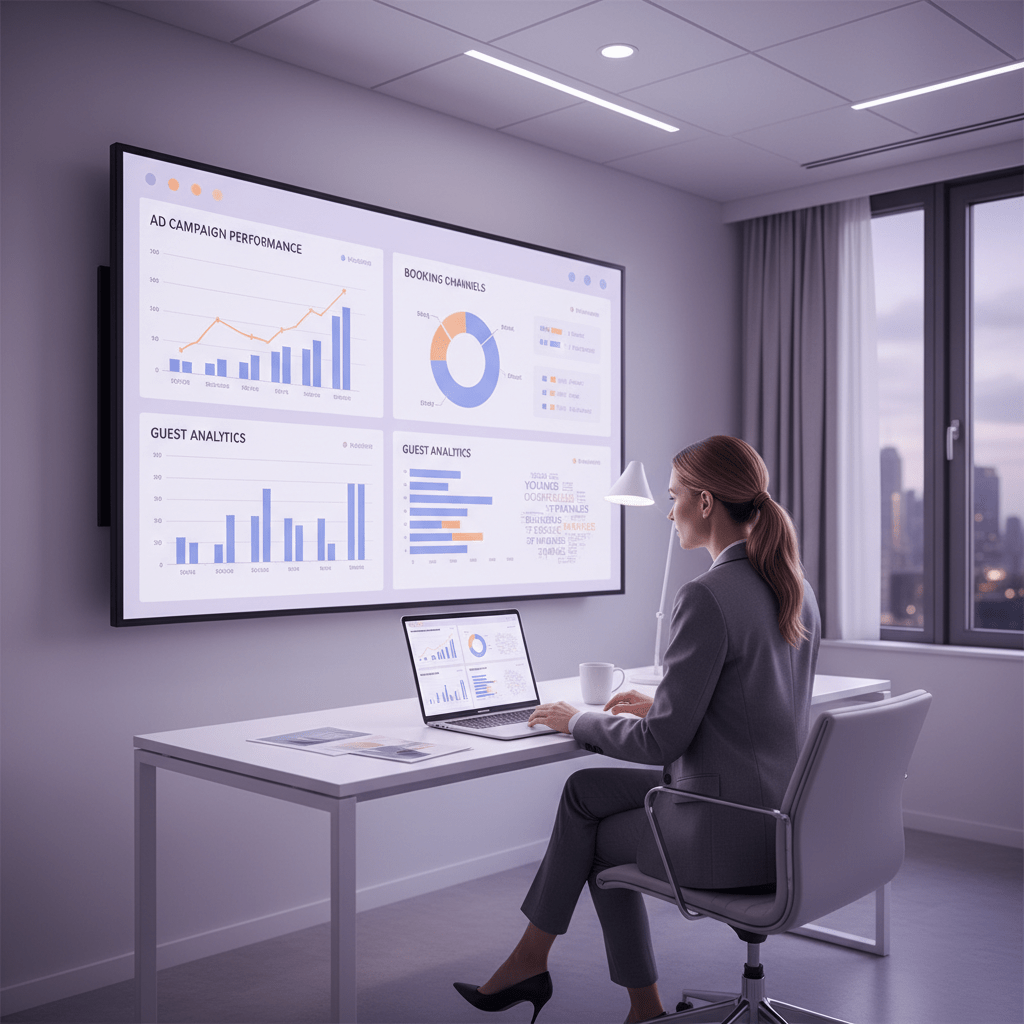
1. Laying the Foundation: Why Precision Beats Power in Hotel Marketing
Ever notice how a billboard on the highway gets ignored after a week, but a traveler searching “hotels in Miami with a pool” is ready to book right now? That’s the big difference here.
Traditional ads cast a wide net. Think print, radio, billboards, and even those magazine spreads in airport lounges. They can help with name recognition, sure. But they rarely know who’s actually looking for a room tonight, this weekend, or next month.
Targeted digital advertising for hotels works a lot differently. Google ads for hotels can reach people with clear search intent. Facebook ads for hotels can reach people who are still daydreaming about a trip and seeing travel posts on Instagram. And retargeting can bring back guests who looked at your booking page but wandered off to compare prices.
That’s where the magic starts. Not magic-magic. Just better timing.
Here’s the deal: precision usually beats raw reach because it helps you spend money where it has a shot at paying back. Hotels that lean into direct bookings also avoid the ugly OTA bite. Major booking platforms often charge 15% to 30% per stay, which means a $200 room can lose $40 before breakfast is even served. Direct bookings can also bring in more revenue per stay, since guests tend to add upgrades and extras, plus they usually cancel less often than OTA bookings.
And the best part? You can measure what happens. Clicks, calls, bookings, room nights. All of it. Unlike a billboard on a freeway. Good luck asking that sign how many suites it sold.
Search intent vs. discovery
This part matters a lot.
- Search intent means someone is already looking for something specific, like “boutique hotel near downtown Austin” or “family hotel with free parking.”
- Discovery means someone isn’t booking yet, but they’re open to ideas. Maybe they follow travel pages, save resort reels, or watch beach getaway clips on TikTok.
Both matter. Just not in the same way.
Search ads usually catch people closer to booking. Social ads are great for getting more guests to your hotel by planting the idea first. Used together, they help drive hotel revenue without forcing you to slash rates every weekend.
What targeted ads do better
| Channel | Best for | Why it works |
|---|---|---|
| Google Ads | High-intent searches | Reaches people already looking for a stay |
| Facebook Ads | Discovery and reminders | Great for travel inspiration and retargeting |
| Retargeting | Lost visitors | Brings back people who almost booked |
| Traditional ads | Broad awareness | Good for visibility, but hard to track |
If you’re building hotel marketing strategies for 2024 and beyond, this is the shift to watch. Start with the guest, not the loudest ad.
I’ve seen this play out over and over: the hotels that win aren’t always the loudest. They’re the ones that know who they want, where those guests spend time online, and what message gets them to click.
That’s also where tools like Ease My Hotel can help behind the scenes, since a clean booking setup, guest messaging, and a single dashboard make it easier to turn ad clicks into real stays. Less chaos. Fewer lost leads. More direct hotel bookings.
And honestly, that’s the whole point.
2. Before You Spend a Dollar: Defining Your Ideal Guest Personas
You know that moment when you’re writing an ad and think, “Who am I even talking to?” Yeah, that’s the trap. And it’s a pricey one.
Before you run digital advertising for hotels, you need to know your guest. Not in a vague way. In a real, useful way. That means building 2 to 3 guest personas you can actually use.
Think of them like little cheat sheets. They help you stop guessing and start speaking to the right people. Plus, they make it easier to attract more guests to your hotel without wasting money on clicks that go nowhere.
Start with 3 simple personas
Here’s a good starting set for most properties:
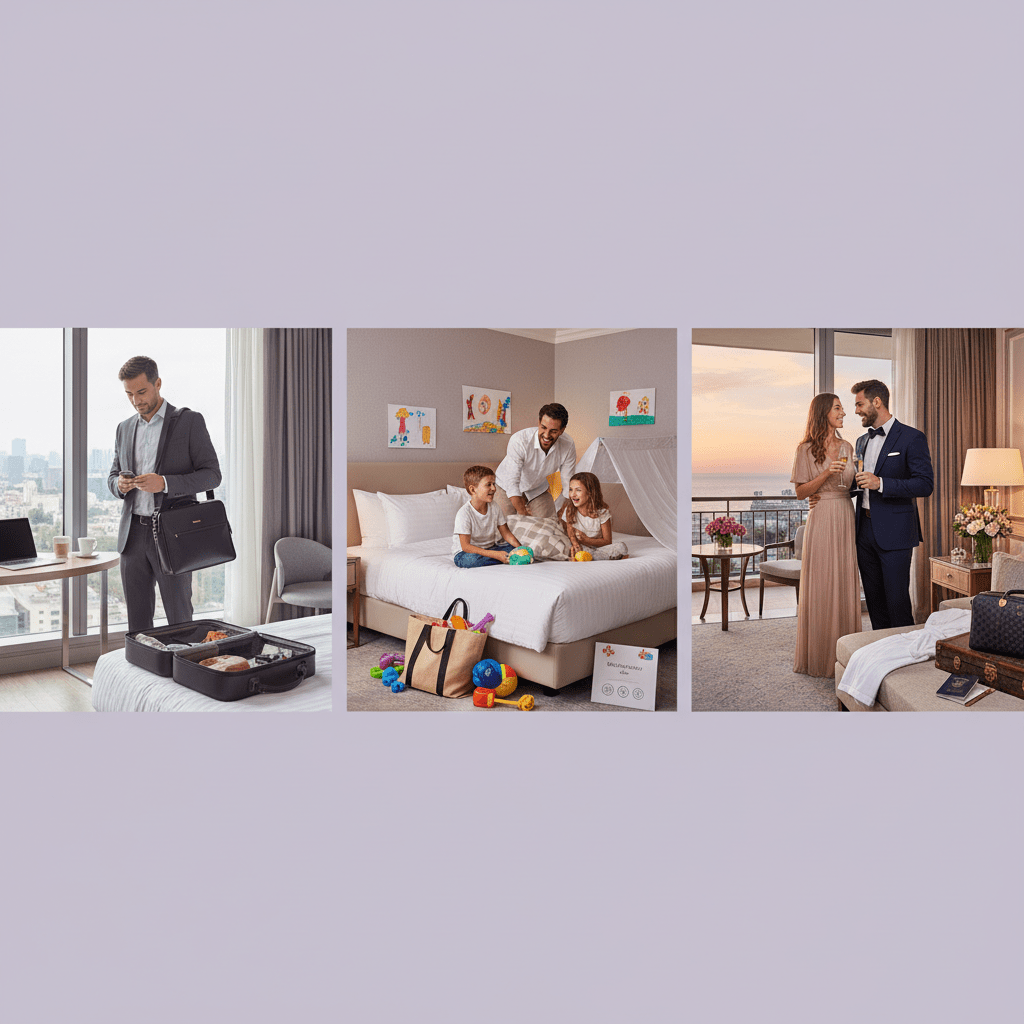
| Persona | What they care about | What they usually book | Best channels |
|---|---|---|---|
| Business Traveler Brianna | Fast WiFi, easy check-in, quiet room | Weeknight stays, direct booking | Google ads for hotels, LinkedIn, email |
| Family Vacation Frank | Space, pool, parking, kid-friendly perks | Weekend or holiday stays | Facebook ads for hotels, Instagram, YouTube |
| Luxury Couple Leo & Linda | Romance, views, upgrades, privacy | Suites, packages, special occasions | Instagram, retargeting, TripAdvisor |
And no, you don’t need 17 personas. That gets messy fast. Three is usually enough to start.
What to put in each persona
Keep it simple. Write down:
- Age range and location
- Travel reason
- Booking habits like last-minute or planned early
- Pain points like slow check-in, tiny rooms, or hidden fees
- Online habits like Instagram, Google search, Facebook groups, or YouTube Shorts
- What makes them book direct instead of going through an OTA
For example, Brianna might be 34, flying in on Monday, and booking from her phone during a coffee break. Frank might be a dad of two who checks reviews on Facebook and wants free breakfast. Leo and Linda might care more about room photos, couples packages, and a late checkout.
Funny enough, the thing they hate most is often the thing that wins the booking. Slow WiFi. Bad parking. Confusing photos. Extra resort fees. Tiny annoyances. Big deal breakers.
Use the data you already have
You don’t need to guess. Look at what’s already in front of you.
- Booking records show who stayed, when they booked, and how far in advance they planned
- Guest feedback shows what people loved and what annoyed them
- Social media followers tell you who’s already paying attention
- Website data can show which pages people click before they book
If you use a system like Ease My Hotel, this gets a lot easier because booking details, guest messages, and property data sit in one place. Less digging. Fewer tabs. More clarity.
And that matters. Because once you know who you’re talking to, your hotel marketing strategies stop feeling random. Your ads get sharper. Your offers get smarter. And your hotel ad campaign examples start looking a lot more like real bookings and a lot less like guesswork.
3. Choosing Your Stage: Where to Run Your Hotel Ad Campaigns
You know that feeling when you’re staring at three tabs, two ad accounts, and one half-finished coffee, thinking, “OK… where do I even put my money?” Yep. Been there.
The good news is you don’t need to be everywhere. You just need to be on the right stage for the guest you want.
1) Google Ads: best for people ready to book
If you have a small budget and need bookings now, start here. Google Ads for hotels works well because it catches people who are already searching things like “hotel near airport in Dallas” or “family suite in Orlando.” That’s high intent. They’re not just browsing. They’re hunting.
And that matters a lot because direct bookings usually cost less than OTA bookings. Major OTAs can charge around 15% to 30% per stay, while direct bookings may only carry payment fees of about 4% to 6%. On a $200 room, that can mean $40 lost to OTA fees versus just a few dollars direct. Big difference. Big deal.
Google Ads is also a solid place to track what’s working. You can see clicks, calls, and bookings. So if your goal is to drive hotel revenue and increase direct hotel bookings, this is usually the first place to test.
Best for:
- High-intent searchers
- Last-minute bookings
- Branded and non-branded search terms
Use this if: you want room nights soon, not just attention.
2) Meta Ads: good for awareness and retargeting
Meta means Facebook and Instagram. And honestly, this is where a lot of travel dreams start. Someone sees a pool shot, a balcony view, or a cozy breakfast spread, and suddenly your hotel is in their head.
Meta Ads work well for discovery. They’re also great for retargeting. So if someone visited your booking page but didn’t finish, you can remind them later with a better offer or a sharper photo. That’s handy. Really handy.
This is also a smart move for hotels trying to attract more guests to your hotel before they’re ready to book. Families, couples, and younger travelers often spend time here while planning trips. And since short-form video gets a lot of attention, a 15-second room tour or local experience clip can do more than a plain flyer ever could.
Best for:
- Building hotel awareness
- Retargeting website visitors
- Showing off experiences, not just rooms
Use this if: you want to warm people up before they book.
3) TripAdvisor Ads: strong at the decision stage
TripAdvisor is a little different. People there are usually deep in planning mode. They’re comparing places, reading reviews, and trying to decide between you and the hotel next door.
That makes TripAdvisor Ads useful at the point of decision. They can help you show up where travelers are already looking for proof. And for independent hotels, that can be a nice edge, especially if your reviews are strong and your property photos look good.
TripAdvisor is not always the cheapest option, though. For some hotels, it works best as a smaller, focused campaign rather than the whole strategy. Think of it as a last nudge, not the whole push.
Best for:
- Travelers comparing options
- Guests close to booking
- Properties with strong reviews and clear value
Quick guide: where should you start?
Here’s the simple version.
| Your goal | Best place to start |
|---|---|
| Need bookings now | Google Search Ads |
| Want to build interest | Meta Ads |
| Need help at the final choice stage | TripAdvisor Ads |
| Have a tiny budget | Google first, then retarget on Meta |
| Have stronger visuals and packages | Meta first, then Google |
If I had to make it even simpler: start with Google if you need fast bookings. Start with Meta if you want to attract more guests to your hotel and stay on their radar. Add TripAdvisor when you want to catch travelers right before they choose.
That’s the real trick with digital advertising for hotels. You don’t need one perfect channel. You need the right mix for your hotel marketing strategies.
And if your booking data, guest messages, and room inventory are all sitting in one clean dashboard, it gets a lot easier to match ad clicks with real stays. That’s one place where Ease My Hotel can help. Less scrambling. More clarity. More chances to turn interest into direct hotel bookings.
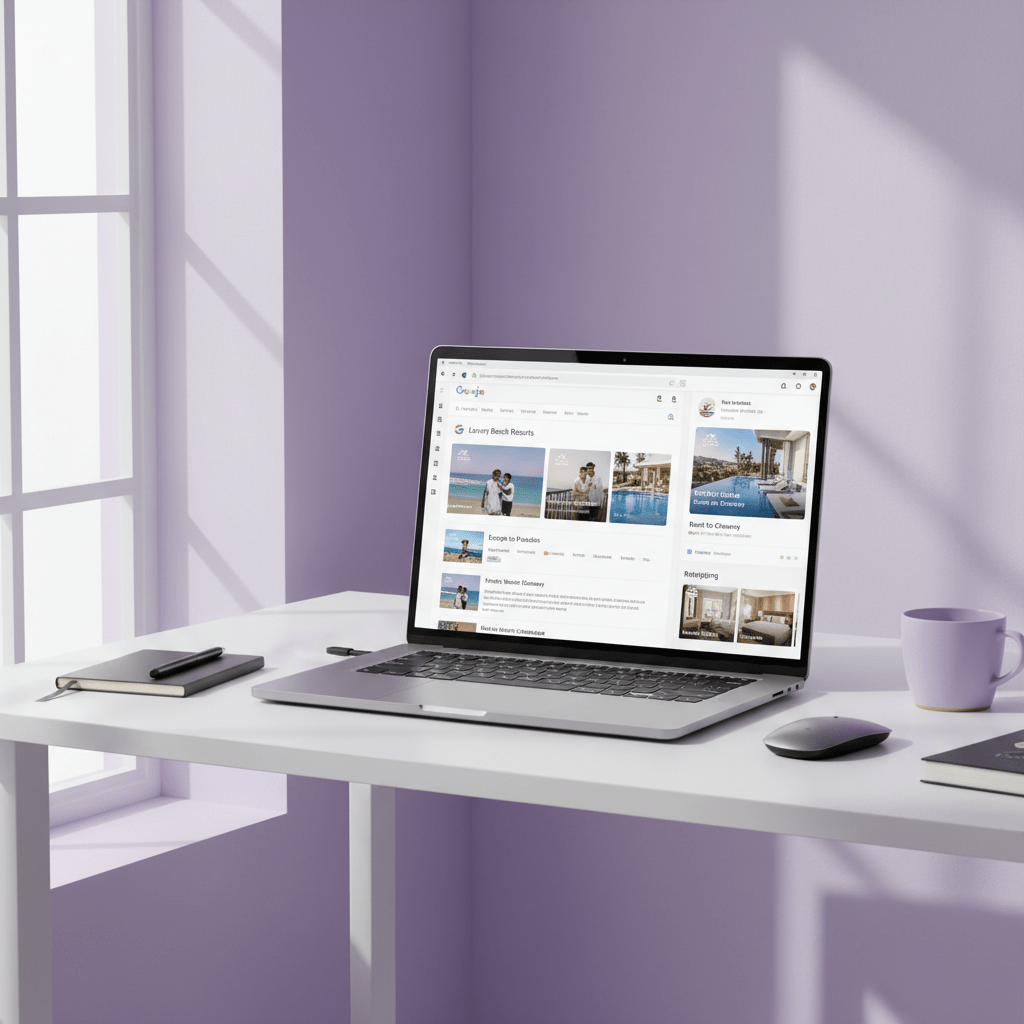
4. Crafting the Irresistible Offer: The Art of Ad Creative and Messaging
You know that ad you scroll past in half a second? Yeah, guests do that too. So if your message feels flat, your hotel gets ignored.
Here’s the trick. Lead with the benefit, not the room type. Say things like “Your serene escape starts here” or “Book direct and save on your stay.” People want a feeling first. Then they want the details.
And please, don’t just show a bed and a lamp. That’s not the dream. Show the pool at sunset, the breakfast tray, the balcony view, the happy couple, the family laughing by the lobby. Video works really well here, and static photos still matter too, especially for retargeting. A short room tour or a clip of the local area can do more than a plain room shot ever could.
What makes people click?
The best hotel ad creative usually does three things:
- Gives a clear benefit right away
- Uses warm, simple language
- Tells people exactly what to do next
So instead of saying “Luxury rooms available,” try “Wake up to ocean views and free breakfast.” That’s stronger. It feels real.
Here’s a quick look at what works:
| Ad piece | Better approach | Why it helps |
|---|---|---|
| Headline | “Book Direct & Save” | Easy to understand fast |
| Image | Pool, breakfast, or local scene | Shows the stay, not just the bed |
| Video | 15 to 30 second property tour | Builds trust and interest |
| CTA | “Check Dates” or “Book Direct” | Tells guests what to do |
But wait, there’s more. A strong direct-booking offer does not always mean a discount. Sometimes a free breakfast, late checkout, room upgrade, or local experience package is a bigger deal. OTAs usually can’t match those perks, which makes them a smart way to increase direct hotel bookings without cutting your room rate to pieces.
That matters because OTA fees can run 15% to 30% per booking, while direct bookings often only cost a few dollars in payment fees. On a $200 room, that gap adds up fast. Plus, direct bookings tend to bring in more add-ons and can earn more revenue per stay, which is pretty nice when you’re trying to drive hotel revenue and protect hotel occupancy rates at the same time.
A few offer ideas that guests actually like
- Free breakfast worth $20 to $40
- Late checkout at 2 PM or 3 PM
- Guaranteed room upgrade when available
- Welcome drink or local snack basket
- Spa credit or local tour bundle
- Flexible cancellation for direct guests
I’ve seen hotels do better with a package than a plain discount. Funny enough, “save 10%” can feel forgettable, but “stay two nights, get late checkout and breakfast” feels like a win.
And if you’re running Google ads for hotels or Facebook ads for hotels, this kind of offer gives your campaign a clear hook. It also gives you better hotel ad campaign examples to build from later.
If you’ve got your photos, videos, and offers in one place, it gets easier to test what works. That’s where a system like Ease My Hotel can help keep booking details, guest messages, and room updates in one clean dashboard. Less chaos. Better follow-through. More chances to attract more guests to your hotel.
Try Ease My Hotel for free.
No lock-in contracts. Cancel anytime
5. From Theory to Traffic: A Step-by-Step Guide to Your First Campaign
You know that messy moment when you’ve got a great hotel, a decent room rate, and no clue why the clicks aren’t turning into bookings? Yeah. That’s usually where the first ad campaign starts to go sideways.
But here’s the good news. Your first campaign does not need to be fancy. It just needs to be clear, small, and easy to measure. That’s how you increase hotel bookings without lighting money on fire.
Step 1: Start with one search idea
For Google Ads for hotels, begin with a simple keyword pattern like:
boutique hotel in Austinfamily hotel in Orlandoairport hotel in Dallasresort in Miami with pool
That’s it. Keep it close to how real people search. Don’t dump every keyword into one bucket. That gets messy fast, and then you can’t tell what’s working.
A better setup is to group ads by guest need:
| Ad group | Example keywords | Best landing page |
|---|---|---|
| Business stays | business hotel in Chicago, downtown hotel near convention center | Business travel page |
| Family trips | family hotel in Orlando, hotel with pool and parking | Family offers page |
| Romantic stays | couples resort in Miami, luxury hotel with ocean view | Romantic getaway page |
And please, send people to the right page. Not the homepage. The homepage is fine for browsing, but a search ad should feel like the answer to a question someone just asked.
Step 2: Set a daily budget you can live with
Start small. Really small if you need to.
For a first test, many hotels begin around $20 to $100 a day, depending on the city and season. A small property in a quiet market may start low. A hotel in a busy place like Orlando or New York probably needs more to get useful traffic.
The point is not to win the internet on day one. The point is to learn.
If one booking from a $200 room can save you from a 15% to 30% OTA commission, that’s a big deal. Direct bookings usually cost far less in payment fees, often around 4% to 6%, so even a few extra stays can change the math pretty fast.
Step 3: Pick a tight location target
This part gets overlooked a lot. And it matters.
For hotels, you usually want to target people in:
- Your city
- Nearby feeder cities
- Drive markets within 2 to 4 hours
- Airports or business hubs that feed your property
Let’s say your hotel is in San Diego. You might target Los Angeles, Orange County, and Phoenix if those places send you guests. Or maybe you’re a resort in Goa, and your best traffic comes from Mumbai and Bangalore. That’s the kind of thinking you want.
One small warning: in Google Ads, don’t leave the default location setting too broad. You want people who are actually in those places, or likely to travel from them, not random browsers from somewhere else.
Step 4: Track bookings, not just clicks
Clicks are nice. Bookings pay the bills.
So before the campaign goes live, set up conversion tracking on your booking engine. That way, you can see which ads lead to room nights, not just page visits. This is where a lot of beginner hotel ad campaign examples fall apart. They stop at traffic.
Track a few things:
- Booking completed
- Phone call from ad
- Email inquiry
- Room upgrade or package add-on
If you use a system like Ease My Hotel, this gets easier because your booking management, guest messages, and property data sit in one place. That helps you see where the lead came from and whether it turned into a real stay.
Step 5: Match the ad to the guest
Now we get to the fun part.
Use the personas from earlier and build ads around them.
For example:
- Business Traveler Brianna gets an ad for fast check-in, strong WiFi, and quiet rooms
- Family Vacation Frank sees free breakfast, parking, and space for everyone
- Luxury Couple Leo & Linda sees spa access, views, and a late checkout offer
On Facebook ads for hotels, you can target people by interest and location too. So if your family-friendly resort gets a lot of guests from Dallas, you can run ads to people there who are interested in family vacations, travel planning, or kid-friendly getaways. That’s a lot sharper than shouting at everyone.
Social ads work best when the creative fits the crowd. A short beach clip for couples. A room tour for business travelers. A pool and breakfast photo for families. Simple.
Step 6: Use the right objective
This one trips people up all the time.
If you want bookings, don’t pick traffic just because it sounds nice. Pick conversions. Or leads, if your booking flow needs a little more hand-holding.
Here’s a quick cheat sheet:
| Channel | Best objective | What it does |
|---|---|---|
| Google Ads | Conversions / Search | Reaches guests already searching |
| Meta Ads | Conversions | Finds people likely to book later |
| Retargeting | Conversions | Brings back visitors who left |
A lot of hotels do well by starting with Google Search for the high-intent crowd, then using Facebook ads for hotels to remind people who didn’t book right away. That one-two move can help drive hotel revenue without leaning too hard on OTAs.
Step 7: Give it 2 weeks, then look at the numbers
Don’t panic on day three.
Look at your first 14 days and ask:
- Which keyword brought the best traffic?
- Which city clicked most?
- Which ad got the most bookings?
- Did people book direct or bounce?
If you get clicks but no bookings, the ad might be fine and the landing page might be the problem. Or the offer. Or the rate. Sometimes it’s all three. Fun, right???
That’s why a clean dashboard helps so much. With Ease My Hotel, you can keep booking management, guest communication, and OTA updates in one place, so you’re not jumping between tabs like you’re playing a very bad game of whack-a-mole.
Start simple. Measure what matters. Then adjust.
That’s how you increase hotel bookings without guessing your way through the process.
6. Measuring What Matters: Tracking ROI to Increase Hotel Bookings
You know that quiet little panic when the ad spend number goes up, but bookings stay flat? Yeah. That’s the moment where a lot of hotel marketing strategies get fuzzy.
But here’s the good news. You can track what’s working. Really track it. Not guess. Not hope. Track.
Set up conversion tracking first
If you want to know how to increase hotel bookings, start by linking your booking engine to your ad platform. That lets you see which ad led to a direct booking, a phone call, or even a package add-on. Without that, you’re basically reading tea leaves with a credit card bill.
A clean setup usually tracks:
- completed bookings
- phone calls from ads
- email inquiries
- room upgrades or add-ons
And if you’re using a system like Ease My Hotel, the whole thing gets easier because booking management, guest messages, and property data live in one place. Less tab hopping. Less confusion. More proof.
The 3 numbers that matter most
Forget vanity stats for a second. Clicks are nice, but they don’t pay staff or fill rooms.
| Metric | What it means | Simple reason to care |
|---|---|---|
| ROAS | Revenue earned for every ad dollar spent | Tells you if the campaign pays back |
| CPA | Cost for one booking or lead | Shows what you’re paying for each result |
| Direct Booking Rate | Share of bookings that come direct | Helps cut OTA dependence |
If your ROAS is low, your ads may be fine but your landing page or offer might be weak. If your CPA is too high, you may be paying too much for each stay. And if direct bookings are rising, that’s a good sign your digital advertising for hotels is pulling its weight.
ROAS, made simple
Here’s the formula:
ROAS = (Revenue from Ads – Ad Cost) / Ad Cost
Let’s say you spend $1,000 on Google ads for hotels and get $5,000 in room revenue from those clicks.
Your ROAS is:
($5,000 – $1,000) / $1,000 = 4
That means every $1 spent brought back $4 in profit before other costs. Pretty nice. And for many hotels, a 4:1 to 8:1 ROAS is a healthy range, with retargeting often doing even better.
Why direct bookings matter so much
This is where the money story gets real.
Major OTAs often charge 15% to 30% per booking, which can mean about $40 gone on a $200 room. Direct bookings usually cost far less in payment fees, often around 4% to 6%. So when you increase direct hotel bookings, you usually keep more of what you earn.
That’s not just good for revenue. It also helps hotel occupancy rates in a smarter way, because the stay itself is worth more.
A quick habit that helps
Check your numbers once a week. Not every five minutes. That way lies madness.
Look at:
- which campaign brought the booking
- which guest persona clicked most
- which city gave the best CPA
- which ad made people bounce
Then adjust. Small changes. Better headlines. Sharper offers. Cleaner pages. That’s how you keep improving without blowing up your budget.
And if your team wants a simpler way to manage bookings, guest messages, and OTA updates in one place, Ease My Hotel can help keep the whole picture clear. Because once you can see the full path from click to stay, it gets a lot easier to drive hotel revenue and attract more guests to your hotel.
<img src=”https://easemyhotel.io/blog/mastering-ppc-for-hotel-bookings-the-essential-metrics-to-analyze-for-higher-roi/” alt=”Hotel analytics dashboard showing ROAS, CPA, and direct booking performance” />
Your Journey to More Direct Bookings Starts Now
So here’s the simple truth. If you want to know how to increase hotel bookings, don’t start with a bigger ad budget. Start with a clearer guest, a better channel choice, a stronger offer, and a plan you can actually measure.
First, define your guest persona. Then pick the right platform, like Google ads for hotels, Facebook ads for hotels, or TripAdvisor. After that, build a direct-booking offer people care about. Free breakfast, late checkout, a room upgrade, or a nice little welcome treat can work better than a plain discount. And once the campaign is live, watch the numbers closely.
This is how smart hotel marketing strategies work. Not by chasing every click. By building a repeatable system that helps attract more guests to your hotel, reduce OTA dependence, and drive hotel revenue with more control. Since major OTAs can take 15% to 30% per booking, even one more direct stay can change the math fast. On a $200 room, that’s the difference between keeping most of the stay or losing a big chunk before check-in. OTA commission and direct booking savings overview
You don’t need to fix everything today. Just start small.
Create one guest persona today. One. Write down who they are, what they want, and where they spend time online. That first step can turn digital advertising for hotels from a guess into a system that actually works.
Try Ease My Hotel for free.
No lock-in contracts. Cancel anytime