

Introduction: Why Your Channel Manager Is the Untapped SEO Goldmine for 2026
Ever had one of those moments where a hotel looks full online, but bookings still feel weirdly flat? Yeah, that gap usually starts in the channel manager.
A lot of people still treat channel managers like a quiet back office tool. Rates in. Availability out. Done. But that’s only half the story. Your channel manager is also where your hotel data gets shaped for OTAs, Google Hotel Search, and your direct booking engine. If the data is messy, your visibility can slide. If it’s clean and complete, you’ve got a better shot at getting more bookings with channel manager setup alone.
Here’s the part most hotels miss: only about half of hotels worldwide even use a dedicated channel manager, and most of those users rely on it for daily ops, not marketing growth. That’s a big gap. And in 2026, with AI tools reading hotel data faster than humans do, that gap gets louder.
This guide is your hotel listing optimization guide for the next wave. We’ll walk through how to optimize listings in hotel channel managers 2026 style, so you can improve hotel visibility on OTAs, support SEO for hotel booking engines, and increase direct bookings SEO at the same time.
What’s really at stake?
If your descriptions are thin, your photos are old, or your amenity tags are incomplete, you’re not just looking less polished. You may be getting passed over in search, filters, and recommendation feeds.
And that’s not a small thing. The online travel market is still growing fast, so the fight for clicks and bookings is only getting tougher. Plus, guests expect cleaner data now. Better photos. Better room details. Better answers.
So no, this isn’t just about syncing rates. It’s about optimizing hotel data for distribution channels in a smarter way.
One hotel tech expert put it simply: “A hotel channel manager is no longer simply a tool for updating room availability. It has become a core component of modern hotel distribution strategy.” That’s the shift we’re working with here.
In the next sections, we’ll break it all down step by step. Simple stuff first. Then the parts that usually get ignored.

1. The Foundation: Auditing and Optimizing Your Core Hotel Data
You know that weird moment when your rooms are ready, your team is on it, but your listings still feel off? That usually starts with messy core data. Not the flashy stuff. The plain old details.
First up, treat your channel manager like the single source of truth. Your Name, Address, Phone, and URL need to match everywhere. Same spelling. Same format. Same website link. If one OTA shows “St.” and another says “Street,” that tiny mismatch can throw people off and make your hotel look less steady than it is. Not fun. And for local search, that kind of drift can hurt trust fast.
Here’s the deal: only about half of hotels worldwide use a dedicated channel manager, and most of those hotels still use it mainly for rate and inventory sync, not marketing growth. But hotels that use one report 20 to 25% more bookings, which tells you the data side matters a lot. A hotel tech expert said it best: “A hotel channel manager is no longer simply a tool for updating room availability. It has become a core component of modern hotel distribution strategy.”
Write one master description
Don’t write five different hotel descriptions from scratch. That gets messy fast. Build one strong master version, then adjust it for each channel.
Keep it under 300 words. Lead with your main keyword early, but keep it natural. Something like:
- family-friendly resort with kids’ club
- romantic boutique hotel for couples
- business hotel near the airport with fast Wi-Fi
- pet-friendly stay with free breakfast
These phrases help with hotel channel manager SEO, SEO for hotel booking engines, and even increase direct bookings SEO work later on. Plus, they help AI tools and OTAs understand who your hotel is really for.
Clean up your photos and video
This part gets ignored way too often. And it’s a big deal.
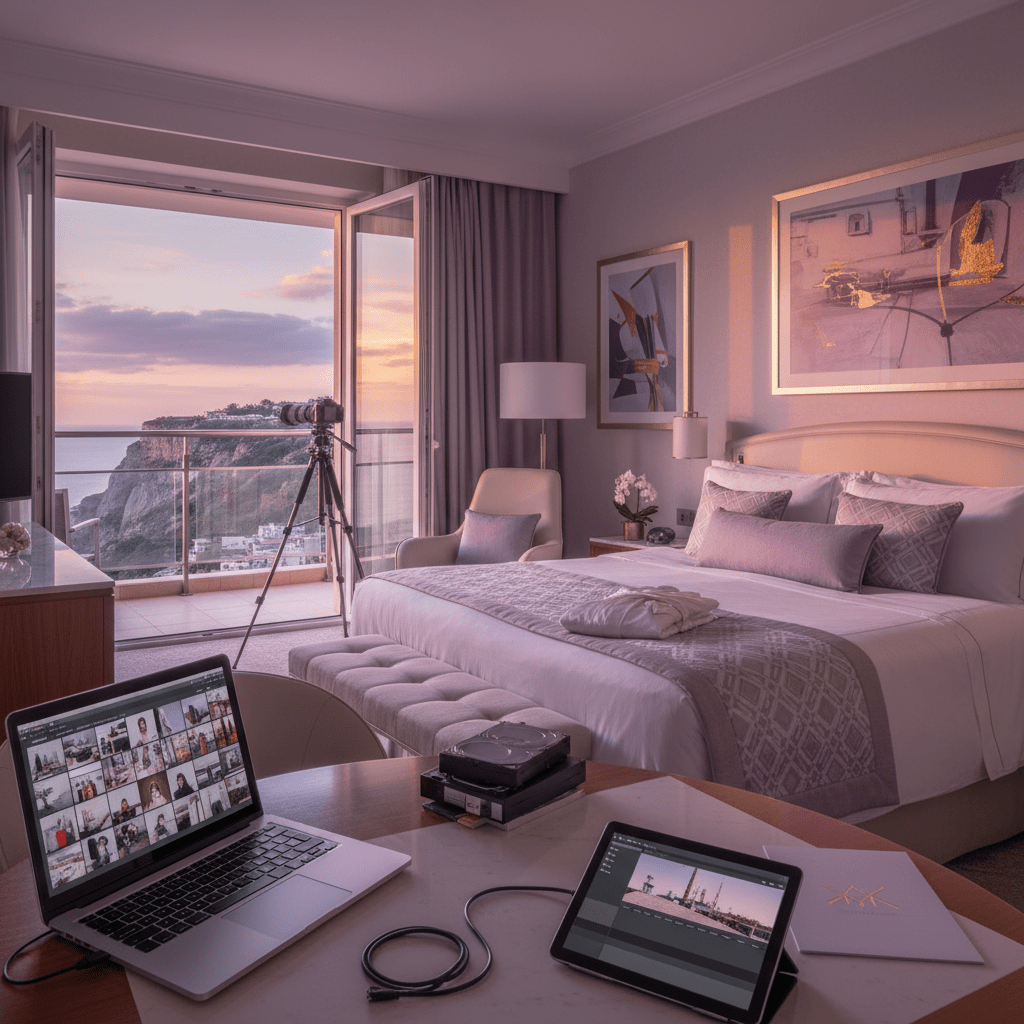
Use high-resolution photos only. Booking.com wants at least 2048 pixels wide, and Expedia is in that same lane. Images below that level may not even show well to users. That means blurry rooms, weak first impressions, and fewer clicks. High-quality photos can lift conversion too, with Booking.com data showing up to 35% higher conversion for listings with professional images.
A few easy photo rules:
| What to check | Simple fix |
|---|---|
| File name | Use clear names like deluxe-room-ocean-view.jpg |
| Image size | Keep it high-res, not tiny phone uploads |
| Orientation | Use landscape shots first |
| Text overlays | Skip them |
| Alt text | Add plain words that describe the scene |
If your channel manager has a media library, use it. Store your best room photos, lobby shots, food images, and short videos there so every OTA pull stays clean and current. That supports optimizing hotel data for distribution channels and helps improve hotel visibility on OTAs without extra chaos.
And if your gallery still has a dark hallway photo from 2019… maybe retire that one today.
For hotels using a platform like Ease My Hotel, this is a good moment to centralize everything in one dashboard, from booking details to media updates. One clean source. Less stress. Better listings. Much better.
2. Advanced Listing Optimization: Unlocking Your Channel Manager’s Hidden SEO Features
You know that annoying moment when a room is great, the view is great, but the listing just says “Standard King”? That’s leaving money on the table. Big time.
And it happens all the time.
If we want to get more bookings with channel manager tools in 2026, we need to stop treating room names, amenity tags, and promo blocks like filler. They’re search clues. They help OTAs, Google, and even AI tools understand what you sell and who should see it.
Room and rate plan names that actually pull clicks
“Standard King” is fine for your back office. But guests don’t search that way. They search like real people. They want “Ocean View King Suite with Private Balcony” or “All-Inclusive Family Fun Package.” Those names tell a story fast.
Try this simple rule:
- Lead with the main selling point
- Add the view, perk, or guest type
- Keep it honest
- Don’t make it sound like a ransom note from a brochure
A better name can catch long-tail search traffic and support hotel channel manager SEO without feeling forced. For example, “Spa & Wellness Weekend Retreat” speaks to a real need, not just a room type. Same with “Pet-Friendly Deluxe Room Near City Center.” Clear. Searchable. Human.
Tag every amenity like someone’s filtering for it
They usually are.
On major OTAs, guests filter hard. Wi-Fi, breakfast, pet rules, pool type, EV charging, and even work-friendly setup all matter. If your channel manager leaves one of those blank, you might disappear from the shortlist before anyone even sees your photos.
Here’s a quick way to think about it:
| Amenity tag | Why it helps |
|---|---|
| High-speed Wi-Fi | Business travelers look for it fast |
| Breakfast included | Easy win for families and couples |
| Pet-friendly | Cuts out guesswork right away |
| Pool type | Helps guests match the stay to the trip |
| EV charging | Pulls in newer travel demand |
| Work-from-hotel friendly | Good for remote workers and long stays |
The bigger point? Optimizing hotel data for distribution channels only works if the data is actually there. OTAs are full of filters now, and those filters shape visibility. So yes, tag the basics. But also add the newer stuff. Sustainability certifications. Quiet rooms. Spa access. Farm-to-table dining. Whatever fits your property.
Use promos as search hooks
This part is sneaky good.
A promo like “Stay 3, Pay 2” does more than fill empty nights. It matches real search intent. So does “Weekend Spa Escape,” “Romantic Couples Getaway,” or “Family Summer Saver.” These offers can live inside your channel manager and support SEO for hotel booking engines because they line up with how guests already think.
Think about it like this. Someone typing “last minute spa weekend near me” does not want a plain room. They want a feeling. A package. A reason to book now.
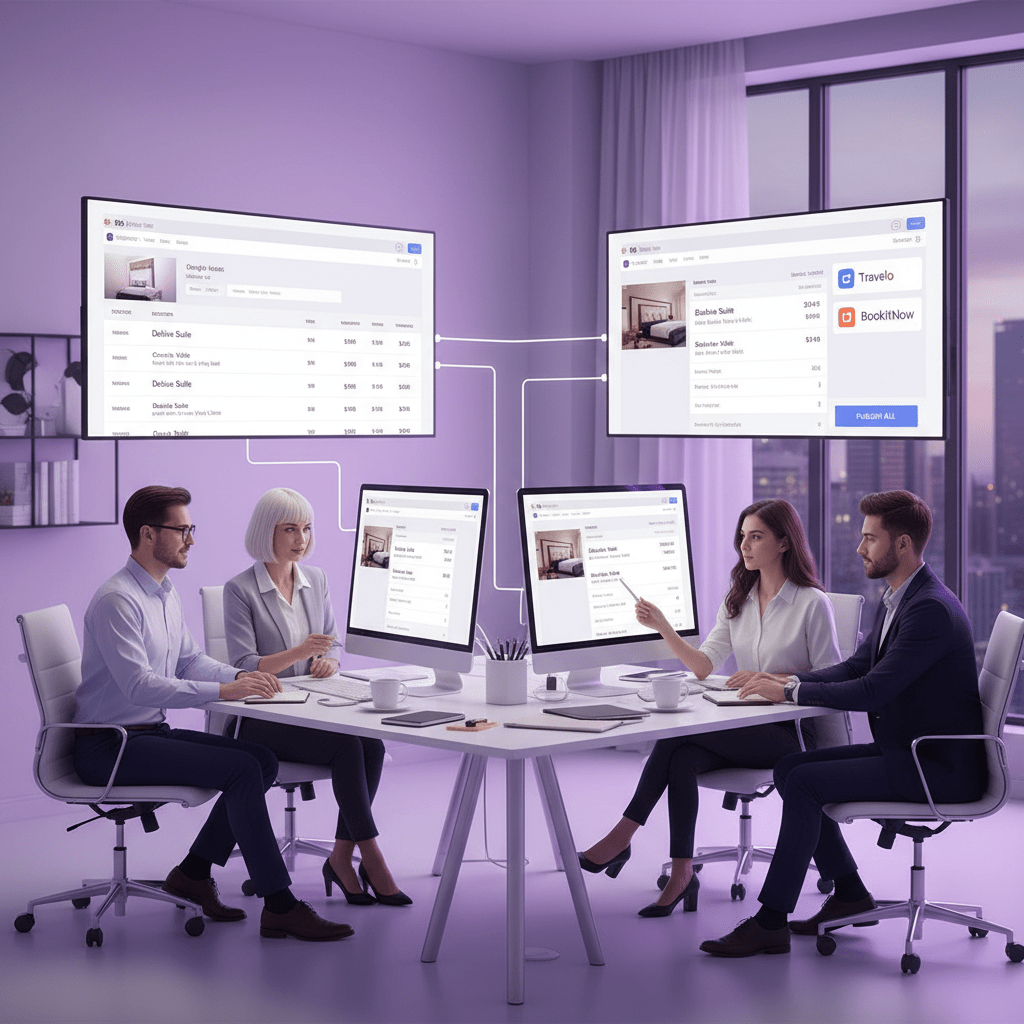
That’s where smart promotions help improve hotel visibility on OTAs and increase direct bookings SEO at the same time. And if your channel manager syncs those offers cleanly across your site, OTA pages, and Google Hotel Search, you’ve got a much better shot at staying consistent everywhere.
One hotel tech expert put it plainly: “A hotel channel manager is no longer simply a tool for updating room availability. It has become a core component of modern hotel distribution strategy.”
And honestly? That shift makes sense. The online travel market was estimated at $713 billion in 2025 and is projected to reach $761.5 billion in 2026, so the fight for attention is only getting louder.
If you’re using a platform like Ease My Hotel, this is a good place to tighten things up. Keep your room names, amenity tags, and package offers in one clean dashboard. Less copy-paste. Fewer weird mismatches. Better listing control. That’s the kind of setup that works when you’re trying to scale without losing your mind.
Try Ease My Hotel for free.
No lock-in contracts. Cancel anytime
3. The Ecosystem Connection: Integrating Your Channel Manager with Google and Your Website
You know that odd little moment when a guest finds your hotel on Google, clicks around for 10 seconds, then bounces because the rate looks different on your site? Painful. And fixable.
This is where your channel manager stops being “just ops” and starts helping your hotel get seen in more places. If your data is clean, your rates are real, and your room details match across channels, you make life easier for guests and search systems at the same time.
Google Hotel Search: the fast lane
Google really likes fresh, matched-up hotel data. So if your channel manager feeds real-time rates and availability into your Google Business Profile and Google Hotel Search setup, you’re already ahead of hotels that update things by hand every few days.
That matters because travelers want quick answers. They want to know the rate, the room, and whether they can book now without surprises. When your feed and landing page match, you’re more likely to show up with stronger direct booking visibility and that little trust boost people call the “Official Site” path. Not a magic trick. Just clean data doing its job.
And here’s the thing: Google’s hotel tools work better when your profile is complete. Photos. Hours. Location. Booking links. All of it. If your channel manager and your website talk to each other well, you’re helping Google understand that your rate is real and your room is ready.
Bring the same content to your website
Don’t make guests read one story on OTAs and a different one on your site. That gets weird fast.
Use the same room names, photo set, and feature text from your channel manager on your direct booking engine. If your listing says “Ocean View King with Balcony” on Booking.com, don’t call it “Deluxe Room A” on your site. That mismatch feels sloppy, and it can chip away at trust before someone even reaches the payment page.
The cleanest setups usually do three things:
- Match room names across OTA pages and your website
- Keep photos in the same order on every channel
- Repeat the same key perks, like breakfast, Wi-Fi, parking, or pet rules
That consistency also helps with SEO for hotel booking engines. Search engines like pages that are clear and easy to read. Guests do too. Funny how that works.
Reviews still matter. A lot.
A beautiful listing can still lose if the reviews look ignored.
When guests leave comments on Google or OTA pages, respond. Short is fine. Warm is better. If someone had a good stay, say thanks. If they had a complaint, answer like a human, not a robot in a tie. That review activity sends a trust signal to both guests and platforms.
Some channel managers can connect with reputation tools, so replies, alerts, and review tracking live in one place. That’s handy for busy teams, especially if you’re running a hotel, hostel, resort, or homestay with a small front desk crew and way too many tabs open.
And here’s the bigger picture. The online travel market was estimated at USD 713 billion in 2025 and is projected to reach USD 761.5 billion in 2026, so the pressure to stand out isn’t slowing down online travel market forecast.
So if you’re using a platform like Ease My Hotel, this is the moment to tighten the loop between your channel manager, your website, and your review workflow. One clean set of data. One message. Fewer headaches. Better odds of getting more bookings with channel manager tools that actually work for growth, not just syncing.
4. The 2026 Factor: How to Optimize Today for the Future of Hotel Search
You know what’s wild? A guest might not type “hotel” at all anymore. They’ll ask, “Hey Siri, find a downtown stay with a rooftop pool and free breakfast.” Quick. Natural. Kinda casual. And if your channel manager data is thin, your property may never even make the shortlist.
So yes, the future of hotel marketing is already here. It just looks more like conversation.
Talk like your guests talk
Voice search doesn’t need fancy writing. It needs clear details. That means your amenity tags, room names, and descriptions should sound like real travel plans, not a dusty spreadsheet. Use plain phrases like:
- rooftop pool
- free breakfast
- pet-friendly
- downtown location
- work-from-hotel friendly
That kind of clean language helps hotel channel manager SEO and makes optimizing hotel data for distribution channels much easier. It also gives Google and OTA search tools a better shot at matching your property to the right query.
And here’s the twist: voice search is still small, but AI search keeps growing fast. So the smart move isn’t chasing every trend. It’s feeding the machines good data.
Rich data fuels AI picks
AI travel tools are getting picky. They try to match travelers with very specific needs, like a couple wanting a quiet room near the spa or a business guest needing fast Wi-Fi and late checkout. If your listing has full tags, clear perks, and honest room notes, you’re way easier to recommend.
That’s the real future of hotel marketing. Not louder ads. Better data.
A hotel tech expert put it simply: “A hotel channel manager is no longer simply a tool for updating room availability. It has become a core component of modern hotel distribution strategy.”
And the market keeps moving. The global online travel market was estimated at $713 billion in 2025 and is projected to hit $761.5 billion in 2026, so more bookings are flowing through these systems every day. More traffic. More filters. More chances to win, or disappear.
Don’t sleep on video and 360 tours
Photos still matter. But video is starting to do more heavy lifting.
Room tours, drone clips, pool walks, and 360-degree views help guests feel the place before they book. That matters for people comparing hotels on OTAs, Google, and your direct site. If they can picture breakfast on the terrace or the lobby at night, they’re one step closer to booking.
Here’s a simple media setup that works well:
| Media type | Best use |
|---|---|
| Room tour video | Show space and layout |
| Drone shot | Show location and setting |
| 360 tour | Help guests explore before booking |
| Short lobby clip | Build trust and mood |
| Breakfast video | Show the real guest experience |
If your channel manager has a media library, keep your best videos there too. Then push the same file set to every connected channel. That keeps things consistent and saves your team from doing the same upload five times. Because nobody has time for that.
The simple move for 2026
Start tagging like a guest is speaking into a phone. Add fresh media. Keep your wording natural. Use one clean source of truth in your channel manager. That’s how you stay ready for voice search, AI search, and the next wave of guest behavior.
If you’re using Ease My Hotel, this is a good time to pull your listing data, media, and booking details into one dashboard. Less back-and-forth. Better visibility. And a stronger shot at getting more bookings with channel manager tools that are built for what’s next.
Conclusion: Your Action Plan to Master Channel Manager SEO by 2026
So here’s the big takeaway. Your channel manager is not just a box that pushes rates around. It’s a marketing engine, too. A quiet one, maybe. But a powerful one if you feed it the right data.
And that shift matters more every year. Only about half of hotels worldwide use a dedicated channel manager at all, and most of those teams still use it for daily ops, not growth. But the market keeps getting louder, with the global online travel market estimated at $713 billion in 2025 and projected to reach $761.5 billion in 2026. More travelers. More filters. More chances to win. Or get skipped.
Here’s your quick action list:
- Audit core data: Make sure your name, address, phone, URL, and room info match everywhere.
- Optimize descriptions: Use clear, human words that tell guests what they get.
- Tag all amenities: Don’t leave out Wi-Fi, breakfast, pet rules, pool type, or newer tags like work-from-hotel.
- Use descriptive rate names: Skip bland labels like “Standard King.” Say what makes it worth clicking.
- Sync with Google: Keep your hotel details, rates, and landing pages in step.
- Prepare for AI: Feed search tools clean, complete, natural data.
A hotel tech expert put it simply: “A hotel channel manager is no longer simply a tool for updating room availability. It has become a core component of modern hotel distribution strategy.”
That’s the mindset shift. And if you’re using a platform like Ease My Hotel, this is your sign to pull everything into one clean dashboard and make the data work harder for you. Start today. Not next month. Not after the next busy season. Because the hotels that clean this up now will have a real edge in 2026 and beyond.
One small fix can turn into more clicks, more trust, and more bookings.
Try Ease My Hotel for free.
No lock-in contracts. Cancel anytime