
Building a 5-Star Brand on a 1-Star Budget: Why It’s More Possible Than Ever
Picture this. A guest scrolls past ten near-identical hotel listings, then stops at yours. Not because you outspent the chain down the road. Because something about your place felt real.
That’s the whole game, and it’s good news for small properties.
I’ll be honest, I used to think branding was a rich person’s hobby. Big logos, big agencies, big invoices. But the numbers tell a different story. Hoteliers in the U.S. reportedly spend less than 2.5% of room revenue on marketing, while many experts suggest 5% to 10% is healthier. So most of us are working with a thinner wallet than we’d like. Sound familiar?
Why Your Budget Isn’t the Real Problem
Here’s the thing. A strong hotel brand isn’t built on ads. It’s built on three simple things:
- Authenticity: your real story, your real building, your real neighborhood.
- Guest experience: what people see, taste, hear and remember during the stay.
- Smart creativity: clever, low-cost moves that big brands are often too slow to try.
A logo is just a sticker if the stay doesn’t match it. And a guest who feels welcomed will happily tell the next traveler about it, for free.
There’s a money angle too. OTA commissions commonly run around 15% to 28%, so every guest who finds you and books direct keeps more profit in your pocket. A brand people remember is one of the cheapest ways to get there.
What You’ll Get From This Guide
This is a practical, step-by-step guide to low-cost hotel branding. No fluff. We’ll cover your identity, your ideal guest, your online presence, your guest experience, local partnerships and the power of reviews. Each step is built for real operational headaches, like tight staff, tight cash and tighter calendars.
Whether you run a ten-room boutique, a family homestay or a quirky old inn, you can build a hotel brand on a budget. Let’s start with the foundation.
Beyond the Logo: Defining Your Hotel’s Core Brand Identity
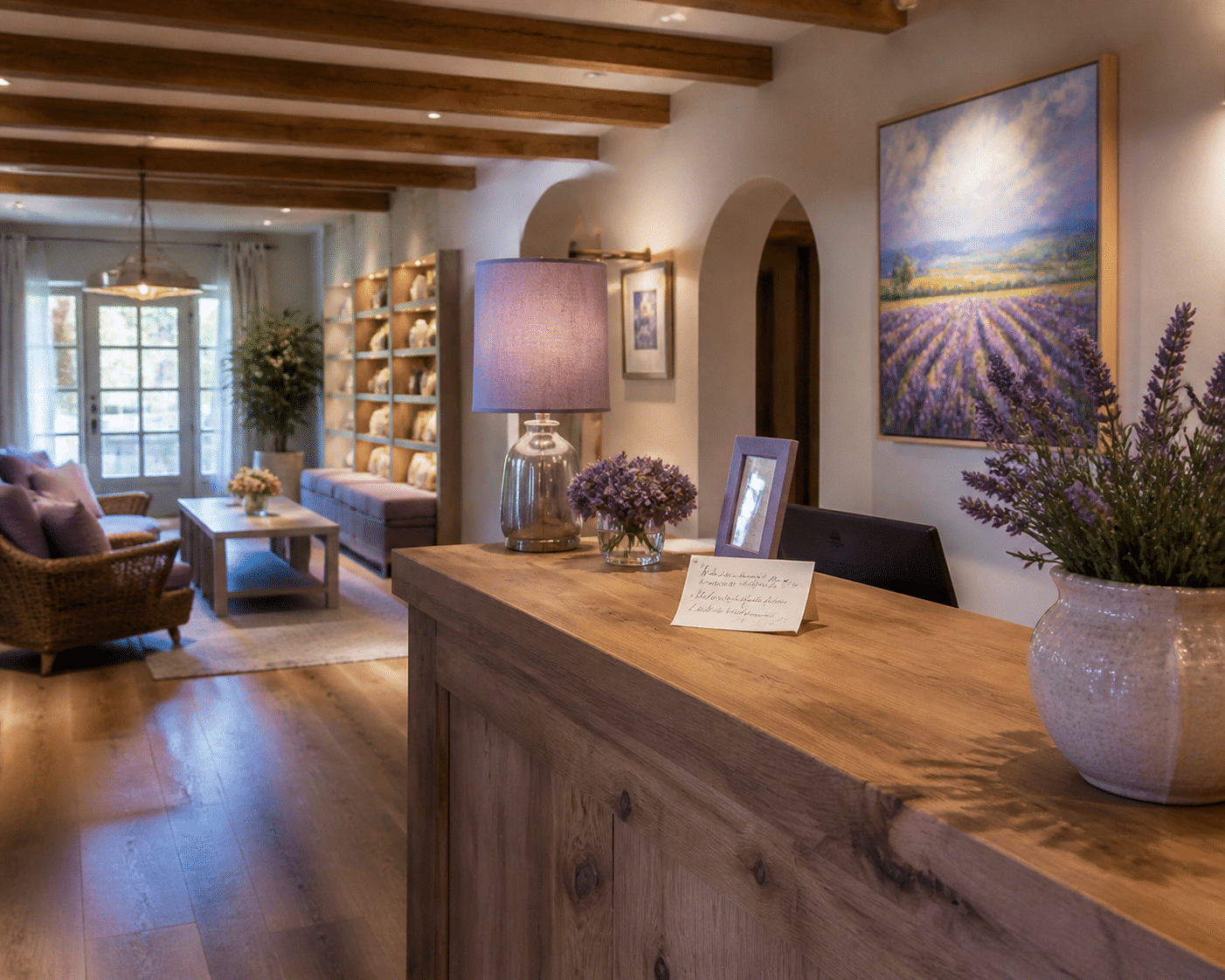
Quick test. Cover your logo with your thumb. Would a guest still know it’s your hotel?
If the answer is no, don’t panic. Most small properties start there.
A Brand Is Everything a Guest Feels
Your brand isn’t a logo and a color scheme. It’s the promise you make, and whether you keep it. EHL describes hotel branding as the identity a property projects and the experience it promises before a guest ever arrives. And Glion says that identity has to show up in “every aspect of the guest experience.”
That means the booking page. The arrival. The room, the breakfast, the checkout chat, and even the thank-you email a week later. All of it counts.
Here’s a simple way to see the pieces:
| Brand piece | What it really means | A low-cost example |
|---|---|---|
| Story | Why your place exists | A short, honest founder note on your website |
| Guest experience | What guests see, taste, hear and remember | A local breakfast item, a handwritten welcome card |
| Service | How your team acts | Staff who share their own favorite local spots |
| Reputation | What other people say about you | Thoughtful replies to every review |
| Visuals | Logo, colors, photos | Real photos of your rooms, not stock images |
Finding Your Brand DNA
Now the fun part. Your brand DNA is what makes your property hard to copy. Ask yourself:
- What’s the history of this building or family?
- What does the location offer that guests can’t get elsewhere?
- Does the architecture have a quirk worth showing off?
- Is there one thing your service does differently?
History can be a gold mine. Take Chapter House on Cape Cod, which leans on its past as a Revolutionary War hospital to give guests a real reason to remember it. You don’t need a story that dramatic. A family recipe or an old mill staircase works too.
Pick one or two threads, not ten. (My first list had a dozen items, and it read like a brochure nobody wanted.) The test is simple: does it change what guests see, do, eat or remember? If it only lives on your About page, it’s just copy.
Branding Isn’t Marketing (And That’s Good News)
These two get mixed up all the time. Branding is the long-term idea of who you are. Marketing is how you tell people about it, through posts, emails, ads and listings.
Marketing usually costs money. Branding mostly costs focused effort. A quiet Sunday afternoon, a notebook and honest answers will get you further than a pricey agency.
Once you know who you are, the next question gets easier: who is that story really for?
Pinpoint Your Ideal Guest and Craft a Resonant Story
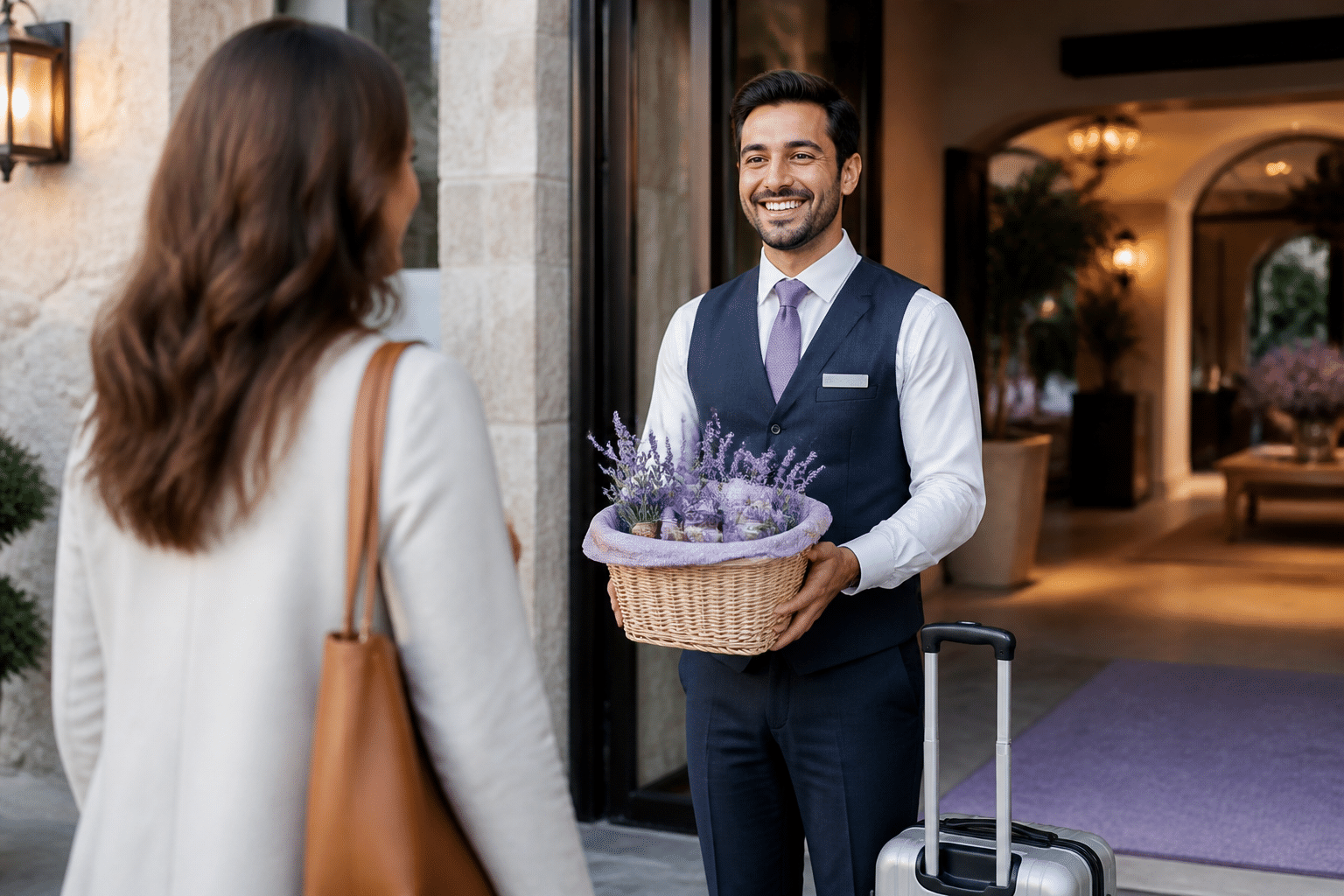
Try describing your perfect guest in one breath. If you said “anyone who needs a room,” we’ve got work to do.
That’s okay. Most small properties start right there.
Who Are You Really Talking To?
Age and country tell you very little. A 34-year-old couple might be on a quiet anniversary trip, or they might be hauling two toddlers to a wedding. Same age. Totally different stay.
So go deeper. For each guest type, write down:
- Why they travel: rest, work, adventure, family, a milestone.
- What annoys them: slow Wi-Fi, noisy halls, hidden fees, a long walk to food.
- What they secretly want: to feel looked after, or to feel like a local.
- How they book: on their phone at midnight, or after weeks of comparing.
You don’t need a research budget. Read your last 30 reviews and tag each one by trip purpose. Free tools like Google Search Console show what people type before they find you. And a short Google Form after checkout, asking “Why did you pick us?”, is gold. I’d say it’s the most underrated question in hospitality.
Turning Your Brand DNA into a Story They Care About
Now connect the dots. Your DNA from the last section (the history, the quirks, the location) is the raw material. Your ideal guest’s wants are the filter.
Here’s a simple formula: “We’re [your DNA], so guests who want [their desire] get [your proof].”
For example: “We’re a family-run farmhouse, so guests who want a slow weekend get fresh eggs from our own hens.” Short. Specific. Believable.
People want this kind of thing. Hilton’s 2025 trends report found that 74% of travelers want recommendations from locals. And a 2025 study on hotel storytelling found that experience-focused stories drew more engagement than plain feature lists. So sell the morning, not the mattress.
Why a Narrow Niche Beats “Everyone Welcome”
I know, it feels scary to say no to anyone. But a clear niche, like “the quiet retreat for remote workers” or “the family basecamp near the trails,” makes every dollar stretch further. Your photos, posts and replies all point one way. Guests recognize themselves faster.
Trying to please everyone usually means pleasing nobody. And it costs more to shout.
Use this canvas as your worksheet. Fill it in on paper before you touch your website.
| Canvas box | Your question | Example answer |
|---|---|---|
| Ideal guest | Who stays and why? | Remote workers on 5 to 10 night trips |
| Pain point | What bugs them elsewhere? | Weak Wi-Fi, no real desk |
| Desire | What do they long for? | Calm mornings, a good coffee |
| Brand DNA | What’s uniquely ours? | Old mill with a sunny library |
| Story line | One sentence, plain words | “Work by the mill window, wander by the river.” |
| Proof | What do guests see or do? | Fast Wi-Fi, desk lamps, local bakery card |
Keeping guest details in one system, like Ease My Hotel, also makes it easier to spot who books most and why. Once your story is clear, you’re ready to show it online.
Master Your Digital Footprint for Maximum (and Free) Visibility
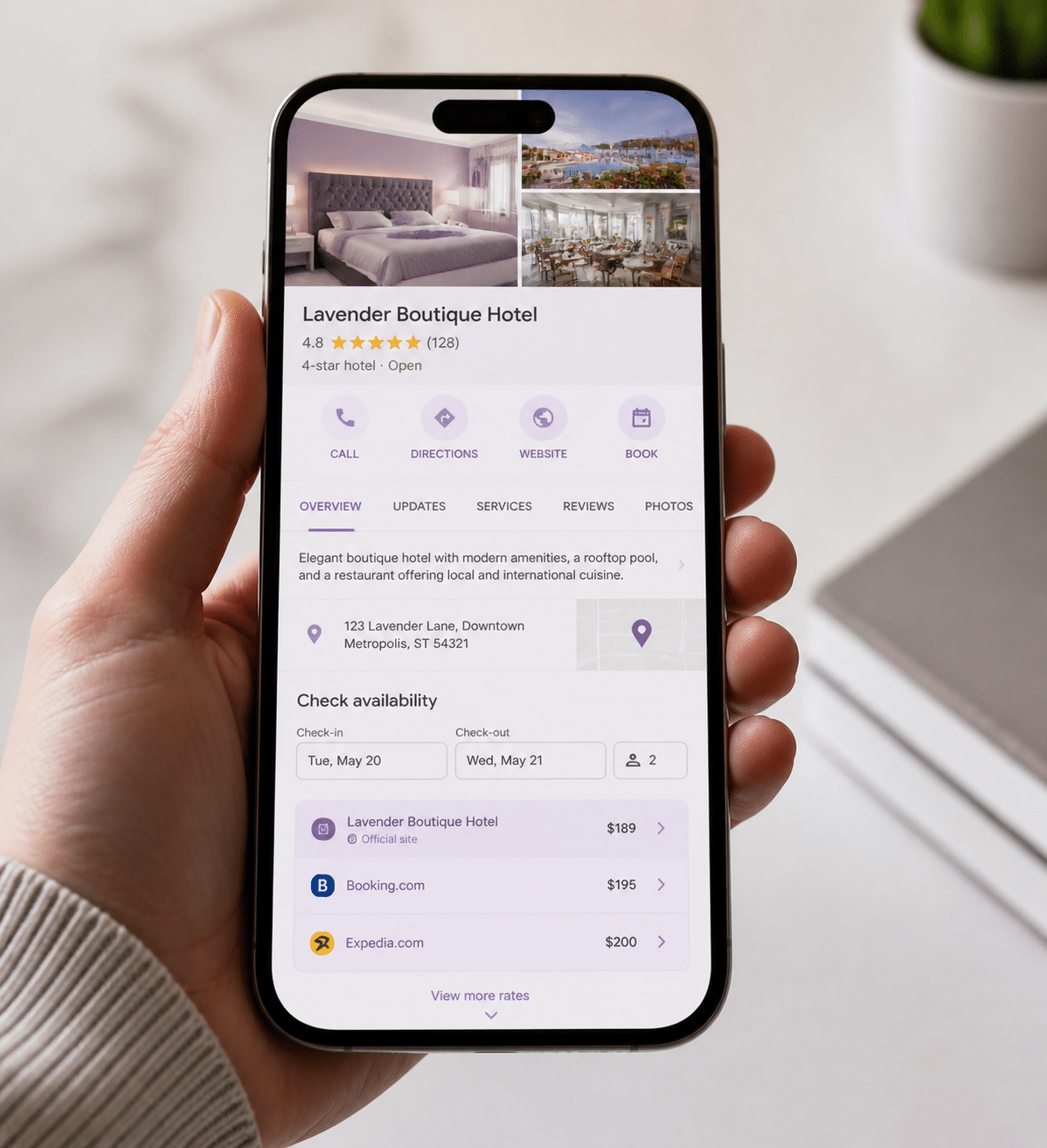
Search your hotel’s name on your phone right now. Go ahead, I’ll wait.
What showed up first? Probably not your website. Probably a map pin, a few photos and a star rating. That’s your real front door, and you don’t have to pay to decorate it.
Start With Your Google Business Profile
One industry roundup says 57% of consumers use Google Search or Maps to research a trip before booking. It’s an industry estimate, not an official Google number, so take it as a signal. A loud one, though.
The profile is free. Google says it exists to help hotel owners manage property details and connect with potential guests. Here’s a 30 minute tune-up:
- Photos: Real ones. Rooms, exterior, breakfast, the view. Swap in fresh shots each season.
- Basics: Use your real name only (no “cheap hotel near downtown”), check the map pin, and fill in amenities and phone.
- Booking link: Send people to your booking page, not a generic homepage. Extra clicks lose reservations.
- Q&A: Answer your own questions first. Parking, pets, check-in time.
- Posts: One short update a week. A local event, a seasonal offer, a new breakfast item.
- Reviews: Reply to every one, in a human voice. Not a copy-paste script.
Also, hunt down duplicate listings. They split your reviews and photos, and guests get confused.
Pick One or Two Social Platforms (Not Five)
You don’t need to be everywhere. Honestly, you can’t be, not with a tiny team. Choose Instagram for visuals, Facebook for community, and do them well.
Skip the paid ads for now. Post things only you can post:
- Guest photos, reposted with permission and a clear credit.
- Behind the scenes: the baker at 6am, fresh linens, a half-painted room during a renovation.
- Local guides: “3 walks under 20 minutes” or “our favorite coffee within a block.”
Picture a 12-room inn posting one guide a week. After three months, that’s a small library of useful content, and it cost nothing but a phone and some curiosity.
Measure more than follower counts. Watch saves, shares, profile visits and direct messages from people planning a trip. Those are the ones that turn into bookings.
Your Website Is Home Base
Google and Instagram get people curious. Your website closes the deal. So it has to load fast, read well on a phone and show real photos.
Most important, let guests book right there. A 2026 boutique hotel benchmark citing Cloudbeds data says OTAs made up roughly 63% of independent hotel bookings in 2025. Every booking you win back also gives you an email address, a guest’s preferences and a chance to say thanks.
A simple booking engine, like the one inside Ease My Hotel, keeps your rates, availability and guest details in one place. That way what Google shows matches what your site shows.
Online, people meet your brand in seconds. Once they arrive, it gets real, and that’s where the next section picks up.
The Guest Experience: Your Most Powerful, Low-Cost Branding Tool
You can have the prettiest logo in town. Then a guest waits 15 minutes at check-in with nobody smiling at them, and that’s the brand they remember.
The good news? Guest experience branding is the cheapest kind there is. It runs on attention, not ad spend.
Small Messages That Feel Personal
The stay starts long before the door opens. Three simple messages can do a lot of the work:
- Right after booking: a confirmation with one real, human line, like “We’re glad you’re coming. Anything we should know?”
- Two days before arrival: a welcome email with check-in details, parking, and three local tips within a 10 minute walk.
- Day two of the stay: a quick text or email asking, “How’s the room? Need anything?”
That last one is my favorite. A small problem caught on day two stays small. Left alone, it becomes a one-star review on day four.
Here’s the part that surprises people. You don’t have to write these by hand every time. A modern PMS, like Ease My Hotel, can send them automatically and pull in the guest’s name and booking details. Write them once, in your own voice, and they feel personal for every guest after.
20 Ways to Surprise and Delight Without Spending Much
None of these need a big budget. Most cost a few dollars or just a bit of thought. Pick the ones that fit your story from Section 1, because a gift that matches your brand beats a random one.
| Moment | Low-cost idea | Rough cost |
|---|---|---|
| Before arrival | Ask about allergies or special occasions | Free |
| Before arrival | Send a hand-drawn or photo walking map | Free |
| Before arrival | Offer an early check-in time if the room is ready | Free |
| Before arrival | Share a short “what to pack” tip for the season | Free |
| Arrival | Handwritten welcome note with the guest’s name | Pennies |
| Arrival | Local snack or pastry from a nearby baker | Low |
| Arrival | Cold drink or warm tea on arrival | Low |
| Arrival | Greet guests by name at the door | Free |
| Arrival | Quick room tour with one “secret” local tip | Free |
| In the room | Postcard of your town, ready to send | Pennies |
| In the room | Fresh flowers or herbs from your garden | Low |
| In the room | A small book or map of local trails | Low |
| In the room | Phone chargers and an umbrella to borrow | Low |
| During the stay | Birthday or anniversary card slipped under the door | Pennies |
| During the stay | Extra pillow or blanket before they ask | Free |
| During the stay | Staff share their own favorite restaurant | Free |
| Checkout | Flexible late checkout when rooms allow | Free |
| Checkout | Takeaway coffee for the road | Low |
| After the stay | Thank-you email a few days later | Free |
| After the stay | Note to returning guests that mentions their last visit | Free |
Don’t try all twenty. Choose three and do them every single time. Consistency is what makes it a brand.
Let Your Team Fix Problems on the Spot
Here’s something I’d put ahead of every item in that table. Ecolab’s 2026 guest survey found that 46% of respondents cited staff interactions as a reason to leave a positive review. People remember people.
So give your team real permission. Set a simple limit, say $50, and let any staff member spend it to fix a guest problem without asking a manager. A broken kettle, a missed dinner, a noisy room. Fix it, apologize, move on. A 2025 review of 98 hospitality studies found that more than 97% reported positive outcomes from empowering employees.
Then ask your staff to be your storytellers. When a housekeeper or cook shares their favorite local spot, that’s your brand talking, and it sounds real because it is.
Once guests love the stay, they’ll start talking about it. Next up, we’ll look at how to reach beyond your own front desk.
Try Ease My Hotel for free.
No lock-in contracts. Cancel anytime
Build Community and Partnerships for Organic Marketing Reach
You don’t have to find every guest yourself. The baker down the street already has a line out the door. So does the pottery studio. Why not borrow a little of that foot traffic (politely, and with something to offer back)?
Partnerships are one of the cheapest ways to grow a hotel brand. They run on goodwill, not ad spend.
Team Up With Neighbors Who Share Your Guests
Start by listing five local businesses your ideal guest would love. A restaurant, a tour guide, a potter, a bike shop, a small brewery. Pick ones that match the story you built earlier, because a fit that feels natural beats a famous name.
Then build one simple package. Room plus a partner experience, like a Saturday tasting or a pottery workshop. Promote it to your guests and let your partner promote it to theirs.
Demand is there. Hilton’s report says 74% of travelers want recommendations from locals, and a 2025 leisure-travel survey also points to strong interest in local experiences. Wait, scratch that first link, you already saw it earlier. The point stands though: guests want the real town, and you can hand it to them.
A few tips that keep partnerships healthy:
- Lead with a clear benefit for them, not a vague “let’s collaborate.”
- Start with a 30 to 90 day test, not a big contract.
- Use a unique code or QR card so you both see what works.
- Pay partners fairly. “Exposure” doesn’t cover rent.
Here’s a short email you can copy and make your own:
| Part | Sample wording |
|---|---|
| Subject | A small idea for your studio and our guests |
| Opening | Hi Maria, I’m Sam from the Old Mill Inn, just two streets from your shop. We love your pottery classes. |
| The offer | We’d like to try a weekend package: one night with us plus your Saturday workshop. Guests pay you directly, and we promote it to our email list and welcome cards. |
| The test | Let’s try it for 60 days. We’ll track bookings with a simple code. |
| Your benefit | New customers who are already in town and ready to spend time. |
| Next step | Could we chat for 15 minutes this week over coffee? |
Host Small Events That Fit Your Story
You don’t need a ballroom. A courtyard, a lobby corner or a breakfast room will do.
Try one of these:
- A local artist showcase, with art on the walls for a month.
- A wine tasting with a nearby vineyard.
- A Sunday morning yoga class on the lawn.
The goal is a event that feels like you. A mill inn might host a bread night. A farmhouse might do a sunset supper. Invite locals too, since they’ll often be your loudest fans, and they’ll bring friends who later need a room for visiting family.
Keep it small at first. Twelve people who love it beat sixty who don’t care. Ask your partner to share the invite, take a few photos, and post them the next day.
Become the Local Expert
Guests trust the person who knows the place. So act like that person, online and in print.
Write a simple neighborhood guide. Add a short post about the next local festival. Make a map with your partners marked on it, then print it for the front desk and put it on your website. Even better, tuck it into your pre-arrival email. Tools like Ease My Hotel can send that message automatically, so you only write it once.
One guide a month is plenty. Over a year, you’ll have 12 useful pages that bring in curious travelers and show everyone you really know your corner of the world.
Once guests start loving all this, they’ll want to talk about it. Next, let’s turn their words into your strongest marketing.
Turn Guest Voices into Your Best Marketing Asset
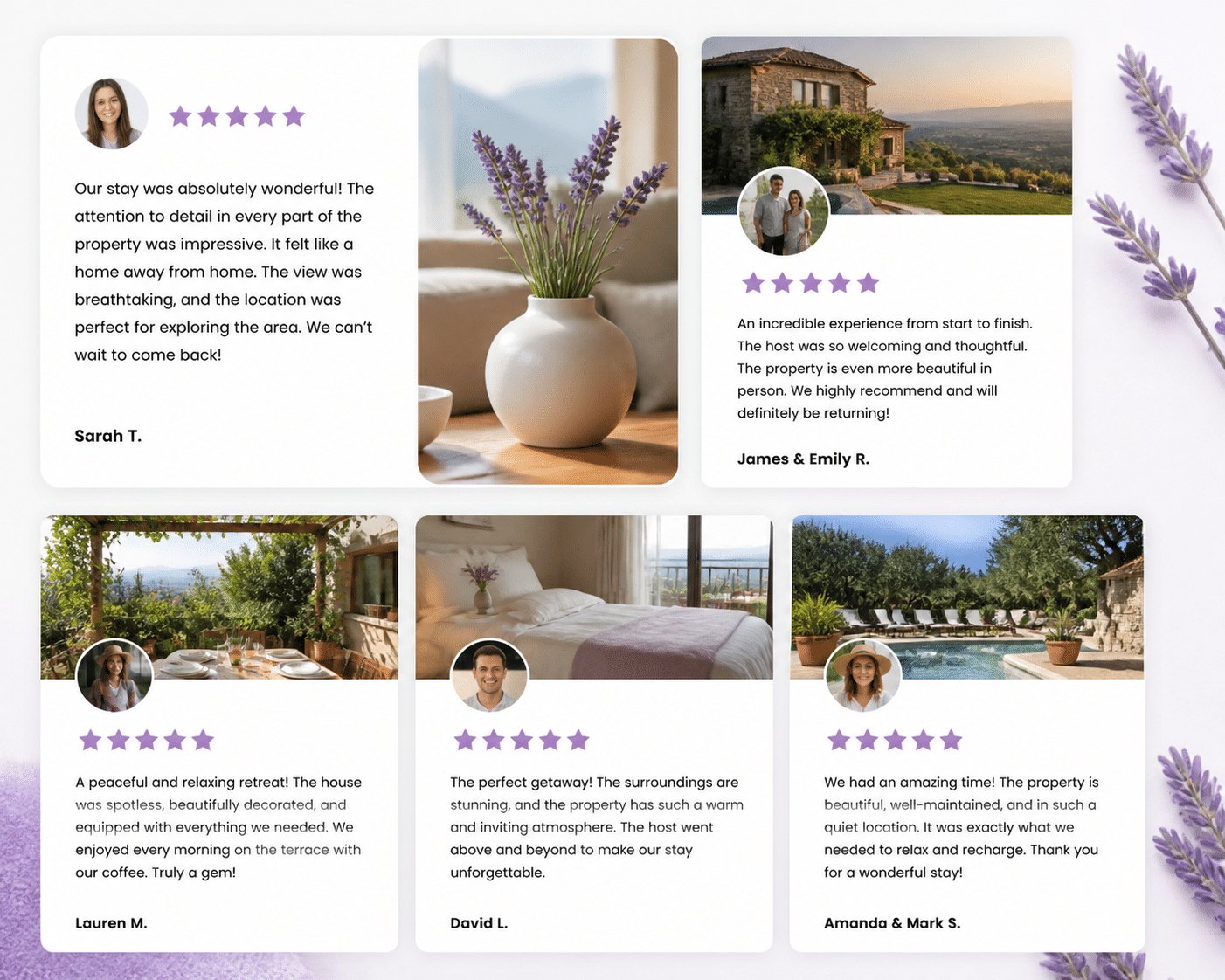
Here’s a funny thing. Your best salesperson isn’t on your payroll. It’s the guest who stayed last weekend and, right now, is typing a few lines about your breakfast.
You can’t buy that kind of trust. But you can make it a lot more likely.
Ask for Reviews the Right Way
Most happy guests never write a review. Not because they don’t care. Nobody asked, and life got busy.
The 2026 Alchemer hospitality study surveyed 1,014 U.S. travelers and found that 87% of those aged 30 to 44 read reviews before booking. So yes, people are reading. Here’s how to get more of them written, honestly:
- Ask at the right moment. Right after a great checkout chat, or in a thank-you email a day later.
- Make it one tap. Send a direct link to your Google review page. Add a small QR card at the front desk for TripAdvisor.
- Ask everyone. Not just the guests you think will say yes.
- Never pay for good reviews. Offering rewards for positive reviews can break platform rules. Ask for honest feedback, full stop.
A short post-stay message is easy to set up once. Ease My Hotel can send it automatically, so nobody has to remember.
Share the Love: Reviews and Guest Photos
A nice review sitting on Google is good. A nice review on your homepage, right beside the booking button, is better.
Pick three or four short quotes that match your story. Put them on your website, in your pre-arrival email and on a framed card in the lobby. Quote the specific bit, like “the owner walked us to the bakery,” not just “great stay.”
User-generated content works the same way. Try these low-cost ideas:
- Create one photo-worthy corner, like a mural or a window seat, with your hashtag nearby.
- Add a QR code at checkout so guests can upload a photo and say it’s okay to repost.
- Run a small monthly feature. The prize can be a late checkout or breakfast for two.
Always ask permission and credit the guest. Hotel brands like Moxy do this with a simple hashtag, and it adapts easily to a ten-room inn.
Reply to Every Review (Yes, Even the Ugly Ones)
I’ll admit it. My first instinct with a bad review is to argue. Bad idea.
A reply is how future guests see who you really are. They’re not reading the angry review for the drama. They’re checking how you handle it.
Here’s a quick guide:
| Review type | What to do | Example opening |
|---|---|---|
| Glowing | Thank them by name, mention one detail | “Thanks, Priya! The sunrise walk is our favorite too.” |
| Mixed | Thank them, own the miss, share the fix | “We’re sorry the Wi-Fi dropped. We’ve upgraded the router.” |
| Angry | Stay calm, apologize, invite them to talk offline | “That’s not the stay we want for you. Please email us so we can make it right.” |
Reply within a day or two, and keep each answer short and human. No copy-paste scripts.
For a small team, the simplest setup is free. Turn on alerts in Google Business Profile and your booking sites, then keep a basic spreadsheet with the rating, the issue and the date you replied.
How One Great Stay Becomes the Next Booking
Think of it as a loop, not a one-time event:
| Step | What happens |
|---|---|
| 1. The stay | A guest feels looked after |
| 2. The ask | A friendly message with a direct review link |
| 3. The review | Honest, specific words appear online |
| 4. The reply | You thank them or fix the problem in public |
| 5. The reuse | The best quotes and photos go on your site and socials |
| 6. The booking | A new guest reads, trusts and books direct |
Every turn of this loop makes your brand a little stronger, and it costs almost nothing. Now let’s pull everything together into a plan you can start this week.
Your Blueprint for a Lasting Brand: From Budget-Conscious to Brand-Confident
So here we are. You started with a thin wallet and a lot of questions. Now you’ve got a plan.
And here’s the big idea: a strong brand reflects your heart and soul, not the size of your bank account. The things guests remember are your story, your welcome and your little touches. None of that needs a big invoice. It needs consistency and a bit of creativity, and honestly, small properties are good at both.
Your Budget Branding Checklist
Print this out. Stick it by the front desk. Tick things off as you go.
| Step | What to do | Done? |
|---|---|---|
| 1. Identity | Pick one or two brand DNA threads and make them visible in the stay | ☐ |
| 2. Ideal guest | Fill in your canvas and read your last 30 reviews by trip purpose | ☐ |
| 3. Digital footprint | Tune up your Google Business Profile and pick one or two social platforms | ☐ |
| 4. Guest experience | Choose three surprise moments and do them every time | ☐ |
| 5. Partnerships | List five local businesses and pitch one 60 day test | ☐ |
| 6. Guest voices | Ask every guest for a review and reply to all of them | ☐ |
See the pattern? Each step feeds the next. Your story shapes your guest, your guest shapes your online look, and happy guests hand you the reviews that bring in the next ones.
Start Small, Start This Week
Don’t try to do it all by Friday. I’d never manage that either.
Pick one row from the checklist. Just one. Maybe it’s replacing a stock photo with a real one on Google, or sending that friendly day-two message. Do it this week, then notice what changes.
If you want a hand keeping bookings, guest messages and reviews requests in one place, Ease My Hotel can take some of that busywork off your plate, so you’ve got more time for the human parts.
Your hotel already has a story worth telling. Go tell it.
Try Ease My Hotel for free.
No lock-in contracts. Cancel anytime