

Why Generic Accounting Software Fails the Hospitality Industry
Ever tried to make a hotel run on a spreadsheet and a basic accounting app? It works… until it really, really doesn’t.
A lot of hotel managers start out with clunky Excel files or a tool like QuickBooks, then spend way too many late nights fixing missed charges, tax messes, and folio issues. And honestly, that’s not a people problem. It’s a software mismatch.
Hotels don’t run like a normal shop. They run 24/7. Rooms sell all day and night. Guests check in, check out, eat dinner, use the spa, pay parking, and maybe book a package that includes all three. That means hotel financial management software has to handle more than just invoices and bank deposits. It has to track hotel revenue tracking, night audit automation, and hotel industry KPIs in a way that actually fits how a property works.
Here’s the deal: generic tools were not built for PMS accounting integration, departmental P&Ls, or the messy reality of hospitality accounting solutions. In fact, hotel operators are already moving away from generic setups. One industry report says 74% of hotel operators globally now use dedicated accounting software integrated with a PMS and 68% of independent hotels and regional hospitality businesses use accounting software to automate bookkeeping and tax management market data on hotel accounting software use.

That shift makes sense. Manual data entry can create a 1 to 4% error rate, and each error can cost around $130 to fix. Ouch. Nobody wants to pay staff to clean up mistakes all week.
In this guide, we’ll break down the five biggest hotel bookkeeping challenges and show you what to look for in the right accounting software for hotels. So if you’re stuck between patchwork tools and a system that doesn’t get your business, you’re in the right place.
Challenge 1: Lack of Seamless Integration with Property Management Systems (PMS)
Ever had one guest check in, order breakfast, use the spa, then charge parking, all before lunch? Hotel life moves fast. Your accounting system should keep up.
But this is where a lot of hotels hit a wall. When the PMS and the accounting tool do not talk to each other, staff end up copying data by hand. Reservations get typed in again. Check-ins get re-entered. Payments, folios, and room revenue all get pushed across line by line. And yep, that eats time like crazy.
Here’s the ugly part. Manual entry is one of the biggest hotel bookkeeping challenges because it invites mistakes in room revenue and occupancy data. A room sold at the wrong rate, a folio posted twice, or a missed tax line can throw off the whole day. One research summary notes that manual data entry has a 1 to 4 percent error rate, and each error can cost around $130 to fix data entry error rates. That adds up fast for a busy property.
It also slows down close-out. If your team has to clean up every shift by hand, the month-end close drags. And without true PMS accounting integration, you do not get a live view of how the hotel is doing. You’re always looking backward. That makes it hard to react to a slow Tuesday, a sold-out weekend, or a spike in cancellations.
A better setup is two-way sync. That means reservations, check-ins, payments, and folios move straight from the PMS into the general ledger, and updates flow back too. No double entry. No guessing. Just cleaner hotel revenue tracking and a faster nightly close.
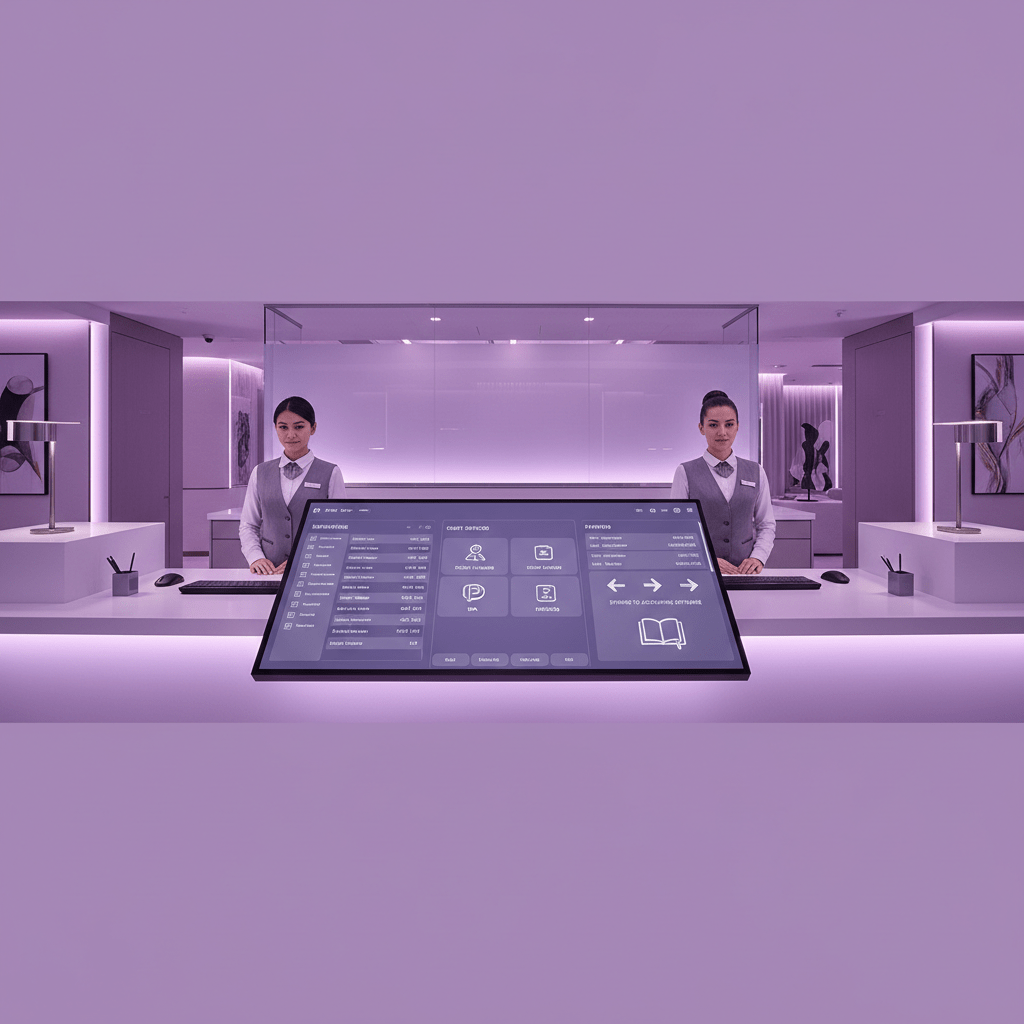
What good integration should do
| PMS Action | What Should Happen in Accounting Software for Hotels |
| Guest books a room | Reservation data posts automatically |
| Guest checks in or out | Stay dates and charges sync right away |
| Room, spa, or parking charge is added | Folio details move to the right account |
| Payment is taken | Cash, card, or direct bill is recorded |
| Night audit runs | Reports feed into the ledger with no manual retyping |
That kind of setup helps hotel financial management software do its job properly. It keeps the front desk, accounting team, and managers on the same page. Also, it makes hotel industry KPIs easier to trust because the numbers are not being patched together from five different spreadsheets.
And if you’re comparing tools, ask one simple question: does this software actually sync both ways, or does it just export a file and wish me luck? Big difference. Huge, really.
For hotels using Ease My Hotel, this is the kind of central control that matters. A unified dashboard, booking tools, and accounting software for hotel and resorts can cut out a lot of duplicate work. That means less time on data cleanup and more time on guest service. Which, let’s be honest, is where the money is made.
Challenge 2: Inability to Manage Complex & Diverse Revenue Streams
You know that moment when the front desk says one thing, the restaurant says another, and the spa slip is still hiding in someone’s pocket? Yep. That’s a normal Tuesday at a hotel.
Hotels don’t just sell rooms. They sell breakfasts, weddings, massage appointments, parking spots, late checkout, mini-bar snacks, and package deals that bundle half the property together. Food and beverage alone can be a huge slice of revenue, and meetings or events often bring in a big chunk too. So if your accounting software for hotels treats every dollar the same, you’re already losing the plot.
That’s where generic tools start to wobble. They can record money, sure. But they usually struggle to split revenue by department, which means you can’t easily see if the restaurant is pulling its weight or quietly draining cash. And that matters. A lot. If the spa looks busy but the payroll and supply costs are eating the gains, you need to know fast, not at month end after three coffees and a headache.
Here’s the thing though: hotels need departmental P&Ls, not just a single lump of income. When revenue gets mixed together, you can’t tell which business unit is healthy and which one is just riding along. That makes it harder to decide where to spend on ads, where to cut waste, and which services deserve more staff on a Friday night.
Take a bundled package like a “Romance Getaway.” If the room, dinner, and spa treatment all get posted into one bucket, the numbers get fuzzy fast. The room should sit in Rooms, dinner should go to Food & Beverage, and the spa charge should land in Spa or Recreation. Otherwise, your hotel revenue tracking is off, and your hotel industry KPIs start telling a half-truth.
Why this gets messy so fast
| Revenue source | Where it should go | Why it matters |
| Room nights | Rooms department | Tracks occupancy and ADR clearly |
| Breakfast, restaurant, room service | Food & Beverage | Shows if dining is profitable |
| Weddings, meetings, banquets | Events or Banquets | Helps judge group sales value |
| Spa services | Spa or Recreation | Separates wellness income from room sales |
| Parking, transport, resort fees | Other revenue | Keeps small income from getting buried |
Without that split, you’re guessing. And guessing is expensive.
I’ve seen hotels pour money into a busy restaurant because it “feels” popular, only to find out the labor bill and food waste were chewing through the margin. The same thing happens with group sales. A full-house weekend can look amazing on the surface, but if the package discount was too deep and the extras were posted wrong, the real profit might be pretty thin.
And wait, there’s more. Generic software often makes package and group sales hard to break apart cleanly. That’s a pain for owners, but it’s also bad for managers who need to plan staffing, marketing, and inventory. If you know spa bookings spike on Fridays, or banquet revenue jumps during conference season, you can put your money in the right places. If you don’t, you’re just tossing darts.
A hotel financial management software built for hospitality accounting solutions handles these moving parts much better. It can separate departments, track margins, and help you see which parts of the property deserve attention. That’s the kind of detail that helps with better decisions, not just cleaner books.
If you’re using Ease My Hotel, this gets easier because the platform brings accounting software for hotel and resorts together with booking, restaurant, and front desk tools in one place. Less jumping around. Less confusion. More clarity for you, your team, and your next planning meeting.
Challenge 3: The ‘Night Audit’ Nightmare: Reconciling a 24/7 Business
Ever walked into work and found the numbers already waiting for you? Nice in theory. Total chaos in hotels.
That’s the night audit.
It’s the overnight check that wraps up a hotel’s day. Staff review room charges, payments, taxes, folios, outlet sales, and anything else that happened before the property rolls into a new business day. For most businesses, the day ends at midnight. Not hotels. A hotel day often ends at 2 or 3 AM, after the last late check-in and the final charge post.
And that’s where generic accounting software for hotels starts to wobble.
Standard accounting tools are built around a strict calendar day. Midnight is midnight. Done. But hotels live on a different clock. If your system closes the books before the night audit is finished, daily sales reporting gets messy fast. You can end up with room revenue in one day, spa charges in another, and a DSR that looks fine right up until someone spots a missing payment at 8:15 AM. Fun, right?
The big issue is timing. A guest can charge dinner at 11:47 PM, settle at 12:10 AM, and check out before sunrise. If your hotel financial management software does not understand that flow, the same sale can land in the wrong day, the wrong report, or the wrong ledger. Then your team spends the morning sorting it out instead of helping guests.
Here’s what a good night audit report should catch:
- Room revenue by rate type
- Occupancy rate and rooms sold
- ADR and RevPAR
- Food and beverage sales by outlet
- Spa, parking, and other revenue
- Payments by tender type
- Accounts receivable changes
- Any balance left from the prior night

When night audit automation is built in, the system can flag weird stuff right away. Wrong folio. Missing tax. Duplicate card settlement. A room rate override that never got approved. You know, the kind of things that make accounting folks stare at a screen for too long.
That’s the real win with hospitality accounting solutions. The DSR is ready each morning, and your team can trust it more because the numbers were checked against the PMS as they happened. Some hotels that switch to automated night audit tools cut the process from 2 to 3 hours down to under 30 minutes. That’s a big deal, especially for small teams already juggling checkouts, guest calls, and breakfast chaos.
And if you’re comparing tools, ask this: does the software help finish the day, or does it make your staff finish it by hand? If it’s the second one, you’ll probably feel that pain before the week is over.
For hotels using Ease My Hotel, this is where the unified dashboard really helps. With booking management, front desk tools, and accounting software for hotel and resorts in one place, your team spends less time fixing overnight mistakes and more time getting the morning right.
Challenge 4: Navigating Complex Occupancy Taxes & Compliance
Ever looked at a hotel tax sheet and thought, “Wait… why are there six different taxes on one room?” Yeah. You’re not alone.
This is one of those hotel bookkeeping challenges that looks small until it blows up your day. Hotels can deal with state taxes, city taxes, county taxes, tourism fees, resort fees, and sometimes extra local charges that change by location. A room in New York City can carry a very different tax load than one in Orlando or Las Vegas. That means your accounting software for hotels has to stay on top of more than a simple sales tax rate.
The problem with generic tools is pretty plain. They often need manual setup for each tax rule, and then someone has to keep checking for updates. That leaves room for mistakes. A tax entered wrong at booking can lead to bad remittance, messy reports, and penalty letters nobody wants to open on a Monday morning. Oof.
And it’s not just about the math. If your hotel revenue tracking is off, your hotel industry KPIs can be off too, because tax errors can distort net figures and make reports harder to trust. One industry guide notes that city hotel tax rates can stack fast, and incorrect remittance can trigger late fees, interest, liens, audits, and even personal liability in some places hotel tax rules by city and compliance risks.
Here’s what specialized hospitality accounting solutions usually do better:
- Auto-calculate taxes by location at booking
- Keep rate rules updated across cities and counties
- Handle exemption certificates and special cases
- Flag odd charges before they hit the ledger
- Make tax reports easier to file and review

That matters a lot for busy teams. If your front desk is juggling check-ins, your manager is fixing a payment issue, and your accountant is chasing down a tax mismatch, the whole day gets lighter when the software does some of that work for you.
Actually, wait – there’s a better way to think about it. Good hotel financial management software doesn’t just store tax data. It helps prevent bad tax data in the first place.
For properties using Ease My Hotel, this kind of setup fits neatly into the broader system. The unified dashboard, booking tools, and accounting software for hotel and resorts can help reduce the back-and-forth that usually comes with tax changes. Less manual checking. Fewer surprises. And a lot less stress when filing time shows up.## Challenge 5: Failure to Generate Actionable, Hotel-Specific KPIs
You know that awkward moment when the report says, “good job,” but your gut says, “wait, what does that even mean?” Hotels do that all the time.
A hotel’s health is not just profit and loss. It’s also about the numbers that sit behind the curtain. Things like ADR, RevPAR, and occupancy rate tell you if rooms are priced right, if you’re filling beds, and if your sales plan is actually working. Without those, you’re kind of flying blind. And that gets old fast.
Here’s the simple version:
| KPI | What it means | Why you care |
| ADR | Average Daily Rate | Shows the average price of each sold room |
| RevPAR | Revenue Per Available Room | Shows how much money each room brings in, sold or not |
| Occupancy Rate | Percent of rooms sold | Shows how full the hotel is |
ADR helps you see if your rates are too low or too high. RevPAR gives a better look at room revenue because it mixes rate and occupancy together. Occupancy rate tells you how busy the hotel is, which matters a lot for staffing, breakfast prep, and even laundry. If you only watch total revenue, you can miss the story hiding inside the numbers.
And here’s the part generic tools mess up. Many regular accounting systems can store money in and money out, but they don’t speak hotel. They usually can’t calculate RevPAR or other hotel industry KPIs on their own, so teams end up building spreadsheets, fixing formulas, and double-checking every tab. That means more time in Excel and less time making smart calls.
I’ve seen managers spend an hour pulling data from the PMS, then another hour trying to make the numbers line up. Not fun. Not even a little.
The better move is software that gives you the right view at a glance. With hotel financial management software built for hospitality accounting solutions, you can see what’s happening now, not just what happened last week. That makes pricing changes, staffing choices, and budget planning a lot easier.
And honestly, that’s the whole point. If your accounting software for hotels can’t help you spot a weak Tuesday, a slow room type, or a rate that’s too low for a busy weekend, it’s not doing enough for you.

For teams using Ease My Hotel, the win is even clearer. The platform brings booking management, guest tools, and accounting software for hotel and resorts into one place, so your KPIs come from the same clean data stream. Less hunting. More knowing. That’s the kind of help hotel teams can actually feel.
Moving from Surviving to Thriving: Choosing the Right Financial Tool
If your books feel like a weekly rescue mission, you’re not alone. Hotels do that to people. One minute everything looks fine, and the next you’re chasing a missed folio charge, a tax mismatch, and a spa sale that landed in the wrong bucket.
That’s the core lesson here. Generic tools can work for a bit, but they usually crack under hotel pressure. Between PMS accounting integration, mixed revenue streams, night audit automation, tax rules, and hotel industry KPIs, accounting software for hotels has to do a lot more than basic invoicing.
So the move is pretty clear. Stop asking, “Can this software do accounting?” and start asking, “Can it handle how a hotel actually runs?” That small shift matters.
Here’s a simple checklist you can use before you buy anything new:
| Non-negotiable feature | What to ask |
| PMS sync | Does it sync both ways, or only export data? |
| Departmental P&Ls | Can it split rooms, F&B, spa, events, and other income? |
| Night audit support | Can it help close the day without manual retyping? |
| Tax handling | Does it update by city, county, and special fee? |
| Hotel KPIs | Can it show ADR, RevPAR, occupancy, and other hotel metrics? |
And here’s the part people miss: switching to hospitality accounting solutions is not just a software cost. It’s a way to save time, cut errors, and get cleaner numbers you can trust. Industry data shows 74% of hotel operators now use dedicated accounting software tied to a PMS, and that makes sense because manual data entry can carry a 1 to 4 percent error rate, with each mistake costing around $130 to fix market data on hotel accounting software use.
If you’re using Ease My Hotel, this is a good time to compare your current process against the five challenges in this guide. Write them down. Be honest about where the headaches are. Then make your list of must-haves before you choose your next hotel financial management software.
Because the goal isn’t just to keep up. It’s to run cleaner, move faster, and make better calls with less stress. And honestly, that feels a lot better than fighting spreadsheets at 11:40 PM.
Try Ease My Hotel for free.
No lock-in contracts. Cancel anytime